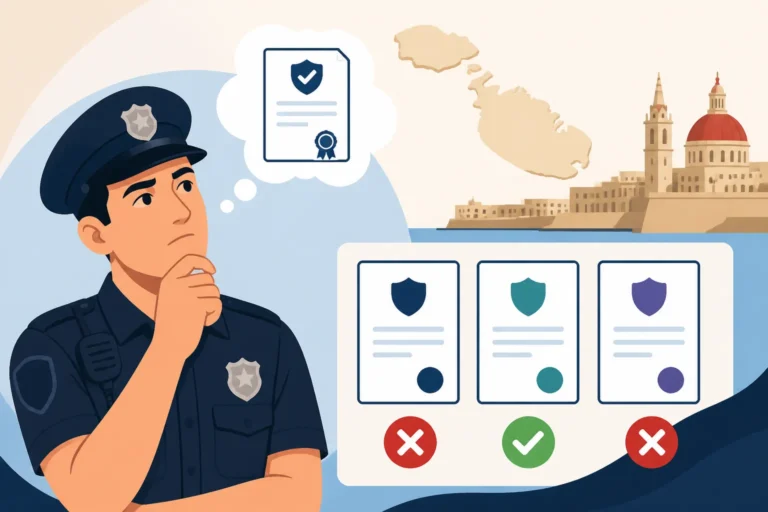
Can I Count Time as a Student Toward Long-Term Residence in Malta?
One of the most common questions I get from international students after they've fallen in love with Malta and decided they want to put down roots here is, "Does my time studying actually count towards becoming a long-term resident?" It's a completely valid and crucial question, as the path to stability and a more permanent footing on the island can feel like navigating a labyrinth. This guide will meticulously break down how your student residence permit factors into your journey towards obtaining long-term residence status in Malta, clearing up the common misconceptions and outlining the precise rules you need to know.
Understanding Long-Term Residence in Malta for Non-EU Citizens
Let's be honest, for many non-EU citizens, the dream isn't just to visit or study for a few years, but to truly integrate and make Malta their permanent home. The concept of Long-Term Residence (LTR) status is central to this ambition, offering a level of stability and rights that short-term permits simply don't. It’s an EU-wide status, meaning once granted by Malta, it often facilitates easier movement or residence in other EU member states, although specific conditions might apply.
The Basics of Long-Term Residence Status
So, what exactly is Long-Term Residence status? Think of it as the golden ticket for non-EU nationals seeking stability within the European Union. Once you hold this status in Malta, you gain significant benefits, including certain social and economic rights that mirror those of Maltese citizens, such as access to employment, education, and social security. It’s not citizenship, but it’s a big step towards a secure future here.
The general prerequisite for applying for Long-Term Residence in Malta is that you must have resided legally and continuously in the country for a period of five years immediately prior to submitting your application. When I first heard "continuously," I panicked, thinking even a weekend trip back home would restart the clock! Thankfully, it’s not that strict, but there are rules about how much time you can spend outside Malta within that five-year period. You generally shouldn’t be absent for more than six consecutive months, and your total absences over the five years shouldn't exceed ten months. These periods are critical, as exceeding them can invalidate your "continuous" residence. You can read more about this in our guide on Long-Term Residence Status After Five Years in Malta.
Who Qualifies for Long-Term Residence
Beyond the five-year legal and continuous residence, the authorities want to ensure that you’re a stable, self-sufficient, and integrated member of society. This means demonstrating you have stable and regular financial resources, which are sufficient to maintain yourself and your dependents without resorting to social assistance. This income threshold is reviewed periodically, so always check the latest requirements from Identità (Malta's agency for identity, citizenship, and residence).
You'll also need to show proof of comprehensive health insurance for yourself and any family members, which is a standard requirement for most non-EU permits anyway. For those residing in Malta for longer periods, many turn to robust international providers like Cigna Global to ensure they're adequately covered, especially if they’re no longer students with basic student-specific insurance. Lastly, there's often an integration aspect, which might involve demonstrating basic knowledge of Maltese society or culture, though the specific requirements can vary. It’s a holistic assessment, designed to ensure you’re truly committed to making Malta your home.
The Specifics of Student Residence and the "Half-Time" Rule
Now, let's get to the crux of your question: how does your time spent studying in Malta contribute to that all-important five-year countdown for Long-Term Residence? This is where many expats get tripped up, and it's vital to understand the nuances.
How Student Time is Calculated for LTR
Here’s the deal: time spent in Malta on a student residence permit does count towards your Long-Term Residence eligibility, but it doesn't count year-for-year. The rule, which is standard across many EU countries to reflect the temporary nature of study permits, is that student residence periods are counted at half their actual duration.
Let’s illustrate with an example: if you spent two years studying at the University of Malta or MCAST on a student permit, only one year (50% of your actual study time) would be considered for your five-year Long-Term Residence calculation. Similarly, if you pursued a three-year degree, you'd accrue 1.5 years towards your LTR status. This means if you spent, say, four years on a student permit, it would only translate into two years of "counted" residence for LTR purposes. It’s crucial to factor this into your long-term planning, as it means you’ll need to spend more actual years on the island if a significant portion of your initial stay was as a student.
This "half-time" rule applies specifically to student permits. It’s a recognition that while you are legally resident, the primary purpose of your stay is temporary education, not long-term settlement from the outset. For a comprehensive overview of how residence permits work, you might find our guide on Residence Permits in Malta: Types, Requirements, and How to Apply helpful.
What Other Permit Types Count Fully
In contrast to student permits, other types of residence permits typically count fully towards your Long-Term Residence period. The most common type for many non-EU expats moving past their student years is the work permit, often issued as a The Single Permit as a Combined Work and Residence Permit in Malta. If you switch from a student permit to a work permit, every year you spend legally residing and working in Malta under that work permit will count as a full year towards your five-year LTR requirement.
Other permits, such as those for family reunification, self-employment, or certain investor/special residence programmes, also generally count fully. The key here is the purpose of the permit – if it implies a long-term commitment to residence and contribution to the Maltese economy and society, it usually counts fully. This distinction means that if you start your journey in Malta as a student and then transition into a full-time job, your clock will effectively speed up. For instance, if you had two years of student residence (counting as one year) and then three years on a work permit (counting as three full years), you would accumulate four years towards LTR. You’d then need another year on a full-time qualifying permit to reach the five-year threshold. This is a common path for many graduates who decide to stay and work after finishing their studies. If you are considering switching your permit type, our article on Can I Switch from a Student Permit to a Single Permit in Malta? provides more detailed information.
Practical Implications for Your Residence Journey
Understanding the half-time rule has significant practical implications for your overall residence planning. It means that if your goal is Long-Term Residence, you cannot simply rely on five years of student permits. You'll need to transition to a permit type that counts fully, such as a work permit or a permit for self-sufficiency, to meet the criteria in a timely manner.
This often means students need to start thinking about their post-graduation plans well in advance. Securing a job offer and applying for a work permit immediately after your studies can be crucial to minimise any gaps in your qualifying residence. Any lapse between your student permit expiring and a new permit being issued could potentially interrupt your continuous residence, which is something you absolutely want to avoid. When you are planning to move your entire life over, perhaps even after graduation, remember services like Sirelo can be incredibly helpful in managing the logistics of international moves, ensuring your transition is as smooth as possible.
Remember, the five-year continuous period is critical. If you were a student for, say, two years (counting as one LTR year), and then immediately secured a work permit for another four years, you would actually accumulate 1 + 4 = 5 years towards your Long-Term Residence. This is a very common trajectory for international students who wish to make Malta their long-term home.
Navigating the Application Process and Proving Your Residence
Applying for Long-Term Residence, just like any interaction with Identità, can feel like a bureaucratic marathon. But with careful preparation and attention to detail, you can navigate it successfully.
Documentation and Evidence Required
When you finally submit your application for Long-Term Residence, Identità will scrutinise your history in Malta. They want to see irrefutable proof of your legal and continuous residence. This isn't just about showing them your current permit; it's about providing a chronological timeline of all your residence permits in Malta. Keep every single eResidence card and permit document you've ever been issued, even the expired ones. They serve as concrete evidence of your lawful stay.
Beyond permits, you'll need to demonstrate financial self-sufficiency. This means providing bank statements, employment contracts, payslips (FS3s), and possibly tax returns to prove you meet the minimum income thresholds. It's about showing you're not a burden on the state and can support yourself and your family. If you've been working, your social security contributions record will also be relevant, showcasing your integration into the local system. Our article on Private Health Insurance Requirements for Non-EU Permit Holders in Malta also highlights the ongoing need for valid health insurance, which is another document you'll need to provide.
Furthermore, evidence of integration into Maltese society might also be considered. This isn’t always a formal test, but it could involve demonstrating an understanding of Maltese culture, participation in local community activities, or even basic language skills, though English proficiency is usually sufficient given Malta's bilingual nature. What Identità really wants to see is a consistent, unbroken chain of legal residence, backed by financial stability and a genuine intention to remain in Malta. Getting your eResidence Card: The Key to Accessing Healthcare (and other services) will have been a continuous process throughout your stay, so keeping records of all applications and cards is essential. For more about the general process, see Applying for an eResidence Document Through the Identità Portal.
Common Pitfalls and How to Avoid Them
The path to Long-Term Residence is paved with good intentions, but also potential pitfalls. The most significant one is having gaps in your residence. Even a few weeks or months where you didn't hold a valid permit can be problematic and might reset your 'continuous residence' clock. This is especially relevant for students transitioning to work permits. Ensure you apply for your new permit before your student permit expires. Always start renewal processes early, as Understanding Identità Processing Times and Delays can be significant.
Another common issue is insufficient documentation. Identità is notoriously stringent. Don't submit an application with missing pieces, hoping they won't notice. They will. Always provide original documents where requested, and certified translations for anything not in English or Maltese. Prepare a meticulously organised file with all your permits, financial records, health insurance policies, and any other supporting documents.
Not meeting financial thresholds is another hurdle. The income requirements are there for a reason. If your financial situation fluctuates, ensure you can demonstrate stability over a prolonged period. Additionally, be mindful of the rules regarding absences from Malta. Exceeding the six-month consecutive absence or ten-month total absence within the five years can be detrimental to your application. Keep records of your travel dates.
Finally, while not directly related to student time counting, remember that Long-Term Residence is an immigration status, not merely a formality. Your overall conduct and adherence to Maltese laws are also implicitly considered. Being proactive, keeping excellent records, and seeking advice when unsure are your best strategies for a smooth application process. Our detailed article, Can Gaps in My Residence Affect My Long-Term Permit in Malta?, is a must-read to avoid these issues.
Here’s a quick overview of how different residence types typically contribute to your Long-Term Residence calculation:
| Residence Permit Type | How it Counts Towards Long-Term Residence (LTR) | Notes |
|---|---|---|
| Student Permit | Counts as 50% of actual duration | E.g., 2 years of study = 1 LTR year. Recognises the temporary nature of stay primarily for education. |
| Work Permit (Single Permit) | Counts as 100% of actual duration | E.g., 2 years of work = 2 LTR years. Requires stable employment and social security contributions. |
| Self-Employed Permit | Counts as 100% of actual duration | E.g., 2 years self-employed = 2 LTR years. Requires proof of regular income and contributions. |
| Family Reunification Permit | Counts as 100% of actual duration | E.g., 2 years as a spouse/dependent = 2 LTR years. Tied to the principal applicant's qualifying residence. |
| Nomad Residence Permit | Does NOT currently count towards LTR | This is a specific permit for digital nomads, distinct from traditional long-term residence paths. |
| Special Residence Programmes | Varies, often 100% for specific schemes | Programmes like Global Residence Programme (GRP) usually count fully, but always check the specific programme's rules for LTR eligibility. |
This table should help you visualise how your different permits string together over the years. Remember, the journey from being a student to a long-term resident is a marathon, not a sprint, especially for those Moving to Malta from Outside the EU/EEA: What You Need to Know. Careful planning and accurate record-keeping are your best allies!
Disclaimer
The information provided in this guide is intended for general informational purposes only and does not constitute legal, financial, or immigration advice. While we strive to keep the information up-to-date and accurate, regulations and procedures in Malta can change. It is essential to consult with Identità (Malta's Agency for Identity, Citizenship and Residence) or a qualified immigration lawyer or consultant for advice tailored to your specific situation. We cannot be held responsible for any actions taken based on the information contained herein.