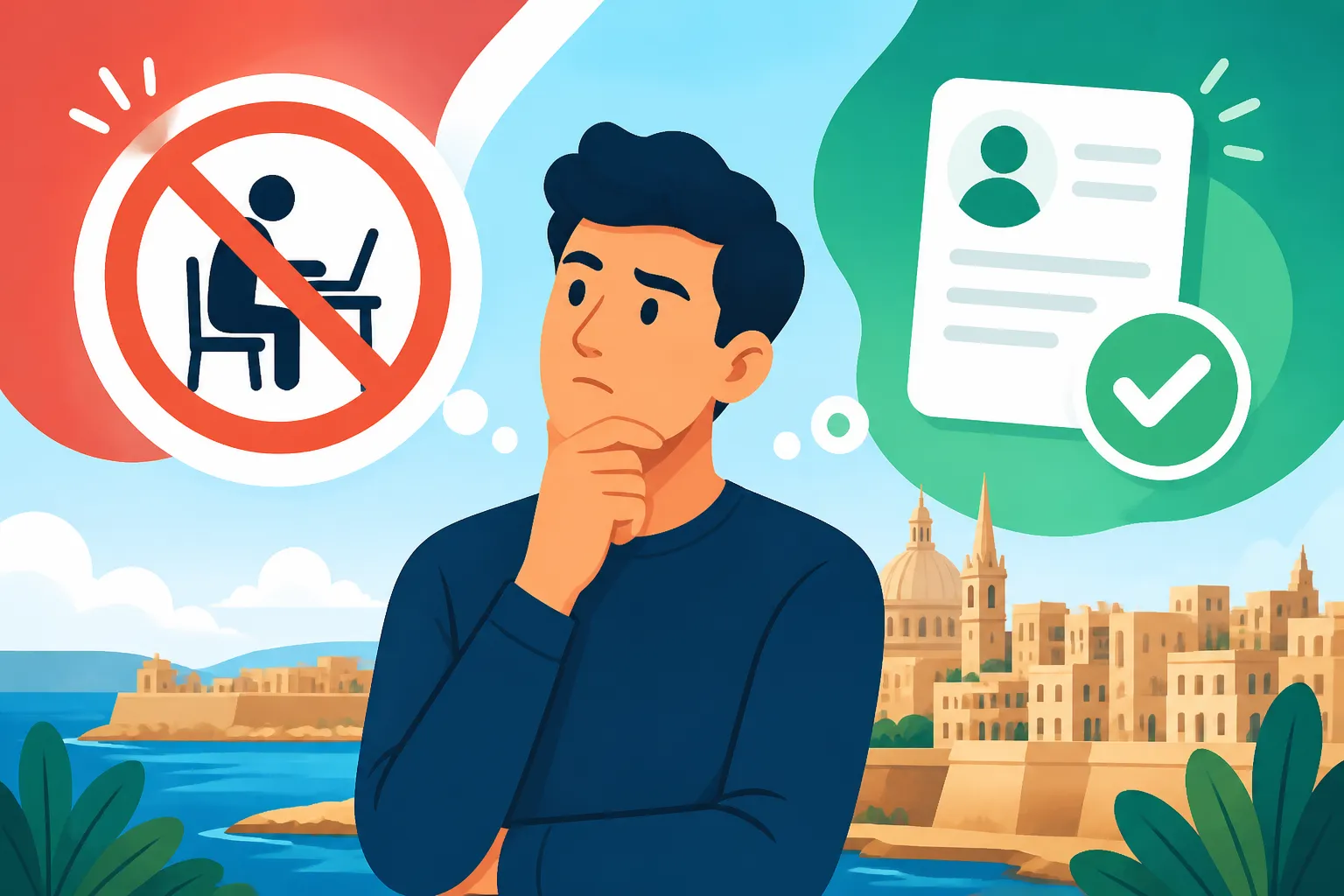
Can I Start Working in Malta Before My Permit Is Approved?
Moving to a new country like Malta often comes with a whirlwind of excitement and, let's be honest, a fair amount of stress, especially when you're itching to start your new job. Many expats arrive with job offers in hand, eager to hit the ground running, and the burning question on everyone's mind is: "Can I start working as soon as I land, or do I need to wait for my permit to be officially approved?" This guide is here to untangle that knot of uncertainty and give you a clear, empathetic overview of the legalities surrounding starting work in Malta before your residence and work permit gets the final stamp of approval.
The Legal Landscape: Understanding Malta's Permit Requirements
When you're looking to work in Malta as a non-EU/EEA/Swiss citizen, or even in some cases as an EU citizen who hasn't completed all their registration, the rules around permits are very clear-cut. It's a system designed to ensure everything is above board, but it can feel incredibly slow when you're just trying to get on with life.
The Single Permit: What It Is and Why It Matters
For most third-country nationals, the golden ticket to working and residing in Malta is the "Single Permit." This isn't just a work permit; it's a combined residence and work permit issued by Identità (formerly Identity Malta). It means that when you receive this document, you are officially authorised to both live and be employed in Malta for the specified period and with the specified employer. Without it, you’re essentially not recognised as legally able to perform paid work. The application process for this can feel like navigating a labyrinth, with various documents required, from your passport and job contract to police conduct certificates and proof of accommodation. It’s a thorough check, ensuring that only those who meet all criteria are granted the right to work here. Understanding the specific requirements for your application is crucial, as any missing document or incorrect information can lead to significant delays.
The "Approval in Principle" Conundrum: A Glimmer of Hope?
You might hear about "Approval in Principle" (AIP) during your application journey. This is often an early stage in the Single Permit process, particularly for those applying from outside Malta. What it means is that your application has been provisionally accepted based on the documents submitted, and Identità is generally satisfied that you meet the criteria for a permit. It's a huge relief when you get it because it often allows you to apply for a D-Visa (a national long-stay visa) to enter Malta to finalise your permit process.
However, and this is where many expats get caught out, Approval in Principle is explicitly not a green light to start working. It's an important step forward, indicating that your full permit is likely to be granted, but it does not confer any right to employment. Think of it as being pre-approved for a mortgage; you know you'll likely get the house, but you can't move in until all the final paperwork is signed. Many hopeful newcomers, understandably eager to begin earning and integrating, misinterpret AIP as permission to start. This misunderstanding can lead to serious complications, not just for them but also for their employers. It's a waiting game, and patience is definitely a virtue in Malta's administrative processes. Even if your employer offers to let you start, you must resist the temptation to begin any paid work until the physical eResidence card is in your hand, or at the very least, you have received official notification that your permit is fully approved and issued.
The Strict "No Work Before Permit" Rule
Let's be unequivocally clear: in Malta, you absolutely cannot start working before your Single Permit is officially approved and issued. This isn't a grey area; it's a black and white rule. Malta's immigration and labour laws are stringent on this point, designed to protect both the local labour market and foreign workers from exploitation. The law states that no third-country national shall be employed in Malta unless they are in possession of a valid Single Permit specifically authorising that employment.
Consequences of Working Illegally
Ignoring this rule can have severe repercussions for you as an individual. If you are caught working without a valid permit, you could face hefty fines, immediate termination of your employment, and potentially deportation. This isn't just a theoretical threat; authorities do conduct checks. Imagine arriving, getting settled, only to be hit with a fine and told you have to leave the country because you started work a few weeks too early. It’s a nightmare scenario that can derail your entire expat dream. Furthermore, any future applications for permits in Malta or even other EU countries could be negatively impacted by a record of illegal employment. Your employer might also face legal issues, which can damage your relationship with them. It's simply not worth the risk, no matter how tempting it might be to start earning.
Employer Responsibilities and Risks
It’s not just the employee who faces consequences. Employers in Malta are legally obligated to ensure that all their foreign staff have valid work permits before they commence employment. Employing someone without the proper authorisation carries significant risks for the company. These can include substantial fines, criminal charges, and reputational damage. Maltese authorities, through entities like Jobsplus and Identità, conduct inspections to ensure compliance. If an employer is found to be employing an individual without a valid permit, they could face penalties that are far more severe than any potential benefit from having an employee start a few weeks early. Therefore, most reputable employers will insist that you wait until your permit is formally issued before commencing any duties. They simply cannot afford the legal and financial risks involved. This is why when you are applying for a Single Permit in Malta, the application process relies heavily on cooperation between you and your prospective employer. They have a vested interest in following the rules just as much as you do.
What You Can Do While Waiting for Approval
While the waiting period can feel frustratingly long, especially after you've received your Approval in Principle and are just waiting for that final document, it doesn't mean you have to sit idly by. This time can be incredibly valuable for getting genuinely settled and preparing yourself for your new role and life in Malta.
Preparing for Your Role: Training and Settling In
Even without being able to perform paid work, you can engage in activities that will make your transition smoother once your permit arrives. This might include familiarising yourself with company policies, reading up on industry trends in Malta, or even informal discussions with future colleagues (as long as these don't constitute actual work tasks). You could also use this time to scout out your new commute, understand local business etiquette, or research important aspects of Maltese professional life. If your employer provides access to internal training materials or online courses that don't involve active work, that can be a productive way to spend your time. This period is also ideal for understanding the nuances of how Maltese health entitlement fits with social security contributions, so you are fully prepared once you start working.
Getting Your Affairs in Order: Banking and ID
The waiting period is an excellent opportunity to tick off other crucial administrative tasks that don't require your work permit but are essential for living here. Opening a Maltese bank account, for example, can be a notoriously slow process for newcomers due to strict anti-money laundering regulations. You'll likely need to provide proof of address, your D-Visa, and possibly your employment contract, even if your permit isn't fully issued yet. Getting this sorted now means your first salary payment won't be delayed. You should also ensure you have your Maltese ID card number, which is crucial for accessing many services, including healthcare. While you might not have your eResidence card yet, often you can initiate some processes or at least gather the required documents. If you have been granted a D-Visa to enter Malta, you can use this time to schedule your biometrics appointment at Identità and begin the process of getting your eResidence card, which is your official ID in Malta.
Leveraging the Waiting Period: Language and Networking
Malta is wonderfully English-speaking, but learning even a few phrases in Maltese can go a long way in integrating and charming the locals. Consider using platforms like iTalki to get a head start on some basic phrases – "Grazzi" (thank you), "Bongu" (good morning), and "Kif inti?" (how are you?) are always appreciated. This shows genuine effort and respect for the local culture.
This downtime is also perfect for networking. Join expat groups on social media, attend local meetups, and explore your new surroundings. Building a social network isn't just good for your mental health; it can also open doors to invaluable local insights and advice, both professional and personal. Many expats find their initial social circle through these channels, helping them settle in quicker and feel less isolated. You might even find connections that inform your future career path or give you tips on navigating the local job market more effectively, for instance, on finding job opportunities in the iGaming, Fintech, and Maritime sectors in Malta.
Navigating the Nuances: Provisional Tax and Specific Exemptions
While the general rule is strict, understanding the broader financial context of working in Malta can also be helpful during your waiting period. Once you do start working, you'll immediately become part of the Maltese tax system, where income tax is deducted at source under the Final Settlement System (FSS). It's wise to start understanding how this works, especially how Malta's progressive tax brackets apply, even before your first paycheck. This is where resources from companies like Taxes for Expats can be incredibly helpful in preparing for your financial obligations.
For the self-employed, the situation is slightly different but equally strict: you must be formally registered as self-employed with Jobsplus and the Inland Revenue Department (CFR) before you can legally offer services and invoice clients. There is no "provisional" self-employment allowed.
Are there any exceptions to the "no work before permit" rule? Generally, no. The Maltese legal framework is quite clear. Even for highly skilled individuals, while there might be fast-track schemes like the Key Employee Initiative (KEI), these schemes still require the permit to be issued before work can commence, they just speed up the processing time. There isn't a provision that allows you to start working simply because your application is "almost there" or because you hold a D-Visa. The D-Visa is for entry and permit finalisation, not for work.
The only scenario that might seem like an exception is for EU/EEA/Swiss citizens. While they generally don't need a work permit, they still need to register their residence with Identità and obtain an eResidence document to formalise their stay and access public services. However, EU/EEA/Swiss citizens do have the right to work in Malta upon exercising their free movement rights, even before their eResidence document is issued, as long as they are genuinely exercising those rights and have submitted their application. The delay is typically in formalising their status and accessing benefits like free healthcare, not in commencing employment. This is a crucial distinction from third-country nationals, who absolutely require the Single Permit to be issued.
To avoid any confusion, always refer back to the official documentation from Identità or Jobsplus, or consult an immigration lawyer or specialist if you have a particularly complex situation.
Here's a quick overview of what you should and shouldn't do:
| Activity | Can I Do This Before Permit Approval? | Notes |
|---|---|---|
| Start any paid work/employment | ❌ No | Strictly prohibited for non-EU/EEA/Swiss citizens. Legal risks for both you and your employer. |
| Volunteer (unpaid, informal) | ✅ Yes (with caution) | Generally fine, as long as it's truly unpaid and not replacing a paid position. Avoid anything that looks like employment. |
| Attend job-related training (unpaid) | ✅ Yes | Acceptable, provided it's clearly for preparation and not actual work. |
| Open a Maltese bank account | ✅ Yes | Highly recommended. You'll need your passport, D-Visa, proof of address, and potentially job offer letter. |
| Apply for your eResidence Card (biometrics) | ✅ Yes | Essential step after arriving with an Approval in Principle and D-Visa. |
| Look for accommodation | ✅ Yes | Crucial for setting up your life. Having an address is also a permit requirement. You will need to register your lease with the Housing Authority in Malta once you have a place. |
| Explore Malta, network, learn Maltese | ✅ Yes | Excellent use of your time to integrate and build a support system. |
| Get a Maltese phone number | ✅ Yes | Important for communication and official contacts. |
| Consult a tax advisor (e.g., Taxes for Expats) | ✅ Yes | Proactive financial planning, especially regarding tax residence vs. domicile in Malta, is smart. |
In summary, the anticipation of starting a new job in a new country like Malta is completely understandable. However, the legal framework is very clear: you must have your official Single Permit issued before you can commence any form of paid employment. While the wait can test your patience, remember that this period is invaluable for completing crucial administrative tasks, preparing for your role, and settling into your new life on this beautiful island. Use the time wisely, follow the rules, and you'll be able to enjoy your expat journey in Malta without any unnecessary setbacks.
Disclaimer
The information provided in this guide is for general informational purposes only and does not constitute legal, financial, or immigration advice. While every effort has been made to ensure accuracy, regulations and procedures in Malta can change. Always consult with official government sources, legal professionals, or immigration specialists for advice tailored to your specific situation.