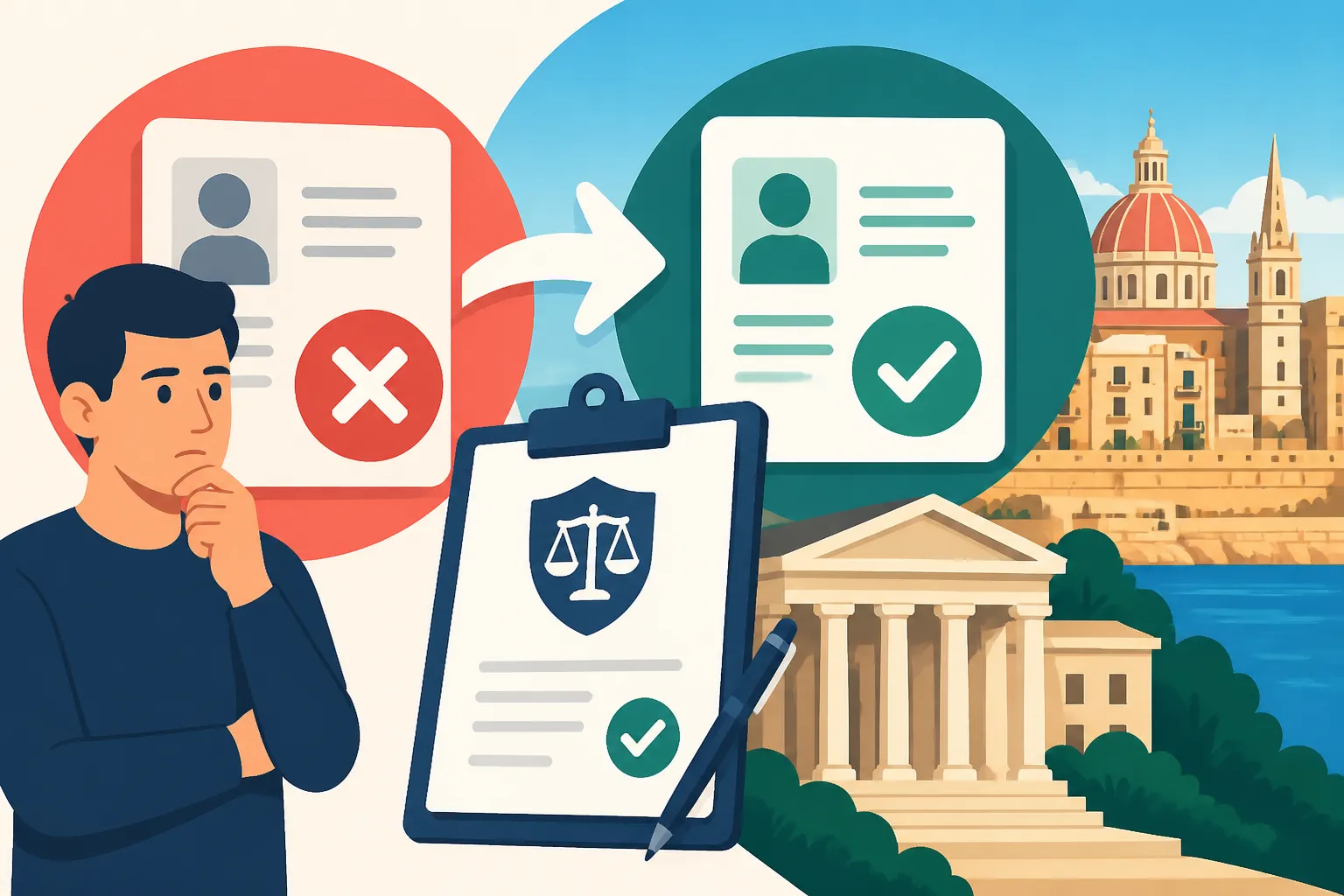
How Do I Appeal a Residence Permit Refusal in Malta?
Getting that official letter from Identità saying your residence permit application has been refused can feel like a punch to the gut. You’ve probably spent weeks, maybe months, meticulously gathering documents, filling out forms, and dreaming about your new life here in Malta, only to have that dream feel suddenly snatched away. It’s incredibly frustrating, disheartening, and frankly, a bit scary. But please, take a deep breath. A refusal isn't necessarily the end of your journey. This guide is here to walk you through exactly what steps you can take to appeal a residence permit refusal in Malta, offering practical advice and setting realistic expectations.
Understanding Why Your Maltese Residence Permit Was Refused
Before you can even think about appealing, you absolutely need to understand why your application was denied. Don't gloss over the refusal letter – it's your most important piece of evidence and your roadmap for what comes next.
Common Reasons for Refusal
Identità, Malta's agency responsible for residence permits, deals with thousands of applications annually, and refusals, while tough, do happen. Often, it boils down to very specific, rectifiable issues.
One of the most frequent reasons we hear about is incomplete documentation. It sounds simple, right? But sometimes, it's a small detail. Perhaps a bank statement wasn't recent enough, a birth certificate wasn't officially translated or apostilled, or you missed a specific annex form that was required for your particular permit type. For example, if you applied for a Single Permit and your employment contract didn't clearly state the duration or salary, or if your employer missed a crucial document like a Jobsplus market test result, that could be grounds for refusal. Sometimes, people forget to ensure their private health insurance policy explicitly covers all of Malta and the duration of their intended stay, which is a common pitfall.
Another common issue is insufficient financial means. Malta needs to be sure you won't become a burden on the state. For many permit types, particularly those for self-sufficiency, students, or even family reunification, you must demonstrate a stable and adequate income or savings. The exact thresholds vary, but if your bank statements don't clearly show consistent funds or fall below the minimum requirements, your application could be rejected. It's not just about having money; it's about proving you have enough for long enough.
Then there's the issue of incorrect permit type or eligibility. Sometimes, applicants genuinely believe they qualify for a certain permit, but their circumstances don't quite fit the criteria. For instance, if you apply for a Nomad Residence Permit but can't demonstrate a connection to a foreign employer or a sufficient income from remote work, you’d face a refusal. Or perhaps your qualifications weren't deemed equivalent for a highly skilled worker permit. It’s vital to ensure you are applying for the right residence permits in Malta: Types, Requirements, and How to Apply from the outset.
And let's not forget administrative errors, which can happen on either side. Sometimes, Identità might genuinely miss a document you submitted, or there might be an internal processing error. On your side, a simple typo on a form, an expired passport, or a poorly scanned document could lead to complications. It’s frustrating when you know you sent everything, but sometimes the processing system has its quirks. This is also why understanding the common pitfalls of How Do I Avoid Common Mistakes on an Identità Application? is so important from the start.
The Refusal Letter: Your First Clue
Your official refusal letter from Identità is not just a piece of bad news; it's the most critical document you'll receive. This letter isn't just a generic "no"; it should explicitly state the reasons for the refusal, referencing specific points in your application or legal criteria that weren't met.
Do not panic, read it carefully. Is it vague? Or is it very specific? For example, it might say "insufficient evidence of stable income" or "missing Police Conduct Certificate." It might even refer to a specific article of the Immigrant Act or a particular policy guideline. Knowing this specific reason is paramount because it tells you exactly what you need to address in your appeal.
If the reason cited is something you believe is incorrect or based on a misunderstanding (e.g., they claim a document is missing, but you know you submitted it), you have a strong basis for appeal. If it highlights a genuine gap (e.g., your health insurance policy didn't meet the minimum requirements, or your funds were indeed lower than stipulated), then your appeal needs to focus on providing that missing information or proving that your situation does meet the requirements despite their initial assessment. This letter forms the foundation of your entire appeal strategy. Remember that if you still have valid private insurance, perhaps from a global provider like Cigna Global, ensure it fully meets Maltese requirements for any re-submission or appeal.
The Appeals Process: Your Rights and Next Steps
Once you’ve deciphered that refusal letter, it’s time to shift your mindset from disappointment to action. Malta's legal framework provides a clear path for appealing such decisions, but it demands swift, organised action.
Time Limits Are Everything: Act Fast!
This cannot be stressed enough: time is absolutely of the essence. Maltese immigration law imposes strict deadlines for filing an appeal against a residence permit refusal. Typically, you have three working days from the date you receive the refusal letter to lodge your appeal. Yes, you read that right – three working days. This is an incredibly tight window, which often catches newcomers off guard, especially if the letter arrives just before a weekend or public holiday. This short timeframe means you can't afford to dither or wait for further clarification; you need to understand How Long Do I Have to File an Appeal in Malta? and act almost immediately.
This tight deadline necessitates quick thinking and, if possible, immediate consultation with legal professionals. The clock starts ticking the moment the letter is deemed to be delivered, which might be the date of the postmark or the date you signed for it. Missing this deadline, even by an hour, usually means your right to appeal is forfeited, and you'd have to consider a fresh application, which can be a much longer and more costly process.
Who Hears Your Appeal? The Immigration Appeals Board
In Malta, appeals against decisions made by Identità (or the Principal Immigration Officer) regarding residence permits are heard by the Immigration Appeals Board. This is an independent body, separate from Identità, designed to review administrative decisions. It acts as a check and balance, ensuring that decisions are made fairly and in accordance with the law.
The Board is typically composed of legal professionals who are well-versed in immigration law. When you submit your appeal, you are essentially asking this Board to review your original application, Identità's refusal decision, and any new evidence or arguments you present. They will assess whether Identità correctly applied the law and policy guidelines to your case. It’s not just a rubber-stamping exercise; they genuinely scrutinise the decision. This means your appeal needs to be well-structured, legally sound, and present a compelling case that Identità’s refusal was either incorrect, misinformed, or based on incomplete information.
Preparing Your Appeal: Building Your Case
Preparing your appeal is akin to building a legal case. It requires meticulous attention to detail and a clear, logical presentation of facts and arguments.
Firstly, revisit your initial application. What documents did you submit? What exactly did the refusal letter state? Compare the two. If the refusal cites a missing document, can you prove you submitted it? Or, if it was indeed missing, can you now provide it and explain why it wasn't there initially?
Gathering new evidence is often crucial. If the refusal was due to insufficient funds, perhaps you can now provide an updated bank statement, a letter from a sponsor, or a new job offer that clearly demonstrates your financial stability. If it was about health insurance, secure a comprehensive policy that meets all Maltese requirements, even if it means upgrading to something like Cigna Global. If a qualification wasn't recognised, perhaps you can provide further certified translations or an MQRIC (Malta Qualification Recognition Information Centre) certificate.
Your appeal document itself needs to be clear, concise, and persuasive. It’s not just about complaining; it’s about presenting a reasoned argument. Start by explicitly stating that you are appealing the decision and reference the date of the refusal letter and your application number. Then, systematically address each reason for refusal mentioned in Identità’s letter. For each point, explain why you believe the refusal was incorrect, or provide the additional information and evidence that now rectifies the issue.
Always remember to maintain a respectful, professional tone. While it’s incredibly frustrating, an appeal is a legal process, not a venting session. Emotional language won't help your case; clear, factual arguments and solid evidence will. This is where seeking professional guidance, perhaps from someone who offers support with the broader process of Visas and Immigration to Malta: The Complete Guide for Foreigners (2026), can be invaluable.
What to Include in Your Appeal and How to Present It
The appeal isn't just about protesting; it's about providing a robust counter-argument to Identità's decision, backed by solid evidence. Think of it as your final opportunity to present your full, compelling case to stay in Malta.
The Appeal Document: Structure and Content
Your appeal should ideally be a formally written submission addressed to the Immigration Appeals Board. While there might not be a specific form, structuring it like a legal brief is a good idea.
Here’s a breakdown of what to include:
- Your Personal Details: Full name, passport number, application reference number, and contact information.
- Date of Refusal: Clearly state the date you received the refusal letter from Identità.
- Statement of Intent: A clear and unambiguous statement that you are appealing the decision to refuse your residence permit.
- Grounds for Appeal: This is the core of your submission. Systematically address each reason for refusal stated in Identità’s letter.
- For each point, quote the reason given by Identità.
- Then, provide your counter-argument. This could involve:
- Explaining how the original submission did meet the criteria (e.g., "The bank statements provided on [date] clearly showed sufficient funds, as per Appendix X of the guidelines…").
- Providing new or clarified evidence that rectifies the issue (e.g., "While the original insurance policy may have been ambiguous, I have now secured a new policy with [insurer name] which explicitly covers all requirements outlined in the legislation. Please see attached Policy Document A.").
- Explaining any mitigating circumstances (e.g., "The delay in providing the certified translation was due to unforeseen circumstances beyond my control, which I have now rectified. See attached Document B.").
- Always refer to any supporting documents you are attaching.
- Relief Sought: Clearly state what you want the Board to do – overturn the refusal and grant your residence permit.
- Signature and Date: Your signature and the date of submission.
Remember, clarity is king. The Board members will be reviewing many cases, so make it easy for them to understand your situation and your arguments. Avoid jargon where possible, and if you use legal terms, ensure they are accurate.
Supporting Documentation: Beyond the Original Application
This is where you can make or break your appeal. Your supporting documentation should directly address the reasons for refusal and fill any gaps identified by Identità.
- Original Application & Refusal Letter: Always include copies of these.
- New/Updated Financial Proof: If finances were an issue, provide updated bank statements, proof of income, salary slips, or a letter from your employer.
- Comprehensive Health Insurance: If health cover was deemed inadequate, provide a new policy that explicitly meets all Maltese requirements. Companies like Cigna Global are often chosen by expats precisely because their policies are designed to be comprehensive and globally accepted. Ensure it clearly states coverage in Malta and for the full period of your permit.
- Missing Certificates/Translations: If a birth certificate, marriage certificate, or academic qualification was missing or improperly translated, provide the correct, officially apostilled, and translated versions. Remember that documents often need to be translated into English or Maltese by a recognised translator.
- Police Conduct Certificates: If your certificate was expired or deemed insufficient, get a new, valid one. Often, you might need both a Maltese one and one from your home country, or any country you've lived in for a significant period.
- Lease Agreement Attestation: If your permit required a specific lease attestation by the Housing Authority, ensure you provide the correct, attested copy. This is particularly important for non-EU nationals, as it's a key requirement for your permit, often linked to the issue of "What Documents Do I Need for a Maltese Residence Permit?".
- Any Other Relevant Correspondence: Include any emails, letters, or official communications that support your case.
Organise all your documents neatly, perhaps in a binder with tabs, and create an index or a list of contents. This shows professionalism and makes the Board's job easier, leaving a positive impression.
Potential Outcomes and What They Mean
Once you've submitted your appeal, the waiting game begins again. This period can feel even more stressful than the initial application wait. The Immigration Appeals Board will schedule a hearing, which you or your legal representative may be required to attend.
Possible Outcomes:
- Appeal Upheld (Successful): This is the best-case scenario! The Board agrees with your arguments and overturns Identità's decision. They will instruct Identità to process your permit. This means you’ll likely proceed to biometrics if you haven't already, and then receive your eResidence card. You've fought for your right to be here, and you've won.
- Appeal Rejected (Unsuccessful): The Board finds that Identità's original refusal was justified, and your appeal is dismissed. This is tough news, but it's not always the absolute end. At this point, you'll need to seriously consider whether to reapply for your permit entirely or if your specific circumstances allow for further legal challenge (though this usually means a more complex judicial review in higher courts, which is expensive and rare).
It's important to be prepared for either outcome. Understanding "How Long Does Identità Take to Decide a Residence Permit?" can give you a rough idea of the original processing times, but appeals can sometimes add further delays, depending on the Board's schedule.
| Appeal Outcome | Implication for Applicant | Next Steps/Considerations |
|---|---|---|
| Appeal Upheld | Applicant granted residence permit. | Proceed with biometrics and eResidence card collection. |
| Appeal Rejected | Identità's refusal stands. | Consult lawyer about further legal options or consider a new permit application. |
It's a process that requires patience and resilience, but many successful stories begin with an initial refusal, so don't lose hope!
Seeking Professional Help and Alternative Options
The appeals process can be a minefield of legal jargon and tight deadlines, especially for someone navigating it for the first time. Knowing when to call in the professionals, or when to rethink your strategy, is key.
When to Consult an Immigration Lawyer
Frankly, if your residence permit application has been refused, particularly if the reasons are complex or unclear, my advice as an expat who’s seen it all is: get a lawyer. Immediately. The three-day appeal window is so incredibly tight that trying to navigate the legalities, draft a compelling argument, and gather new evidence on your own is an immense challenge. You simply don't have the luxury of time for mistakes.
An immigration lawyer who is familiar with Maltese law and the workings of Identità and the Immigration Appeals Board can provide invaluable assistance. They can:
- Interpret the Refusal Letter: They can properly understand the legal implications of the reasons cited for refusal, helping you pinpoint the strongest arguments for your appeal.
- Advise on the Strength of Your Case: A lawyer can realistically assess your chances of a successful appeal based on the evidence you have and the specifics of Maltese immigration law.
- Draft the Appeal Submission: They can prepare a professionally written appeal that addresses all legal points effectively, increasing your chances of success.
- Gather Supporting Evidence: They can guide you on what specific new evidence is required and how to obtain it quickly.
- Represent You at the Board Hearing: If a hearing is required, having legal representation ensures your case is presented expertly.
- Advise on Next Steps: If the appeal is unsuccessful, they can explain any further legal avenues, such as judicial review, or advise on the best way forward for a fresh application.
Yes, legal advice costs money, but consider it an investment in your future in Malta. Trying to save a few hundred euros by going it alone might end up costing you much more in lost opportunities, stress, and potentially having to leave the country. For more insights on this, you might find "Can I Get Legal Help with a Maltese Immigration Appeal?" a useful read.
Reapplying vs. Appealing: Weighing Your Options
This is a critical strategic decision that you might need to make, sometimes even before or instead of an appeal.
When to Appeal:
- Clear Error in Refusal: If Identità clearly misunderstood your application, missed a document you submitted, or made an administrative error.
- Minor Fixable Issues: If the refusal is due to a small, easily rectifiable omission, such as an expired Police Conduct Certificate which you can immediately replace, or insufficient clarity on your health insurance (which you can quickly upgrade, perhaps with a provider like Cigna Global).
- Strong, New Evidence: If you have compelling new evidence that directly counters the reasons for refusal and can present it within the tight timeframe.
- No Other Options: If the specific permit type is crucial for your stay and a fresh application would mean significant delays or a loss of eligibility.
When to Reapply (or consider it alongside an appeal):
- Fundamental Ineligibility: If the refusal indicates a fundamental lack of eligibility for the permit type you applied for (e.g., your income is genuinely too low, or your qualifications don't meet the standard). An appeal here might be futile.
- Complex Issues Requiring Time: If the reasons for refusal are deep-seated and require significant time to rectify (e.g., you need to obtain a new qualification, find a completely different job, or secure a substantial amount of capital). The three-day appeal window won't allow you to make these fundamental changes.
- Changes in Circumstances: If your circumstances have significantly changed since your original application in a way that would make you eligible for a different permit (e.g., you found a new employer, or gained new qualifications).
- "Can I Reapply After a Refusal in Malta?": Yes, you generally can, but it will be a completely new application process, starting from scratch. This can mean new fees, new waiting times, and a new round of document gathering. It's often the chosen path if the appeal deadline is missed or if the reasons for refusal are too substantial to fix within an appeal.
It's also worth noting that while your appeal is pending, your legal status might be in limbo. "Can I Stay in Malta While My Residence Permit Is Being Processed?" is a common concern. Generally, if your permit has expired while an appeal is pending, your right to stay might be questionable, and seeking legal clarity here is paramount to avoid overstaying. The whole process of moving country, settling in, and navigating bureaucracy is a huge undertaking, so don't be afraid to lean on professional help. Resources like Sirelo, a relocation platform, often highlight how crucial good immigration advice is to prevent such stressful situations.
Making the right choice between appealing and reapplying requires a clear understanding of your individual situation, the precise reasons for refusal, and the advice of legal professionals. Don't rush into a decision, but don't delay in seeking expert opinions.
Disclaimer
Please note that this guide provides general information and advice based on typical experiences and publicly available information regarding Maltese immigration procedures. Immigration laws and policies can change rapidly. While every effort has been made to ensure accuracy, this content does not constitute legal advice. For personalised guidance on your specific situation, it is highly recommended to consult with a qualified Maltese immigration lawyer or legal professional. Relying solely on general information without professional consultation may not be sufficient for your individual case.