What Documents Do I Need for a Maltese Residence Permit?
Oh, the infamous stack of documents! Believe me, as someone who’s navigated Malta’s bureaucratic waters more times than I care to count, the sheer volume of paperwork required for a Maltese residence permit can feel like a mountain to climb. It’s a rite of passage for every expat, filled with moments of head-scratching frustration. This guide is here to demystify that process, walking you through every crucial document you’ll need to secure your slice of Maltese life, so you can avoid the common pitfalls and get your permit approved without too many extra headaches.
The Initial Shock: Why So Many Documents?
When you first start looking into applying for a residence permit in Malta, the list of required documents can feel overwhelming, even a bit intrusive. You might wonder, "Do they really need all of this?" And the short answer is, yes, they most certainly do. Malta, like any sovereign nation, has a responsibility to control who lives within its borders, and the process is designed to ensure compliance with national and EU regulations, security protocols, and to confirm your genuine eligibility for the permit you're seeking.
Understanding Identità's Requirements
Identità, previously known as Identity Malta, is the agency responsible for issuing residence permits and eResidence cards. Their requirements are stringent because they need to verify every aspect of your application. They’re looking to confirm your identity, your legal status, your financial stability, your purpose for being here, and your accommodation arrangements. This means you’ll be asked for documents that fall into several broad categories: personal identification, proof of where you'll live, evidence of how you'll support yourself, and specific documents related to your reason for wanting to reside in Malta. It’s not about making life difficult for you; it's about adhering to a thorough verification process. From personal experience, it's easy to feel like you're constantly jumping through hoops, but understanding the why behind their requests can help manage expectations.
The Importance of Accuracy and Completeness
Here’s where many newcomers stumble, myself included, especially when I first applied. Even a tiny oversight or a minor discrepancy can lead to your application being returned, causing significant delays and additional stress. Imagine you’ve submitted your entire packet, waited weeks, only to get a dreaded email asking for a corrected date on a form or a missing stamp. It feels like starting all over again.
This is why meticulous attention to detail is paramount. Every single document must be accurate, up-to-date, and presented exactly as requested. This often means ensuring that documents like birth certificates or marriage certificates are not just copies, but certified true copies, and if they’re not in English or Maltese, they must come with official translations and often an apostille from your home country. An apostille is an international certification that verifies the authenticity of a signature on a document, and it's a common requirement for official documents coming from abroad. Skipping this step, or submitting a non-certified translation, will almost certainly lead to a request for further information (RFI), pushing your approval date further into the future. It truly pays to double-check everything before submitting.
Core Document Categories for Most Residence Permits
No matter what type of residence permit you’re applying for – whether it’s a Single Permit for work, a student permit, a family reunification permit, or a Nomad Residence Permit – there’s a foundational set of documents that Identità will always want to see. Think of these as the absolute essentials that prove who you are and establish your basic eligibility.
Personal Identification and Status
This is about proving you are who you say you are, and that you're legally able to reside in Malta.
- Passport: This is your primary identification. Ensure it has at least six months of validity beyond your intended stay in Malta. You’ll need copies of all pages, not just the photo page, including any pages with stamps or previous visas. Identità often specifically requests all pages, even blank ones, to ensure no travel history is missed.
- Birth Certificate: For many applications, particularly family reunification or long-term residence, your birth certificate will be required. If it's not in English, you'll need a certified translation. Depending on your country of origin, an apostille might also be necessary to validate its authenticity.
- Marriage Certificate / Civil Partnership Certificate: If you're applying with a spouse or partner, or for family reunification, this document is critical. Again, ensure it’s translated and apostilled if applicable.
- Previous Residence Permits/Visas: If you’ve previously held any residence permits or visas for Malta or another EU country, you'll need to provide copies. This helps Identità understand your immigration history.
- Passport-Sized Photos: You’ll need a few recent passport-sized photos that meet specific requirements (usually standard biometric photo size, neutral background, no glasses unless medically necessary). It sounds simple, but getting them right saves time.
Proof of Accommodation in Malta
Identità needs to know you have a legitimate place to live in Malta. This is often a significant hurdle for new arrivals, especially if they haven't secured long-term housing yet.
- Lease Agreement (Rental Contract): This is the most common proof. The agreement must be valid for at least six months, but often longer, especially for non-EU citizens. Critically, your lease agreement must be registered with the Housing Authority in Malta. If it’s not registered, Identità won't accept it, and you'll be sent back to your landlord. Make sure you get proof of this registration from your landlord.
- Lease Agreement Attestation: For non-EU citizens applying for a Single Permit or other long-stay permits, a specific "Lease Agreement Attestation" form might be required, signed by both you and your landlord, confirming the details of your registered lease. This is a unique Maltese requirement that often catches people off guard. For more details on this, you can check out our guide on The Lease Agreement Attestation Requirement for Non-EU Tenants in Malta.
- Property Purchase Agreement: If you’ve bought a property in Malta, you’ll need to provide a copy of the final deed of sale.
- Declaration of Host: If you're staying with friends or family and not directly renting, your host will need to provide a signed declaration confirming your stay, along with proof of their own residence and utility bills for the address.
Evidence of Financial Self-Sufficiency
Malta wants to ensure you won't become a burden on the state. So, proving you can support yourself financially is non-negotiable. The exact amount required varies by permit type and whether you're supporting dependents.
- Bank Statements: You'll typically need recent bank statements (usually for the last 3-6 months) from your Maltese bank account. If you're a new arrival and haven't opened a Maltese account yet, statements from your home country bank might be accepted initially, but a local account will be expected once you're here. These statements need to show sufficient funds to cover your living expenses. For single individuals, this is generally calculated to be above the national minimum wage or a significant buffer. For families, the threshold is considerably higher.
- Employment Contract/Job Offer: If you’re coming to Malta to work, a signed employment contract or a formal job offer letter from a Maltese employer is essential. It needs to detail your position, salary, working hours, and the duration of employment. This will be the cornerstone of your Single Permit application.
- Payslips: If you're already employed in Malta and renewing your permit, recent payslips (e.g., last 3 months) will be required to prove ongoing employment and income.
- Proof of Pension/Investments: For retirees or those applying under financially independent routes, documentation proving regular pension income, investment portfolios, or substantial savings will be needed.
- Business Plan/Registration: For self-employed individuals or those starting a business, you'll need your business registration documents, a detailed business plan, and proof of funds to operate your business and support yourself. Our article on Registering as Self-Employed with Jobsplus and the CFR in Malta might be a useful resource here.
Purpose of Stay Specific Documentation
Beyond the core documents, each permit type has its own set of specific requirements.
For Work/Single Permit Applicants
If you're coming to work, this is where the Single Permit application really comes into play.
- Detailed Employment Contract: This isn't just a basic offer letter. It needs to be comprehensive, approved by Jobsplus (Malta’s public employment service), and clearly outline your role, responsibilities, salary, and terms of employment.
- Employer's Declaration/Endorsement: Your employer will often need to provide a letter confirming your employment and their intention to hire you.
- Academic/Professional Qualifications: You’ll need copies of your degrees, diplomas, and any professional certifications. Often, these need to be recognised by the Malta Qualifications Recognition Information Centre (MQRIC). If your qualifications are from outside Malta, getting them recognised can be a process in itself.
- Curriculum Vitae (CV): A detailed CV outlining your work history and skills.
- Police Conduct Certificate: This is a big one. You’ll need a Police Conduct Certificate from your home country (and any country you’ve resided in for over six months in the past few years) and, if you’ve already been in Malta for a period, a Maltese Police Conduct Certificate too. These documents attest to your clean criminal record.
- Skills Pass: As of 2026, many foreign workers now require a Skills Pass before their Single Permit application can even be considered. This new pre-employment requirement aims to ensure basic skills and integration.
For Study Permit Applicants
Malta is a popular destination for international students, but you'll need to prove your academic intent and financial stability.
- Acceptance Letter: An official letter of acceptance from an accredited educational institution in Malta (e.g., University of Malta, MCAST, or a private language school).
- Proof of Tuition Fee Payment: Evidence that you have paid or can pay your tuition fees.
- Proof of Sufficient Funds for Living Expenses: Bank statements demonstrating you have enough money to cover your accommodation, food, and other living costs throughout your studies.
- Travel and Health Insurance: A comprehensive insurance policy covering medical expenses and repatriation for the duration of your stay.
For Family Reunification Applicants
Bringing your loved ones to Malta involves proving your relationship and your ability to support them.
- Marriage/Birth Certificates: Authenticated marriage certificates for spouses and birth certificates for children are paramount. These typically require certified translations and apostilles.
- Proof of Relationship: Beyond certificates, sometimes additional evidence like family photos, joint bank accounts, or correspondence might be requested to prove the genuine nature of your relationship.
- Sponsor's Financial Stability: The applicant already residing in Malta (the sponsor) must demonstrate a higher level of financial means to support all family members without relying on social assistance.
- Sponsor's Accommodation Proof: The sponsor must show that they have suitable accommodation for the entire family.
- Health Insurance: Each family member typically needs their own health insurance policy.
For Nomad Residence Permit Applicants
Malta’s Nomad Residence Permit is for those who can work remotely for non-Maltese employers or as freelancers with international clients.
- Employment Contract / Client Contracts: Proof of employment with a company registered outside Malta, or contracts with clients if you're self-employed/freelancing, demonstrating your ability to work remotely.
- Minimum Income Proof: You’ll need to prove a minimum gross monthly income (currently €2,700 for a single applicant, with additional requirements for dependents). This can be shown through recent bank statements and pay slips/invoices.
- Private Health Insurance: Comprehensive private health insurance covering Malta for the entire duration of your permit.
- Proof of Accommodation: A registered lease agreement or property ownership documents for your Maltese residence.
Health Insurance and Other Mandatory Documents
Beyond proving who you are and why you're here, there are other crucial documents that are mandatory for nearly all non-EU residence permit applications. Ignoring these will guarantee a rejection or, at best, a significant delay.
The Health Insurance Conundrum
For most non-EU permit holders, health insurance isn’t just a good idea; it’s an absolute requirement. You cannot get your residence permit approved without it. The Maltese public healthcare system, while excellent, is primarily funded by social security contributions. If you're a third-country national who isn't yet paying into the system or whose permit type doesn't automatically grant public health entitlement, you need private cover.
- Public vs. Private: If you're an EU citizen moving to Malta, you can often transfer your healthcare rights using an S1 form or use your European Health Insurance Card (EHIC) for initial care, but you’ll eventually need to register for local entitlements. For everyone else, comprehensive private health insurance is usually the way to go. You'll need to demonstrate that your policy covers Malta, has sufficient coverage for medical treatment and hospitalisation, and includes repatriation in case of serious illness or death.
- Minimum Coverage Requirements: The exact minimum coverage amount can vary, but generally, policies should cover at least €30,000 for medical emergencies and hospitalisation.
- Choosing a Provider: Many international insurance providers offer suitable plans. Companies like Cigna Global are a popular choice among expats in Malta because they understand the needs of international residents and offer plans specifically designed for global mobility, making it easier to meet the permit requirements. When choosing, look for clarity on outpatient care, specialist access, and any deductibles or exclusions. Getting your health cover sorted early is one less thing to worry about.
Maltese ID Card Number and Provisional Documents
This is a classic "chicken and egg" situation that every expat in Malta grapples with. You need an ID card number for almost everything – setting up utilities, registering with a health centre, opening a bank account – but you can’t get your eResidence card (which contains your ID number) until your residence permit application is approved. It's a frustrating loop!
- Provisional Documents: While waiting for your eResidence card, Identità sometimes issues a provisional document or a letter confirming your application is in process. This isn't an ID card, but it can sometimes serve as interim proof that you're legally residing in Malta. However, its acceptance varies, and many institutions still insist on the eResidence card itself. Our guide on Getting Your Maltese ID Card Number: The Key to Accessing Healthcare delves deeper into this common expat challenge.
- Police Conduct Certificate (Maltese): If you've been living in Malta for a period before applying for a new permit or renewal, you will likely need a Maltese Police Conduct Certificate. You can apply for this at the Police General Headquarters in Floriana. It’s usually issued quite quickly compared to international ones.
- Passport Photos: As mentioned, precise passport photos are always needed. Make sure they are recent and meet the official specifications to avoid delays.
Practical Tips for a Smoother Application
After gathering all those documents, the way you present and manage them can make a huge difference to the speed and success of your application. Think of it as preparing for an exam – organisation is key.
Organising Your Paperwork
Trust me on this one: the better organised you are, the less stressed you'll be. Learn from our mistakes!
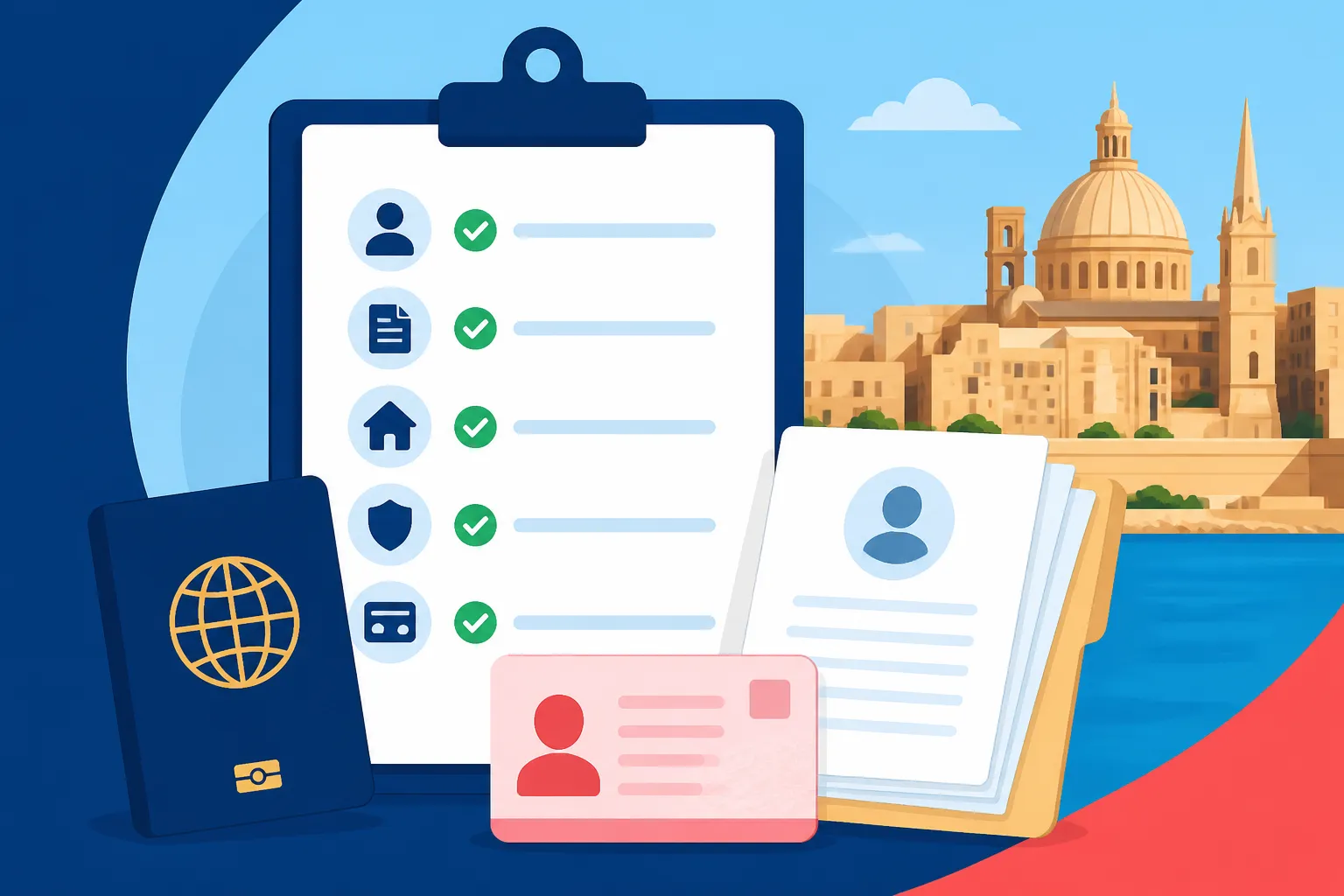
- Create a Master Checklist: Before you even think about submitting, create a detailed checklist of every single document required for your specific permit type. Cross-reference it with the official Identità website and any emails you've received.
- Digital and Physical Copies: Scan everything and keep digital copies on a cloud drive (Google Drive, Dropbox) and a separate USB stick. Then, for your physical submission, organise all the documents into clearly labelled folders or binders. Use dividers for each section (e.g., "Passport & ID," "Accommodation," "Financial Proof," "Health Insurance").
- Originals vs. Certified Copies: Always clarify whether Identità needs original documents or certified copies. Generally, they’ll want to see originals for verification but will keep copies. For crucial documents like birth certificates, always submit certified true copies, not the originals, unless specifically instructed otherwise.
- Leverage Support: If the thought of all this paperwork makes your head spin, remember there are services that can help. Relocation assistance providers like Sirelo can be invaluable. They specialise in helping people move and settle in new countries, and part of that often involves navigating the labyrinthine document requirements. They can help you organise, check, and even submit your paperwork, taking a massive weight off your shoulders.
- What to Check Before Signing a Rental Contract in Malta is a relevant article you might find helpful for ensuring your lease documentation is solid.
Dealing with Translations and Apostilles
These two elements are frequent stumbling blocks for non-EU applicants. Don’t underestimate their importance.
- Official Requirements: Any document not in English or Maltese must be accompanied by a certified translation. This means a translation done by a sworn translator recognised by the Maltese authorities, or from an official embassy. A quick Google Translate job simply won't cut it.
- Apostille Requirements: For documents issued in countries that are part of the Hague Apostille Convention, an apostille is needed. This is a stamp or certificate from an authority in your home country (often the Ministry of Foreign Affairs or a similar department) that authenticates the signature on the document. Without it, Maltese authorities cannot verify if your foreign document is genuine. If your country is not part of the Hague Convention, you might need a more complex legalisation process through your embassy. Always check specific country requirements.
- Cost and Time Implications: Both certified translations and apostilles cost money and take time. Factor these into your budget and timeline. Don't leave them until the last minute!
What to Do While Waiting (and the dreaded RFI)
Once your application is submitted, the waiting game begins. This can be the most nerve-wracking part, especially with Identità's processing times which can sometimes feel like an eternity.
- Managing Expectations: Identità provides indicative processing times, but these are often just guidelines. Be prepared for delays, especially during peak application periods. Patience is truly a virtue here.
- Requests for Further Information (RFI): This is when Identità sends you an email or letter asking for additional documents or clarifications. Don’t panic, but don’t delay. Respond as quickly and accurately as possible. The longer you take, or if your response is incomplete, the more your application will be delayed. Always double-check what they're asking for and ensure your submission is exactly what they requested.
- Staying Connected: While you can’t constantly call or email Identità to "check up" on your application (it often just adds to their workload), some applicants might get a reference number to track their progress online. Keep all communication records.
- You might find our guide on Understanding Identità Processing Times and Delays helpful in managing your expectations.
| Document Category | Specific Documents (Common Examples) | Purpose | Important Notes |
|---|---|---|---|
| Personal Identification | Passport | Proof of identity and nationality | Minimum 6 months validity beyond stay. Copies of all pages (stamped & blank). |
| Birth Certificate | Verification of personal details | Certified translation and apostille (if not English/Maltese). | |
| Marriage/Civil Partnership Certificate (if applicable) | Proof of relationship for family applications | Certified translation and apostille (if not English/Maltese). | |
| Passport-sized photos | For eResidence card | Recent, biometric standards. | |
| Accommodation | Registered Lease Agreement | Proof of address in Malta | Must be registered with Housing Authority. Valid for at least 6 months. |
| Lease Agreement Attestation (Non-EU) | Specific form for non-EU applicants | Signed by landlord and tenant, attesting to registered lease. | |
| Property Purchase Deed (if applicable) | Proof of home ownership | Copy of final deed. | |
| Financial Proof | Bank Statements | Evidence of sufficient funds to live in Malta | Recent (3-6 months), showing minimum required funds. From Maltese account preferred. |
| Employment Contract / Job Offer | Proof of stable income (for work permits) | Detailed, Jobsplus approved, showing salary and terms. | |
| Payslips (if employed) | Proof of ongoing income | Recent (3 months). | |
| Pension Statements / Investment Proof | Proof of income for retirees/financially independent | Official statements. | |
| Purpose-Specific Documents | Academic Qualifications / CV | For work or study permits | MQRIC recognition may be required for qualifications. |
| Acceptance Letter from Institution | For study permits | Official letter from Maltese educational provider. | |
| Police Conduct Certificate | Proof of clear criminal record | From home country & any country resided in past 6 months (and Maltese if applicable). | |
| Health & Other | Private Health Insurance Policy | Mandatory for most non-EU permit holders | Covers Malta, minimum €30,000, repatriation clause. |
| S1 Form / EHIC (EU citizens) | For EU citizens to access public healthcare | Transfer of healthcare rights. |
Navigating the document requirements for a Maltese residence permit truly tests your patience and organisational skills. But by breaking it down, understanding why each piece of paper is needed, and carefully preparing your application, you can significantly smooth out the journey. Take it step by step, be thorough, and don't hesitate to seek advice if you're unsure. Before you know it, you'll have your eResidence card in hand, ready to truly settle into your new life on this beautiful island.
Disclaimer
Please note that the information provided in this guide is for general informational purposes only and does not constitute legal or immigration advice. While we strive to keep the content accurate and up-to-date, immigration laws and requirements in Malta can change frequently. We strongly recommend consulting the official Identità (Identity Malta Agency) website or seeking advice from a qualified immigration lawyer or consultant for the most current and personalised guidance regarding your specific situation.