Why Maltese Banks Ask for So Much Documentation
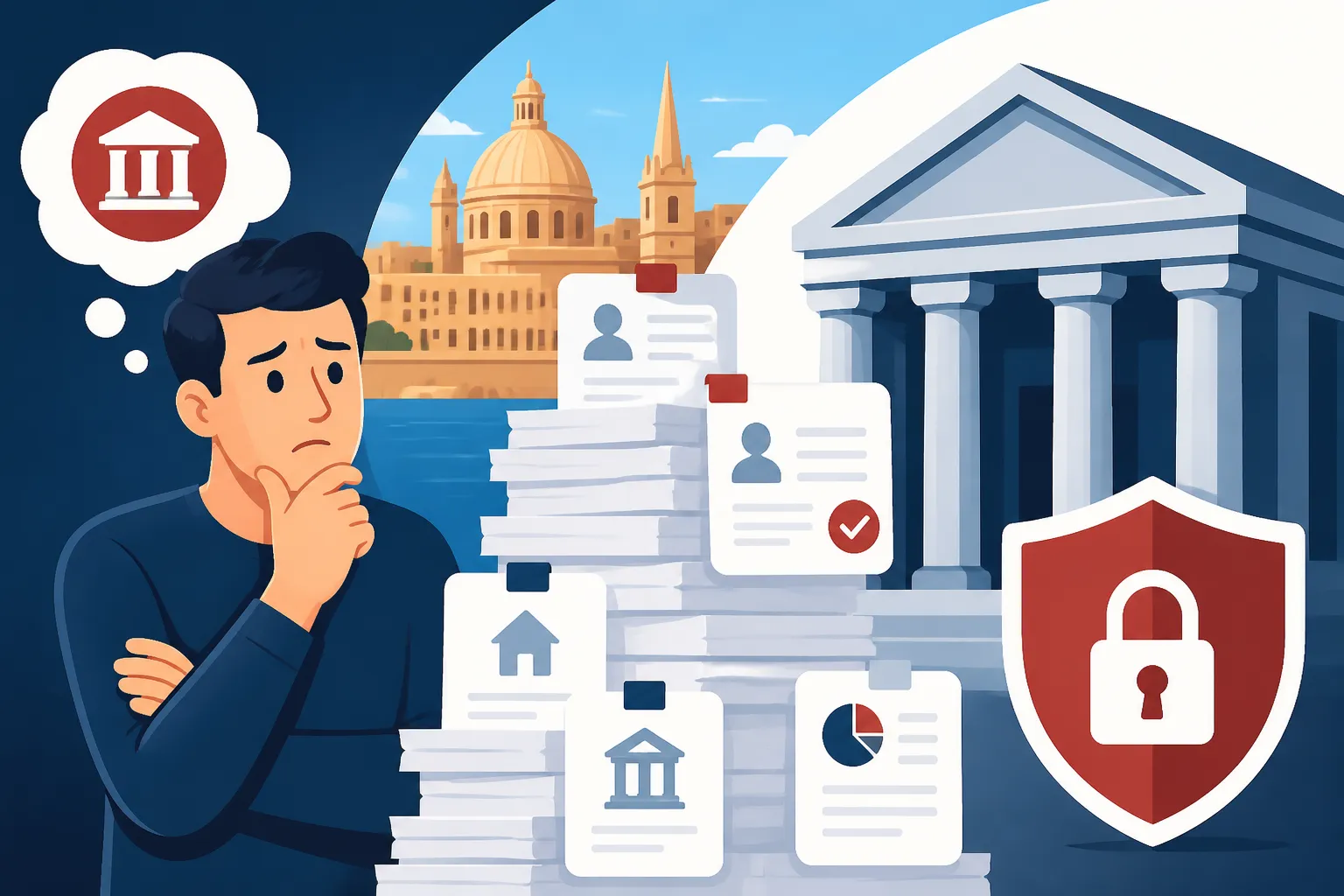
You’ve finally found a flat in Sliema, your job is waiting, but your bank application feels like a relentless interrogation. This guide explains why Maltese banks require mountain-high stacks of paperwork and provides a realistic roadmap to help you navigate the process without losing your mind, ensuring you can finally access your local salary and pay your bills.
The Regulatory Climate and the MFSA
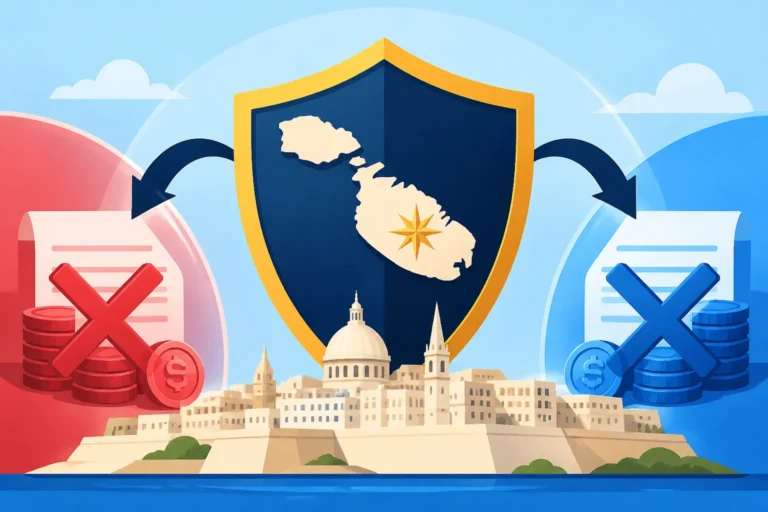
To understand why a simple bank account application feels like applying for a top-secret security clearance, you have to look at the gatekeepers of the Maltese financial system. The Malta Financial Services Authority (MFSA) and the Central Bank of Malta operate under intense scrutiny from European regulators. Malta is a small island with a massive financial services sector, a booming iGaming industry, and a high volume of foreign direct investment. This combination makes it a focal point for international monitors who are constantly looking for gaps in financial oversight.
When you walk into a branch of Bank of Valletta (BOV) or HSBC Malta, the clerk behind the desk isn't trying to be difficult on purpose. They are following a rigid set of protocols designed to protect the bank from massive fines. In the past decade, the global landscape for financial transparency has shifted dramatically. Regulators now use a "risk-based approach," which unfortunately means that as a foreign national, you are automatically placed in a higher risk category than a local who has had the same account since their First Holy Communion.
The MFSA mandates that banks must have a "complete" profile of every customer. This isn't just about knowing your name and where you live; it’s about understanding your entire financial history. If a bank fails to document a customer correctly and that customer is later found to be involved in anything untoward, the bank faces existential threats to its licensing. This is why they ask for your Opening a Bank Account in Malta: A Step-by-Step Guide documents with such tenacity. They aren't just ticking boxes; they are building a legal shield.
Anti-Money Laundering (AML) and Know Your Customer (KYC)
If you’ve spent any time in expat forums, you’ve seen the acronyms AML and KYC. These are the twin pillars of modern banking in Malta. Anti-Money Laundering (AML) refers to the laws and regulations that prevent the "cleaning" of illegally obtained funds. Know Your Customer (KYC) is the process the bank uses to verify your identity and ensure you are who you say you are. In Malta, these processes are applied with a level of detail that can feel invasive.
For a newcomer, KYC involves proving your identity through a valid passport and, crucially, your Maltese residence card. Many expats face a "Catch-22" situation: they need a bank account to get their residence card, but the bank wants the card to open the account. In these cases, you often have to rely on your Getting Your Maltese ID Card Number: The Key to Accessing Healthcare process to at least show you have applied. The bank will often accept the blue "Application Receipt" from Identità, but they will restrict your account until the actual plastic card is presented.
The AML side is even more rigorous. The bank needs to ensure that the money entering their system is "clean." This is why they ask for three to six months of bank statements from your previous country. They aren't just looking at your balance; they are looking for patterns. If they see large, unexplained cash deposits or transfers from high-risk jurisdictions, your application will likely hit a brick wall. They want to see a clear trail of income—usually a salary or a pension—that matches the life you claim to be leading in Malta.
Source of Wealth versus Source of Funds
This is where many foreigners get tripped up. There is a distinct difference between "Source of Funds" and "Source of Wealth," and a Maltese bank will likely ask for documentation on both. Source of Funds refers to the specific money you are using for a transaction or to open the account—for example, your first month's salary from a Maltese company. You prove this with an employment contract and an FS3 form.
Source of Wealth is much broader. It refers to how you accumulated your total net worth over your entire lifetime. If you are moving to Malta and planning to buy property, the bank will want to know where the deposit came from. Did you inherit it? Did you sell a business? Did you save it over twenty years of working in London or Berlin? You will be expected to provide the paperwork to prove it. If it was a house sale, they want the contract of sale. If it was an inheritance, they want the legal probate documents.
For many digital nomads or freelancers, this is a nightmare. If your wealth is spread across various investments or crypto-assets, Maltese banks often become very nervous. They prefer traditional, linear career paths that are easy to document. This is one reason why many expats choose to use Wise in the interim. Wise allows you to hold multiple currencies and receive your salary with a dedicated IBAN while you spend months gathering the "Source of Wealth" evidence required by a traditional local bank. It provides a level of flexibility that the local "Big Four" banks simply cannot match during the onboarding phase.
The Infamous Bank Reference Letter
In most of the world, the "bank reference letter" is a relic of the 1950s. In Malta, it remains a standard requirement for many non-EU citizens and even some EU nationals. The bank wants a letter from your previous bank (where you have held an account for at least two years) stating that you have been a "satisfactory" customer and that your account has been conducted in a proper manner.
The problem? Many modern mega-banks in the UK, US, or Northern Europe have automated systems and simply refuse to write custom reference letters. They might offer a standard "status enquiry" or a proof of account, but Maltese banks are often specific about the wording they want. If your previous bank won't play ball, you might find yourself in a bureaucratic stalemate.
Many people spend weeks calling their old bank's customer service line, trying to explain to a call center agent in another country why they need a physical letter with a wet-ink signature. My advice is always to ask for a "Letter of Good Standing." If the local bank in Malta rejects it, you may need to escalate to a manager or consider Which Maltese Banks Are Easiest for Foreigners to Join? as some smaller, more modern local banks are starting to accept digital statements as a substitute for the formal reference letter.
The Impact of the FATF Greylisting
To understand the current "strictness" of Maltese banks, we have to talk about the 2021 FATF (Financial Action Task Force) greylisting. For a year, Malta was placed on a list of jurisdictions under increased monitoring for money laundering risks. While Malta was successfully removed from the list in 2022 after making significant reforms, the "trauma" of that event still dictates banking policy today.
The greylisting was a wake-up call that nearly crippled the island's reputation as a financial hub. As a result, the banks went into overdrive. They didn't just implement the required changes; many "over-complied" to ensure they would never be the reason for another greylisting. This is why you are asked for your What Documents Do I Need to Open a Maltese Bank Account? twice, or why you might receive a letter out of the blue asking you to "update your records" or face account suspension.
This "de-risking" phase meant that many banks simply closed accounts for people living in "high-risk" countries or those working in sectors like crypto or certain types of international trade. For the average expat, this means the onboarding process is now a gauntlet. The bank would rather lose a potential customer than take a 1% risk that the customer might cause a regulatory headache. It feels personal, but it is purely a defensive institutional reflex.
Correspondent Banking and US Dollar Clearing
Another hidden reason for the mountain of paperwork is "correspondent banking." Most local Maltese banks are relatively small. To process international transfers, especially in US dollars, they need to partner with massive global banks (like JP Morgan or Citibank). These global giants have their own strict compliance rules.
If a US bank thinks that a Maltese bank has "loose" KYC procedures, they will cut off that Maltese bank's ability to process US dollars. This would be a disaster for Malta's economy. Therefore, the local banks have to prove to their "big brothers" in New York and London that they are being incredibly strict with their customers. Every payslip you provide and every How to Open a Maltese Bank Account as a Newcomer form you fill out is part of a paper trail that the Maltese bank can show to its international partners to prove they are a safe pair of hands.
Practical Documentation Comparison
When deciding where to park your money, it helps to see the difference in what will be asked of you. While traditional banks offer more local services (like home loans), digital platforms are often the only way to survive the first six months.
| Requirement | Traditional Maltese Bank (BOV/HSBC/APS) | Digital Challenger (Wise/Revolut) |
|---|---|---|
| Passport/ID | Original physical copy required in-branch | High-quality digital scan/photo |
| Proof of Address | Maltese utility bill or lease agreement | Digital statement or GPS verification |
| Reference Letter | Often mandatory for non-EU nationals | Never required |
| Source of Wealth | In-depth history required for high balances | Simplified automated checks |
| Timeline | 2 weeks to 3 months | 10 minutes to 48 hours |
| Maltese ID Card | Almost always required for full access | Often accepted after account opening |
Proving Your Residence: The Utility Bill Struggle
One of the most frustrating documents to provide is the proof of residence. In Malta, the "gold standard" for this is a utility bill (electricity or water) in your name. However, as an expat, you will likely be renting. Many landlords in Malta do not transfer the utility accounts to the tenant's name because it is a bureaucratic hassle involving ARMS (the billing entity).
If the bill is in the landlord's name, the bank might reject it as proof of your residence. You then have to provide a registered lease agreement. This leads to another hurdle: the lease must be registered with the Housing Authority. If your landlord is trying to avoid tax and hasn't registered the lease, you won't have the "HRA" certificate, and the bank will refuse your application. Always ensure your landlord follows the rules for How Do I Register as a Residential Utility User in Malta? or at least provides a registered contract, or you will find yourself effectively "homeless" in the eyes of the bank.
Professional Advice and Tax Compliance
If you are a high-net-worth individual or someone with complex income streams (like a US citizen living in Malta), the documentation requirements scale up exponentially. US citizens are a particular challenge for Maltese banks due to FATCA (Foreign Account Tax Compliance Act). This US law requires foreign banks to report the account details of American citizens to the IRS.
Because of the reporting burden, some smaller Maltese banks simply refuse to open accounts for Americans. If you are in this position, you need to be impeccably organized with your tax filings. Using a service like Taxes for Expats can be a lifesaver here. They specialize in the complex intersection of US tax law and foreign residency. Having a professional tax summary from Taxes for Expats can actually help convince a Maltese compliance officer that you are a low-risk, transparent client who takes their international obligations seriously.
Furthermore, you must understand how your tax status affects your banking. The bank will ask for your Tax Identification Number (TIN) from your home country and will eventually want your Maltese TIN. They are required to share this information under the Common Reporting Standard (CRS). You can read more about how this fits into the local system in our guide on Tax Residence vs Domicile in Malta: Why Both Matter.
Why the Bank Might Say No
It is a bitter pill to swallow, but sometimes, even with all the paperwork, the bank says "no." They don't always give a reason, often citing "internal policy." Common reasons for refusal include:
- Your employment contract is for a "probationary period" and the bank wants to see a permanent contract.
- Your industry (e.g., crypto, adult entertainment, or high-value art) is on their "excluded" list.
- You have a "Politically Exposed Person" (PEP) status because a distant relative once held a minor government post in another country.
- Your Cost of Living in Malta: Budgeting for the Real Numbers doesn't seem to match your declared income, leading to suspicion.
If you are refused, don't panic. You can try another bank, as each has a slightly different "appetite" for risk. Small banks like BNF or Lombard might be more willing to look at your case than the larger institutions.
Final Tips for the Documentation Gauntlet
To survive this process, you need to be a librarian of your own life. Keep a digital folder with every contract, every payslip, and every tax return from the last five years. When you go to a bank appointment, bring the originals and two sets of photocopies. Being over-prepared signals to the clerk that you are a serious, organized person, which can subtly influence their internal "risk assessment" of you.
Don't be afraid to use "bridge" solutions. Using Wise for your daily spending and salary receipt allows you to take your time with the local banks. It removes the desperation from the situation. You can wait three months for a BOV account to open if your rent is already being paid via a Wise transfer. Remember, the goal is to get your life in Malta started, and while the paperwork is a headache, it is a one-time hurdle that every single one of us has had to jump over.
Disclaimer
This guide is provided for informational purposes only and does not constitute legal, financial, or tax advice. Banking requirements in Malta are subject to frequent change based on local regulations and international compliance standards. Always consult with a qualified professional or contact the specific financial institution for the most up-to-date requirements regarding your individual circumstances.