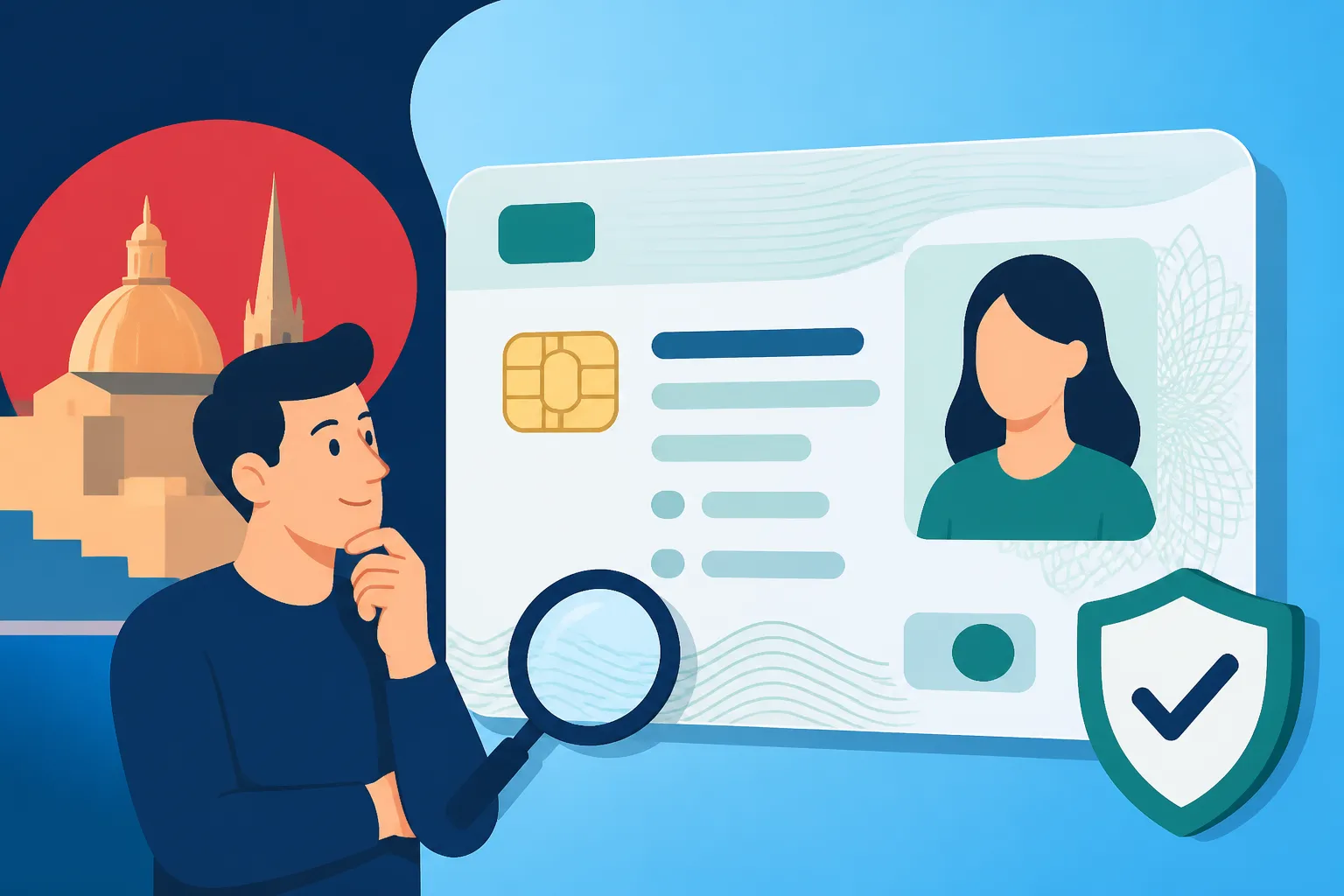
The eResidence Card: What It Shows and How to Read It
Oh, the infamous Maltese eResidence card! For many of us who've moved here, it feels like the Holy Grail, the golden ticket, the one document that unlocks everything. But once it's finally in your hand after what can feel like an eternity of waiting and navigating the labyrinth that is Identità, it can still leave you scratching your head. What do all those numbers and labels actually mean? How do you read it, and more importantly, how do you use it? Don't worry, my fellow expat, this comprehensive guide is here to unravel the mysteries of your Maltese eResidence card, making sure you understand every crucial detail.
What Exactly Is the Maltese eResidence Card?
When you first arrive in Malta, especially from outside the EU, the sheer volume of paperwork and the waiting game for official documents can be incredibly daunting. Among these, the eResidence card stands out as possibly the most important piece of identification you'll possess during your time here. It's more than just a fancy plastic card; it's your official proof of legal residence in Malta, issued by the Identity Malta Agency (Identità).
More Than Just an ID: Your Gateway to Life in Malta
Think of your eResidence card as your new passport for life within Malta. While your actual passport gets you into the country and proves your nationality, the eResidence card confirms your right to be here as a resident. Back in our home countries, we often rely on national ID cards, driver's licenses, or even a simple bank card for everyday identification. In Malta, particularly for foreigners, this card steps into that crucial role.
It acts as your primary form of identification for nearly every administrative process you'll encounter. From registering for your tax number to getting healthcare, and from opening a bank account to signing a rental agreement, this little card is universally requested. It’s the official stamp that says, "Yes, this person lives here, legally." Without it, or at least a temporary document confirming your application, many doors remain firmly shut, leading to frustrations that most expats here can intimately understand. Whether you're an EU citizen registering your residence or a third-country national on a single permit, this card is fundamental.
The Digital Evolution: Why 'eResidence'?
The "e" in eResidence isn't just for show; it signifies the card's advanced digital features. These aren't just pretty plastic cards; they're smart cards embedded with a microchip. This chip securely stores your personal data, including your biometric information, which typically includes your fingerprints and a digital version of your photograph. This technology isn't unique to Malta; it's part of a broader European initiative to enhance document security and streamline identification processes across the EU.
This digital component serves several vital purposes. Firstly, it significantly boosts the security of the card, making it much harder to forge or tamper with. This is incredibly important in preventing identity fraud. Secondly, it facilitates quick and accurate data verification by authorities, whether you're at the airport, a police station, or a government office. When you present your card, a quick scan can pull up your verified details, ensuring that the information you're providing is legitimate and up-to-date in the national database. It's a modern solution to a modern challenge, even if the application process itself can sometimes feel anything but modern!
Deciphering the Front of Your eResidence Card
The front of your Maltese eResidence card is packed with essential information, often in a format that might not be immediately intuitive if you're used to ID cards from other countries. Let's break down each key area, helping you understand what you’re looking at and why it matters.
The Visual Elements: Photos, Signatures, and National Symbols
First, you'll see your photograph. This is pretty standard stuff, designed to provide instant visual verification that the card belongs to you. It should be a clear, recent headshot that accurately represents your current appearance. Make sure to always check this when you receive your card – a blurry or old photo could cause issues down the line when officials are trying to confirm your identity.
Below your photo, you’ll find a space for your signature. This is also crucial for authentication. Many places will ask you to sign a document and then compare it to the signature on your card. It's one of the simplest, yet most effective, ways to ensure you are who you say you are.
Dominating the background or prominently placed, you'll also see the Maltese coat of arms. This national emblem signifies that the card is an official document issued by the Republic of Malta. It’s not just decorative; it adds to the card's authenticity and legal weight. Understanding these basic visual cues helps you quickly confirm you’re holding a genuine Maltese document.
Key Personal Data Fields
Now, let's get into the nitty-gritty of the text fields, which are arguably the most critical for your daily life here.
- Surname(s): This is your family name, exactly as it appears on your passport. If you have multiple surnames, they will all be listed here.
- Given Name(s): Your first and middle names, also matching your passport.
- Nationality: This will show your country of citizenship (e.g., 'BRITISH', 'GERMAN', 'INDIAN').
- Date of Birth: Your full date of birth in DD/MM/YYYY format.
- Sex: Usually indicated as 'M' for male or 'F' for female.
It’s absolutely vital that all these details are 100% accurate and consistent with your passport and other official documents. If you spot any discrepancies when you first collect your card, raise it with Identità immediately. Rectifying errors later can be a bureaucratic nightmare that you absolutely want to avoid. Imagine trying to open a bank account if your name is spelled differently on your ID card than on your passport – it’s a non-starter!
Your Unique Identifiers
This section is where things get really specific to Malta and where a lot of newcomers can get confused. These numbers are your keys to unlocking various services.
-
Document No. (ID Card Number): This is arguably the most important number on your card. It's usually an alphanumeric code (e.g., 123456M) and it functions as your primary Maltese identification number. This is what banks will ask for, what you’ll need for your lease registration, and critically, it's tied to your healthcare entitlement. If you ever have questions like "How Do I Register for Free Healthcare in Malta?", your ID card number is the first step. You'll use this everywhere, so commit it to memory or at least know exactly where to find it. This single number often forms the backbone of your identity in Malta.
-
Personal No.: Often a purely numerical sequence. For many, this number might look similar to a social security number from their home country, and indeed, it often correlates with your Social Security number here. While important for internal government records and social benefits, it's generally not the number you'll be asked for as frequently as your 'Document No.' for everyday identification purposes. However, it plays a key role in tracking your contributions and benefits, so it’s essential to understand its presence.
-
Type of Permit: This field tells you what kind of residence you have in Malta. It could be something like 'Resident Permit' for those under various schemes, 'EU Citizen' for those exercising their free movement rights, 'Family Member' if you've joined a spouse, or increasingly, 'Nomad Resident' for those on the popular Malta Nomad Residence Permit. This field dictates your rights and obligations, especially regarding work and travel. For instance, a 'Student' permit might have specific work hour limitations, whereas a 'Single Permit' holder has full working rights. Understanding this classification is crucial for navigating your entitlements.
-
Issue Date & Expiry Date: These are self-explanatory but critically important. The Issue Date tells you when your current card was printed. The Expiry Date is paramount! It’s the date by which you must have applied for a renewal. Mark this in your calendar, set reminders, tattoo it on your arm if you must! Allowing your eResidence card to expire can lead to serious complications with your status, banking, and even travel. Typically, you should aim to start the renewal process a good two to three months before this date, especially if you're dealing with Identità and their processing times. Don’t fall into the trap of letting it sneak up on you; renewing Your Maltese Residence Permit Before It Expires is a crucial step for uninterrupted life here.
Unlocking the Back of Your eResidence Card
While the front of your eResidence card contains your core identifying information, the back provides further crucial details about your residence status and the issuing authority. It might seem less immediately critical, but it holds information that explains the nature of your permit.
Residence Type and Endorsements
On the back, you’ll usually find another field detailing the 'Type of Residence'. This is a more explicit description of your specific status. For instance, while the front might simply state 'Resident Permit,' the back could elaborate with 'EMPLOYEE,' 'SELF-EMPLOYED,' 'STUDENT,' 'DEPENDANT,' or 'RETIREE.' This distinction is incredibly important because it defines what you are legally allowed to do while residing in Malta.
If your card explicitly states 'EMPLOYEE,' it means you have the right to work for a specific employer or in a particular role as defined by your work permit. If it says 'DEPENDANT' or 'FAMILY MEMBER,' it often implies restrictions on your right to work unless a separate work permit has been issued or endorsed. Similarly, a 'STUDENT' permit might come with explicit conditions about maximum working hours per week. These endorsements are not just administrative labels; they are legal directives. Always ensure you understand any restrictions or allowances tied to your specific residence type. Misinterpreting these can lead to serious immigration issues, so if you're unclear, it's always best to seek clarification from Identità or an immigration lawyer.
Authority, Place, and Dates of Issue
These fields are straightforward but reinforce the official nature of your document:
- Authority: This will consistently state "Identità" (or "Identity Malta Agency"). This is the government entity responsible for issuing all identity and residence documents in Malta. It’s the office you’ve probably become all too familiar with during your application process!
- Place of Issue: This will be "MALTA", confirming the country that issued the document.
- Dates: You might find a duplicate of the issue date or other administrative dates relevant to the card's creation.
These details might not be something you refer to daily, but they're important for any official body, both in Malta and when traveling internationally, as they confirm the source and legitimacy of your identification.
Machine-Readable Zone (MRZ)
At the very bottom of the back of your card, you'll see a series of lines filled with seemingly random letters and numbers. This is the Machine-Readable Zone (MRZ). It's designed to be read quickly by automated scanners, typically at border control checkpoints or when entering data into a system.
The MRZ contains the same key personal data found visually on your card – your name, date of birth, document number, and expiry date – but encoded in a standardised format that computers can easily process. This speeds up immigration procedures and reduces the potential for human error during data entry. You won't ever need to "read" this yourself, but it’s an essential security and efficiency feature of modern identity documents, ensuring that your card functions smoothly in a globally interconnected world.
Common Scenarios and How Your eResidence Card Helps (or Hinders)
Your eResidence card isn't just a pretty piece of plastic; it's a tool that either smooths your path or throws up roadblocks in countless daily scenarios. Understanding its power and limitations is key to navigating life in Malta.
Accessing Essential Services
This is where the eResidence card truly earns its keep. It's the lynchpin for almost everything you need to do here:
-
Healthcare: Perhaps one of the most vital services. Your Maltese ID card number (the Document No. on your eResidence card) is intrinsically linked to your healthcare entitlement. If you're contributing to social security, this number is what grants you access to Malta's public healthcare system. When you go to a health centre or hospital, you'll be asked for it. Without it, or without a valid permit, accessing free or subsidised public healthcare can be a real headache. To fully understand the ins and outs, I'd highly recommend diving into our guide on "Healthcare in Malta for Foreign Residents: The Complete System Guide (2026)". It clarifies entitlement and how your card plays a central role.
-
Banking: Oh, the joys of opening a Maltese bank account! This is often one of the first major hurdles for new arrivals. Maltese banks, particularly the larger ones like HSBC and BOV, have strict Know Your Customer (KYC) regulations. They will almost certainly require your physical eResidence card, along with your passport and proof of address, before they even consider your application. Trying to open an account before your card arrives is typically an uphill battle. If you're struggling, check out our detailed guide on "How to Open a Maltese Bank Account as a Newcomer" – it has invaluable tips for navigating this process.
-
Employment: If you’re here on a work permit (like a Single Permit), your eResidence card is your undeniable proof of your right to work in Malta. Employers will need to see it to verify your legal status before you can even begin your job. The "Type of Permit" and any endorsements on the back will explicitly state your working rights. This is also key for registering with Jobsplus.
-
Renting: Landlords, especially legitimate ones, will want to see your eResidence card as proof of your legal residence. More importantly, your lease agreement must be registered with the Housing Authority, and for non-EU tenants, your lease may even require attestation – processes that invariably require your eResidence card details. Understanding "Renting a Home in Malta: Contracts, Deposits, and Tenant Rights" will highlight just how central this card is to your housing situation.
-
Public Transport: While you might initially use an anonymous Tallinja Card, to benefit from the free public transport scheme for residents, you'll need to register your personalised Tallinja Card. Guess what they ask for? Your Maltese ID number from your eResidence card!
Travelling Within and Outside Schengen
Your eResidence card also plays a role in your travel plans:
-
Intra-Schengen Travel: When traveling between Schengen countries (which Malta is a part of), your eResidence card acts as a valid identification document alongside your passport. You generally don't need your passport to travel within the Schengen Area if you have a valid eResidence card. However, always carry your passport just in case, especially for non-EU citizens, as some airlines or border officials might still request it.
-
Non-Schengen Travel: If you're leaving the Schengen Area (e.g., flying back to your home country outside the EU), your eResidence card is not a travel document. You will need your passport to exit and re-enter the Schengen zone and your destination country. Your eResidence card merely grants you the right to reside in Malta, not to travel internationally on its own.
-
Expiry and Travel: This is a critical point. Do not travel outside Malta if your eResidence card is about to expire or if your renewal application is still processing and you haven't received a temporary document. Leaving the country without valid proof of residence can create serious issues upon your return, potentially leading to denied re-entry. Always check our guide on "Travelling While Your Maltese Permit Is Being Processed" to avoid this common and stressful mistake. It’s always better to be safe than sorry when it comes to international borders. Even well-established relocation services like Sirelo, which can help with the logistical nightmare of moving, can’t help you if your papers aren’t in order!
What to Do If Your Card is Lost, Stolen, or Damaged
Losing your eResidence card can induce panic, and understandably so! It’s happened to enough of us to know the immediate knot in your stomach. Here’s what you need to do, step by painful step:
- Report to the Police: Your very first step is to report the loss or theft to the local police station immediately. They will issue you a police report, which is absolutely essential for your next steps. This report validates that your card is genuinely missing and was not voluntarily surrendered.
- Contact Identità: With your police report in hand, you must contact Identità (Identity Malta Agency) to report the loss and apply for a replacement. You’ll likely need to book an appointment. Be prepared to provide the police report, your passport, and possibly new passport-sized photos. There will be a fee for replacement.
- Temporary Measures: Identità might issue you a temporary document or receipt confirming you've applied for a replacement. Keep this safe! It can sometimes serve as interim proof of your legal status, though it might not be accepted everywhere.
- Inform Your Bank and Employer: It’s wise to inform your bank and employer that your card is missing and a replacement is being processed. This can prevent issues with transactions or employment verification.
The process is tedious and time-consuming, adding to the already stressful administrative burdens of expat life. It’s a real hassle, and it often involves multiple trips and long waits. My advice? Treat your eResidence card like gold, keep it in a secure place, and consider digitising a copy (safely!) for emergencies.
Keeping Your eResidence Card Valid and Up-to-Date
The eResidence card is not a "set it and forget it" document. Just like your passport, it has an expiry date, and your circumstances in Malta can change, requiring updates to your record. Staying on top of these administrative tasks is vital for uninterrupted residence.
The All-Important Expiry Date and Renewal Process
The expiry date on your eResidence card is perhaps the single most critical piece of information you need to track. It's not a suggestion; it's a hard deadline. Missing this date can lead to severe consequences, including issues with your legal status, inability to access services, and potential fines or even deportation.
- Monitor Vigorously: As a rule of thumb, start checking your expiry date at least four to five months before it's due. Why so early? Because Identità's processing times can be notoriously unpredictable. While some renewals might sail through quickly, others can take months, leaving you in a stressful limbo.
- The Renewal Window: You can typically apply for renewal about two to three months before the expiry date. Applying too early might mean your application is rejected; applying too late could mean your card expires before the new one arrives.
- The Paperwork: Renewing usually involves submitting an updated application form, new passport photos, proof of continued eligibility (e.g., employment contract, proof of funds, lease agreement), and your current eResidence card. The exact documents depend on your permit type (e.g., Single Permit, Nomad Resident, EU Citizen). It's crucial to consult the Identità website for the precise, up-to-date list for your specific residence category. They tend to be very particular about complete applications.
- Consequences of Lapses: If your card expires while your renewal is still processing, you might receive a temporary letter or sticker from Identità to prove your application is active. However, this is not a guaranteed fix. Banks might freeze your account, employers might pause your salary, and international travel becomes a huge risk. Always plan ahead to avoid these scenarios. "Renewing Your Maltese Residence Permit Before It Expires" is not just advice, it's a directive for a smooth expat life.
Notifying Changes: Address, Status, and Personal Details
Life in Malta is dynamic, and your circumstances might change. It's a legal obligation to inform Identità of significant changes to your personal details or status. Ignoring this can lead to issues during renewal or if you apply for another permit type down the line.
- Change of Address: Moving house? You must update your address with Identità. This is crucial because your legal address is tied to your residence permit. The process usually involves filling out a specific form and providing a new registered lease agreement or proof of ownership. This is something often overlooked by new residents, but "Updating Your Address and Status with Identità in Malta" provides a clear guide on how to handle this.
- Change in Marital Status: Got married or divorced? These significant life changes need to be reported. You might need to provide updated marriage or divorce certificates. This is particularly relevant if your permit is tied to family reunification or if you plan to apply for it for a spouse.
- Change in Employment (for specific permits): If you're on a Single Permit, your permit is often tied to a specific employer and role. If you change jobs, you typically need to apply for a new Single Permit or an amendment to your existing one. This isn't just a simple update; it's a significant process, so be sure to understand the implications for your permit before making a job switch. For other permits (like EU citizens), a job change might not require an immediate permit update but does impact your social security and tax records.
Staying proactive with these updates not only keeps you compliant with Maltese law but also ensures that your official records accurately reflect your current situation, preventing future headaches. It might feel like constant paperwork, but it's part and parcel of living legally and smoothly in this beautiful island nation.
Navigating Specific Situations and Maximising Your Card's Use
Let's look at some specific scenarios and how your eResidence card fits in, often making the difference between smooth sailing and rough waters.
Health Entitlement and Private Insurance
While your eResidence card is key to accessing public healthcare if you are entitled (usually through social security contributions), it's worth noting that many expats also opt for private health insurance. Companies like Cigna Global offer extensive health coverage that can complement or entirely replace reliance on the public system. For example, some non-EU permit holders are required to have private health insurance as a condition of their visa. Even for those with public entitlement, private insurance often means shorter waiting times for specialists, access to private clinics, and a wider choice of doctors. The eResidence card gets you in the door for public services, but private insurance, especially from reputable providers, opens up different avenues for care.
The eResidence Card and the Identità Portal
You'll find that applying for or renewing your eResidence document usually starts or ends with the Identità Portal. This online platform is where you can often initiate applications, check on the status of your existing permit, and sometimes upload documents. Your eResidence card details are essential for creating and maintaining your profile on this portal. Understanding how to use the portal effectively is a crucial skill for any resident, as it's the primary digital interface with the agency responsible for your legal stay. Make sure you familiarize yourself with "Applying for an eResidence Document Through the Identità Portal" as it is your gateway to managing your status here.
Comparing Residence Cards: EU vs. Third-Country Nationals
It's important to understand that while all foreign residents receive an eResidence card, there can be subtle differences in the card issued to EU/EEA citizens versus third-country nationals (non-EU/EEA).
- EU/EEA Citizens: Your card formally documents your right to reside in Malta under EU free movement laws. It's primarily a registration document. The underlying right to reside comes from your EU citizenship, not the card itself, although having the card is legally required after three months of residence.
- Third-Country Nationals: For non-EU citizens, the eResidence card is the permit itself. It grants you the right to reside in Malta based on the specific conditions of your visa or permit (e.g., work, study, family reunification, Nomad Residence Permit). Without this card, you do not have a legal right to reside in Malta.
These distinctions mean that while the physical card might look similar, the legal framework behind it and the implications of its expiry or loss can differ significantly.
A Quick Reference: Key Fields on Your eResidence Card
To make things a little easier to digest, here's a quick summary of the most important fields you'll find on your card and what they mean to you.
| Field Name | Location | Purpose / Significance | Importance Level |
|---|---|---|---|
| Photograph | Front | Visual identification; confirms card belongs to you. | High |
| Surname(s) | Front | Legal family name(s) as per passport. | High |
| Given Name(s) | Front | First and middle name(s) as per passport. | High |
| Nationality | Front | Country of citizenship. | Medium |
| Date of Birth | Front | Your birthdate (DD/MM/YYYY). | High |
| Sex | Front | Gender (M/F). | Medium |
| Document No. | Front | Your Maltese ID Card Number. Crucial for all administrative tasks (banking, healthcare, rent, etc.). | Critical |
| Personal No. | Front | Internal government identifier, often linked to Social Security. Less used for everyday ID. | Medium |
| Type of Permit | Front | General category of your residence status (e.g., Resident Permit, EU Citizen, Nomad Resident). | High |
| Issue Date | Front | Date your current card was printed. | Medium |
| Expiry Date | Front | Date by which you MUST apply for renewal. Failure to renew is serious. | Critical |
| Signature | Front | Your personal signature for verification. | High |
| Type of Residence | Back | Specific details of your permit (e.g., EMPLOYEE, STUDENT, DEPENDANT). Defines your rights/restrictions (e.g., to work). | High |
| Authority | Back | Identità (Identity Malta Agency) – the issuing body. | Medium |
| Place of Issue | Back | MALTA. | Low |
| MRZ (Machine Readable Zone) | Back | Encoded data for automated scanning and border control. | Low (for personal reading) |
So, there you have it. Your Maltese eResidence card, demystified. It's a powerful tool, a testament to your legal status here, and a constant companion in your expat journey. Treat it with respect, understand its details, and keep it updated, and it will serve you well during your wonderful life in Malta.
Disclaimer
The information provided in this guide is for general informational purposes only and does not constitute legal, financial, or immigration advice. While every effort has been made to ensure accuracy, regulations and procedures in Malta can change rapidly. Always consult official government sources, such as Identità (Identity Malta Agency), or seek professional advice from qualified legal or immigration experts for specific guidance pertaining to your individual circumstances.