Can I Bring My Family on the Malta Nomad Residence Permit?
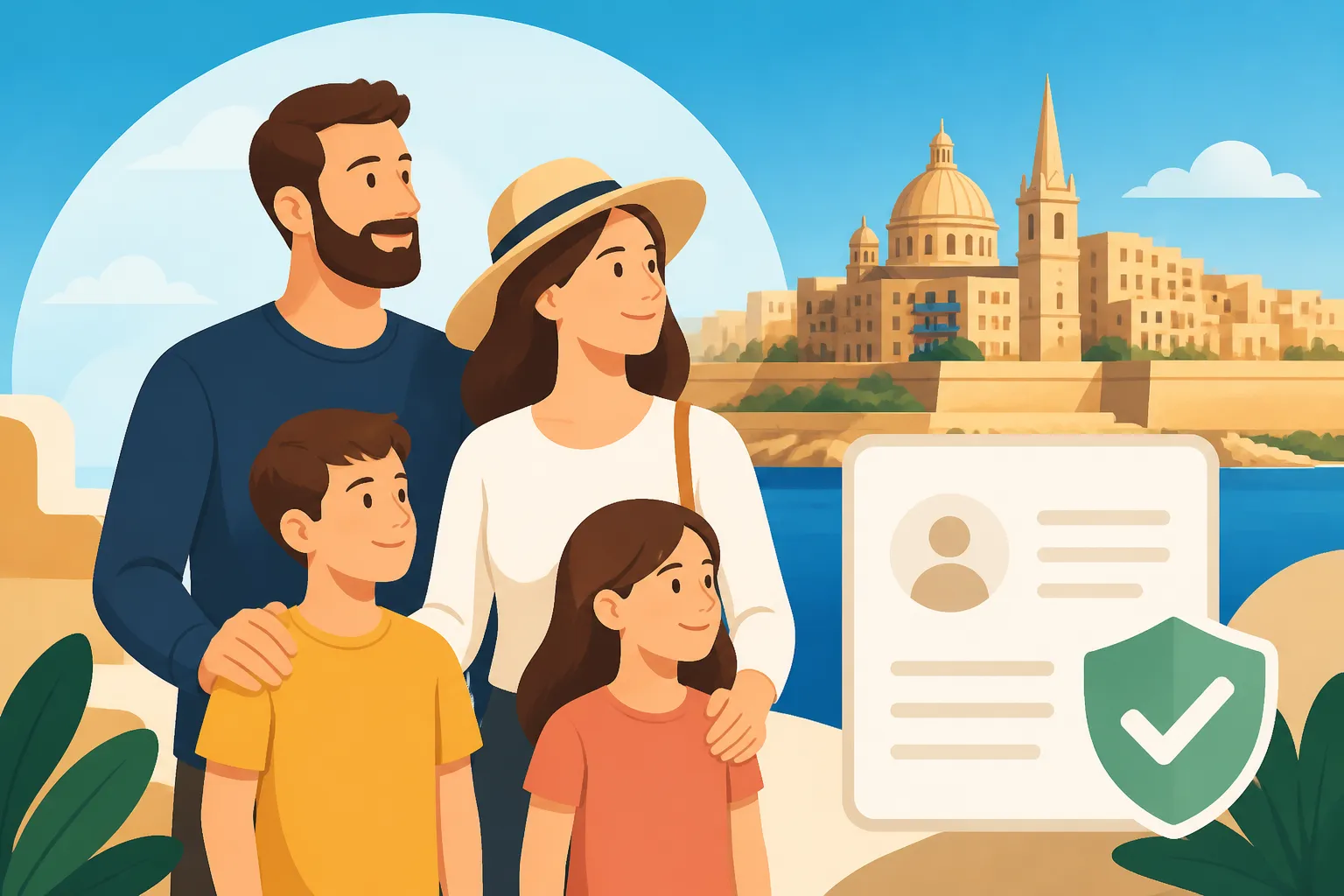
The thought of moving to a new country like Malta often comes with a mix of excitement and apprehension, especially when you’re not just thinking about yourself, but your entire family. One of the biggest worries for many contemplating a new life here, particularly those eyeing the Nomad Residence Permit (NRP), is whether their loved ones can actually join them. The good news is, yes, Malta's Nomad Residence Permit does allow for family reunification, but trust me, it’s not as simple as ticking a box. This guide will meticulously walk you through everything you need to know about bringing your family along on your Maltese nomadic adventure, from who qualifies to the financial hoops you'll need to jump through and the essential documents you’ll have to gather.
Understanding the Nomad Residence Permit's Family Provisions
When you embark on the journey of applying for a Nomad Residence Permit in Malta, you're not just securing your own stay; you're often paving the way for your entire household. However, the term "family" in the context of immigration isn't always as broad as we might hope. The NRP programme, overseen by Residency Malta Agency, has specific definitions for who can tag along as your dependent. It’s crucial to understand these distinctions from the outset to avoid any heart-wrenching surprises down the line.
Who Qualifies as a Family Member for the NRP?
The Nomad Residence Permit is designed to accommodate the main applicant’s immediate family, but the criteria are quite precise. First and foremost, your spouse or partner is typically eligible. This generally means a legally married spouse, but it can also extend to partners in a registered civil partnership or even those in a proven, long-term cohabiting relationship. For unmarried partners, you’ll need to provide substantial evidence of your genuine and durable relationship, which often involves joint bank accounts, shared utility bills, photographs, and even notarised declarations. It's about demonstrating that your relationship is as committed and stable as a marriage, even without the legal certificate.
Beyond your partner, your dependent children are also usually eligible. This means children under the age of 18. However, it can sometimes extend to children over 18 but under 26 who are unmarried and still financially dependent on you, for instance, if they are enrolled in full-time education. Each child, regardless of age, must be demonstrably dependent on the main applicant for their livelihood, education, and general welfare. Expect to provide birth certificates, school enrollment letters, and financial records to prove this dependency. Unfortunately, other relatives like parents or siblings are typically not covered under the standard dependent provisions of the Nomad Residence Permit. This is often a source of frustration for many, as family structures vary so much across cultures, but the Maltese system, like many others, draws a firm line.
The Application Process for Dependent Family Members
Here’s where it gets a little more bureaucratic. While your family members are considered "dependents," each eligible family member, be it your spouse, partner, or child, must submit their own individual application for a Nomad Residence Permit. This isn't a single group application where everyone gets bundled together. Instead, each person will have their own set of forms to fill out, documents to compile, and fees to pay.
However, these applications are linked to yours, the main applicant. Think of it as a tree: your application is the trunk, and your family members’ applications are the branches. They all draw from the same source, namely your eligibility as the digital nomad. This means that while they submit separately, their approval is contingent on your application's success and their direct relationship to you. You'll need to provide proof of relationship for each dependent – marriage certificates, birth certificates, adoption papers, or sworn declarations for common-law partners. Each dependent will also undergo their own due diligence checks, including police conduct certificates for those over a certain age. It’s a painstaking process that requires meticulous attention to detail for every single person in your family wishing to join you. Missing a document for one family member can hold up everyone's application, so double-checking everything is paramount.
Financial Requirements for Family Reunification under the NRP
Money talks, and nowhere is that truer than in immigration applications. The Nomad Residence Permit in Malta is no exception, and when you're bringing family, the financial requirements become even more stringent. It's not just about proving you can support yourself; you need to demonstrate the financial capacity to comfortably support everyone joining you. This ensures that dependents won't become a burden on the Maltese social welfare system, a primary concern for any host country.
Income Thresholds for Main Applicant and Dependents
The Nomad Residence Permit stipulates a minimum gross monthly income for the main applicant. As of early 2026, this stands at €2,700 per month. However, this figure is solely for the main applicant. If you intend to bring your family, you will need to demonstrate additional income for each dependent. Typically, this means adding an extra €500 per month for a spouse or partner and an additional €300 per month for each dependent child.
Let's break that down with an example. If you, the main applicant, plan to bring your spouse and two children, your gross monthly income requirement would look something like this:
- Main Applicant: €2,700
- Spouse: + €500
- Child 1: + €300
- Child 2: + €300
- Total Minimum Gross Monthly Income: €3,800
These figures are minimums, and it’s always wise to show a comfortable buffer above these amounts. Residency Malta Agency wants to see financial stability and sustainability, not just that you scrape by. This isn't just about meeting the legal threshold; it's about demonstrating that your family will have a good quality of life without relying on local public funds. Prepare for a thorough examination of your income streams and financial history.
Proving Financial Sufficiency: What Documents Are Needed?
Gathering the financial documentation can feel like an archaeological dig through your entire fiscal past. To prove your financial sufficiency for yourself and your family, you'll need to provide a comprehensive suite of documents. This typically includes:
- Bank Statements: Recent statements (usually for the last three to six months) from all your active bank accounts, showing consistent income deposits and sufficient balances to support your family.
- Employment Contracts/Freelance Agreements: If you're employed, your current employment contract detailing your salary, role, and terms of employment. For freelancers or self-employed individuals, a portfolio of contracts, invoices, and client testimonials demonstrating ongoing work and income.
- Tax Returns: Your latest income tax returns from your previous country of residence. These are crucial for verifying your declared income.
- Payslips: Recent payslips, usually for the last three to six months, providing clear evidence of your regular gross income.
- Business Registration Documents: If you run your own business, relevant registration documents and financial statements of the company.
Remember, all these documents must be in English or officially translated into English by a certified translator. The agency is looking for a clear, consistent, and robust financial picture. Any gaps, discrepancies, or sudden large deposits without explanation will raise red flags and cause delays. It’s definitely one of those areas where over-preparation pays off immensely. The process can feel incredibly intrusive, as if every penny you've ever earned is under a microscope, but it's a necessary evil to ensure you can genuinely support your family in Malta.
Accommodation and Health Insurance Considerations
Beyond proving your familial connections and financial prowess, there are two other massive hurdles to clear when bringing your family on the Malta Nomad Residence Permit: securing suitable accommodation and ensuring everyone has comprehensive health insurance. These aren't just bureaucratic checkboxes; they are fundamental elements for a safe, comfortable, and healthy life for your family in Malta.
Adequate Accommodation for the Entire Family
Finding a place to live in Malta can be a challenge even for a single person, let alone a family. When you apply for the Nomad Residence Permit with dependents, Residency Malta Agency will scrutinise your living arrangements to ensure they are suitable for the entire family. This means proving that you have accommodation that is appropriately sized for the number of people who will be living there. A small studio apartment might be fine for one, but it won’t cut it for a family of four.
You'll need to provide a rental agreement (lease contract) for a property in Malta. This contract must clearly state the names of all occupants, including your dependents. It should also be registered with the Housing Authority, which is a legal requirement in Malta. Beyond the lease, you might be asked for recent utility bills (electricity and water from ARMS Ltd) in your name to further prove that you are genuinely residing at the declared address. The agency wants assurance that your family isn't just "visiting" but has a stable, long-term home.
Securing suitable family accommodation can be competitive, especially in popular areas like Sliema, St. Julian's, or Swieqi. Rental prices are on the rise, and larger properties are less common and more expensive. Start your search well in advance, and be realistic about what you can afford and where. It’s a common frustration that many landlords are hesitant to rent to families with young children due to perceived wear and tear, making the search even more daunting. This is where a service like Sirelo might come in handy for planning your move and understanding the logistics of shipping your household goods once you've secured a suitable place.
Private Health Insurance for Each Family Member
Here's a critical point that cannot be overstated: holders of the Nomad Residence Permit and their dependents are NOT eligible for Malta's public healthcare system. This means that every single member of your family, from the youngest baby to the oldest parent, must have comprehensive private health insurance coverage for the entire duration of their stay in Malta. This isn't an optional extra; it's a mandatory requirement for the permit.
The insurance policy needs to provide extensive coverage for medical expenses, including hospitalisation, specialist consultations, emergency treatment, and repatriation. It must be valid in Malta and cover you and your family for at least the length of your permit. You'll need to submit proof of this insurance with each individual application. Policies that merely cover emergencies or only have minimal coverage will likely be rejected.
Choosing the right private health insurer is vital. You’ll want a policy that not only meets the NRP requirements but also provides peace of mind. International providers like Cigna Global are often popular choices among expats and digital nomads because they offer comprehensive plans designed for those living abroad, with global coverage and often direct billing options. It's crucial to thoroughly read the policy details, understand what is and isn't covered, and ensure the coverage limits are sufficient. The cost of private health insurance can add a significant amount to your monthly expenses, so factor this into your financial planning. Don't skimp on this; falling ill without adequate cover in Malta can lead to astronomical bills that will quickly ruin your nomadic dream. For more detailed information, you can always refer to resources on Private Health Insurance Requirements for Non-EU Permit Holders in Malta.
Key Challenges and Practical Tips for Bringing Your Family
Bringing your family to Malta on the Nomad Residence Permit is a significant undertaking, riddled with potential pitfalls and administrative headaches. Having been through a few of these processes myself (albeit for different permits), I can tell you that preparation and patience are your best friends. Let’s talk about some of the common challenges and how you can try to smooth the path.
Navigating Documentation and Translation Requirements
The sheer volume and specific nature of the documents required for each family member can be overwhelming. Birth certificates, marriage certificates, police conduct certificates, school enrollment letters, financial statements – the list goes on. And it’s not just about having the documents; it's about having them in the right format. Any document not originally in English must be accompanied by an official translation performed by a certified translator. Often, these translations also need to be apostilled or legalised, depending on the country of origin.
My advice? Start gathering documents early. I mean, seriously early. Request official copies, check their validity dates (many certificates expire), and then deal with translations and apostilles. Don's assume. Check every single requirement for every single document for every single person. I've heard countless stories of applications being delayed because a birth certificate was missing an apostille, or a translation wasn't from an officially recognised translator. Imagine getting to the finish line only to find a tiny detail like that sets you back weeks, if not months. This detailed guide on What Documents Do I Need for a Maltese Residence Permit? can be a lifesaver, but always cross-reference with the official Residency Malta Agency guidelines.
Managing Processing Times and Communication with Identità
One of the biggest frustrations for many expats in Malta, myself included, is the often-lengthy and sometimes opaque processing times for residence permits. While the Nomad Residence Permit is generally streamlined, bringing multiple family members naturally adds layers of complexity and can extend the waiting period. You might be told an estimated timeframe, but it's crucial to understand that these are often just estimates, and delays are common.
Communication with Identità, the agency responsible for issuing eResidence cards, can also be challenging. While Residency Malta Agency handles the NRP application itself, Identità processes the physical residence card. You might find yourself sending emails that go unanswered for days or weeks, and phone lines can be busy. This lack of clear, consistent updates can be incredibly stressful, especially when your family’s entire future hinges on that plastic card.
My top tip here is to be patient, persistent, and keep impeccable records. Keep copies of every single document you submit, every email you send, and note down the date and time of every phone call. If you have any queries about delays, politely follow up, providing your application numbers. Remember, they handle hundreds of applications, so being organised on your end helps immensely. Reading up on Understanding Identità Processing Times and Delays can help manage expectations.
Life in Malta with Family: Schools, Social Life, and Support
Once you clear the bureaucratic hurdles, the real adventure begins: settling your family into Maltese life. Malta is generally a family-friendly country, but it comes with its unique quirks.
Schools: You’ll have options for your children: state schools, church schools (often free but with religious instruction), and independent/international schools (which come with significant fees). Places in popular international schools can fill up quickly, so if that's your preference, inquire well in advance. For more details, check out Schools in Malta: State, Church, and Independent Options.
Social Life: Building a social circle for your family is important. Look for expat groups on social media, attend local community events, and explore activities for children. Malta has a vibrant expat community, and you'll find plenty of opportunities to connect with other families who understand the unique experience of living abroad.
Support Networks: The lack of immediate family can be tough. Seek out local parenting groups, sports clubs, or volunteer opportunities to build your support system. Remember, the Nomad Residence Permit is relatively new, so the support specific to this group is still evolving, but the broader expat community is well-established. Ultimately, for a holistic view of settling in, a comprehensive guide like Housing and Living in Malta: The Complete Newcomer's Guide (2027) would be invaluable.
Malta offers a fantastic lifestyle for many families, with its sunny climate, rich history, and relatively safe environment. However, the path to getting there with your loved ones on an NRP requires diligence, financial planning, and a deep well of patience.
Nomad Residence Permit: Key Requirements for Main Applicant vs. Dependents
Here’s a quick overview of the key distinctions in requirements between the main NRP applicant and their dependent family members:
| Requirement | Main Applicant (Nomad) | Dependent Family Member |
|---|---|---|
| Eligibility Criteria | Employed by foreign company, self-employed for foreign clients, or partner/shareholder in foreign company. Income €2,700/month. | Spouse/partner (legally married/registered/proven long-term), dependent children (under 18, or under 26 in full-time education). |
| Application Process | Individual application, primary focus on demonstrating work status and income source. | Individual application, linked to the main applicant. Focus on proving relationship and dependency. |
| Financial Threshold | Minimum gross income of €2,700/month. | Additional €500/month for spouse/partner, €300/month per dependent child. |
| Proof of Income | Comprehensive bank statements, employment contracts, tax returns, payslips, business documents. | Not directly, but main applicant's income must cover their requirements. |
| Accommodation | Must have confirmed suitable accommodation in Malta, lease agreement required. | Included in the main applicant's accommodation requirements; property must be suitable for all occupants. |
| Health Insurance | Mandatory comprehensive private health insurance covering all medical eventualities in Malta. | Mandatory comprehensive private health insurance for EACH dependent, same level of coverage. |
| Documents | Passport, NRP application form, CV, contract, bank statements, police conduct, proof of accommodation, insurance. | Passport, dependent NRP form, birth/marriage certificates, proof of dependency, police conduct (if applicable), insurance. |
| Public Healthcare Access | NO. | NO. |
Disclaimer
The information provided in this guide is intended for general informational purposes only and does not constitute legal, financial, or immigration advice. While we strive to provide accurate and up-to-date information, rules and regulations in Malta regarding immigration, permits, and financial requirements can change frequently. It is essential to consult with official Maltese authorities, such as Residency Malta Agency, Identità, or a qualified immigration lawyer or consultant, for advice tailored to your specific circumstances before making any decisions related to your relocation or Nomad Residence Permit application.