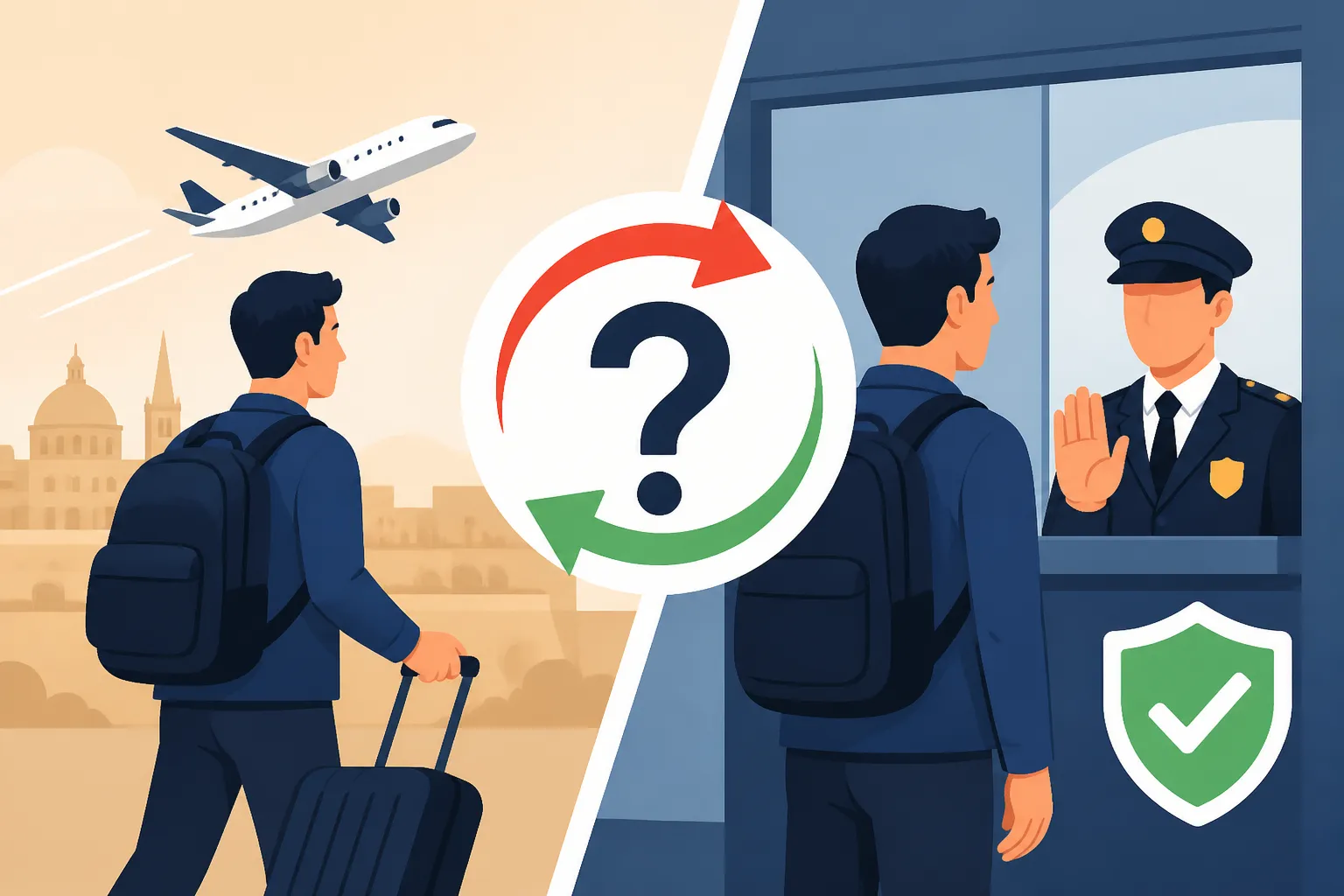
Will I Be Let Back into Malta If I Leave During Processing?
The anxiety that grips you when you're waiting for your Maltese residence permit to be approved is palpable, and the thought of leaving the island for any reason during that limbo period can be truly terrifying. Many expats have faced this dilemma, wondering if a necessary trip home or an urgent family matter will jeopardise their hard-won application. This guide will meticulously break down the risks and realities of travelling out of Malta while your residence permit is still processing, offering practical advice to help navigate this bureaucratic minefield.
Understanding the Waiting Game: Your Permit Status and Travel
Let's be brutally honest: the processing times for residence permits in Malta can feel like an eternity, and the communication from Identità (the agency responsible for identity, citizenship, and permits) isn't always as clear as we'd like. This creates a stressful "waiting game" where you might feel stuck, unable to plan even short trips. It's a common frustration among foreign residents, whether you're here for work, study, or family reunification.
The Grey Area: What "Processing" Truly Means in Malta
When your application is "processing," it means it's somewhere in the administrative pipeline, moving through various checks and departments at Identità. You've likely submitted your documents, paid your fees, and perhaps even had your biometrics taken. But what exactly does this in-between status entail for your travel freedom?
First off, there’s no singular definition of "processing." It could mean your file is sitting on a desk awaiting initial review, or it could be with a case officer who is scrutinising your documentation, or it might even be going through inter-departmental consultations. The reality is, without a physical eResidence card or an official letter confirming your right to reside and re-enter, you are in a vulnerable position. Many newcomers ask, "How Long Does Identità Take to Decide a Residence Permit?" and the answer is often, "It varies wildly," which just adds to the uncertainty.
The lack of consistent updates can be maddening. You might not hear anything for weeks or even months after your initial submission or biometrics appointment. This silence shouldn't be interpreted as a green light for travel. It simply means a decision hasn't been made yet. Your primary document proving your right to reside in Malta, and thus your right to re-enter, is your eResidence card. Without it, you are essentially relying on the discretion of border control. This is why it’s critical to understand exactly What Is the eResidence Card and What Information Is On It?.
The Peril of Leaving Malta Without a Final Decision
The biggest risk you face when leaving Malta during permit processing is the very real possibility of being denied re-entry. While your application is pending, you do not technically hold a valid Maltese residence permit that allows unrestricted travel in and out of the Schengen Area or back into Malta.
Imagine this scenario: you've applied for your Single Permit, had your biometrics, but haven't received your card. An urgent family matter arises back home. You book a flight, thinking your pending application is enough. Upon attempting to re-enter Malta, the immigration officer at the airport examines your passport. They see you don't have a valid visa or residence permit for Malta yet. Even if you show them proof of application, a job contract, or a tenancy agreement, these are not official travel documents. The officer’s primary concern is whether you meet the entry requirements for Malta at that very moment. They are not obliged to assume your permit will be approved.
This situation is particularly fraught for third-country nationals (non-EU/EEA/Swiss citizens) because their entry and stay in the Schengen Area are governed by strict visa rules and the 90/180-day rule. If you entered Malta on a short-stay Schengen visa or under a visa-free arrangement, and you’ve exceeded or are close to exceeding your permitted stay in the Schengen Area, leaving and attempting to re-enter before your residence permit is issued is incredibly risky. The clock on your Schengen allowance doesn't stop just because you've applied for a long-term permit in Malta.
Scenarios and the Risks Involved
The impact of travelling during permit processing isn't uniform; it varies significantly depending on your nationality. Understanding these distinctions is crucial for assessing your personal risk.
EU/EEA Citizens: Relative Flexibility, But Not Without Concerns
If you're a citizen of an EU/EEA country or Switzerland, you generally benefit from the principle of free movement. This means you have the right to live and work in Malta, and to travel within the Schengen Area, regardless of whether your Maltese eResidence document has been issued yet.
However, "relative flexibility" doesn't mean "no concerns." While you're unlikely to be outright denied entry back into Malta for simply not having your eResidence card, border control officers might still question you. They might ask for proof that you are indeed a resident in Malta and that you have initiated the process to formalise your stay. This could include:
- Your job contract if you’re employed.
- Your rental agreement (ideally one that is registered with the Housing Authority).
- Proof of application to Identità, such as the receipt or confirmation email for your eResidence document application.
- Evidence of your financial means to support yourself in Malta.
Even with these, not having the official document can still lead to delays, secondary checks, and a generally unpleasant experience at the border. The purpose of your eResidence card, even for EU/EEA citizens, is to officially register your residence in Malta and provide clear proof of your rights. Without it, you are technically in compliance with EU free movement, but you lack the easy, official evidence. It's best to sort out How Do EU Citizens Register Their Residence in Malta? as soon as possible after arrival.
Third-Country Nationals (TCNs): A Higher Stakes Game
For TCNs, the situation is far more precarious. Your right to enter and remain in the Schengen Area is typically tied to a visa or a residence permit. Without an issued Maltese residence permit, you are generally subject to the standard Schengen entry rules.
-
Schengen 90/180-Day Rule: If you entered Malta on a short-stay Schengen visa or as a visa-exempt national, you are permitted to stay for a maximum of 90 days within any 180-day period across the entire Schengen Area. If you leave Malta and then try to re-enter, any days you've already spent in the Schengen Area count towards this limit. If you've used up your 90 days, or if your return date would push you over, you will be denied re-entry. An ongoing residence permit application in Malta does not grant you an extension of your Schengen short-stay allowance. This is why understanding Short-Stay Schengen Visas and the 90-Day Rule for Malta is paramount.
-
The D-Visa: Many TCNs enter Malta with a D-Visa, which is a national long-stay visa, specifically to wait for their residence permit application to be processed. This D-Visa has an expiry date. If you leave Malta and your D-Visa expires while you are outside, or before you attempt to re-enter, you will face significant problems. You may not be allowed back into the Schengen Area at all without a new visa or an issued residence permit. The D-Visa acts as your legal entry gateway to initiate your long-term stay, but its validity is crucial. If you are curious about this, you can look into The D-Visa National Long-Stay Visa for Entering Malta.
-
"Approval in Principle" Letters: Sometimes, Identità might issue an "Approval in Principle" letter, especially for work permits, indicating that your application has been provisionally approved, and the permit will be issued upon your biometrics (or similar final step). While this sounds promising, it is not a travel document. It's an internal administrative notification. Border guards are highly unlikely to accept this as sufficient proof for re-entry, especially for TCNs. The actual eResidence card is what gives you your legal status to cross borders.
-
Hypothetical Scenario: Let's say you're a TCN from India, working in Malta, and your Single Permit is processing. Your mother falls ill back home. You fly out, spending a week away. When you return to Malta, the immigration officer at the airport, seeing no valid visa or residence permit in your passport (only your expired D-visa or an expired Schengen stamp), could very well deny you entry. Even if you show them your Identità application receipt and employment contract, they are within their rights to say you do not possess the necessary travel documents. You would then be in a terrible position, stuck at the airport, likely facing a return flight to your home country.
Practical Advice and Mitigating Risks
Given the high stakes, avoiding travel during the processing period is always the safest bet. However, life happens, and sometimes travel is unavoidable. If you find yourself in such a situation, here’s how to approach it cautiously.
What to Do Before Even Thinking of Leaving
Preparation is your absolute best defence. Do not, under any circumstances, just pack your bags and go without thoroughly considering and executing these steps.
-
Contact Identità (and document everything!): This is your first port of call, despite how frustrating it can be. Call their helpline, email them, or even consider visiting their offices in Msida if you're desperate. Explain your situation fully and explicitly ask if your travel plans will jeopardise your re-entry. Crucially, document every interaction: note down names, dates, times, and summaries of conversations. If you receive an email response, save it. A polite, formal email might yield a written response that could be helpful at the border, even if it's not a guarantee. They might, on rare occasions, issue a letter specifically stating your application is being processed and you are permitted to re-enter, but this is far from standard practice.
-
Gather Every Piece of Proof You Have: Arm yourself with an exhaustive dossier of documents. This means literally everything that ties you to Malta and proves your legitimate intent to reside here.
- Application Receipt: The official receipt from Identità proving you submitted your residence permit application.
- Biometrics Appointment Confirmation: If you've already had them.
- Lease Agreement: Your rental contract, especially if it's registered with the Housing Authority, proving your accommodation.
- Employment Contract/Letter of Engagement: If you're here for work, this is vital. For those arriving under a specific visa type, like the Nomad Residence Permit, ensure you have all supporting documentation such as your remote work contract and income statements.
- Bank Statements: Showing funds in a Maltese bank account, demonstrating financial stability.
- Travel Insurance: Especially important for TCNs. Companies like Cigna Global offer comprehensive expat health insurance that can cover emergencies abroad, but this is separate from immigration status.
- Medical Appointments/School Enrolment: Any documentation that shows your life is established in Malta.
- Expired D-Visa: If you entered on one, keep it as proof of your initial legal entry.
- Proof of Social Security Contributions: If you’ve started working and paying into the system. This can be strong evidence of your active residence. You can find more details on How Maltese Health Entitlement Fits with Social Security Contributions.
-
Seek Legal Advice (Especially for TCNs): For third-country nationals, this is not just a recommendation, it's almost a necessity. An immigration lawyer in Malta will have the most up-to-date information on Identità's policies and current border control practices. They can assess your specific situation, including your nationality, previous Schengen stays, and the type of permit you applied for, to give you the most accurate risk assessment. They might even be able to intervene on your behalf or provide a legal opinion letter.
-
Timing Your Departure: If travel is absolutely unavoidable, try to time your departure strategically. For TCNs who entered on a D-Visa, departing and returning before your D-Visa expires is less risky than attempting to return after it has lapsed. Similarly, if you are still within your initial Schengen 90-day visa-free period, and your return date is still within that period, your re-entry is slightly less precarious (though still not guaranteed). However, these are nuances, not guarantees.
What to Expect at the Border (Re-entry to Malta)
Even with all your preparations, re-entering Malta without your eResidence card can be a tense experience. Here's what you might encounter:
-
Border Control Discretion: Remember, the final decision on your entry rests solely with the individual immigration officer at the point of entry. They have the authority to grant or deny entry. Your meticulously prepared folder of documents is there to persuade them, but it’s not an automatic pass.
-
Preparedness is Key: Have all your documents easily accessible, not buried in your checked luggage. Present them calmly and clearly explain your situation: "My residence permit application for Malta is currently processing, I have my application receipt here, and I am employed/residing at this address, as evidenced by these documents."
-
Potential for Secondary Checks and Delays: Don't be surprised if you are taken aside for a secondary interview. This is where officers conduct more in-depth checks, review your documents, and possibly contact Identità for verification. This can add significant delays to your journey. Be patient, polite, and cooperative.
-
Refusal of Entry: In the worst-case scenario, you could be refused entry. This means you would be put on the next available flight back to your point of departure or your country of origin. This is a severe outcome with significant personal and financial repercussions. It could also complicate future visa or residence permit applications for Malta or other Schengen countries. Therefore, if you are moving all your belongings to Malta, ensure you have your permit first; professional movers like Sirelo often advise against shipping personal effects until your residency is confirmed.
It’s a tough situation, but understanding the potential pitfalls and preparing thoroughly can make a difference. The bottom line is that while your permit is processing, you are in a vulnerable state, and any international travel carries inherent risks.
| Aspect | EU/EEA Citizens | Third-Country Nationals (TCNs) |
|---|---|---|
| Legal Basis for Entry | Freedom of movement within the EU/EEA. | Visa or Residence Permit required. |
| Primary Proof of Residency | Passport/ID Card (but still required to register). | eResidence Card (essential). |
| Risk of Re-entry Refusal | Low, but possible delays and questions. | High, especially if D-Visa expired or Schengen limit exceeded. |
| "Processing" Status | Allows re-entry but expect scrutiny without eResidence. | Does NOT confer travel rights without valid visa/permit. |
| Key Documents for Travel | Passport/ID, job contract, lease, Identità receipt. | Valid D-Visa (if applicable), Identità receipt, job contract, lease. |
| Border Discretion | Less likely to deny, but can cause delays. | Full discretion, higher chance of denial without proper documents. |
| Schengen Rules Impact | Not affected by 90/180-day rule for long-term stay. | Heavily affected by 90/180-day rule for short stays. |
Disclaimer
The information provided in this guide is for general informational purposes only and does not constitute legal advice. Immigration laws and policies in Malta can change frequently. It is always recommended to consult with the official Maltese authorities (Identità) or an immigration legal professional for advice tailored to your specific circumstances before making any travel decisions.