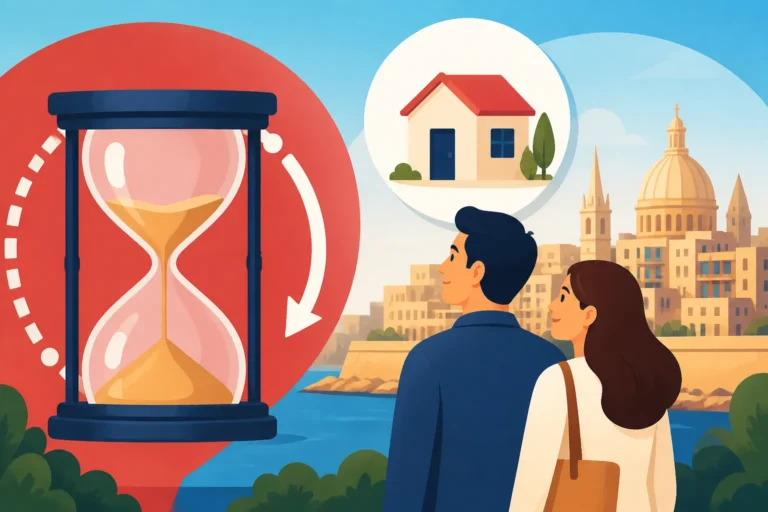
Do Non-EU Students Need a Jobsplus Licence to Work in Malta?
Oh, the labyrinthine world of permits and licences in Malta! If you're a non-EU student dreaming of earning a little extra cash while you hit the books here, you've likely found yourself staring blankly at official websites, wondering, "Do I really need a Jobsplus Licence to work in Malta?" Trust me, you're not alone. This is one of those questions that seems simple on the surface but quickly unravels into a thicket of regulations. Many expats, myself included, have navigated these murky waters, feeling that initial rush of hope about studying in a sunny Mediterranean paradise, only to be confronted by the bureaucratic reality of actually needing to support yourself.
This guide is here to untangle that very question for non-EU students in Malta. We'll cut through the jargon, walk you through the necessities, and give you the real-world lowdown on securing your right to work, so you can focus on your studies and enjoy your time on the islands without the nagging fear of being non-compliant.
Understanding the Jobsplus Work Permit Requirement for Non-EU Students
Let's dive right into the heart of the matter. The simple answer to "Do Non-EU Students Need a Jobsplus Licence to Work in Malta?" is generally yes. If you're from outside the European Union (EU) or European Economic Area (EEA), or Switzerland, and you're studying in Malta, you absolutely need proper authorisation from Jobsplus (Malta's national employment agency) to take up any form of employment, even part-time. This isn't just a suggestion; it's a legal requirement that protects both you and the Maltese labour market. Ignoring it can lead to serious consequences, not least of which is the revocation of your student residence permit.
The Basics: What is a Jobsplus Licence?
So, what exactly is a Jobsplus Licence, and why is it such a big deal? Think of it as your official permission slip to work in Malta. For non-EU citizens, it’s formally known as an Employment Licence. Jobsplus is the governmental agency responsible for all things employment in Malta, from registering job seekers to issuing these crucial licences. Their role is to regulate the labour market, ensure fair employment practices, and, importantly for us, control who can work here, especially when it comes to non-EU nationals.
Before anyone from outside the EU/EEA/Switzerland can legally be employed in Malta, their prospective employer must apply for this Employment Licence on their behalf. It's not something you, as the employee, apply for directly, but rather a process initiated and largely managed by your employer. This might feel a bit strange if you're used to systems where individuals apply for their own work permits, but in Malta, the employer bears much of the responsibility for demonstrating why they need to hire a non-EU individual.
The Specifics for Non-EU Students: Is it Needed?
For non-EU students, the requirement for a Jobsplus Employment Licence is unequivocal. Your student residence permit allows you to reside in Malta for the purpose of study, but it does not automatically grant you the right to work. That's where the Jobsplus Employment Licence comes in. You cannot simply start working with just your student visa or residence permit.
There's often confusion because EU/EEA/Swiss students generally don't need a separate work permit; their right to free movement and work extends to Malta. However, if you're from a "third country" (as non-EU/EEA/Swiss countries are often referred to in immigration terms), this distinction is paramount. You need both a valid student residence permit and a valid Jobsplus Employment Licence. The key difference for students, compared to other non-EU workers, lies in the conditions attached to this work permit, particularly regarding working hours and the type of employment permitted, which we'll delve into shortly.
The Purpose Behind the Permit: Protecting the Local Job Market
You might wonder why Malta has such a strict system. It boils down to safeguarding the local labour market. The Maltese government's primary objective is to ensure that Maltese citizens and other EU nationals are given priority for available jobs. The Jobsplus Employment Licence system is a mechanism to control the influx of foreign workers and ensure that non-EU nationals are only employed when there isn't a suitable local candidate available for a particular role. This is a common practice across many countries globally.
For students, the idea is that your primary purpose in Malta is to study. Any work is generally seen as a secondary activity, intended to support your studies rather than compete with local job seekers for full-time, long-term positions. This is why student work permits often come with limitations on hours and job types. It's about balancing the needs of international students to gain experience and earn some money with the government's responsibility to protect its own workforce. This perspective can sometimes lead to frustrations for students who genuinely need to work to cover their living expenses, but understanding the underlying rationale helps manage expectations.
Navigating the Application Process for Student Employment
So, you've established you need a Jobsplus Employment Licence. What's next? The process can feel a bit like wading through treacle, but with a clear understanding of the steps and requirements, it becomes much more manageable. Remember, your prospective employer plays a huge role here, so strong communication with them is key.
Eligibility Criteria: Who Can Apply?
Before your employer can even think about applying for a Jobsplus Employment Licence on your behalf, you, as the student, need to meet certain eligibility criteria. This isn't just about showing up with a pulse; there are specific conditions designed to ensure you're genuinely here to study.
Firstly, you must hold a valid student residence permit issued by Identità (Malta's national agency for identity and citizenship). Without this, no work permit application will even be considered. You can't start the work permit process on just a tourist visa or before your student permit is fully approved. Think of your student residence permit as the foundation upon which your work authorisation is built. If you're still waiting for your residence permit, you might be asking yourself, "Can I Move to Malta to Look for Work Without a Job Offer?" The answer, generally, is no, especially for non-EU citizens. The work permit is typically linked to a specific job offer and your student status.
Secondly, you generally need to have completed your first 90 days of study in Malta. This rule is crucial and often a point of confusion. It's designed to ensure that your primary commitment is to your studies. This means you can't just arrive and immediately start looking for work. You need to demonstrate a period of active enrollment and attendance at your educational institution. Check with your institution for precise dates and documentation confirming your attendance.
Finally, the work itself must be part-time. The specifics of this are outlined in the "Working While Studying in Malta: The 20-Hour Employment Licence" guidelines, meaning you're usually limited to a maximum of 20 hours per week.
The Role of Your Employer: A Crucial Partnership
Your employer isn't just hiring you; they're becoming your partner in this bureaucratic dance. They are the ones who formally submit the application for your Jobsplus Employment Licence. This means they'll need to demonstrate to Jobsplus a few key things:
- No Suitable Local Candidates: The employer usually has to advertise the position and show that they couldn't find a suitable candidate from Malta or the EU/EEA. This is a fundamental part of the labour market test.
- Compliance with Employment Laws: They must confirm that your employment will adhere to Maltese labour laws, including minimum wage, working conditions, and social security contributions.
- Financial Capacity: Sometimes, they might need to demonstrate that they are a legitimate business with the financial capacity to employ you.
The employer will typically gather most of the required documentation, including the job description, proposed contract, and details of your student status. This is why having an employer who is familiar with the process, or at least willing to learn and be patient, is incredibly valuable. They will communicate directly with Jobsplus and keep you updated on the application's progress. Be prepared to provide them with any personal documents they request, promptly.
Required Documentation: Getting Your Paperwork in Order
Even though your employer submits the application, you'll need to provide them with a stack of documents. Being organised and having everything ready can significantly speed up the process. Here's a typical list of what you (and your employer) might need:
- Completed Jobsplus Application Form: This is the main form, usually filled out by the employer.
- Copy of Your Passport: Specifically the biodata page and any pages with relevant visas or stamps.
- Copy of Your Valid Student Residence Permit: Front and back, showing your Identità ID number.
- Letter from Your Educational Institution: This letter is critical. It needs to confirm:
- Your full-time student status.
- The course you are enrolled in.
- The duration of your course.
- Confirmation that you have completed at least the first 90 days of your studies (or equivalent, depending on your course structure).
- Your attendance record, if applicable.
- Employment Contract or Promise of Employment: Detailing your role, hours, salary, and employment conditions.
- Job Description: A clear outline of your duties.
- Your CV/Resume: Demonstrating your qualifications for the role.
- Malta Police Conduct Certificate: This might be requested as part of your overall residence status, but having an up-to-date one is always a good idea when dealing with any government agency. If you are applying for a new permit type or renewing, expect to provide a clean criminal record.
- Copies of Relevant Qualifications: Any degrees, diplomas, or certificates pertinent to the job.
- Passport Photos: Recent, passport-sized photos meeting official requirements.
The specific list can sometimes vary slightly, so always confirm with Jobsplus or your employer what's precisely required for your situation. Gathering these documents can be time-consuming, so start early!
Working While Studying: Hours, Limitations, and Important Considerations
Even with your Jobsplus Employment Licence in hand, remember that working as a student in Malta isn't a free-for-all. There are specific rules designed to ensure that your studies remain your primary focus. Understanding these limitations is crucial for staying compliant and avoiding any issues with your student residence permit or future immigration applications.
The 20-Hour Rule: Balancing Study and Work
The most significant limitation for non-EU students working in Malta is the 20-hour per week rule. This means you are generally permitted to work a maximum of 20 hours during term time. This is strictly enforced, and exceeding these hours can lead to serious problems, including the revocation of your student permit and your work permit.
It's a balancing act, really. Malta wants to give students the opportunity to gain some work experience and earn supplementary income, but not at the expense of their academic performance. Imagine trying to juggle a full-time study load with a full-time job; it's practically impossible!
During official academic holidays, such as the summer break or Christmas holidays, you might be allowed to work full-time (40 hours per week), but this is usually subject to specific approval from Jobsplus and your educational institution. Always, always, get explicit confirmation in writing before increasing your hours beyond the 20-hour limit, even during holidays. Don't just assume. Your employer will need to adjust your contract or seek specific approval for these periods. This falls under the general guidelines discussed in our article, "Working While Studying in Malta: The 20-Hour Employment Licence".
What Kind of Work Can You Do? Sector and Skill Restrictions
While the 20-hour rule governs how much you can work, there are also informal, and sometimes formal, considerations about what kind of work non-EU students typically do. Generally, student employment licences are issued for roles that don't directly compete with the core Maltese labour market for highly skilled or full-time positions. This often means students find work in sectors that have a higher demand for part-time or flexible staff.
Common sectors where non-EU students find employment include:
- Hospitality: Restaurants, cafes, hotels, and bars frequently hire part-time staff for waiting, bartending, kitchen support, and housekeeping roles.
- Retail: Shops and supermarkets often need extra help, especially during peak seasons or weekends.
- Administrative Support: Some offices might hire students for light administrative duties, data entry, or reception work.
- Customer Service: Call centres or online support roles, particularly those requiring specific language skills, can be an option.
It's less common for students to secure work permits for highly specialised professional roles unless these roles are directly related to their field of study and are explicitly approved. The key is that the job should complement your studies and not undermine the integrity of your student status.
Tax and Social Security Implications: Beyond the Paycheck
Once you start earning a salary, even part-time, you enter the world of Maltese tax and social security. This is another area where many new arrivals, students included, often feel overwhelmed. But don't fret; it's manageable once you understand the basics.
As an employed individual in Malta, both you and your employer will contribute to social security. These contributions, under "Social Security Contributions in Malta: Classes, Rates, and Benefits", entitle you to certain benefits, including access to Malta's public healthcare system. This is a significant perk! However, keep in mind that short-term contributions might not immediately qualify you for all benefits, such as a state pension, which requires many years of contributions.
Regarding income tax, your part-time earnings will be subject to Malta's progressive tax rates. Your employer will deduct tax at source through the Final Settlement System (FSS), so you'll receive a net salary. You'll also need a Maltese Tax Identification Number (TIN) to be registered with the Inland Revenue Department. It's a good idea to understand "Income Tax in Malta: Progressive Rates, FSS, and Filing" to see how your earnings will be impacted.
For more complex tax situations, especially if you have income from your home country or other sources, it might be wise to consult with a tax advisor. Services like Taxes for Expats can be incredibly helpful in understanding your obligations and ensuring you're compliant with Maltese tax law. Remember, even if you're only working part-time, you're still part of the financial system, and adhering to its rules is paramount.
Common Pitfalls and How to Avoid Them
Life in Malta as a student, especially a working one, is an adventure, but it comes with its own set of potential traps. Knowing what to look out for can save you a lot of stress and ensure your time here is as smooth as possible.
Unauthorised Work: The Risks and Consequences
This is arguably the biggest and most serious pitfall. Working without a valid Jobsplus Employment Licence – or exceeding your permitted hours – is illegal. It's often referred to as "working under the table" or "black labour," and the consequences can be severe for both you and your employer.
For you, the student, the risks include:
- Deportation: This is the most extreme, but very real, consequence. If caught, your student residence permit can be revoked, and you could be asked to leave Malta, potentially facing a ban from re-entering the Schengen Area for a period.
- Fines: You could face hefty fines.
- Immigration Record: An infraction like this can negatively impact any future immigration applications, not just in Malta but potentially in other EU countries.
- Exploitation: Employers who hire people illegally often take advantage of their vulnerable status, paying less than minimum wage, offering poor working conditions, and having no legal recourse if something goes wrong.
For the employer, the consequences are also severe, including substantial fines and damage to their reputation. It’s simply not worth the risk for either party. Always insist on proper employment contracts and ensure your employer applies for your Jobsplus licence before you start any work.
Permit Renewals and Changing Jobs: Staying Compliant
Your student residence permit and your Jobsplus Employment Licence are typically tied to your course duration and often to a specific employer. Life happens, though, and you might change courses, extend your studies, or find a new job. Each of these scenarios requires careful navigation to maintain your legal status.
- Student Permit Renewal: You'll need to renew your student residence permit well in advance of its expiry date. This usually involves proving continued enrolment and sufficient financial means.
- Employment Licence Renewal: If your studies continue and your job is ongoing, your employer will likely need to renew your Jobsplus licence. This process is similar to the initial application.
- Changing Jobs: If you decide to switch employers, your new employer will need to apply for a new Jobsplus Employment Licence on your behalf. Your old licence is tied to your previous employer. You cannot simply transfer it. This means there might be a period where you cannot work legally while the new application is being processed. Always communicate openly with your new prospective employer about this.
The key takeaway here is: never let your permits expire. Start the renewal process early. Identità and Jobsplus can experience delays, so don't leave it to the last minute. This proactive approach helps you avoid being in a grey area where you're technically undocumented. For further details on renewing your permit, consult the post "Renewing Your Maltese Residence Permit Before It Expires".
Language Barriers and Cultural Nuances in the Workplace
While English is an official language and widely spoken in Malta, particularly in business and academic settings, navigating a new workplace can still present challenges. Understanding the local communication style and cultural norms can make a significant difference in your work experience and overall integration.
Maltese workplace culture can sometimes be more hierarchical or informal than what you might be used to. Direct communication is generally appreciated, but always with respect. Learning a few Maltese phrases can go a long way in showing goodwill, even if you conduct most of your work in English. Our guide, "Learning Maltese: Why and How Newcomers Pick It Up", offers excellent starting points.
If you find yourself struggling with communication or want to polish your English or even pick up some Maltese, resources like iTalki can be invaluable. It connects you with native speakers for online lessons, which can be particularly useful for improving conversational skills relevant to a workplace setting. Understanding "The Maltese Workplace: Culture, Contracts, and Your Rights" is also crucial to know what to expect and what your entitlements are as an employee.
Remember that patience and a willingness to adapt are your best allies. Don't be afraid to ask questions if you don't understand something, whether it's about a task or a workplace custom.
Key Requirements for Non-EU Student Work in Malta
To help summarise, here's a table outlining the essential requirements for non-EU students looking to work legally in Malta:
| Requirement Category | Specific Details | Responsible Party |
|---|---|---|
| Residence Status | Must hold a valid Maltese Student Residence Permit (eResidence Card) issued by Identità. | Student |
| Study Duration | Must have completed a minimum of 90 days of studies in Malta. | Student (via Institution) |
| Work Authorisation | Must obtain a Jobsplus Employment Licence (Work Permit) for a specific employer and role. | Employer |
| Working Hours Limit | Maximum of 20 hours per week during academic term time. | Student & Employer |
| Employer Role | Employer must apply for the Jobsplus Licence, demonstrating a need for the foreign worker and compliance with labour laws. | Employer |
| Required Documents | Valid Passport, Student Residence Permit, letter from educational institution, employment contract, job description, CV, Police Conduct Certificate. | Student & Employer |
| Tax & Social Security | Register for a Tax Identification Number (TIN) and make social security contributions. | Student |
| Renewal | Both student residence permit and Jobsplus licence must be renewed before expiry. | Student & Employer |
This table should give you a quick reference point for the key aspects you need to manage. Always verify the latest information with Identità and Jobsplus as regulations can sometimes change.
In conclusion, while the prospect of navigating Malta's employment regulations as a non-EU student might seem daunting, it is absolutely achievable. By understanding the requirement for a Jobsplus Employment Licence, collaborating closely with your employer, and meticulously preparing your documentation, you can successfully integrate work into your study abroad experience. Malta offers incredible opportunities, and with proper planning, you can make the most of your time here, both academically and professionally.
Disclaimer
The information provided in this guide is for general informational purposes only and does not constitute legal or professional advice. While we strive to keep the information up-to-date and accurate, regulations regarding visas, residence permits, and employment licences in Malta can change without notice. Always consult official government sources, such as Identità and Jobsplus, or seek advice from a qualified immigration lawyer or consultant for your specific situation. Reliance on any information in this guide is solely at your own risk.