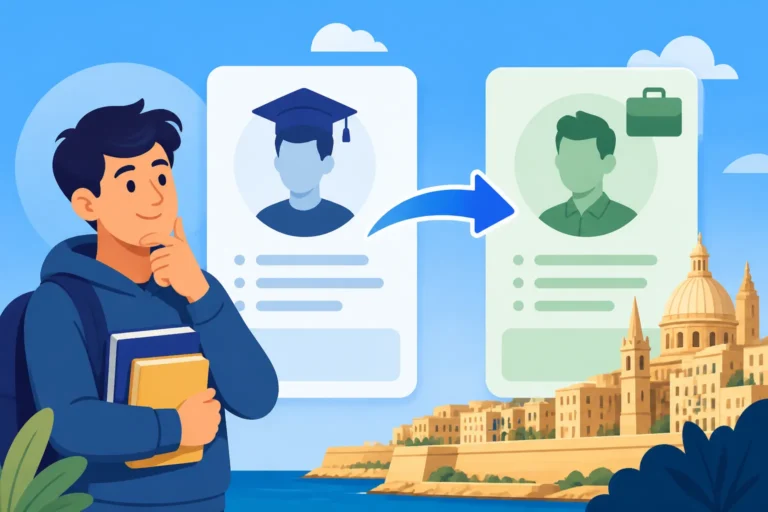
Working While Studying in Malta: The 20-Hour Employment Licence
Ah, the student life in Malta! It's a fantastic experience, isn't it? But let's be real, for many of us expats, the dream of sun-drenched studies often comes hand-in-hand with the very practical need to earn a bit of extra cash. You're trying to keep your head above water with tuition, rent, and the occasional pastizzi, and suddenly the question looms: "Can I actually work while I'm studying here?" This guide is all about cutting through the red tape and explaining everything you need to know about the 20-hour employment licence that allows international students to work in Malta.
Understanding the 20-Hour Employment Licence for Students
When you first arrive in Malta as an international student, the sheer enthusiasm for your new life might overshadow the practicalities of making ends meet. But soon enough, the reality of living expenses sets in. Thankfully, Malta's immigration policies recognise this need, offering a pathway for non-EU/EEA students to gain part-time employment through a specific licence. This isn't just a casual nod to student jobs; it's a formal, government-sanctioned process designed to regulate your work while ensuring your primary focus remains your studies. It's a system put in place to protect both you as a student worker and the Maltese labour market.
Who is Eligible for this Licence?
First things first, let's talk eligibility. This isn't a free-for-all; there are specific criteria you need to meet to even apply for this valuable licence. Generally, this particular employment licence is designed for non-EU/EEA students who hold a valid Maltese student residence permit. It's crucial that your permit is current and hasn't expired. You can't just rock up on a tourist visa and expect to start working.
Furthermore, there’s usually a waiting period before you can even think about applying. Typically, students must have resided in Malta for at least three months, and sometimes even six months, from the start date of their studies, and possess a valid residence permit. This period is intended to demonstrate your commitment to your studies and to ensure you've properly settled into your academic life before taking on additional respons responsibilities. The course you are studying also plays a role; it usually needs to be a full-time programme at a recognised educational institution in Malta. Short-term language courses or casual vocational training might not always qualify, so always double-check with your institution and Identità (Malta's agency for identity management) if you're unsure. This licence is distinct from other work permits like the Single Permit, specifically catering to the student experience.
The Rationale Behind the 20-Hour Limit
So, why exactly 20 hours? This isn't an arbitrary number plucked out of thin air. The 20-hour weekly limit is a common international standard for student work permits, designed to strike a delicate balance. On one hand, it allows students to earn supplementary income to help cover their living expenses and gain valuable work experience. On the other hand, it ensures that your studies remain your primary focus. The Maltese authorities, much like their counterparts in many other countries, want to avoid situations where students are working so many hours that their academic performance suffers, or where the student visa becomes a backdoor route to full-time employment.
This limit is crucial. Exceeding it without proper authorisation can lead to serious consequences, including the revocation of your student residence permit and potential deportation. It’s a strict rule, and it’s there for a reason – to maintain the integrity of the student immigration system. It also aims to prevent the exploitation of student workers and ensure that full-time employment opportunities are available for those on appropriate full-time work permits. Think of it as a protective measure: it ensures you don't burn out, and it ensures the system isn't abused. Your main goal here in Malta is to get that qualification, and this rule helps keep you on track.
Key Benefits and Limitations of Working Part-Time
Working part-time while studying in Malta offers a multitude of benefits that extend far beyond just financial relief. Firstly, the most obvious advantage is the ability to support yourself financially. Malta, while not as expensive as some Western European capitals, still has a significant cost of living, especially when it comes to rent in popular areas like Sliema or St. Julian's. Earning a steady income, even part-time, can greatly alleviate the financial pressure and allow you to enjoy your student experience more fully, perhaps even affording those spontaneous trips to Gozo or Sunday lunches by the sea.
Beyond the monetary aspect, gaining work experience in Malta can be invaluable for your future career. It allows you to build a local network, understand the Maltese workplace culture, and develop practical skills that complement your academic learning. Imagine working in an office environment, a bustling café, or even assisting in a local business – these experiences offer real-world insights that textbooks simply cannot. For many international students, the ability to work in an English-speaking environment is also a huge plus, enhancing language skills and confidence. You might even find yourself picking up a few Maltese phrases along the way!
However, it's vital to acknowledge the limitations. The 20-hour weekly cap is rigid and must be adhered to. This means you won't be able to rely on part-time work to cover all your expenses, and you'll still need to demonstrate sufficient funds to support yourself when you apply for or renew your student residence permit. Balancing work and study can also be incredibly challenging. University assignments, exam preparations, and project deadlines don't suddenly disappear because you have a shift at work. Time management becomes an art form, and you might find yourself sacrificing some social activities or leisure time. It's a trade-off, and you need to be honest with yourself about whether you can manage both without compromising your academic success. Furthermore, finding a job that aligns perfectly with your study schedule can be tough, as employers might expect some flexibility.
The Application Process: Steps to Getting Your Licence
So, you've decided working part-time is for you, and you meet the eligibility criteria. Excellent! Now comes the slightly less glamorous but absolutely necessary part: applying for the employment licence. Navigating bureaucracy in a foreign country can feel like trying to solve a Rubik's Cube blindfolded, but I promise, with a clear step-by-step approach, it's manageable. The key is preparation and patience, two virtues that will serve you well during any administrative process in Malta.
Gathering Essential Documentation
Preparation is paramount when dealing with Maltese officialdom. Before you even think about logging onto the Jobsplus portal, you need to ensure all your documents are in order. Missing a single piece of paper can lead to frustrating delays, pushing back your ability to legally start working. Here's a rundown of what you'll typically need:
- Valid Passport: This is a given, and it must have sufficient validity remaining.
- Malta Student Residence Permit (eResidence Card): Crucially, you must already have this in hand. You cannot apply for a work licence if you're still waiting for your primary residence permit. If you're wondering how to get one, check out our guide on Student Residence Permits for Malta: Requirements and Renewal.
- Letter of Acceptance from Your Educational Institution: This verifies your enrolment in a full-time study programme.
- Proof of Continued Study and Attendance: Your institution will need to provide a letter confirming you are an enrolled student in good standing and actively attending your course. They'll also verify your course duration.
- Employment Contract/Engagement Form: This is vital. You cannot apply for the licence without a prospective employer. The contract will outline your hours (ensuring it's within the 20-hour limit), your role, and your remuneration. Make sure it's signed by both you and your employer.
- Jobsplus Engagement Form: Your employer will need to submit this form, confirming their intention to employ you. This is part of the standard process for Jobsplus: Registering Your Employment and Finding Work in Malta.
- Police Conduct Certificate: While not always explicitly required for the 20-hour student licence, it's good practice to have a recent one, especially if your employer requests it. For any residence permit applications, it's almost always a requirement.
- Passport-sized photos: Always have a few recent ones handy.
- Application Form: The specific form provided by Jobsplus for student employment licences.
Ensure all documents are clear, legible, and, if not in English or Maltese, accompanied by an official translation. Any discrepancy can cause a roadblock in your application.
Navigating the Jobsplus Application Portal
Once you have your ducks in a row with the documentation, the next step is to submit your application through Jobsplus, Malta's public employment service. In recent years, much of this process has moved online, which is a blessing and a curse. It means fewer trips to offices, but it also requires you to be meticulous with your online submissions.
You or your prospective employer will need to access the Jobsplus online portal. Often, the employer takes the lead on submitting the engagement form and some initial details, as they are the ones offering you the job. However, you will be responsible for uploading your personal documents and the student-specific proofs. Make sure you register an account if you don't already have one.
The portal will guide you through the various sections, prompting you to upload the necessary documents. Pay close attention to file formats and sizes – nothing is more annoying than having your upload fail because of a technicality. Double-check every single field before you hit submit. A typo in your passport number or a missed checkbox can delay your application significantly. Once submitted, you'll usually receive an acknowledgement. It’s then a waiting game, which can test anyone’s patience, but it’s crucial to remain calm and follow up politely if you experience undue delays. Keep copies of everything you submit, and maintain a record of any communication with Jobsplus.
Common Pitfalls and How to Avoid Them
Even with the best intentions, the application process can throw up a few curveballs. Being aware of common pitfalls can help you sidestep them.
One of the most frequent issues is incomplete documentation. As mentioned, a missing document, an expired permit, or an uncertified translation can bring your application to a screeching halt. Always create a checklist and verify each item before submission. Don't assume anything; if in doubt, provide it.
Another common problem is applying too early or too late. Remember the typical waiting period after your arrival? Applying before this period is up will result in an automatic rejection. Conversely, waiting too long means you might miss out on job opportunities or face difficulties if your residence permit is nearing its expiry. Aim to apply once you meet the minimum residency requirement and have a solid job offer in hand. You can find more details on timeframes in our guide How Long After Arriving Can a Student Start Working in Malta?.
Incorrect information on the application forms is also a major headache. Double-check names, dates of birth, passport numbers, and addresses. Even minor errors can trigger requests for clarification, prolonging the processing time.
Finally, lack of communication with your employer can create unnecessary stress. Ensure your employer understands the specific requirements for student employment licences and is prepared to assist with their part of the application. They are a crucial partner in this process. Having a clear conversation with them about expected timelines and document submissions can prevent misunderstandings. Also, be aware that while you might think you don't need a Jobsplus Licence to work in Malta if you're a student, you absolutely do for non-EU/EEA nationals.
Finding Part-Time Work: Opportunities for International Students
Once you've wrapped your head around the administrative side of things, the exciting part begins: finding a job! The Maltese job market, while perhaps smaller than some larger European nations, offers a decent array of opportunities for part-time student workers, particularly in sectors that thrive on seasonal demand or require flexible hours. It’s all about knowing where to look and how to present yourself.
Industries That Welcome Student Workers
Malta's economy is heavily reliant on tourism, hospitality, and the service industry, which often means there's a constant demand for flexible labour. These sectors are typically the most welcoming to international students seeking part-time work:
- Hospitality: Think hotels, restaurants, cafes, and bars. Roles like waiters, bartenders, kitchen assistants, receptionists, and housekeepers are frequently available. These jobs are often shift-based, making it easier to fit around a university timetable. Given Malta's popularity as a tourist destination, especially during the warmer months, these establishments are always on the lookout for reliable staff.
- Retail: Shops, boutiques, and larger retail outlets often need sales assistants, particularly during peak seasons like holidays or summer. Working in retail can also improve your customer service skills and give you a glimpse into Maltese consumer culture.
- iGaming and Tech Support: Malta is a hub for the iGaming industry, and many companies here operate 24/7. This often translates to a need for customer support agents, data entry roles, or even junior administrative positions that can accommodate part-time shifts, including evenings and weekends. These roles often require strong English language skills and sometimes additional languages, which many international students possess.
- Administrative and Office Support: Smaller businesses or even departments within larger companies might occasionally need help with administrative tasks, filing, or basic data management. These roles can be a bit harder to find but offer valuable office experience.
- Language Teaching/Tutoring: If you're fluent in a language in demand, you might find opportunities to tutor children or other expats. Platforms like iTalki, while global, can also connect you with local language learners seeking in-person lessons, or at least provide a flexible online income stream that doesn't conflict with your 20-hour limit for Maltese employment. This is a fantastic way to leverage your existing skills.
Job Hunting Strategies and Platforms
Don't just wait for opportunities to fall into your lap. Proactive job hunting is key!
- Online Job Portals: Websites like Jobsplus (the official employment agency), LinkedIn, MaltaPark, and various local recruitment agency sites are great starting points. Filter your searches for "part-time," "student," or "flexible hours." Update your LinkedIn profile with your skills, language proficiencies, and your student status.
- Recruitment Agencies: Many recruitment agencies in Malta specialise in different sectors. While some focus on full-time professional roles, others cater to temporary or part-time positions, especially in hospitality and iGaming. Register with a few reputable ones and let them know your availability and the constraints of your student visa.
- University Career Services: Your educational institution might have a career services department or a notice board where local businesses post vacancies suitable for students. They may also offer workshops on CV writing specific to the Maltese market.
- Networking: This is huge in Malta. Talk to your fellow students, lecturers, and any contacts you make. "Word of mouth" is a powerful tool here. Attend university events, join student clubs, and put yourself out there. You never know who might know someone looking to hire.
- Walk-Ins: Especially in the hospitality and retail sectors, sometimes the old-fashioned approach works best. Print out some CVs and walk into cafes, restaurants, and shops, asking if they have any part-time vacancies. This shows initiative and allows you to make a direct impression.
- Tailor Your CV: Make sure your CV is up-to-date, concise, and highlights any relevant experience or skills. Don't forget to mention your availability and the fact that you hold a student residence permit and are eligible for a 20-hour work licence. If you need help with this, our guide on Writing a Maltese CV and Cover Letter That Get Noticed might be useful.
Balancing Study and Work Commitments
This is perhaps the trickiest part of the entire endeavour. You've come to Malta to study, and that must remain your priority. Juggling lectures, assignments, exams, and a part-time job requires exceptional organisation and discipline.
- Create a Detailed Schedule: Map out your university timetable, including contact hours, study time, and assignment deadlines. Then, realistically see where your 20 work hours can fit in. Be honest about how much time you genuinely need for your studies.
- Communicate with Your Employer: Be upfront with your potential employer about your university commitments and your 20-hour limit. A good employer will understand and appreciate your honesty. Look for workplaces that offer flexibility, such as shift swapping or predictable rotas that align with your academic calendar.
- Prioritise Sleep and Wellbeing: It's easy to fall into the trap of overworking and neglecting your health. Remember, burning out will negatively impact both your studies and your work performance. Ensure you're getting enough rest, eating well, and taking time for yourself.
- Utilise Downtime Effectively: Those gaps between lectures, or your bus commute, can be excellent opportunities to review notes or plan your next study session. Every little bit counts.
- Don't Be Afraid to Say No: If a work shift will genuinely jeopardise your academic performance, or if you're feeling overwhelmed, it's okay to decline extra hours or to talk to your employer about your workload. Your education is your investment.
- Seek Support: If you're struggling, talk to your university's student support services or academic advisors. They can offer guidance on managing your workload and point you to resources.
Legal and Financial Considerations for Student Workers
Working in a foreign country, even part-time, comes with a specific set of legal and financial obligations you need to understand. It's not just about earning money; it's about doing so legally and ensuring you're compliant with Maltese laws regarding employment, tax, and social security. Ignoring these aspects can lead to unexpected fines or complications with your residence status.
Understanding Your Rights and Responsibilities
Even as a part-time student worker, you are entitled to certain rights under Maltese employment law. It's easy to feel vulnerable as an international student, but knowing your rights empowers you.
- Employment Contract: Always ensure you have a written employment contract that clearly outlines your role, responsibilities, working hours (specifically confirming the 20-hour weekly limit), rate of pay, notice period, and any other terms and conditions. If you need help understanding it, seek advice from your university or a local legal aid service. Our guide on Employment Contracts and Conditions of Work in Malta offers more general insights.
- Minimum Wage: You are entitled to the national minimum wage. Make sure your hourly rate meets or exceeds this.
- Annual Leave and Public Holidays: Even part-time workers accrue annual leave pro-rata to their hours worked. You are also entitled to public holidays, which if worked, should be compensated appropriately.
- Sick Leave: You have rights regarding sick leave, usually after a probationary period, and you'll need a doctor's certificate. Our article on Sickness Benefit in Malta: Your Rights When You Can't Work delves into this more.
- Safe Working Environment: Your employer is legally obliged to provide a safe and healthy working environment.
- Non-Discrimination: Maltese law protects you from discrimination based on nationality, gender, religion, or any other protected characteristic.
Your responsibilities include adhering to your contract, performing your duties diligently, and following workplace rules. Crucially, you must strictly adhere to the 20-hour weekly work limit, as exceeding this is a serious breach of your employment licence conditions.
Tax Implications and Social Security Contributions
This is where things can get a little complex, but it's vital to grasp. As an employee in Malta, even part-time, you will have deductions from your salary for both income tax and social security contributions.
- Income Tax: Malta operates a progressive income tax system. As a student worker, your earnings will likely fall into the lower tax brackets, but tax will still be deducted at source through the Final Settlement System (FSS). Your employer is responsible for deducting this and remitting it to the Commissioner for Revenue (CFR). At the end of the tax year, your employer will issue an FS3 form, summarising your earnings and deductions. You may or may not need to file a personal tax return depending on your income level and if you have other sources of income, but it's always good to be aware of the process. For more detailed information, look at our guide on Income Tax in Malta: Progressive Rates, FSS, and Filing. For those earning international income, it's particularly important to understand how Malta's tax residency rules interact with your home country's, and platforms like Taxes for Expats can be invaluable for clarifying these cross-border tax issues, even for part-time earnings.
- Social Security Contributions (SSC): These are mandatory contributions that fund Malta's social welfare system, including healthcare, pensions, and unemployment benefits. As an employee, you and your employer both contribute. The amount depends on your earnings. Making these contributions is key to unlocking access to Malta's public healthcare system. Our article Social Security Contributions and What They Fund in Malta provides an in-depth explanation of these. It's important to note that while your contributions entitle you to public healthcare services, there are usually specific registration steps for students, detailed in guides like Healthcare in Malta for Foreign Residents: The Complete System Guide (2027).
It's highly advisable to keep good records of your payslips and any communication related to your tax and social security. If you find the tax system overwhelming, especially with potential foreign income or specific student situations, consulting with a local accountant or a service like Taxes for Expats can provide much-needed clarity. They can ensure you're compliant and take advantage of any applicable deductions or treaties.
Potential Impact on Your Residence Permit
Your employment licence is intrinsically linked to your student residence permit. Any violation of the terms of your employment licence can have direct and serious repercussions on your ability to remain in Malta.
- Adherence to Hours: As stated, consistently working more than 20 hours a week without specific authorisation (which is rare for students) is a serious breach. Identità, the agency responsible for residence permits, can revoke your student permit if they find evidence of non-compliance.
- Maintaining Student Status: The employment licence is granted on the condition that you remain a full-time student in good standing. If you drop out of your course, fail to attend classes, or are expelled, your employment licence becomes invalid, and consequently, your student residence permit will also be at risk.
- Permit Renewal: When it comes time to renew your student residence permit, your history of compliance with your employment licence will be part of the assessment. Any previous infringements could jeopardise your renewal application.
- Switching Permit Types: If you graduate and wish to stay in Malta to work full-time, you'll need to apply for a different type of permit, such as a Single Permit. Your history as a compliant student worker can be a positive factor, but it's a completely separate application process. Don't assume your student work permit seamlessly transitions to a full-time work permit. If you're considering this path, research Can I Switch from a Student Permit to a Single Permit in Malta? to understand the requirements.
In essence, view your 20-hour employment licence as a privilege tied to your student status. Respecting its terms is crucial for your long-term stay and future prospects in Malta.
Life Beyond Work and Study: Integrating into Maltese Life
While your primary purpose in Malta might be studying and your part-time job provides a necessary income, true expat life is about more than just academics and employment. Integrating into Maltese society, building a social network, and understanding the local culture will enrich your experience immeasurably and make your time here truly memorable.
Building a Social Network and Community
Moving to a new country can be isolating, but Malta offers many avenues to connect with others.
- University Life: This is your most immediate social circle. Join student organisations, attend freshers' events, participate in campus activities, and collaborate with classmates on projects. These are fantastic ways to meet both local and international students who are in the same boat as you.
- Expat Groups: Malta has a thriving expat community. Search for "Expats in Malta" groups on social media platforms like Facebook. These groups often organise meetups, social events, and provide a forum for asking questions and sharing experiences. They can be a lifeline for new arrivals.
- Hobbies and Interests: Pursue your hobbies! Whether it's a sports club, a book club, a hiking group, or a photography class, joining local clubs is a surefire way to meet people who share your passions.
- Work Colleagues: Your part-time job isn't just about earning money; it's also a social environment. Make an effort to get to know your colleagues. Many friendships begin in the workplace.
- Volunteering: Contributing to a local charity or community project is a wonderful way to meet like-minded people, give back to your new home, and gain a deeper understanding of local issues.
Remember, building a social network takes time and effort. Don't get discouraged if you don't instantly find your tribe. Keep putting yourself out there, and eventually, you'll find your community.
Language Learning and Cultural Immersion
While English is an official language and widely spoken in Malta, especially in business and education, making an effort to learn Maltese can significantly enhance your experience and aid in deeper cultural immersion.
- The Power of Maltese: Even learning a few basic phrases ("Grazzi" for thank you, "Bonġu" for good morning, "Kif int?" for how are you?) will go a long way. Locals genuinely appreciate the effort. It can open doors, facilitate everyday interactions, and show your respect for the local culture. For those serious about picking up the language, resources like iTalki offer flexible online lessons with native speakers, which can be a perfect fit around your study and work schedule. Engaging with a tutor on iTalki, for example, can give you that personalised touch that classroom settings sometimes lack.
- Cultural Nuances: Maltese culture is a fascinating blend of European, North African, and Middle Eastern influences, shaped by centuries of diverse rulers. Observe local customs, particularly during village festi (feasts) or religious holidays. Understand that family is paramount, and hospitality is deeply ingrained. Be open-minded and curious.
- Explore and Engage: Don't just stick to the main tourist spots. Venture into smaller villages, try local cuisine, visit historical sites beyond Valletta and Mdina, and engage with local shopkeepers and residents. Attend local events, concerts, or traditional performances. The more you explore, the more you'll understand the soul of Malta. You might even find yourself enjoying the lively banter at a local market or the quiet charm of a fishing village.
Planning for Post-Graduation Opportunities
While you're busy navigating your student life and part-time work, it's never too early to start thinking about what comes next. If your goal is to stay and work in Malta after graduation, proactive planning is crucial.
- Career Fairs and Networking Events: Attend any career fairs organised by your university or local industry bodies. Network with professionals in your field of study. Many companies, especially in growing sectors like iGaming, FinTech, and IT, are always looking for new talent.
- Internships: If your academic programme includes an internship, seize that opportunity. An internship can often lead to a full-time job offer post-graduation, or at least provide valuable contacts and experience.
- Understand Permit Transitions: Be aware that your student residence permit is not a direct path to a full-time work permit. You will need to apply for a different type of permit, such as a The Single Permit in Malta: Combined Work and Residence, Step by Step, or potentially the Key Employee Initiative if you meet the criteria. Start researching these options well in advance of your graduation.
- Skills Development: Continuously work on developing skills that are in demand in the Maltese job market. This could involve additional certifications, language proficiency, or specialised software knowledge.
- Utilise University Resources: Your university's career services department can often provide guidance on post-graduation visa options, job search strategies, and even mock interviews.
By thinking ahead, you can smoothly transition from student life to a professional career in Malta, leveraging the experience gained from your studies and your valuable part-time work.
Important Considerations for Student Employment Licence Holders
Here's a quick summary of key aspects related to the 20-hour employment licence for students in Malta.
| Aspect | Detail | Key Takeaway |
|---|---|---|
| Eligibility | Non-EU/EEA students with valid student residence permit, enrolled in full-time course, typically after 3-6 months residency. | Ensure your student permit is active and you meet the waiting period before applying. |
| Work Limit | Strictly 20 hours per week. | Exceeding this limit can lead to permit revocation. |
| Application Body | Jobsplus (Malta's Public Employment Service). | The process is mostly online; prepare all documents meticulously. |
| Required Documents | Passport, eResidence card, student enrolment proof, job offer/contract, Jobsplus engagement form, (sometimes) police conduct. | Incomplete applications are the biggest cause of delays. |
| Employer Role | Employer must confirm engagement and often initiates parts of the Jobsplus process. | Clear communication with your employer is vital. |
| Taxes & Social Security | Income tax (FSS) and social security contributions deducted from salary. | These are mandatory. Keep payslips. Consult with experts like Taxes for Expats if needed. |
| Healthcare Entitlement | Social security contributions contribute to public healthcare access, but specific registration steps are necessary. | Ensure you register with the Entitlement Unit to access public healthcare benefits. |
| Impact on Residence | Non-compliance (e.g., exceeding hours, dropping out of studies) can jeopardise your student residence permit. | Your work licence is tied directly to your student status. Maintain good standing in both. |
| Post-Graduation | A separate work permit (e.g., Single Permit) is required for full-time employment after graduation. | Plan ahead for career opportunities and the necessary permit changes. |
| Language Learning | While English is common, learning Maltese enhances integration and opportunities. | Use resources like iTalki to learn Maltese and connect with the local culture. |
Disclaimer
The information provided in this guide is intended for general informational purposes only and does not constitute legal, financial, or immigration advice. While every effort has been made to ensure accuracy and up-to-date information, regulations and procedures in Malta can change. Always consult with official government sources, such as Jobsplus, Identità, and the Commissioner for Revenue (CFR), or seek professional advice from qualified immigration lawyers or financial advisors in Malta for your specific circumstances.