How Do I Register as Self-Employed in Malta?
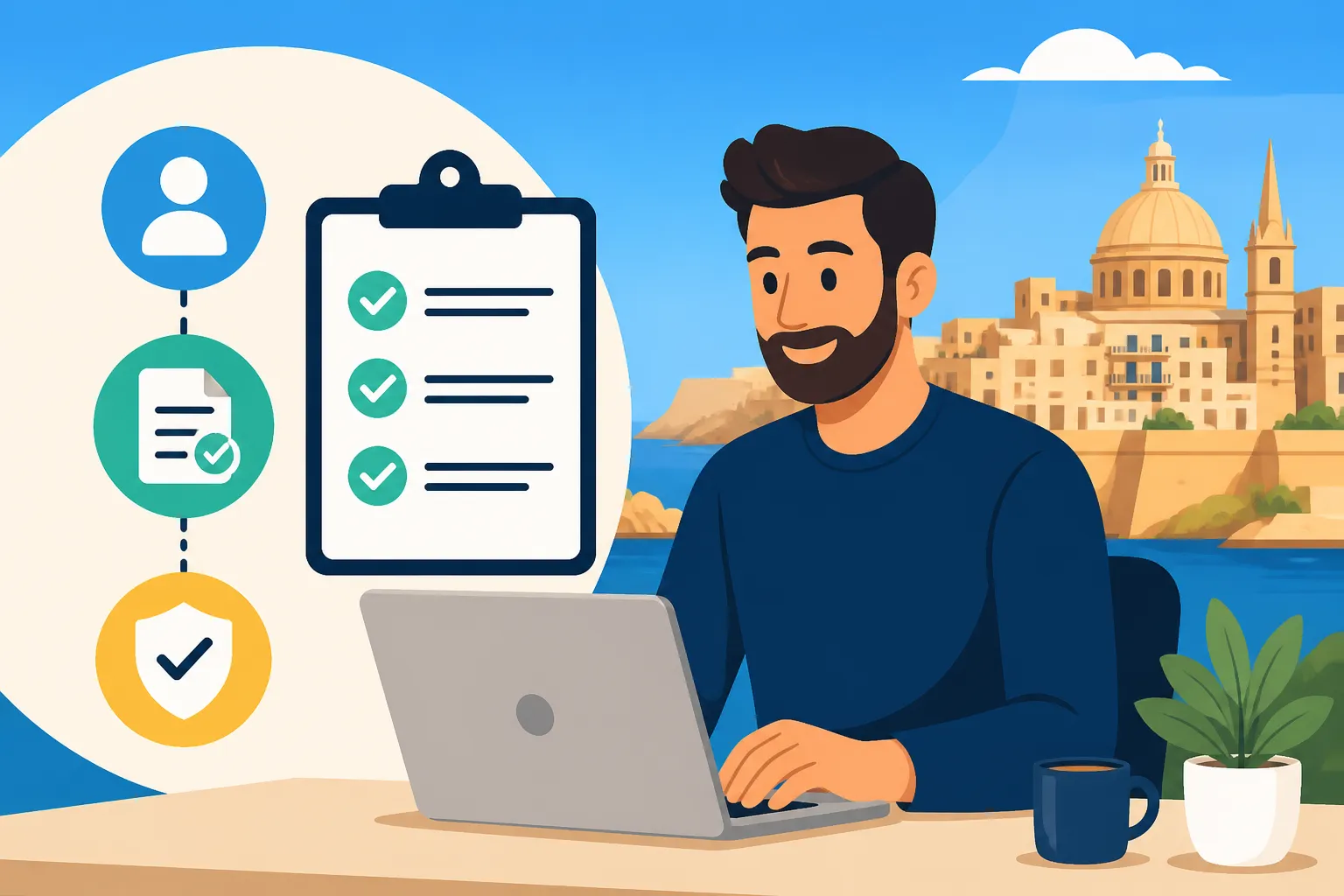
Thinking about taking the leap into self-employment here in Malta? It's an incredibly exciting prospect, offering freedom and flexibility, but let's be honest, the administrative hurdles in a new country can feel like navigating a complicated maze blindfolded. This guide is here to cut through the confusion, offering you a clear, empathetic, and realistic walkthrough of every essential step required to register as self-employed in Malta, ensuring you can focus on building your business, not getting bogged down in bureaucracy.
Understanding Self-Employment in Malta: More Than Just a Title
Before you even fill out your first form, it's crucial to grasp what being "self-employed" truly means in the Maltese context. It's not just a fancy job title; it's a legal and financial status with distinct obligations and benefits. Many expats arrive here with big dreams, perhaps of freelancing for international clients or setting up a small local service, and while Malta is generally welcoming, the process isn't always as straightforward as it might seem on paper.
Distinguishing Self-Employed from Employed Status
When you're self-employed, you're essentially your own boss, and that comes with a whole different set of responsibilities compared to being an employee. An employee works under a contract of service for an employer who dictates tasks, hours, and provides benefits like sick leave and paid holidays. You, as the self-employed individual, operate under a contract for service. This means you determine your own working conditions, invoicing clients for your services, and are responsible for your own taxes, social security, and any other business-related expenses. The lines can sometimes blur, especially if you have a single, long-term client, but Maltese authorities are generally quite clear on these distinctions. It's a fundamental difference that impacts everything from how you pay into the national system to how you ultimately file your annual tax return.
Defining Your Business Activity
One of the initial steps, even before formal registration, is to clearly define what it is you'll actually be doing. The Maltese authorities will want to know your primary business activity. This often involves looking at NACE codes (Nomenclature of Economic Activities), which are standardized European classifications for economic activities. Don't let this intimidate you; for most freelancers or consultants, it’s usually straightforward. Are you a graphic designer? A freelance writer? A private tutor? An IT consultant? Your chosen activity will be listed on your official registration documents, so it's worth taking a moment to think it through. While you can often expand or adjust your activities later, having a clear focus from the start simplifies the initial paperwork. Many expats come with diverse skills, so pick the one that represents the majority of your expected work.
The Official Road: Registering with Jobsplus and the Commissioner for Revenue
This is where the rubber meets the road. Navigating the bureaucratic systems of Jobsplus and the Commissioner for Revenue (CFR) is paramount to legally operating as self-employed in Malta. It can feel like a lot of back-and-forth, but each step is vital to ensure you're compliant.
Your First Stop: Jobsplus
Your journey into self-employment in Malta officially begins with Jobsplus, Malta’s public employment service. You need to register your self-employment activity with them. This isn't just a formality; it's how the government tracks your employment status and ensures you're contributing to the social security system.
The process typically involves submitting a "Jobsplus Engagement Form for Self-Occupied Persons". You can usually find this form on the Jobsplus website. When filling it out, you'll need details like your personal information, your Maltese ID card number (or provisional ID number if you're very new), and a clear description of your self-employed activity. This is where those NACE codes come into play, helping you categorize your work. The form also asks for your expected start date. It's important to submit this before you actually start working as self-employed. If you've been registered as a jobseeker with them previously, you might also need to formally deregister from that status before registering as self-employed, so keep that in mind. Remember, this initial registration sets the stage for everything else, so take your time and ensure all details are accurate. It’s also important to note that you might also need an actual licence or permit depending on your profession. For example, if you're a therapist or a specific type of consultant, you might have additional regulatory bodies to deal with.
Getting Your Tax Identification Number TIN and Registering with the CFR
Once Jobsplus has acknowledged your self-employment status, your next crucial stop is the Commissioner for Revenue (CFR). This is where you get your Tax Identification Number (TIN) and formally register yourself as a taxpayer liable for income tax and potentially Provisional Tax. If you're wondering, "How Do I Get a Tax Number (TIN) in Malta?", it's typically issued automatically when you register for tax.
You'll need to fill out a "Commencement of Activity Form" (Form TA22 for individuals, or TA24 if you're primarily earning rental income but also self-employed). This form informs the tax authorities that you're starting a taxable activity. It requires your personal details, your Jobsplus registration number, and again, a description of your business activity and your expected start date. It's a critical step that links your self-employed activity to your tax obligations. Without this, you won't be able to properly declare your income later on, leading to headaches. Many expats find navigating the CFR portal a bit tricky at first, but thankfully, there are resources and professional services, such as Taxes for Expats, that specifically cater to assisting foreigners with these registrations, offering invaluable peace of mind.
The Lease Attestation Requirement for Some
This is a specific hurdle that often catches non-EU/EEA nationals off guard, especially those applying for certain types of residence permits or setting up a business. For your residence permit, and sometimes for business registration, you might be required to have your rental agreement attested by the Housing Authority. This means the authority verifies the legitimacy of your lease. While not directly part of the self-employment registration itself, it's a prerequisite for maintaining your legal residence in Malta, which in turn allows you to be self-employed. If you're a non-EU citizen, make sure you know about the Lease Agreement Attestation Requirement for Non-EU Tenants in Malta. This is one of those specific Maltese administrative quirks that can add a surprising layer of complexity if you're not prepared for it.
Your Financial Obligations: Social Security and Provisional Tax
Once you’re officially registered, your focus shifts to the ongoing financial responsibilities. Understanding how social security contributions and provisional tax work is key to avoiding penalties and ensuring you’re contributing correctly to Malta’s system.
Understanding Social Security Contributions
As a self-employed individual in Malta, you are legally obliged to pay Class 2 Social Security Contributions (SSC). This is how you contribute to Malta's welfare state, which in turn entitles you to benefits like public healthcare, sickness benefits, and eventually, a state pension. Many wonder, "Do I Pay Social Security as a Self-Employed Person in Malta?" The answer is a resounding yes.
The amount you pay is typically based on your net income from self-employment from the previous year, or if you're just starting out, on a provisional basis. There are different rates and maximum thresholds for these contributions, which are adjusted annually. You'll find specific details on how much you need to pay, usually broken down by week or month, on the Department of Social Security website. It's crucial to stay on top of these payments. Failing to pay your social security contributions can impact your entitlement to various benefits down the line, including access to Malta's public healthcare system. Understanding "How Maltese Health Entitlement Fits with Social Security Contributions" is vital for long-term residents.
Here's a simplified breakdown of typical Class 2 Social Security Contributions (rates are subject to annual change, so always check the latest official figures):
| Category | Basis of Calculation | Contribution Rate (Approx.) | Payment Frequency |
|---|---|---|---|
| Self-Occupied (Class 2) | Based on average weekly income from the previous year (with minimums and maximums) | 15% of annual income | Quarterly |
| Newly Self-Occupied (Provisional) | Flat rate for first year, then adjusted | Fixed minimum rate | Quarterly |
| Under 18 / Over Pensionable Age (Voluntary) | Specific conditions apply | Voluntary rates | Varies |
Note: The actual rates and thresholds for social security contributions are updated annually by the Maltese government. Always refer to the official Department of Social Security website for the most current figures.
Provisional Tax: Malta's Pay-As-You-Go System
Malta operates on a pay-as-you-go system for income tax, which for employees is managed through the Final Settlement System (FSS). For the self-employed, this equivalent is called Provisional Tax. This means you don't wait until the end of the year to pay all your income tax in one lump sum. Instead, you'll make estimated payments quarterly throughout the year. If you're interested in the specifics, look up "Provisional Tax and Settlement Tax for the Self-Employed in Malta".
The amount of Provisional Tax you pay is an estimate of your annual income tax liability. For your first year, this might be based on an estimate you provide, or on a fixed minimum if you're just starting with very little income. In subsequent years, it's typically calculated based on your tax liability from the previous year. You usually make these payments in April, August, and December. It's easy to forget about these dates when you're busy growing your business, but missing them can lead to interest and penalties. Keeping clear financial records from day one is crucial here, as it will help you accurately estimate your income and, consequently, your provisional tax.
Future Tax Returns: The Importance of Good Record Keeping
Even though you're paying Provisional Tax, you'll still need to file an annual income tax return. This is where you declare your actual income and expenses for the year, and reconcile it against the Provisional Tax payments you've already made. You might owe more, or you might be due a refund. Forms like the TA22 or TA24 are what you'll typically use. If you're a freelancer managing multiple clients, it can get complicated. This is another area where specialist tax advisors, like those at Taxes for Expats, can be immensely helpful in ensuring you remain compliant and claim all eligible deductions. Getting a handle on "Filing Your Maltese Tax Return: The CFR, FS3, and TA22/TA24" is essential for your long-term financial health as a self-employed individual.
Beyond Paperwork: Practical Steps for Your Self-Employed Journey
Registration is just the beginning. To truly thrive as a self-employed individual in Malta, you'll need to tackle practical matters, from banking to networking, and understand how to integrate into the local ecosystem.
Opening a Business Bank Account
While it might be tempting to just use your personal bank account, particularly in the beginning, it's highly recommended to open a separate business bank account. This provides clarity for your accounting, makes tax filing much simpler, and presents a more professional image to your clients. Unfortunately, opening a bank account in Malta can be notoriously challenging for new expats, self-employed or not. Banks like BOV, HSBC, and APS Bank are the main players, but they often require extensive documentation, proof of address, and a clear understanding of your income source.
Be prepared for a thorough due diligence process. You'll likely need your eResidence card, proof of address (a utility bill is best), your business registration documents from Jobsplus and the CFR, and possibly a business plan or contracts with clients to demonstrate your income. It's not uncommon for the process to take several weeks or even months. To simplify things, you might initially consider using digital banking solutions like Revolut or Wise for transactional purposes, though for formal business accounts, a local Maltese bank is usually required. Dive deeper into "Opening a Bank Account in Malta: A Step-by-Step Guide" to prepare yourself for this often frustrating but necessary step.
Getting Your Maltese ID Card Number: The Key to Accessing Healthcare
Your Maltese eResidence card, and the ID number it contains, isn't just for showing you're a resident; it's the gateway to so many essential services, including healthcare. Once you have your eResidence card, which you apply for through Identità (formerly Identity Malta), you effectively have your official Maltese ID number. This number is used for everything from your tax registration to accessing public health services.
As a self-employed person paying social security contributions, you are entitled to access Malta's public healthcare system. However, the system needs to 'know' who you are. So, if you're wondering "Getting Your Maltese ID Card Number: The Key to Accessing Healthcare", understand that it's indispensable for this. You'll use this number to register with a local health centre and ultimately gain access to public doctors and services. Don't underestimate the importance of securing this card promptly after your arrival and successful permit application.
Continuous Learning and Support
Being self-employed means you’re constantly learning, not just about your core business, but about the ecosystem you operate in.
- Networking: Malta has a vibrant expat community and numerous business groups. Joining these can provide invaluable advice, potential clients, and a support network. Look for groups on platforms like LinkedIn or local Facebook communities focused on self-employment or specific industries like "Freelancing and the iGaming, Fintech, and Maritime Sectors in Malta."
- Language Skills: While English is widely spoken and the primary language of business in Malta, learning some basic Maltese can significantly enhance your integration, particularly if you deal with local clients or suppliers. Platforms like iTalki offer flexible online lessons with native speakers, which can be incredibly helpful for picking up conversational Maltese at your own pace. Even just a few phrases can make a big difference in building rapport and navigating daily life.
- Professional Advice: Don't try to go it alone, especially when it comes to taxes and legalities. Engaging with local accountants or lawyers who specialize in expat businesses can save you a world of trouble. They can advise on specific deductions, VAT registration (if applicable), and ensure you're always compliant with Maltese law. Services such as Taxes for Expats are designed to assist newcomers in understanding the intricacies of the Maltese tax system, offering tailored guidance for your specific situation.
- Licences and Permits: Depending on your profession, you might need additional licenses or permits beyond the general self-employment registration. For instance, certain trades, food services, or regulated professions have their own specific requirements. Always check with the relevant government authorities or a business consultant to ensure you haven't overlooked anything vital.
What If You're Also Employed?
It's actually quite common for people to combine self-employment with a part-time or even full-time employed role, especially when they're just starting out as freelancers. The good news is that Malta's system allows for this. You can be both employed and self-employed simultaneously. However, your social security contributions and tax obligations will be calculated differently. If you find yourself in this situation, ensure you understand "Can I Be Employed and Self-Employed at the Same Time in Malta?" as it will impact how you report your income and pay your dues. Your employer will handle your Class 1 social security and FSS tax deductions for your employed income, while you'll be responsible for your Class 2 social security and Provisional Tax for your self-employed earnings. It requires careful record-keeping but is certainly achievable.
It’s a journey, but with patience and a clear understanding of the steps, you’ll be well on your way to a successful self-employed life in Malta.
Disclaimer
Please remember that this guide provides general information for registering as self-employed in Malta as of early 2026. Laws and procedures can change, so always verify the latest requirements with official Maltese government sources, such as Jobsplus, the Commissioner for Revenue, and the Department of Social Security. For personalized advice, consulting with a local legal or tax professional is highly recommended.