Do I Pay Social Security as a Self-Employed Person in Malta?
Navigating the administrative labyrinth of the Mediterranean can be a daunting experience, especially when you are trying to build a new life as a freelancer or small business owner. One of the most frequent points of confusion for newcomers is the social security system. This guide clarifies exactly whether you need to pay, how much it will cost, and how these contributions unlock essential services like healthcare and pensions while you are living and working in Malta.
Understanding Class 2 Social Security Contributions
When you first land in Malta and decide to forgo the traditional nine-to-five, you stop being an employee and become, in the eyes of the Social Security Department, a "Class 2" contributor. This distinction is vital because the responsibility for calculating, reporting, and paying into the system shifts entirely from an employer to you. Unlike employees who see their deductions vanish before their salary even hits their bank account, self-employed individuals must proactively manage their payments three times a year.
The Maltese system defines a self-employed person as anyone who gains income from a trade, business, profession, or any other activity where they are not under a contract of service. If you are a freelance graphic designer, a consultant, or even someone running a small boutique in Valletta, you fall into this bracket. It is a common misconception that paying social security is optional if your income is low; in reality, the requirement to contribute kicks in as soon as you are earning above a very modest threshold. Failing to keep up with these payments can lead to significant interest penalties and, more importantly, can jeopardize your residence status and access to the public health system.
To get started, you must ensure you have handled the initial paperwork. This includes Registering as Self-Employed with Jobsplus and the CFR in Malta to establish your legal standing. Without this registration, you effectively do not exist in the professional ecosystem, which makes opening bank accounts or applying for loans nearly impossible. I remember the frustration of my first year, thinking I could just "figure it out" later, only to realize that the "later" involved a mountain of back-dated forms and a very stern conversation with a clerk at the Floriana office.
Who is classified as self-employed versus self-occupied
In Malta, the law makes a subtle but important distinction between being self-employed and being self-occupied. A self-occupied person is someone who is actively engaged in their business and derives their main income from it. A self-employed person might technically be someone who earns income from passive sources, like dividends or rents, but for the vast majority of expats, we are talking about being self-occupied. If you are the one doing the work, you are self-occupied and must pay Class 2 contributions.
This status is what allows you to access the benefits we often take for granted back home. For instance, your contributions are what eventually allow you to participate in the Health Entitlement in Malta: How Social Security Contributions Unlock Free Care scheme. If you are moving here from a non-EU country on a work permit, proving you are paying your dues is a non-negotiable part of your annual permit renewal. Even if you are an EU citizen, your right to stay beyond three months is often tied to your economic activity and your contributions to the national coffers.
The difference between Class 1 and Class 2 contributions
It helps to visualize the social security landscape as two distinct lanes. Class 1 is for employees and their employers, where the cost is split down the middle. Class 2 is for you, the independent worker. Because there is no employer to pick up half the tab, the percentage of your income that goes toward social security can feel higher, even though the rates are designed to be relatively fair. The burden of administrative accuracy falls squarely on your shoulders, which is why many of my fellow expats use services like Taxes for Expats to ensure they aren't accidentally overpaying or missing a critical deadline.
While the "Class 1" employees pay weekly, as a self-employed person, you will deal with four-month blocks. This requires a different kind of financial discipline. You aren't just paying for a pension; you are paying for the right to be a part of the Maltese social fabric. If you ever find yourself in a situation where you cannot work due to illness, these Class 2 payments are what determine your eligibility for the Sickness Benefit in Malta: Your Rights When You Can't Work. Without a history of contributions, you are essentially flying without a net.
Rates and Calculation for Self-Employed Workers
The actual cost of social security in Malta for the self-employed is not a flat fee; it is a tiered system based on your previous year's annual net income. For most people, this works out to roughly 15% of their earnings, but there are minimum and maximum caps that act as guardrails. The system is designed so that those earning very little aren't crushed by debt, while high earners contribute a fair share without being taxed into oblivion.
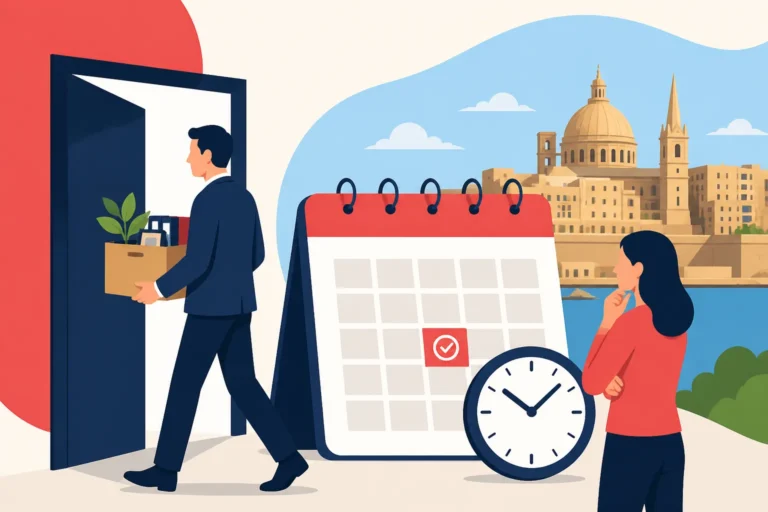
Payments are due in three installments: April, August, and December. Each payment covers the preceding four months. For example, your April payment covers January through April. This "tri-annual" rhythm is something you must mark in your calendar with bright red ink. The Commissioner for Revenue (CFR) sends out payment slips, but they don't always arrive on time, and "I didn't get the mail" is never accepted as an excuse for late payment. You need to be proactive and check your portal or visit the office if the deadline is approaching and your slip is nowhere to be found.
| Contribution Category | Annual Income Range (Example 2026) | Weekly Rate Calculation |
|---|---|---|
| SA 1 (Minimum) | Up to €11,000 | Approx. €32.00 per week |
| SA 2 (Standard) | €11,001 – €22,000 | 15% of Weekly Income |
| SA 3 (Maximum) | Over €28,000 | Fixed Max. Approx. €85.00 per week |
| Part-Time Self-Employed | Various | 15% of actual profit |
How to calculate your weekly rate
Calculating your rate involves looking at your net profit—that is, your total income minus your legitimate business expenses. This is where professional advice becomes invaluable. If you are a digital nomad who has transitioned to a local permit, you might still be thinking in terms of your home country's tax rules. However, Malta has specific rules about what can be deducted. If you spend time learning the local terminology, perhaps by using a tutor from iTalki to understand Maltese business context, you’ll find it much easier to navigate these conversations with local accountants.
Once you have your annual net profit, you divide it by 52 to get your weekly income. If that figure falls within the "SA 2" bracket, you multiply it by 15%. That is your weekly contribution. Multiply that by 17 or 18 (the number of weeks in that four-month period), and you have your total payment for that installment. It sounds complicated, but once you do it once, it becomes second nature. The key is to never spend that 15% when it hits your bank account; it was never yours to begin with.
The trap of the first year in business
One of the most common hurdles for new residents is the "provisional" nature of the first year. Since the government doesn't know what you will earn, they often start you on a default rate. If you end up earning significantly more, you will face a "balancing" payment at the end of the year. If you earn less, you can apply for a reduction, but this requires proof and paperwork. Many expats find themselves hit with a massive bill in their second year because they didn't account for the discrepancy between their actual earnings and the government's estimate.
If you are unsure, it is always better to pay a bit more or set aside a larger "tax buffer" in a high-interest savings account. Too many talented freelancers have to leave the islands because they were hit with a €4,000 tax and NI bill they hadn't anticipated. If your situation involves foreign income, using Taxes for Expats can help you figure out how to report those earnings correctly to both Malta and your home country so you don't end up paying social security twice on the same Euro.
Benefits Unlocked by Your Contributions
Paying into the system isn't just an administrative burden; it is your ticket to the Maltese social safety net. The most immediate benefit for many is healthcare. In Malta, the public healthcare system is world-class, but it is not automatically free for everyone just because they live here. Access is strictly tied to your social security record. Once you start paying Class 2 contributions, you become entitled to use the health centres and the main hospital, Mater Dei, without the hefty bills that private care can incur.
Furthermore, these contributions count toward your "insurance record." This is vital for long-term residents who plan to retire here. Malta has a "two-thirds" pension system, and the amount you receive in your golden years is directly proportional to the number of years you contributed and the amount you paid. Even if you only plan to stay for five or ten years, Malta has social security agreements with many countries, allowing you to transfer these "credits" back home or to another EU state.
Accessing the public healthcare system
Once your first few payments are processed, you should visit the Entitlement Unit to confirm your status. This is a crucial step that many forget. Just paying the money isn't enough; you need to ensure the system has updated your profile so that when you walk into a clinic, they see you as "entitled." You can find more details on this process in the guide on How to Register for Health Entitlement with the Entitlement Unit in Malta.
Having this entitlement is a game-changer. It means your visits to the local health centre—for things like blood tests, stitches, or a general check-up—are covered. It also allows you to access specialized services. If your GP thinks you need to see a consultant, you will need to understand How the Specialist Referral System Works in Malta's Public Hospitals to ensure the costs are covered by the state. For a self-employed person who doesn't have a corporate health insurance plan, this is the most valuable "ROI" on your social security spend.
Sickness, maternity, and injury benefits
The social security system also acts as a form of disability and maternity insurance. If you become pregnant while working as a self-employed person, your Class 2 contributions entitle you to a maternity benefit. This is a flat-rate payment provided by the government to help cover the period when you aren't working. Similarly, if you suffer an injury at work that prevents you from earning, you can apply for an Injury Benefit.
However, be aware that there are "contribution tests." You usually need to have paid a certain number of weeks before you can claim these benefits. This is why it is so dangerous to work "off the books." If you aren't in the system, the system can't help you when life takes an unexpected turn. If you need help communicating with the departments or filling out the Maltese forms, taking a few lessons on iTalki to learn "administrative Maltese" or find a language partner who can help translate can be a lifesaver.
Administrative Hurdles and Staying Compliant
The paperwork involved in being self-employed in Malta can be intense. Your first point of contact will be Jobsplus. You must file an "Engagement Form" as a self-employed person. Once that is processed, you will receive a confirmation that you are officially active in the labor market. Following this, you must register with the Commissioner for Revenue to get your Tax Identification Number (TIN) if you don't already have one. You can read more about this in the guide on How Do I Get a Tax Number (TIN) in Malta?.
Once you are registered, the social security payments will be linked to your ID card number. It is absolutely essential to Get Your Maltese ID Card Number: The Key to Accessing Healthcare as early as possible. This number is the "DNA" of your administrative life in Malta. Everything from your social security payments to your utility bills and your internet contract will be tied to it.
Handling the three annual deadlines
The deadlines for Class 2 payments are fixed: April 30th, August 31st, and December 21st. If these dates fall on a weekend, the deadline is usually the next business day. You can pay online through the CFR portal, which is the most efficient method. If you miss a deadline, the interest starts accruing immediately. It isn't a huge amount at first, but over months and years, it can snowball into a significant sum that the government will eventually collect, often by freezing your bank account if ignored long enough.
For those of us coming from countries with highly automated systems, the manual nature of some Maltese processes can be frustrating. You might find yourself standing in a queue at the Maltapost office to pay a slip because the online portal is down for maintenance. This is just part of the "island life" experience. Embrace it, bring a book, and remember that this is the price of living in the sun.
Dealing with foreign income and Non-Dom status
Malta has a unique tax system for "non-domiciled" residents (most expats). This can make your social security and tax situation a bit more complex. If you are earning money from clients outside of Malta, how much of that money you bring into the country (remit) can affect your tax bill, but your social security is generally based on your total global self-employment income if you are a tax resident here.
This is a grey area where generic advice fails. If you are a high-earner or have complex income streams from the US, UK, or elsewhere, you should definitely consult with Taxes for Expats. They specialize in exactly these kinds of cross-border situations, ensuring you meet your Maltese obligations without falling foul of your home country's tax authorities. It is much cheaper to pay for a consultation now than to pay for a legal battle with the taxman later.
Practical Tips for Managing Your Finances
Success as a self-employed person in Malta depends on your ability to self-regulate. My best advice is to open a separate bank account specifically for your tax and social security obligations. Every time a client pays you, immediately transfer 20-25% of that invoice into the "tax bucket." This covers your 15% social security and a bit extra for your income tax.
When the April, August, or December payment slips arrive, the money will already be sitting there. This prevents the "lifestyle creep" that often sinks new freelancers. It’s tempting to spend that extra cash on a fancy dinner in St. Julian’s or a weekend trip to Sicily, but that money belongs to the Maltese government. Treat yourself as an employee of your own company and pay your "boss" (the government) first.
Keeping meticulous records
Malta is moving toward more digital processes, but "the receipt" is still king. Keep every invoice you issue and every business-related receipt you collect. If you are ever audited—which can happen even to small freelancers—you will need to prove that your "net profit" calculation was accurate. Use an app to scan receipts immediately so the ink doesn't fade in the Maltese humidity.
If your business grows and you start reaching certain thresholds, you might also need to look into VAT in Malta: Registration, Rates, and the 18% Standard Rate. Social security is just one part of the puzzle; VAT is the other major administrative pillar. Keeping your records organized from day one will make the transition to VAT-registered status much less painful.
Finding a community and professional support
Don't try to do this alone. Join expat groups on social media, attend networking events, and talk to other self-employed people. You will find that everyone has a story about a missing payment slip or a confusing letter from the Social Security Department. Learning from their mistakes is a lot cheaper than making your own.
If you are struggling with the language barrier in official documents, remember that while English is an official language, some legal jargon remains rooted in Maltese. Using iTalki to find a language partner who can help you read through a specific government notice can provide peace of mind. Malta is a small island, and often, a friendly conversation with the right person is the quickest way to solve a "bureaucratic" problem.
Disclaimer
The information provided in this article is for general informational purposes only and does not constitute legal, financial, or professional tax advice. While every effort has been made to ensure the accuracy of the information, laws and contribution rates in Malta are subject to change. Readers should consult with a qualified accountant or the Maltese Social Security Department directly before making any financial decisions or submitting official documentation.