How Do Tax Treaties Stop Me Paying Twice in Malta?
Moving to a new country like Malta brings a whirlwind of excitement, new experiences, and let's be honest, a fair bit of administrative head-scratching. One of the biggest anxieties many foreigners face – and rightly so – is the dreaded possibility of being taxed twice on the same income by two different countries. It's a genuinely frustrating prospect that can leave you feeling squeezed from both ends, but thankfully, Malta has a robust system of tax treaties designed specifically to prevent this from happening. This guide will walk you through how these treaties work, what they cover, and how they become your best friend in navigating Malta's tax landscape without feeling the burn of double taxation.
The Expat's Dilemma: Understanding Double Taxation
It’s a universal fear, isn’t it? You’ve moved to Malta, you’re earning your living here, perhaps you still have investments or a pension coming in from back home, and suddenly you’re picturing two tax authorities with their hands out. This isn't just a paranoid fantasy; it’s a very real potential issue that arises from how different countries define tax residency and jurisdiction.
Why Double Taxation is a Real Concern for Foreigners
Imagine this: your home country considers you a tax resident because you still own property there, or perhaps you visit frequently. At the same time, Malta, where you now live and work, also considers you a tax resident because you’ve spent more than 183 days here. Suddenly, your employment income, your savings interest, or even the small rental income from that old flat back home could technically be subject to tax in both jurisdictions. It sounds like a nightmare, and without proper mechanisms, it absolutely would be.
The issue stems from sovereign tax rights. Every country wants to tax income generated within its borders or by its residents, which is completely understandable. The problem arises when these claims overlap due to differing definitions of residency or source of income. For example, if you're a "non-dom" in Malta and you receive income from abroad, Malta generally only taxes it if it's remitted to the island. However, your home country might still tax you on that worldwide income regardless of where you spend it. Navigating these nuances is where the complexity – and the potential for double taxation – really kicks in. This is why understanding the intricate details of Malta's tax system, including concepts like residence, domicile, and the remittance basis, is so crucial for every expat.
Malta's Approach to Tax Residence and Domicile
Malta’s tax system is fascinating and, frankly, a bit unique when compared to many other European nations, which can be both a blessing and a challenge for newcomers. For income tax purposes, your status in Malta hinges on two key factors: your residence and your domicile.
Generally, you become a tax resident in Malta if you spend more than 183 days in the country within a calendar year. This is a fairly standard rule across many jurisdictions. Once you're a tax resident, Malta starts to look at your income.
Now, here's where domicile comes in, and it's a concept that often catches people off guard. Your domicile is typically where your father was domiciled at your birth, and it’s a much harder thing to change than your residence. Many expats in Malta remain "non-domiciled" in Malta, even after living here for years. For non-domiciled residents, Malta operates on a "remittance basis" of taxation. This means that generally, foreign-source income is only taxed if it's actually brought into or received in Malta. Foreign capital gains, on the other hand, are not taxed in Malta, even if remitted. This distinction is vital and can significantly impact your tax planning. If you're a non-dom, ensuring you understand the ins and outs of the remittance basis and even how to avoid accidental remittances on a foreign bank card in Malta is paramount. Without this careful management, you could inadvertently trigger a tax liability that you didn't anticipate.
Malta's Network of Double Taxation Treaties: Your Shield
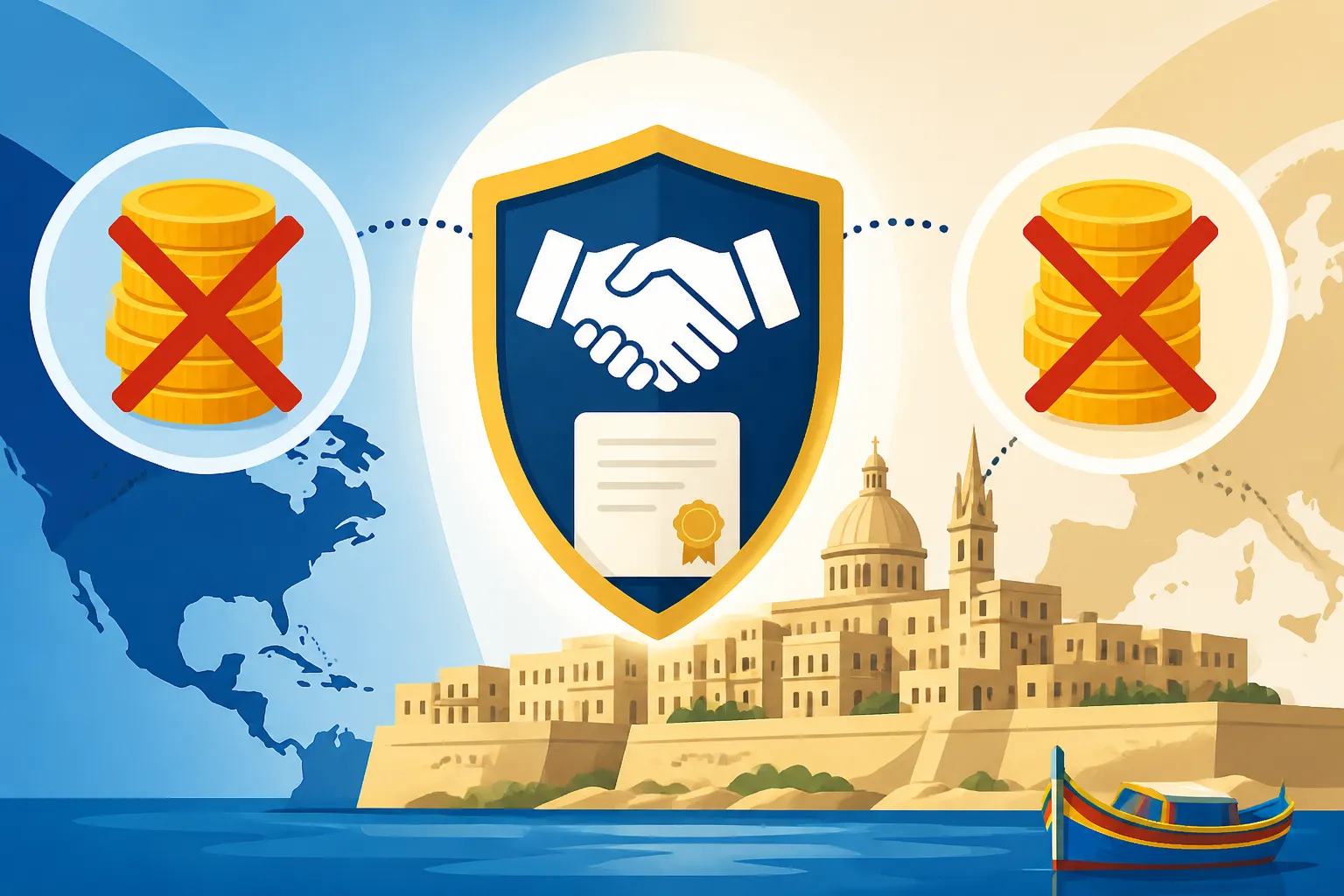
So, with the complexities of residency and domicile, how do you avoid paying tax twice? Enter Double Taxation Treaties, or DTTs. These are bilateral agreements between two countries designed precisely to prevent this very scenario. Think of them as international peacemakers in the world of taxation.
What is a Double Taxation Treaty and How Does It Work?
A Double Taxation Treaty is essentially a legal agreement between two countries (say, Malta and the UK, or Malta and Australia) that sets out clear rules on which country has the right to tax various types of income. Their primary goal is to ensure that income earned by a resident of one country from a source in another country isn't subject to tax in both jurisdictions.
These treaties generally work in one of two ways:
- Exemption Method: One country agrees to exempt certain income from tax if it has already been taxed in the other country. This means you only pay tax in one place.
- Credit Method: If both countries have a right to tax the income, the country of residence provides a credit for the tax already paid in the other country. So, if you pay tax in Country A, Country B will allow you to subtract that amount from the tax you owe them on the same income, up to the amount of tax payable in Country B. This prevents you from paying the full tax twice, though you might still pay the higher of the two rates.
Most of Malta's tax treaties largely follow the OECD Model Tax Convention, a template that promotes consistency across international tax agreements. Malta has an extensive network of DTTs with over 70 countries worldwide, including major economies in Europe, North America, Asia, and Oceania. This broad coverage means that a vast majority of expats coming to Malta will find their home country covered by such an agreement, offering a valuable layer of protection against double taxation.
Key Provisions in a Maltese Tax Treaty
While each DTT has its unique quirks, they all share common ground based on international tax principles. Knowing these core provisions can help you understand how your income will be treated.
One of the most important aspects is the "tie-breaker rules" for determining residence. What happens if both Malta and your home country claim you as a tax resident? The treaty will typically have a hierarchy of rules to decide which country gets to be your sole treaty residence for tax purposes. These usually start with where you have a "permanent home available to you," then move to where your "centre of vital interests" (personal and economic ties) is, and then to your "habitual abode." If all else fails, it might come down to nationality or even a mutual agreement procedure between the tax authorities.
Beyond residency, DTTs meticulously allocate taxing rights for different income types:
- Employment Income: Generally, income from employment is taxed where the work is performed. So, if you live and work in Malta, Malta will usually have the primary right to tax your salary. However, there are often exceptions for short-term assignments or if you're employed by a company in your home country while temporarily working in Malta (often referred to as the "183-day rule").
- Pensions: Treaties often distinguish between government service pensions (taxed by the paying state) and private pensions (often taxed only in the country of residence).
- Dividends and Interest: These are often taxed in the country where they arise (the source country), but the treaty might limit the withholding tax rate that the source country can impose. Then, the country of residence will tax it again, providing a credit for the tax paid at source.
- Rental Income: Income from immovable property is almost always taxable in the country where the property is located. The country of residence then typically provides a credit for the tax paid abroad.
- Capital Gains: Gains from the sale of immovable property are usually taxed in the country where the property is situated. Gains from the sale of shares might be taxed in the country of residence, though there can be specific rules for shares in property-rich companies.
The treaty also usually includes provisions for mutual agreement procedures (MAPs), allowing the tax authorities of both countries to resolve any disputes in applying the treaty, and for the exchange of information, which helps ensure compliance and prevents tax evasion.
Claiming Treaty Benefits: Practical Steps and Pitfalls
It’s not enough for a treaty to exist; you need to actively claim its benefits. This isn’t always an automatic process, and it often requires you to take specific steps to ensure you're not overtaxed.
The most common way to claim treaty benefits is by obtaining a Certificate of Residency from the tax authority in your country of residence (in your case, likely Malta’s Inland Revenue Department). This certificate formally states that you are a tax resident of Malta. You then present this to the tax authority or the payer of income (e.g., your pension provider) in the other country. They will then apply the treaty provisions, either withholding tax at a reduced rate or exempting the income altogether.
For instance, if you receive a pension from your home country, and the DTT states it's only taxable in your country of residence (Malta), you would provide your Maltese Certificate of Residency to your former employer or pension fund administrator back home. This should prompt them to stop deducting tax at source. If they've already deducted it, you might need to file a claim for a refund with their tax authority.
Pitfalls to watch out for:
- Ignorance: Don't assume everything sorts itself out. You need to be proactive.
- Documentation: Keep meticulous records of all income, taxes paid, and any correspondence with tax authorities.
- Timing: Apply for your Certificate of Residency well in advance, as processing times can vary.
- Complexity: If you have multiple income streams, complex investments, or are moving between countries frequently, determining your exact status can become incredibly intricate. This is precisely when professional advice becomes not just useful, but absolutely crucial. Firms like Taxes for Expats specialise in these cross-border tax issues and can help you navigate the nuances, ensuring you correctly apply treaty provisions and avoid costly errors. They can literally save you headaches and money.
Navigating Specific Income Types with DTTs in Malta
Let's dive into some common income scenarios that expats face and how tax treaties typically address them.
Employment Income and Pensions Across Borders
For most employed expats in Malta, your salary earned from working here will be taxed in Malta. This is usually straightforward. The treaty will confirm that Malta, as the country where the employment is exercised, has the primary right to tax this income. Your employer in Malta will deduct tax at source via the Final Settlement System (FSS), and you'll file your Maltese tax return accordingly. You can learn more about how income tax works in Malta and the progressive rates.
However, things can get trickier if you're working remotely for an employer in another country while living in Malta. In such cases, while your employer might be in your home country, the DTT will likely state that because you are performing the work in Malta, Malta has the primary right to tax that income. Your home country might still tax you if you're deemed a resident there, but the treaty would then dictate that one country (usually Malta, as the country of actual work) grants an exemption or a tax credit for the tax paid to the other.
Pensions are another area where DTTs play a huge role. Treaties generally differentiate:
- Government Service Pensions: These are typically taxed only by the state that pays the pension. So, if you receive a government pension from your home country, it will likely remain taxable there, even if you live in Malta. Malta, in turn, would exempt this income from its tax calculation.
- Private Pensions: These are more commonly taxed only in the country of residence. So, if you're a Maltese tax resident receiving a private pension from abroad, Malta would typically have the sole right to tax it, and your home country would agree not to tax it.
Imagine a scenario: You're a retired Brit living in Malta. You receive a UK State Pension and a private occupational pension. The DTT between Malta and the UK specifies that government pensions are taxed in the UK. So, the UK will tax your State Pension. However, your private occupational pension, under the same treaty, is generally taxable only in Malta, where you are a resident. You would then declare this private pension income on your Maltese tax return, and the UK would not tax it. This avoids both pensions being taxed twice.
Rental Income, Dividends, and Interest: What to Expect
These passive income streams are very common for expats and are frequent causes of double taxation if not handled correctly.
-
Rental Income: If you still own a property and receive rental income from your home country, the DTT will almost universally state that this income is taxable in the country where the property is located. So, your home country will tax your rental income. When you file your Maltese tax return, you’ll declare this foreign income. Since you're likely a non-dom, it would typically only be taxed in Malta if remitted. If you are domiciled here or if the treaty requires it, Malta would then grant you a credit for the tax you’ve already paid in your home country. This ensures that while both countries might have a claim, you only end up paying the higher of the two tax rates once.
-
Dividends and Interest: Income from dividends and interest often follows a "shared" taxation model. The country where the dividend or interest originates (the source country) usually has the right to levy a withholding tax, but the DTT limits this rate (often to 10% or 15%). The country where you are resident (Malta) then also has the right to tax this income, but it must provide a credit for the withholding tax you already paid in the source country. So, you end up paying the full Maltese tax rate on it, minus what you already paid to the source country.
For example, you have shares in a company back home that pays you dividends. Your home country might withhold 10% tax on those dividends as per the DTT. When you receive the net amount in Malta (or remit it if you're a non-dom), you declare it. Malta will calculate the tax due and then allow you to deduct the 10% already withheld by your home country. This prevents the total tax from exceeding Malta's tax rate on that income.
Capital Gains and Other Income Considerations
-
Capital Gains from Property: Selling a property, whether in Malta or abroad, brings capital gains into play. DTTs typically state that gains from the disposal of immovable property are taxable only in the country where the property is located. So, if you sell a house in your home country, only your home country has the right to tax the capital gain. Malta, being your country of residence, would then typically exempt this income from its tax calculation, especially if you're a non-dom where foreign capital gains are generally not taxed in Malta anyway.
-
Capital Gains from Shares: The taxation of capital gains from shares or other movable property can vary. Often, these gains are taxable only in the country of residence of the person selling them. However, some treaties have specific rules, for instance, if the shares derive more than 50% of their value from immovable property in the other contracting state.
-
Other Income: DTTs also have a "catch-all" clause for "other income" not specifically mentioned. This often grants the taxing right solely to the country of residence.
Here's a simplified table to illustrate how different income types are generally treated under a typical Maltese DTT, assuming you are a tax resident and non-domiciled in Malta:
| Income Type | Primary Taxing Country (General) | Malta Tax Treatment (Non-Dom Remittance Basis) |
|---|---|---|
| Employment Income | Where work is performed | Taxed in Malta (if earned in Malta) |
| Private Pension | Country of Residence | Taxed in Malta (if remitted) |
| Government Pension | Payer State (e.g., home country) | Exempt in Malta (not taxed even if remitted) |
| Rental Income (Foreign Property) | Where property is located (source) | Not taxed in Malta unless remitted, credit for foreign tax if remitted |
| Dividends (Foreign Source) | Source country (limited WHT) & Residence | Not taxed in Malta unless remitted, credit for foreign WHT if remitted |
| Interest (Foreign Source) | Source country (limited WHT) & Residence | Not taxed in Malta unless remitted, credit for foreign WHT if remitted |
| Capital Gains (Foreign Property) | Where property is located (source) | Not taxed in Malta (even if remitted) |
| Capital Gains (Foreign Shares) | Country of Residence | Not taxed in Malta (even if remitted) |
Note: This table is a simplified guide. Specific DTTs and individual circumstances (especially your domicile status and whether income is remitted) can alter these rules.
Practical Advice for Foreigners Living in Malta
Navigating tax treaties, residency rules, and income definitions can be a minefield. While Malta offers significant tax advantages for non-doms, especially concerning foreign capital gains, getting it wrong can lead to serious headaches.
When to Seek Professional Tax Advice in Malta
Let's be real, you wouldn't perform surgery on yourself, would you? The same principle often applies to complex international tax matters. While this guide provides a solid overview, it's just that – an overview. Your personal circumstances, the specifics of your income streams, your domicile status, and the particular DTTs relevant to you are all unique.
You should seriously consider seeking professional tax advice if:
- You have diverse income sources (e.g., employment, investments, multiple pensions, rental income from different countries).
- Your domicile status is unclear or potentially contentious.
- You're considering significant financial transactions, such as selling property or large investments, in your home country or elsewhere.
- You're uncertain about how the remittance basis of taxation applies to your specific situation, especially regarding money transfers or spending on foreign credit cards.
- You're a high-net-worth individual or enrolled in any of Malta's special tax programmes, which have their own complex rules.
- You need help filing your Maltese tax return, especially if it involves claiming foreign tax credits or declaring foreign income.
Specialists, such as the advisors at Taxes for Expats, live and breathe these complexities. They can provide tailored advice, ensure you're compliant with both Maltese and international tax laws, and help you optimise your tax position. Trying to decipher every clause of a DTT and every nuance of Maltese tax law on your own can be incredibly stressful and risky. Don't be afraid to invest in expert guidance; it often pays for itself many times over.
Managing Your Finances Across Borders
Beyond understanding the treaties, practical financial management is key to preventing tax complications.
- Be Organised: Keep meticulous records of all your income, expenses, and any taxes paid in any country. This includes bank statements, payslips, investment statements, and tax certificates. If the Maltese tax authorities or your home country's tax authorities ever have questions, clear documentation is your best defence.
- Understand Remittance: If you are non-domiciled in Malta, be acutely aware of what constitutes a "remittance." Simply bringing money into a Maltese bank account, or even using a foreign bank card for expenses in Malta, could be considered a remittance and trigger a tax liability on certain foreign income. It's crucial to understand these rules to avoid accidental remittances on a foreign bank card in Malta.
- Choose the Right Tools: When transferring money between countries, using dedicated international money transfer services can be invaluable. Platforms like Wise (formerly TransferWise) allow you to send money at competitive exchange rates with transparent fees, often at the mid-market rate. Critically, for non-doms, they can help you manage transfers without inadvertently causing unintended tax consequences by clearly separating funds that may or may not be subject to Malta's remittance basis rules.
- Stay Informed: Tax laws can change, both in Malta and in your home country. While your tax advisor will keep you updated, it's always good practice to stay generally aware of any major legislative shifts that might affect your financial planning.
By understanding how tax treaties work, seeking professional advice when necessary, and managing your cross-border finances thoughtfully, you can live in Malta with confidence, knowing you're protected from the headache of paying tax twice. It’s a bit of work upfront, but the peace of mind is absolutely worth it.
Disclaimer
The information provided in this guide is for general informational purposes only and does not constitute professional tax, legal, or financial advice. While we strive to provide accurate and up-to-date information, tax laws and regulations are complex and subject to change. Your individual tax situation depends on your specific circumstances, and you should consult with a qualified tax advisor or professional for personalized advice regarding your tax obligations in Malta and your home country. Reliance on any information provided in this guide is solely at your own risk.