Sending Money To and From Malta Without High Fees
Moving your hard-earned savings or monthly salary across borders often feels like navigating a minefield of hidden charges and outdated banking procedures. Many expats arriving in Malta are shocked to find that a simple transfer from home can vanish by several percentage points due to predatory exchange rates and "middleman" bank fees. This guide reveals how to bypass traditional banking traps and move money in and out of the islands efficiently.
Why Traditional Banks in Malta Can Be Expensive
When you first land at Luqa airport and start looking for a place to stay, one of your first administrative hurdles will be Opening a Bank Account in Malta: A Step-by-Step Guide. While having a local account with a provider like Bank of Valletta (BOV), HSBC Malta, or APS is essential for local life, using them for international transfers is often where the financial "bleeding" begins. Traditional institutions typically operate on a legacy model that prioritizes their margins over your convenience.
The Hidden Cost of Exchange Rate Markups
Most people look at the flat fee a bank charges—perhaps €15 or €30—and think that is the total cost of the transfer. However, the real cost is usually buried in the exchange rate. Banks rarely give you the "mid-market rate" (the one you see on Google or Reuters). Instead, they add a spread, often between 2% and 5%. If you are transferring €50,000 for a property deposit in St. Paul's Bay, a 3% markup means you are effectively paying €1,500 just to convert your currency. This is money that could have gone toward your Cost of Living in Malta: Budgeting for the Real Numbers or furnishing your new apartment.
Many newcomers lose significant sums because they didn't realize the rate they were quoted was vastly different from the actual market value. Always compare the bank’s quoted rate against a live market tracker before clicking "confirm." If the difference is more than a fraction of a percent, you are being overcharged.
Correspondent Banking Fees and Hidden Extras
Another frustration unique to traditional wire transfers is the "correspondent bank" fee. Because Maltese banks are relatively small on a global scale, they often don't have direct relationships with banks in the US, Australia, or even some parts of Asia. To move your money, they use an intermediary bank. This middleman often takes a "slice" of the transfer—usually between €20 and €50—without prior warning.
You might send $1,000 from New York, expecting it to arrive as the full Euro equivalent, only to find that €40 has gone missing during the transit. This makes it incredibly difficult to pay exact invoices or rent amounts. In Malta, where Why Maltese Banks Ask for So Much Documentation is already a common complaint, these unpredictable deductions add another layer of administrative headache when you have to explain to a landlord why the payment arrived short.
Local Bank Processing Times and Frustrations
If you are used to instant transfers in your home country, the Maltese banking pace can be a culture shock. While SEPA transfers (within the Eurozone) are generally fast and cheap, moving money via SWIFT from outside the EU can take anywhere from three to seven business days. During this time, your funds are essentially in "limbo." Local branches often have limited visibility into where the money is once it leaves their system, leading to frantic phone calls to customer service centers in Mrieħel or Valletta.
Modern Alternatives for International Transfers
The good news is that the days of being tethered to a physical bank branch for international needs are over. Malta has become a hub for fintech, and most residents now use a hybrid approach, keeping a local account for utilities but using digital platforms for everything else. This is particularly useful once you have been Getting Your Maltese Tax Identification Number (TIN) and are fully integrated into the local economy.
Using Digital Money Apps and Neobanks
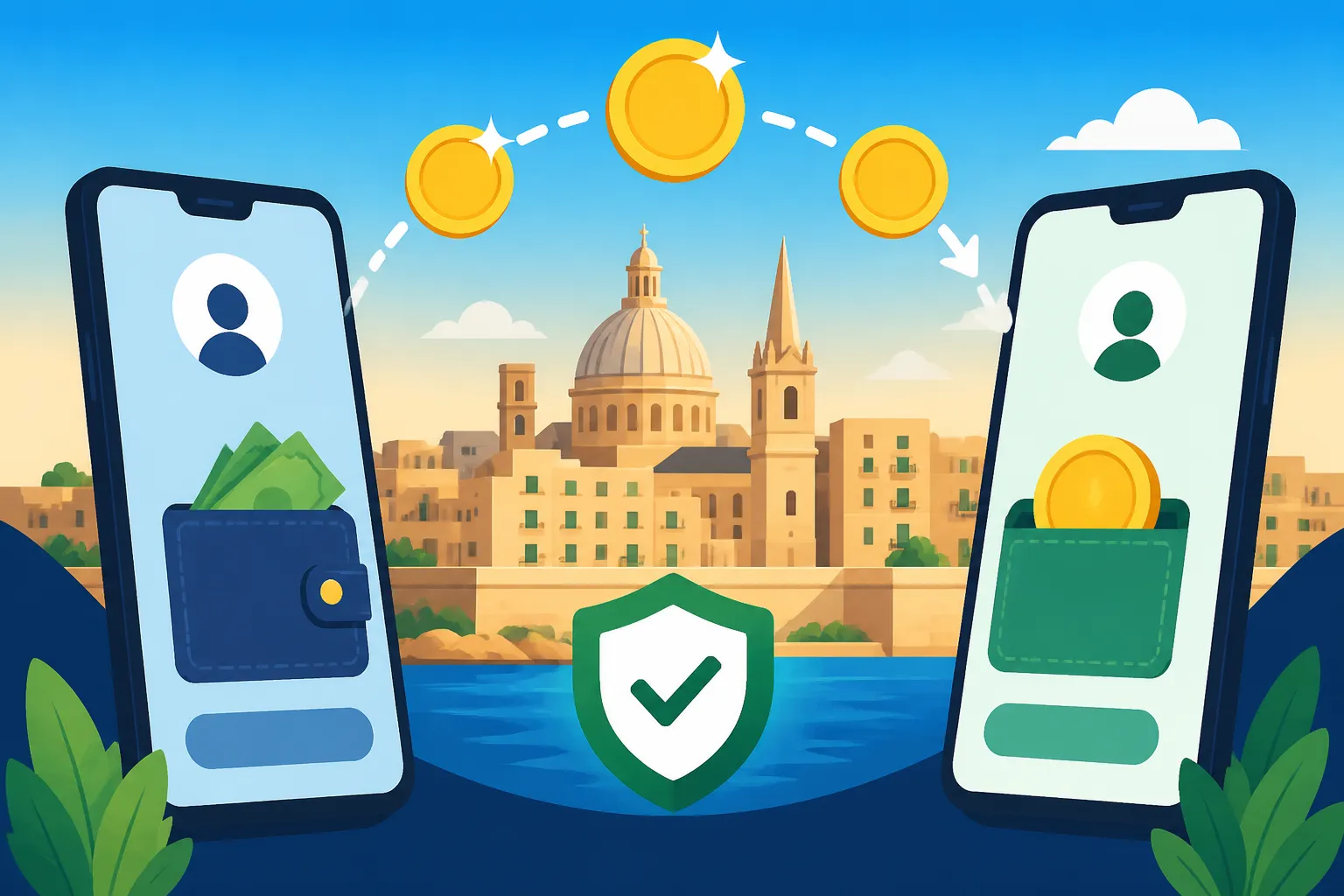
Digital banks have revolutionized how expats live in Malta. They offer near-instant currency exchange at rates that are significantly closer to the mid-market rate than any high-street bank. Because they operate digitally, they bypass the correspondent banking network whenever possible, ensuring that the amount you send is the amount that arrives. This level of transparency is vital when you are trying to manage a tight budget in an increasingly expensive Mediterranean market.
The Role of Wise in Cutting Costs
Among the various tools available, Wise has become a staple for the Maltese expat community. What makes Wise different is their "local-to-local" model. Instead of actually moving your money across a border, they have pools of currency in different countries. If you want to send British Pounds to Malta, you pay into their UK account, and they pay you out from their Euro account in Europe.
This completely eliminates SWIFT fees and keeps the exchange rate fair. I personally used Wise to move my initial relocation funds, and the savings compared to my UK high-street bank were enough to cover my first month's rent in Sliema. It is a straightforward, transparent solution that provides the exact exchange rate you see on independent financial sites.
When to Use Specialized Foreign Exchange Brokers
While apps are great for monthly salaries or small transfers, if you are buying a house in Gozo or transferring a large inheritance, you might want to look at a dedicated foreign exchange broker. These companies offer "forward contracts," which allow you to lock in an exchange rate for a future date.
For example, if you know you need to pay for a property in three months but worry the Euro will get stronger, a broker can help you fix the price today. This provides peace of mind in a volatile market. These brokers often provide a more personal service than a standard app, though they usually require more initial paperwork to satisfy Malta's stringent anti-money laundering regulations.
Receiving Money from Abroad into Malta
Receiving funds is just as critical as sending them, especially for retirees or those working for foreign companies. You need to be aware of how the local system treats incoming "wealth" to avoid having your account frozen or your funds flagged by the compliance department.
Incoming Wire Fees at Major Maltese Banks
Most Maltese banks charge a fee just to receive money from outside the SEPA zone. It might seem unfair to be charged for someone giving you money, but it is standard practice here. These fees are usually a percentage of the total or a flat fee (often around €10 to €15). If you are receiving a small monthly pension or a freelance payment, these fees eat into your income significantly over a year. Using a multi-currency account through a digital provider can help you bypass these "landing fees" by allowing you to receive the money in its original currency first.
Proving the Source of Funds to Maltese Institutions
Malta is under heavy international pressure to maintain high anti-money laundering (AML) standards. Consequently, if a large sum—typically anything over €10,000—suddenly hits your local account, the bank will likely pause the transaction. You will be asked to provide "Source of Wealth" or "Source of Funds" documentation.
This could be a contract of sale for a property abroad, a payslip, or a bank statement from your home country. My advice is to be proactive. If you know a large transfer is coming, call your bank manager or visit the branch beforehand to show them the documentation. It’s much easier to clear the path before the money arrives than to try and "unstick" it from a compliance queue later.
Impact of Non-Dom Status on Remittances
For many expats, the way you move money into Malta is not just about fees; it’s about tax. Many foreigners fall under a specific tax regime where you are only taxed on foreign income if you "remit" (bring) it into Malta. This is a complex area where Tax Residence vs Domicile in Malta: Why Both Matter becomes incredibly important.
If you bring in capital (savings you had before moving to Malta), it is generally not taxed. However, if you bring in income earned after you became a resident, it is taxable. Distinguishing between the two requires careful record-keeping. This is a primary reason why many expats choose to keep their foreign savings in a separate account and only transfer what they need for daily living, always being mindful of The Remittance Basis: Taxing Only What You Bring Into Malta.
Sending Money Out of Malta
Whether you are supporting family back home or paying off a mortgage in your home country, sending money out of Malta requires a strategy to ensure you aren't losing a portion of your Understanding the FSS (Final Settlement System) on Your Payslip earnings to inefficient systems.
Moving Your Salary Home or Paying Overseas Bills
If you are being paid in Euros into a Maltese account but have bills in another currency, do not use the standard "International Transfer" button in your local banking app. The rates will be poor. Instead, link your Maltese account to a digital platform. You can pull the Euros via a local SEPA transfer (which is usually free or costs cents) into the platform and then convert it to your home currency at the real exchange rate.
This is particularly useful for those who haven't yet fully committed to a permanent life on the islands and still maintain financial obligations elsewhere. It ensures that your Maltese salary retains its maximum value when it crosses the border.
Managing Transfers for Property Sales
If you decide to leave Malta and sell your property, you will be dealing with a significant sum of money. The process of moving this out of Malta is heavily scrutinized. You will need to show the final deed of sale and proof that all relevant taxes have been paid to the Maltese Commissioner for Revenue.
In these cases, a local bank might be the most "secure" route in the eyes of the authorities, but you should negotiate the exchange rate. Don't accept the first rate the bank offers for a six-figure sum. Often, they can offer a "treasury rate" which is much more competitive if you speak to a senior manager or a relationship officer.
Daily Limits and Security Protocols
Maltese banks often have surprisingly low daily transfer limits on their mobile apps—sometimes as low as €1,000 or €5,000. If you need to send a larger amount, you might find yourself needing to visit a branch in person or use a physical "token" device that some banks still issue. This can be frustrating if you are traveling or have already left the country. Always check your limits and set up your security credentials (like 2FA) while you are still physically in Malta to avoid being locked out of your funds from abroad.
Tax Implications of Moving Money
Moving money isn't just a logistical challenge; it's a legal one. The Maltese tax authorities and international bodies like the IRS (for Americans) or HMRC (for Brits) are increasingly interested in the flow of funds.
Understanding Remittance-Based Taxation
As mentioned earlier, the "remittance basis" is a cornerstone of the Maltese tax system for many expats. It means that if you earn €100,000 in dividends in a UK account and never bring that money to Malta, you might not owe Maltese tax on it (though you may owe UK tax).
However, the moment you transfer even €1,000 of that to your BOV account to pay for a nice dinner in Valletta, that €1,000 becomes "remitted" and taxable. It gets even more complicated if you use a foreign credit card; you must ask yourself: Does Spending on a Foreign Card in Malta Count as a Remittance? In many cases, the answer is yes, as you are essentially bringing the value of that foreign income into the Maltese economy.
Reporting Foreign Income and Capital Gains
While Malta has a very attractive tax system, it is not a "tax haven" in the sense that you can hide income. You are legally required to be honest about your status. If you are transferring money from an investment account abroad, you need to know if that represents original capital or a "gain."
Malta generally does not tax foreign capital gains, even if remitted, but they do tax foreign income. Keeping these two pots of money clearly separated in different bank accounts is the best way to avoid a nightmare during an audit. If you are unsure, consulting with an expert who understands both Maltese and international law is essential.
How Taxes for Expats Can Help with Compliance
For those with complex financial lives, particularly US citizens who are taxed on global income regardless of where they live, managing these transfers can be overwhelming. This is where services like Taxes for Expats come into play. They specialize in helping people navigate the specific reporting requirements that come with living in a place like Malta while maintaining financial ties elsewhere.
Using Taxes for Expats ensures that you aren't just saving money on the transfer itself, but also avoiding massive fines for failing to report foreign bank accounts (FBAR) or specific types of income. They can help you determine Will I Be Taxed If I Transfer Foreign Savings to Malta based on your specific situation, which provides an extra layer of financial security.
Comparing Transfer Options for Malta Residents
| Method | Typical Fee Structure | Speed | Best For |
|---|---|---|---|
| Local Maltese Bank | High fees (€15-€50) + 3-5% FX Markup | 3-7 Days | Paying local government fees or large local deposits |
| Wise | Low, transparent fee (approx. 0.5%) | Instant to 2 Days | Monthly salaries, rent, and small to mid-sized transfers |
| Digital Neobanks | Subscriptions or small flat fees | Instant | Cash, Cards, and Everyday Payments in Malta |
| FX Broker | No flat fee, but built into a small markup | 1-3 Days | Property purchases or transfers over €50,000 |
Practical Tips for Large Sums
When you are moving life-changing amounts of money—perhaps for a retirement nest egg or starting a business—the stakes are higher. You cannot afford to make a mistake with a decimal point or a SWIFT code.
Navigating Central Bank Reporting
The Central Bank of Malta monitors large flows of currency to maintain the stability of the Euro. While you as an individual don't usually have to file reports for personal transfers, your bank certainly does. This is why they might ask seemingly intrusive questions about why you are moving the money.
Don't take it personally. It is a standard part of the "Know Your Customer" (KYC) protocols. Have your documents ready: a sale agreement, a will, or a gift letter if the money is from family. If you are transparent, the process is usually smooth, albeit a bit slow.
Locking in Exchange Rates with Forward Contracts
It is wise for expats to watch the currency markets for a few weeks before a big move. If the Euro is weakening against your home currency, it might be the perfect time to "lock in" a rate. As discussed, brokers can help with this.
A forward contract allows you to agree on a price today for a transfer that happens months later. This is a form of insurance against "currency shock." Many people moving to Malta from the UK after the Brexit vote were saved by forward contracts, as they didn't see their buying power evaporate overnight when the Pound dipped.
Protecting Yourself from Transfer Scams
Malta’s booming property market has unfortunately attracted scammers. A common tactic is "invoice interception," where a scammer hacks the email of a notary or a real estate agent and sends you "updated" banking details for your deposit.
Never, ever send a large sum of money to a new bank account based solely on an email. Always call the recipient on a trusted phone number (not the one in the email) to verify the IBAN and the bank name. If the bank is located outside of Malta for a Maltese property transaction, that is a massive red flag. Always stay vigilant and double-check every detail before hitting send.
Disclaimer
This guide is provided for informational purposes only and does not constitute professional financial, legal, or tax advice. Financial regulations and tax laws in Malta are subject to change. You should always consult with a qualified financial advisor or tax professional, such as the team at Taxes for Expats, regarding your specific circumstances before making significant financial decisions or moving large sums of money. Neither the author nor this publication is responsible for any financial losses or legal issues arising from the use of the information contained herein.