What Support Exists for Spouses of Workers Seeking Jobs in Malta?
Spouse support in Malta covers legal work permits, Identità processes, recruitment agencies, family reunification rights, and local networking.

Spouse support in Malta covers legal work permits, Identità processes, recruitment agencies, family reunification rights, and local networking.
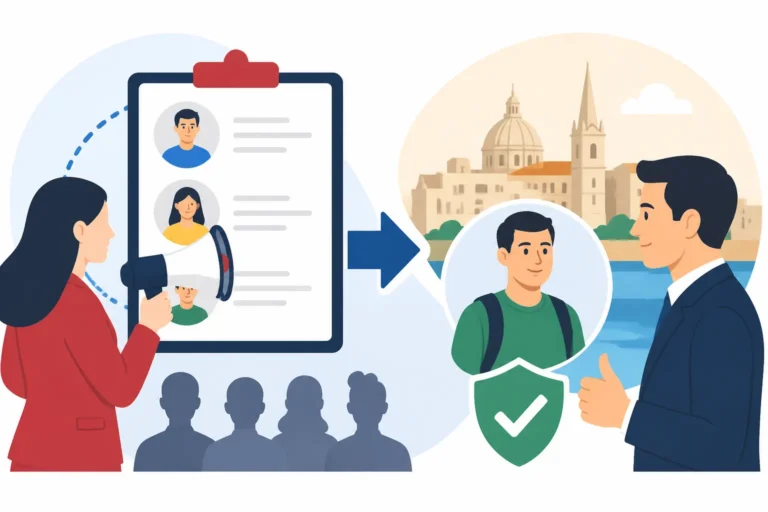
The Maltese labor market test requires employers to advertise job openings publicly to prioritize local and EU workers before hiring foreigners.
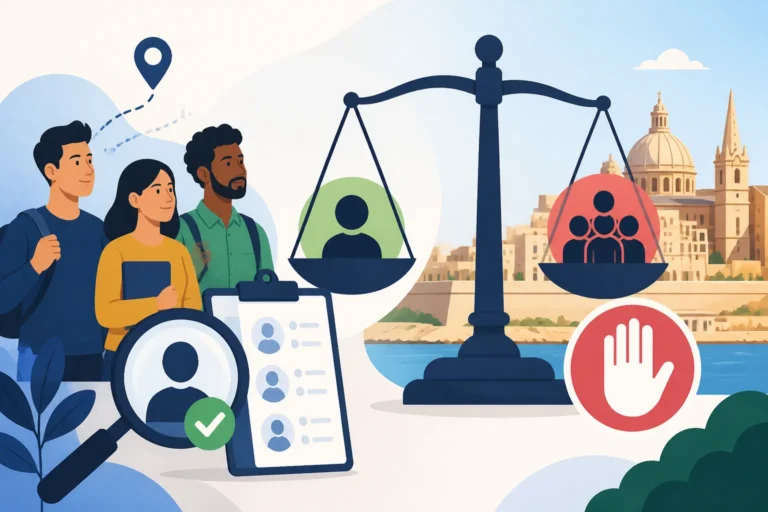
Malta workforce quotas and labor market tests determine non-EU hiring approvals through industry demand, company worker ratios, and fast-track initiatives.

The registration process for foreign healthcare workers in Malta requires statutory council approval, degree recognition, and specific legal documents.

Maltese professional licensing rules require expats in healthcare, engineering, law, and education to obtain local warrants before practicing legally.

Foreign credential validation in Malta explains the specific steps educators and healthcare professionals must follow to legally practice.

Maltese workplace culture provides newcomers with insights into local office customs, communication styles, networking, contracts, and professional ethics.

Remote and flexible working in Malta reveals a cultural divide between traditional local offices and international sectors or nomad permits.

Maltese working hours and overtime rules explain standard limits, pay rates, rest periods, and legal rights for employees in Malta.

Workplace harassment procedures in Malta require contacting internal HR, the DIER, or the NCPE for legal protection and dispute resolution.