Is Remote and Flexible Working Common in Malta?
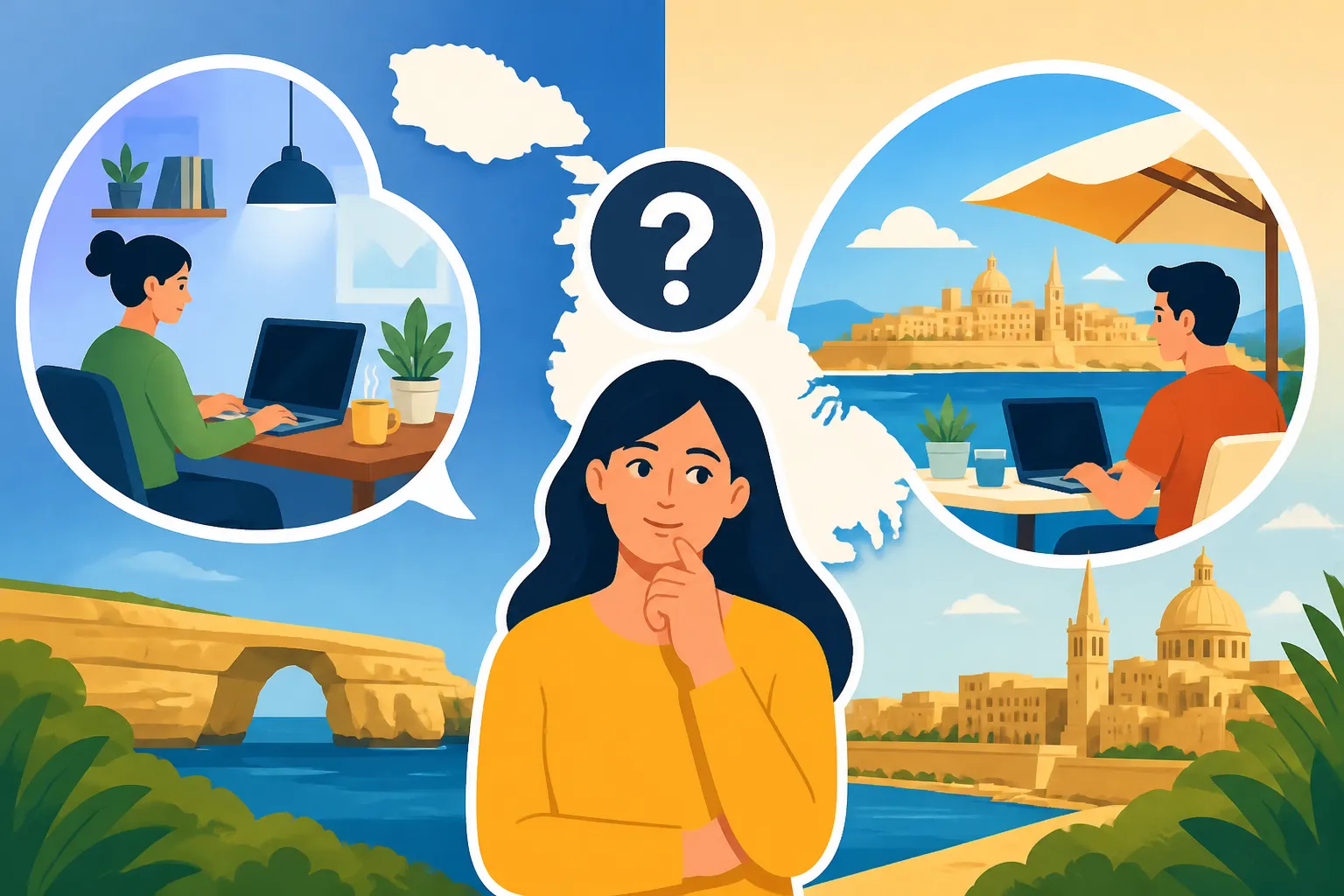
Many foreigners arrive in Malta dreaming of working from a sun-drenched terrace overlooking the Grand Harbour, only to find themselves tethered to a traditional office in a congested part of Sliema or St. Julian's. This guide breaks down exactly how common remote and flexible work really is on the islands, navigating the cultural expectations of local employers versus the freedom offered by international sectors and the specialized nomad permits available to newcomers.
The Cultural Evolution of Flexibility in Malta
For many years, the Maltese labor market was defined by a traditional "face-time" culture. Employers often felt that if they couldn't see you at your desk, you weren't actually working. However, the global shifts of the early 2020s forced a massive transformation in the local mindset. While the island is small and commuting distances are technically short, the paralyzing traffic has made the argument for remote work stronger than ever. Today, the landscape is a patchwork of ultra-modern digital flexibility and lingering traditionalism.
In sectors like iGaming, Fintech, and software development, remote and flexible working is not just common; it is often a standard part of the recruitment package. These industries are largely staffed by expats and operate on a global scale, meaning their culture is more aligned with Silicon Valley or London than with the traditional Maltese family business. If you are looking at How Big Is the iGaming job market in Malta?, you will find that many of these companies offer "work from anywhere" weeks or hybrid models where you only visit the office once or twice a week.
Conversely, traditional Maltese firms—such as those in law, accounting, or local retail management—still lean heavily toward office-based work. Even if the role could technically be done from home, there is a cultural value placed on physical presence and the social hierarchy of the office environment. If you are joining a local firm, it is vital to understand What Is Maltese Workplace Culture Like for Newcomers? before assuming you can spend your Fridays working from a cafe in Gozo. The "flexible" part of your contract might simply mean you can start at 8:30 AM instead of 8:00 AM, rather than true location independence.
Remote Work for Local vs Foreign Employers
If you are living in Malta but working for a company based in another country, you are part of a growing community of "digital nomads." Malta was one of the first EU countries to actively court this demographic by clarifying the legalities of such arrangements. For many, the ultimate goal is to earn a Northern European or American salary while enjoying the lower cost of living and Mediterranean climate of the islands. However, doing this legally requires careful navigation of the immigration system.
For non-EU citizens, the most common route is to apply for a specific residency status that recognizes their remote employment. It is essential to research What Is the Nomad Residence Permit in Malta? to see if your income meets the threshold. This permit allows you to live on the island while working for an employer registered abroad, bypassing the need for a local work permit. It is a fantastic solution for those who want the lifestyle without the complexities of the local job market.
For those who are employed by a Maltese entity, the degree of flexibility depends entirely on your contract. Even if your boss is open to remote work, they are legally bound by Employment Contracts and Conditions of Work in Malta, which must specify your place of work for insurance and tax purposes. If you are an EU citizen, you have more freedom to move, but you still need to be aware of the 183-day rule regarding tax residency. Using a service like Taxes for Expats can be incredibly helpful here to ensure you aren't accidentally creating a "permanent establishment" for your foreign employer or running into double taxation issues.
The Administrative Labyrinth for Remote Workers
One of the biggest frustrations for remote workers in Malta is the administrative "gray area" that often exists when you aren't a traditional office employee. When you work in an office, your HR department usually handles your tax registrations and social security. When you work remotely or flexibly, a lot of that burden shifts to you. You will still need to navigate the process of How Do I Get a Tax Number to Start Working in Malta? regardless of whether you are in a high-rise in Gzira or a farmhouse in Xaghra.
Social security is another area where remote workers often get tripped up. Even if you are working from home, you are likely required to contribute to the local system to access healthcare and other benefits. You should look into Social Security Contributions in Malta: Classes, Rates, and Benefits to understand how much will be deducted from your earnings. For those working for foreign companies, the question of who pays the employer's share of social security can be a major sticking point in negotiations.
To manage these complex cross-border tax obligations, many expats rely on professional advice from Taxes for Expats to keep their filings in order both in Malta and their home country. This is especially true for Americans, who face citizenship-based taxation regardless of where their "home office" is located. Getting this wrong can lead to significant fines and issues with permit renewals down the line.
| Work Type | Residence Basis | Local Tax Obligation | Office Requirement |
|---|---|---|---|
| Local Employee | Single Permit / EU Registration | Full Maltese Income Tax | Usually hybrid (2-3 days) |
| Digital Nomad | Nomad Residence Permit | Generally Exempt (Specific rules apply) | None |
| Self-Employed | Class 2 Social Security | Progressive Tax Rates | None (Coworking suggested) |
| Foreign Employee | EU Treaty Rights / Nomad Permit | Depends on 183-day rule | None |
Practical Realities: Internet, Infrastructure, and Heat
While the idea of working from a balcony sounds idyllic, the reality can involve construction noise, spotty Wi-Fi, and the brutal summer heat. Malta has a very high population density, and construction is a national pastime. If you are planning to work from home, you need to be very selective about your neighborhood. A quiet street in Balzan might be perfect, while a flat in the heart of Sliema might be a nightmare of jackhammers and delivery trucks.
Infrastructure has improved, but you still need to be diligent. Before signing a lease, check Which Internet and Mobile Providers Are Best in Malta? for the specific street you are moving to. Some older houses with thick stone walls act as a Faraday cage, killing your Wi-Fi signal from one room to the next. You should also ask How Do I Get Internet Installed in My Maltese Home? early in the process, as technicians can sometimes take weeks to arrive, especially during the busy summer months.
The climate also dictates flexibility. During July and August, the heat is so intense that working from a non-air-conditioned room is virtually impossible. This has led to the popularity of coworking spaces like SOHO or 230 Works, which offer reliable cooling, high-speed fiber internet, and a community of other remote workers. Networking in these spaces is also a great way to integrate. If you find yourself struggling to connect with the locals or international colleagues in these hubs, using a platform like iTalki to brush up on your language skills or understand local nuances can make those "water cooler" moments much more productive.
Networking and the Social Aspect of Flexible Work
The hidden danger of remote work in Malta is isolation. The island is very social, and much of the "real" business happens over coffee or at village feasts. If you are 100% remote for a company in another time zone, you might find it difficult to build a local support network. This is where the flexibility of your schedule becomes your greatest asset. You can use your mornings to attend local meetups or join interest groups.
Learning a bit of the local language, even if everyone speaks English, goes a long way in building rapport with neighbors and local shopkeepers. Booking a few sessions on iTalki with a Maltese tutor can help you master basic greetings and cultural etiquette, which can be the difference between being "the foreigner in apartment 4" and being a welcomed member of the community. This social integration is just as important for your long-term success as having a stable internet connection.
Finally, always remember that your right to live and work here is tied to your administrative status. If you are on a The Single Permit in Malta: Combined Work and Residence, Step by Step, your flexibility is ultimately at the mercy of your employer's willingness to let you work from home. If you lose your job, you may find that your permit's validity is at risk. Always ensure you are clear on Do I Need a Permit to Work Remotely from Malta? before you make any permanent lifestyle changes or sign a long-term lease on a property that is far from potential office hubs.
The Future of Remote Work in Malta
As we look toward 2026 and beyond, the Maltese government continues to refine its digital infrastructure and residency programs. The goal is to position Malta as a premier hub for the "laptop class." However, the tension between the new digital economy and the traditional ways of doing business remains. You will likely find that flexibility is something you have to negotiate and prove your worth for, rather than something that is universally granted.
For those who manage to secure a flexible or remote arrangement, the rewards are immense. You gain back hours of your life previously lost to the "Marsa bypass" traffic, and you get to experience the islands at a slower, more intentional pace. Whether you are navigating Can I Work Remotely for a Foreign Employer While Living in Malta? or trying to convince a local boss to let you work from home on Wednesdays, the key is to be proactive, legally compliant, and culturally aware.
Disclaimer
The information provided in this guide is for general informational purposes only and does not constitute legal, financial, or professional advice. Immigration laws, tax regulations, and employment policies in Malta are subject to frequent change. Always consult with official government sources, such as Identità or the Commissioner for Revenue, and seek professional advice from qualified experts regarding your specific circumstances.