How Do I File My Tax Return on the CFR Portal in Malta?
Let's face it, diving into a new country's tax system can feel like trying to solve a Rubik's Cube blindfolded, and Malta is no exception. For many expats, the moment "tax return" enters the conversation, a collective groan is heard across the island. But fear not, because navigating the Maltese Inland Revenue Department, specifically their online portal, isn't as daunting as it first appears. This guide will walk you through the nitty-gritty of filing your tax return on the CFR Portal, ensuring you understand each step and confidently meet your obligations.
Understanding Your Tax Obligations in Malta
Before you even log into the portal, it’s crucial to grasp the basics of Malta’s tax system and understand if and how you’re expected to contribute. The Maltese tax system operates on a progressive scale, meaning the more you earn, the higher percentage of tax you pay. However, the exact rules that apply to you can vary significantly based on your residency, domicile, and the type of income you receive.
Many newcomers mistakenly believe that if tax is deducted directly from their salary (under the Final Settlement System, or FSS), they don't need to file a return. This is often true for straightforward employment, but not always. If you have other sources of income, such as rental income, self-employment income, or certain types of foreign income, filing a personal tax return (Form TA22 or TA24) becomes mandatory. Even if you're solely employed, you might still need to file if you wish to claim certain deductions or reliefs, or if there's any discrepancy in the tax deducted.
The key is to determine your tax residence and domicile status in Malta, as these dictate what income is taxable here. For instance, non-domiciled residents typically only pay tax on income earned in Malta and foreign income that is remitted (brought into) Malta. Understanding this distinction is vital, and you can delve deeper into this complex area by reading about The Maltese Tax System Explained: Residence, Domicile, and Remittance. It's a fundamental concept that can save you a lot of headaches – and money – if you grasp it early.
Who Needs to File a Tax Return in Malta?
This is a question that often catches new arrivals off guard, assuming their employer handles everything. While it's true that most employed individuals in Malta have their income tax deducted at source through the FSS, meaning their employer takes care of it, this doesn't always exempt you from filing a personal tax return. If your tax affairs are simple – you have one job, no other income, and your tax is correctly deducted – you might fall into the category where you don't need to file. However, it's always safer to check.
Situations that definitely require you to file include being self-employed, having rental income from property in Malta or abroad, receiving income from foreign sources that isn't already taxed in Malta and is remitted here, or if you had multiple employers during the year. Furthermore, if you want to claim specific tax reliefs or deductions that weren't accounted for by your employer, such as certain pension contributions or eligible expenses, filing a return allows you to do so. It's a common misconception, but relying solely on your employer for accurate tax submission can lead to penalties if other income sources are overlooked.
For a clearer picture, the Commissioner for Revenue (CFR) issues a notice each year detailing who is required to file. Generally, if you're employed and your tax has been fully settled through the FSS, you might not receive a pre-filled form or an explicit instruction to file. However, if you have any income beyond your basic employment or wish to verify your tax position, it’s best practice to register with the CFR and access the portal, if only to confirm you have no further obligations. You can find more detailed information on this topic by exploring Do I Need to File a Tax Return If I'm an Employee in Malta?.
Key Documents You'll Need
Gathering your documents before you start the filing process on the CFR Portal is like prepping your ingredients before cooking – it makes the whole process smoother and less stressful. The main document you'll need if you're employed is your FS3 Form. This is provided by your employer by mid-March each year and summarises your total earnings, FSS deductions, and Social Security contributions for the previous year. It's your official record of employment income and tax paid.
If you are self-employed, you'll be dealing with forms like the TA22 or TA24. The TA22 is for individuals, while the TA24 is specifically for income from rental of immovable property. You’ll also need to gather all your business income and expenditure records, invoices, and any other relevant financial statements. For foreign income, you'll need statements or records from the source country, showing income earned and any tax paid abroad. Furthermore, bank statements can be crucial, especially if you're on the remittance basis, to prove what foreign income has or hasn't entered Malta. Keep all these handy, preferably in a digital format for easy upload if required.
Table: Essential Documents for Your Maltese Tax Return
| Document Name | Description | Who Needs It | Where to Get It |
|---|---|---|---|
| FS3 Form | Summary of annual employment income, tax deducted, and social security. | All employees | From your employer |
| TA22 Form | Annual Income Tax Return (for individuals). | Self-employed, those with other income sources, or needing to declare/claim. | CFR Portal (pre-filled or blank) |
| TA22 Form (Foreign) | Specifically for reporting foreign-sourced income that is remitted to Malta. | Non-domiciled residents with foreign income. | CFR Portal |
| TA24 Form | For income from rental of immovable property. | Individuals with rental income. | CFR Portal |
| Bank Statements | To verify income, remittances, and expenses. | Everyone, especially non-domiciled residents. | Your bank (local or foreign) |
| Invoices/Receipts | For expenses claimed by self-employed individuals. | Self-employed | Keep your own records |
| P60 Equivalent | If you worked abroad for part of the year. | Individuals with split-year residency. | Previous employer abroad |
Navigating the CFR Portal: A Step-by-Step Guide
The CFR (Commissioner for Revenue) Portal is your primary gateway for all tax-related matters in Malta. While it's generally user-friendly, the first time can feel a bit like learning a new language. You'll use it to access your tax profile, view past assessments, and most importantly, file your annual tax return. Accessing it requires your e-ID, which is the same login you use for other government services, streamlining the process once you're set up.
Before you can even think about logging in, you need your Maltese Tax Identification Number (TIN). This is a unique 9-digit number assigned to you by the CFR and is essential for all your tax interactions. Without it, you can't register or file anything. If you haven't received one, or can't find it, you'll need to contact the CFR to get it sorted. For an in-depth guide on how to get yours, check out Getting Your Maltese Tax Identification Number TIN.
Once you have your TIN and your e-ID credentials, you're ready to tackle the portal. Be prepared for a system that, while efficient, may not always be intuitive if you're used to other tax systems. Patience is key, and don't be afraid to take screenshots of any errors or confusing pages to assist you if you need to contact their support. Remember, many expats have trodden this path before you, and while it's not perfect, it does work.
Registering and Logging In
Your first port of call will be the official CFR website, specifically the e-services section. If you've never used it before, you'll need to ensure your e-ID is active and linked to your Maltese identity. This e-ID is your universal government digital login and is usually set up when you get your eResidence Card. Once you have it, logging into the CFR portal is straightforward: click on the "Login with e-ID" button.
Upon successful login, you'll be directed to your personal tax dashboard. For first-time filers, you might not see any previous returns, which is perfectly normal. The system is designed to either pre-populate certain forms based on employer submissions (like your FS3 details) or allow you to start a fresh return. Don't panic if your dashboard looks sparse; the important thing is that you're in the system and ready to begin the process. If you encounter any issues with your e-ID, make sure to resolve them through Identità, as the CFR cannot assist with e-ID authentication problems.
If you're facing persistent login issues or find that your e-ID isn't correctly linked to your tax profile, it might be necessary to contact the CFR’s helpdesk. They can guide you through specific technical hitches. Sometimes, particularly for very new arrivals, there might be a delay in your details being fully integrated across government systems. A quick call can clarify if it's a technical glitch or simply a matter of waiting for the systems to sync up.
Filling in Your Declaration
Once you're logged in, you'll typically look for an option like "Submit Income Tax Declaration" or "File Tax Return." The system will then ask you to select the relevant assessment year. If the CFR has already processed some data for you (e.g., from your employer's FS3 submissions), you might find a pre-filled TA22 form waiting for you. This is a blessing and a curse; it's great for checking accuracy but demands careful review. Always compare the pre-filled data with your actual FS3 form and any other income statements you have. Do not assume it is 100% correct, as errors can occur, especially if your employer submitted incorrect information.
You'll navigate through various sections: personal details, employment income, self-employment income, other income (like rental income or dividends), deductions and reliefs, and finally, a section for foreign income. This is where many expats get tripped up. If you're a non-domiciled resident, you'll need to carefully declare only the foreign income remitted to Malta, and you might need to use specific forms or sections for this. This area is particularly complex, and if you have significant foreign assets or income, seeking expert advice from a company like Taxes for Expats could save you a world of pain and ensure compliance. They specialise in helping people in your exact situation.
For each section, ensure you input accurate figures. For example, under employment income, you'll enter the gross income and FSS tax deducted as per your FS3. If you have rental income, you’ll report the gross rent received and any allowable expenses. The portal will guide you through these entries, and in some cases, it will automatically calculate the tax due or refund amount as you progress. Don't rush this part; double-check every figure against your supporting documents. A small error here can lead to a big headache later on.
Reviewing and Submitting
After meticulously filling in all the relevant sections, the CFR portal will typically present you with a summary of your tax declaration. This is your chance for a final, thorough review. Check every single figure against your FS3, bank statements, and any other income or expense records. Look at the total income, total deductions, and the final tax due or refund amount. Does it look right? Does it align with your own calculations or expectations?
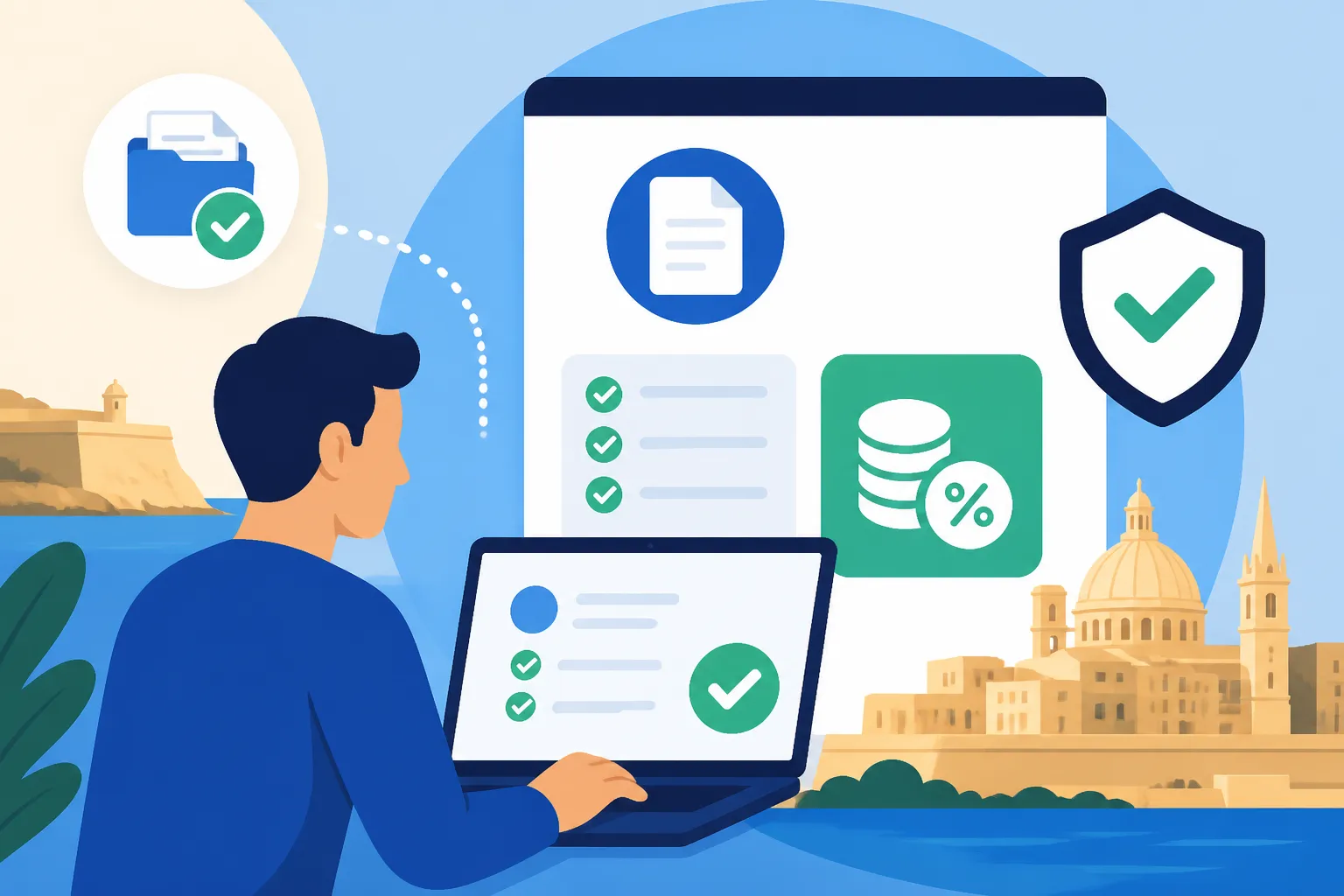
The portal will also highlight any errors or missing information before allowing you to proceed. Address these promptly. Once you are confident that everything is accurate, you’ll digitally sign and submit your declaration. The act of submission usually generates a confirmation or reference number. It is absolutely critical that you save this confirmation, either by printing it or saving a digital copy. This is your proof that you have fulfilled your obligation and submitted your return by the deadline. Without this, if there's ever a query, you'll have no concrete evidence.
Remember, the tax return deadline for individuals in Malta is typically 30th June for the previous year's income, though this can sometimes be extended. Submitting late can incur penalties, so mark your calendar! You can refer to When Is the Tax Return Deadline in Malta? for the most up-to-date information on deadlines.
Common Pitfalls and Tips for Expats
Even with a step-by-step guide, certain aspects of the Maltese tax system can prove particularly challenging for expats. The nuances of residency, domicile, and how foreign income is treated are frequent sources of confusion. It's easy to make assumptions based on your home country's tax laws, but Malta often operates differently, sometimes significantly so.
One major area of concern is often related to banking and how money is moved. If you’re a non-domiciled resident, the "remittance basis" means you only pay tax on foreign income brought into Malta. This requires careful management of your finances. Using a service like Wise (formerly TransferWise) for international transfers can be beneficial, as it allows you to clearly track what funds are being remitted and from which sources, making it easier to declare accurately. However, be cautious: simply spending money on a foreign debit or credit card in Malta can, in certain circumstances, be considered a remittance if the funds are drawn from foreign income.
Another common pitfall is underestimating the importance of getting a Tax Identification Number (TIN) and keeping your e-ID details updated. These are foundational elements for accessing the CFR portal and managing your tax affairs. Without them, you're essentially locked out. Don't wait until the last minute to sort these out.
Dealing with Foreign Income and the Remittance Basis
This is perhaps the biggest head-scratcher for many expats in Malta, particularly those from non-EU countries. Malta operates on a remittance basis for non-domiciled residents, meaning you are generally only taxed on income earned in Malta and on foreign income and capital gains that are actually remitted (brought into) the country. This sounds great on paper, but in practice, it requires careful financial management and a thorough understanding of what constitutes a "remittance."
Let’s say you have a savings account in your home country. If you transfer money from that account to your Maltese bank account, and those funds originated from foreign income (like an overseas salary, rental income from a property abroad, or dividends), then that transfer is considered a remittance and is taxable in Malta. However, if those funds were capital (e.g., the proceeds from selling a property abroad, or money you had before you became a tax resident in Malta), they are generally not taxable upon remittance. This is why having clear documentation for the source of your funds is absolutely vital. You can learn more about this crucial concept by reading The Non-Dom Remittance Basis in Malta: How It Works.
The complexities extend to how you spend money. Using an overseas debit or credit card in Malta, which draws funds directly from an account holding foreign income, can also be deemed a remittance. This is where services like Wise can be helpful in managing different currency accounts and making clear what funds you are intentionally remitting. It allows for transparency and better tracking, which is essential for accurate tax declaration. Many expats find it prudent to keep their capital separate from income in foreign accounts to avoid accidental remittances. This meticulous approach to managing your overseas finances will simplify your annual tax declaration significantly and reduce the risk of inadvertent tax liabilities.
Deadlines and Penalties
The Commissioner for Revenue has strict deadlines for filing tax returns, and missing them can result in penalties. For individuals, the tax return for the previous year's income is typically due by 30th June of the current year. For instance, income earned in 2025 would be due by 30th June 2026. However, these dates can sometimes be subject to change or extensions, particularly for electronic submissions, so always confirm the exact deadline for the specific tax year you are filing. This information is usually published on the CFR website annually.
Penalties for late filing can include fines and interest on any unpaid tax. The longer you delay, the higher the penalties can become. Furthermore, if you are found to have deliberately misstated your income or engaged in tax evasion, the consequences can be much more severe, including higher fines and even legal action. It’s far better to file on time, even if you’re struggling with the figures, and then amend your return later if necessary, rather than miss the deadline entirely. You can always check When Is the Tax Return Deadline in Malta? for exact dates.
If you find yourself in a situation where you know you won't be able to meet the deadline, it's advisable to contact the CFR as soon as possible to discuss your options. While extensions are not guaranteed, demonstrating a proactive approach and a genuine reason for delay might be viewed more favourably than simply ignoring the deadline. However, for most, the best advice is to start gathering your documents and accessing the CFR portal well in advance of the due date to avoid any last-minute stress.
Seeking Professional Help
Let's be honest, for many expats, the Maltese tax system, especially with its intricacies like the remittance basis and varying residency rules, can feel like a foreign language. While this guide aims to simplify the process, there are definitely times when DIY simply isn't the best option. If your tax situation is complex – for example, if you have significant foreign income from various sources, own multiple properties, run a business, or have just moved to Malta mid-year – then seeking professional help is not just a luxury, it's a wise investment.
A qualified local accountant or a tax advisor specialising in expat taxation can provide invaluable assistance. They understand the nuances of Maltese law, can correctly interpret your residence and domicile status, and ensure you're taking advantage of all eligible deductions and reliefs. They can also represent you in communications with the CFR, taking that burden off your shoulders. For global citizens, companies like Taxes for Expats specifically cater to the unique tax challenges of those living and working across borders, offering tailored advice that considers both your Maltese and home country tax obligations.
Even if your situation seems straightforward, a one-off consultation with an expert can offer peace of mind and confirm you're on the right track. They can help you understand How Do I Report Foreign Income to the CFR in Malta? or explain How Much Income Tax Will I Pay on a Maltese Salary? in detail based on your specific circumstances. Don't struggle alone if you're feeling overwhelmed; the cost of professional advice often outweighs the potential penalties or missed savings from getting it wrong.
After Submission: What Happens Next?
Once you've clicked that "submit" button on the CFR Portal and received your confirmation, you might breathe a sigh of relief, but the process isn't always entirely over. What happens next depends on whether you have a tax liability (you owe money) or if you are due a refund. The CFR will process your submission, and eventually, they will issue an official tax assessment.
This assessment is a formal document detailing their calculation of your tax liability or refund based on the information you provided. It's crucial to review this assessment carefully against your submitted figures. While generally accurate, errors can occur, so ensure it reflects what you declared. If you disagree with the assessment, you typically have a window to file an objection. This usually involves submitting an official letter to the CFR explaining your discrepancy and providing supporting evidence.
The CFR system is designed to be relatively efficient, especially for electronic submissions, but processing times can vary, particularly during peak filing season. It's not uncommon for it to take a few weeks or even a couple of months to receive your official assessment or refund. Patience is often required.
Understanding Your Tax Assessment
After the Commissioner for Revenue has processed your submitted tax return, you will eventually receive a formal document called a "Notice of Assessment" or "Tax Statement." This document is usually made available on your CFR Portal account, and sometimes a physical copy might be mailed to your registered address. It's essentially the CFR's official determination of your tax liability or refund for that specific assessment year, based on the information you provided.
When you receive this assessment, don't just glance at the final figure. Take the time to meticulously compare it against the copy of the tax return you submitted. Check all the key figures: your reported income, any deductions or reliefs applied, and the resulting tax calculation. Pay particular attention to how foreign income, if applicable, has been treated, as this is often where discrepancies arise for expats. The assessment will clearly state the amount of tax due or the refund amount, along with the due date for any payment or an indication of when a refund might be issued.
If you spot any discrepancies, or if the assessment doesn't match your expectations, it's important not to ignore it. You typically have a limited timeframe – usually 30 days from the date of the assessment – to lodge an objection or request a clarification. This process involves writing to the CFR, explaining the perceived error, and providing any supporting documentation. It's a formal process, so ensure your communication is clear and concise. Prompt action is key here to avoid any further complications or potential penalties.
Making Payments or Receiving Refunds
Once you've reviewed your tax assessment and confirmed its accuracy, the next step depends on whether you owe money to the CFR or if they owe money to you. If the assessment shows a tax liability, meaning you have tax due, the Notice of Assessment will specify the payment deadline. Missing this deadline can lead to interest charges and penalties, so mark it in your calendar.
Payments to the CFR can usually be made online directly through the CFR Portal, using a debit or credit card. There might also be options for bank transfers or payments at specific bank branches, but online payment is generally the most convenient method for expats. Ensure you use the correct payment reference number provided on your assessment to avoid any delays or misallocations of your payment. For a detailed guide on how to handle payment, consult How Do I Pay a Tax Balance to the CFR in Malta?.
Conversely, if your assessment indicates a refund is due to you, the CFR will process this automatically. Refunds are typically issued via direct bank transfer to the bank account you have registered with them. This is usually your Maltese bank account, so ensure your banking details are up to date on your CFR profile. While the process is automatic, the timing can vary, so patience is required. If a significant amount of time passes and you haven't received your refund, you can follow up with the CFR's customer service, quoting your assessment reference number.
Disclaimer
The information provided in this guide is intended for general informational purposes only and does not constitute professional tax advice. Tax laws and regulations in Malta can be complex and are subject to change. While every effort has been made to ensure accuracy, individual circumstances can vary significantly. Therefore, it is strongly recommended that you consult with a qualified Maltese tax advisor or accountant for personalised advice regarding your specific tax situation.