How Do I Set Up Direct Debits for Bills in Malta?
Oh, the sheer joy of navigating the labyrinthine world of Maltese bureaucracy and everyday admin! I remember vividly when I first moved here, convinced that setting up automatic payments for my bills would be as simple as a few clicks, just like back home. Boy, was I in for a surprise. It’s not always straightforward, and the process can definitely feel like a bit of a treasure hunt. But don't you worry, because this guide is going to strip away the mystery and walk you through exactly how to set up direct debits for your essential bills in Malta, helping you achieve that elusive peace of mind.
Understanding Direct Debits in Malta: The Basics and Why They Matter
When you're settling into a new country like Malta, understanding how to manage your finances and recurring payments is paramount. Direct debits, or mandati diretti as they're sometimes referred to in a more formal, slightly Italian-esque way here, are an excellent tool for this, though their implementation might feel a little different to what you’re accustomed to. Essentially, a direct debit is an authorisation you give to a company, allowing them to collect varying amounts of money from your bank account when a bill is due. Unlike a standing order, which is a fixed payment amount on a fixed date, a direct debit adjusts to the actual bill, making it super convenient for things like utility bills or phone contracts where the amount changes month to month.
The convenience factor cannot be overstated. Imagine missing a bill payment because you forgot the due date or, worse, because the paper bill got lost in the postal system – which, let's be honest, can happen here. Late payment fees, service interruptions, and the sheer stress of trying to sort it out are all things you can happily avoid with direct debits. It frees up mental space, allowing you to focus on the more enjoyable aspects of living in Malta, like exploring new festa celebrations or finding the best pastizzi. For anyone who’s ever had to frantically run to pay an ARMS bill at the last minute, you’ll know exactly what I mean.
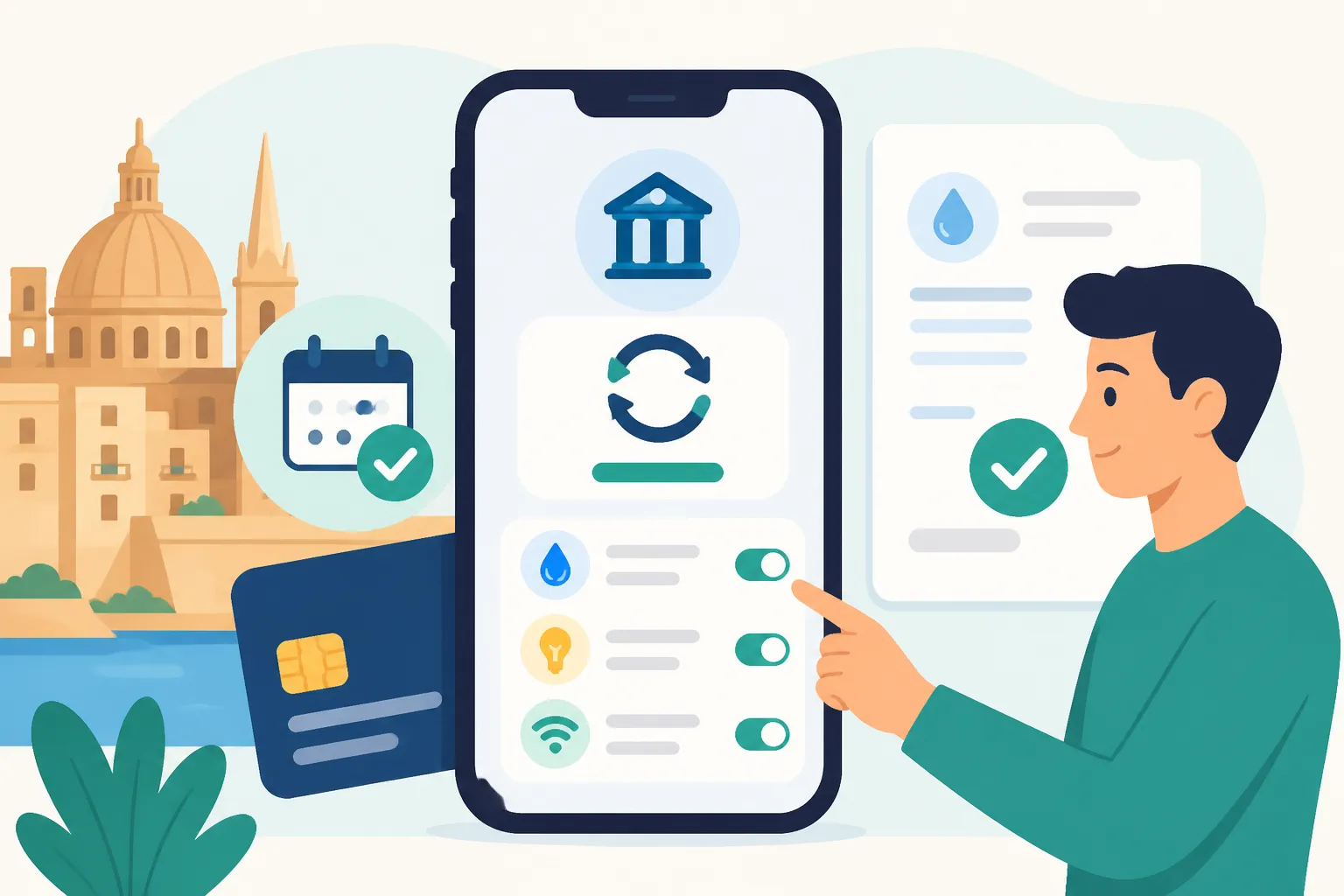
In Malta, the most common bills you'll typically set up direct debits for include your electricity and water with ARMS Ltd, your internet and mobile phone services with providers like GO, Epic, or Melita, and sometimes, even your private health insurance premiums. However, it’s crucial to understand that not every recurring payment can be easily set up as a direct debit. For instance, things like property tax (if applicable to you) or some other governmental charges usually require manual payments or distinct online portals. It’s part of the charmingly analog side of Malta that we expats often come to tolerate. Speaking of managing finances in Malta, especially complex ones like taxes, many find that a specialist service like Taxes for Expats can really simplify things, especially for those with cross-border income, helping navigate what can't be automated here.
The Step-by-Step Process of Setting Up Direct Debits
Alright, let's get down to the nitty-gritty of actually making this happen. The process might not be as instantaneous as a click in an app, but once it’s done, you’ll be so grateful for it. It usually involves a bit of interaction with both your bank and the service provider.
Ensuring Your Bank Account is Ready
First things first, you absolutely need a local Maltese bank account. I know, I know, opening a bank account here can be a bit of a saga, often requiring more documentation than you thought possible, but it’s a non-negotiable step for direct debits. Banks like BOV, HSBC, and APS Bank are the main players, and while digital banks like Revolut are fantastic for everyday spending and international transfers, they generally don't offer the full direct debit functionality for Maltese utility and service providers in the same way traditional banks do. If you're still in the throes of getting sorted, our guide on How to Open a Maltese Bank Account as a Newcomer might be a lifesaver.
Once you have your account, make sure it’s regularly funded. A failed direct debit due to insufficient funds isn't just an inconvenience; it can incur bank charges and potentially lead to late payment fees from your biller. Trust me, you don't want the headache of a disconnected internet service because a €30 mobile bill bounced. It’s a good practice to keep an eye on your account balance, especially around the typical billing dates.
Initiating the Direct Debit Mandate
Here's where it often differs from other countries: you usually initiate the direct debit through the bill provider rather than directly through your bank's online portal for Maltese entities. The biller then sends the request to your bank.
Let's take ARMS Ltd, for instance, which handles your electricity and water bills. For new residents, you might start off by receiving paper bills, or more often these days, e-bills via their online portal. To set up a direct debit for ARMS, you'll typically need to:
- Access the ARMS Online Portal: If you haven't already, register for an account on their website. This is essential for managing your utility accounts, checking past bills, and making payments. You'll likely need your ARMS account number, which you can find on any past bill or by contacting them directly.
- Locate the Direct Debit Section: Within the portal, there should be a section for payment methods or direct debits.
- Fill in the Mandate Form: You'll be asked to provide your bank's IBAN (International Bank Account Number), the account holder's name (which must match the ARMS account holder), and your Maltese ID card number. Some people find that for utilities, it's sometimes necessary to download a physical form from the ARMS website, fill it out, and then submit it to an ARMS office, often the main one in Luqa. While the online option is becoming more prevalent, don't be surprised if the analogue approach is still mentioned as an alternative. Understanding Tiered Utility Tariffs and Registered Residents in Malta is also crucial, as your resident status affects your utility rates.
For internet and mobile providers like GO, Epic, or Melita, the process is usually more streamlined and heavily leans towards online setup:
- Log into Your Customer Portal: Most modern telecom providers in Malta have robust online portals or mobile apps.
- Navigate to Billing/Payment Options: Look for a section like 'My Bills', 'Payment Methods', or 'Direct Debit Setup'.
- Enter Bank Details: You'll input your IBAN and sometimes the SWIFT/BIC code for your Maltese bank. They often have an option to save this as your preferred payment method. Our guide on Getting Internet and Mobile Service in Malta can help you get set up with these providers first.
For rent, setting up a direct debit is less common directly with private landlords unless they use a property management company that facilitates such payments. More often, you might set up a standing order from your bank account to your landlord’s, which is a fixed recurring payment. The difference is subtle but important: a standing order is bank-initiated and fixed, whereas a direct debit is payee-initiated and variable. Always discuss this with your landlord first and ensure it’s clearly stipulated in your Renting a Home in Malta: Contracts, Deposits, and Tenant Rights.
Required Documentation and Information
When setting up any direct debit, you'll invariably need some key pieces of information and potentially some documentation:
- Your IBAN: This is your unique international bank account number. You'll find it on your bank statements or through your online banking portal.
- Account Holder Name: This must exactly match the name on your bank account.
- Maltese ID Card Number: Your eResidence card number is crucial for identification and linking your accounts. This number is your golden ticket for almost all administrative tasks in Malta, from healthcare to banking. If you're still waiting for it, check out our piece on Getting Your Maltese eResidence Card and ID Number.
- Biller Account Number: For ARMS, this is your utility account number; for telecom, it's your customer or contract number. This allows them to link your direct debit request to your specific service.
The reason for all this information is straightforward: security and compliance. Maltese financial institutions, like those across the EU, adhere to strict Know Your Customer (KYC) and Anti-Money Laundering (AML) regulations. They need to verify who you are and that you’re authorising legitimate transactions. So, even if it feels like a lot of hoops to jump through, it’s all for your protection.
Managing and Troubleshooting Your Direct Debits
Once your direct debits are humming along, it’s easy to forget about them, which is precisely the point. But it’s still wise to have a system for monitoring them and knowing what to do if a glitch occurs.
Monitoring Your Payments
Even with direct debits set up, it’s always a good idea to cast an eye over your bank statements each month. Countless accounts exist where a bill wasn't quite what was expected, or a direct debit simply didn't go through for reasons unknown.
- Online Banking: Regularly log into your Maltese bank's online portal (e.g., BOV, HSBC, APS) to review your transactions. This is your primary tool for seeing when direct debits are processed and for what amount.
- Biller Portals: For utilities and telecom, their respective online portals (e.g., ARMS online) will show your bill history and payment status. This allows you to cross-reference with your bank statement. If you're paying your ARMS bill, you can always refer to How Do I Pay My ARMS Utility Bill Online in Malta? to see other options.
- Budgeting: Incorporating these expected direct debits into your monthly budget is essential for financial stability. This ties into the broader topic of Cost of Living in Malta: Budgeting for the Real Numbers, ensuring you're not caught off guard by unexpected expenses.
It’s about being proactive. Catching an error early, whether it’s an overcharge or a missed payment, is far easier than trying to untangle a mess weeks or months down the line.
When Things Go Wrong: Failed Payments and Disputes
Life happens, and sometimes a direct debit might not go as planned. Here’s what you should know:
- Insufficient Funds: If a direct debit fails because you don't have enough money in your account, your bank will typically charge you a fee for the returned payment. The biller might also charge a late payment fee, and your service could be interrupted. The best course of action is to immediately transfer funds to cover the bill and contact the biller to arrange an alternative payment or reschedule the direct debit if possible. Be upfront and explain the situation.
- Incorrect Amount or Dispute: If you notice a direct debit has gone through for an amount you believe is incorrect, or if you want to dispute a charge, your first point of contact should always be the biller. They are the ones who initiated the charge. Gather all your documentation – the bill itself, your bank statement, and any communication you've had with them. If you cannot resolve it with the biller, then you can contact your bank to explain the situation. Under SEPA (Single Euro Payments Area) rules, you have certain rights to request a refund for an unauthorised or incorrectly executed direct debit.
- Cancelling a Direct Debit: You have the right to cancel a direct debit at any time. Ideally, you should inform both the biller and your bank to ensure it's stopped effectively. Contacting the biller is important so they know to expect alternative payment methods from you and don't assume you're simply not paying. Most biller portals or customer service lines will have instructions on how to cancel. Your bank can also cancel it, usually through online banking or by visiting a branch. Just remember, cancelling a direct debit doesn't mean you no longer owe the money for the service; it just means you'll need to pay it another way!
International Payments and Alternatives
While direct debits are fantastic for local Maltese bills, many expats also deal with international payments, whether it's receiving a salary from an overseas employer or sending money back home. This is where services like Wise come into their own. They offer transparent, low-cost international money transfers, which can be a lifesaver if you're juggling funds across different currencies or need to send remittances without high bank fees. While you wouldn't use Wise for a local Maltese utility direct debit, it's an invaluable tool for managing the broader financial picture of expat life, offering much better exchange rates than traditional banks for international transfers.
For fixed, regular payments that aren't typically handled by direct debit systems, like certain international subscriptions or rent to a non-local landlord, you might explore setting up a standing order through your bank. Again, the key difference is that a standing order is set by you for a fixed amount, while a direct debit is initiated by the company for a variable amount. Knowing the distinction can save you a lot of grief. It’s all about finding the right financial tool for the right job, and in Malta, that often means using a combination of methods.
Disclaimer
The information provided in this guide is for general informational purposes only and does not constitute financial, legal, or professional advice. While we strive to keep the information up-to-date and accurate, regulations and procedures in Malta can change. It is always recommended to consult with relevant financial institutions, service providers, or legal professionals for advice tailored to your specific situation.