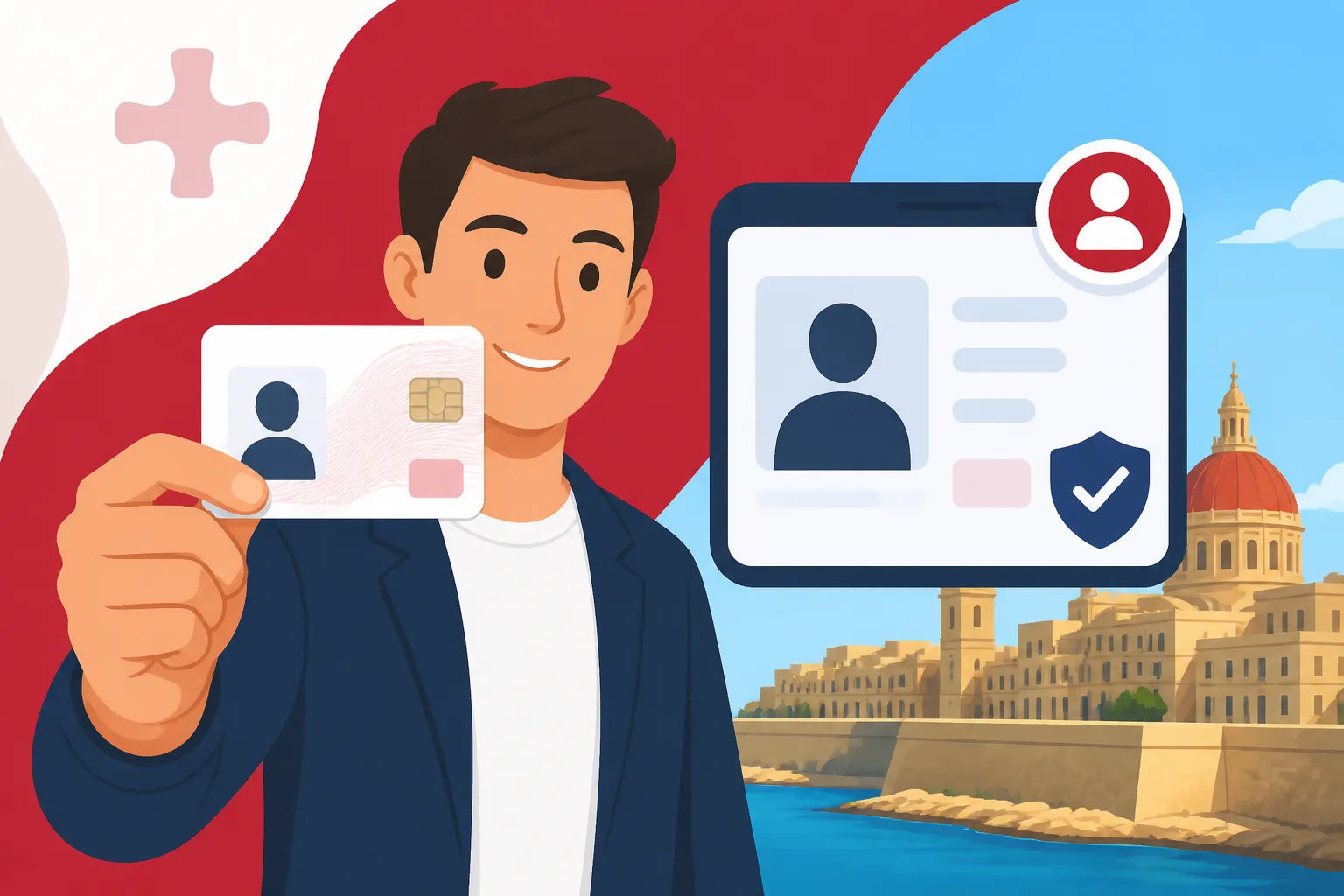
Getting Your Maltese eResidence Card and ID Number
Ah, the infamous Maltese eResidence Card! If you’ve just landed on our sunny shores, or are planning your big move, you’re likely already feeling the slight tremor of apprehension about the paperwork. Trust me, every expat who has ever called Malta home has faced the often-bewildering dance with local bureaucracy. It can feel like you’re constantly jumping through hoops, especially when it comes to getting that all-important piece of plastic that confirms your right to be here. This guide is going to strip away the confusion and walk you through every single step of obtaining your Maltese eResidence card and its crucial ID number, so you can navigate the process like a seasoned local, not a bewildered newbie.
What Exactly Is the Maltese eResidence Card and ID Number?
When you first arrive in Malta, especially if you’re coming from outside the EU/EEA, you might think you just need a visa. But once you’re here for anything more than a short tourist stint, the eResidence Card becomes your absolute bedrock. It’s not just a fancy piece of plastic; it’s the official documentation that proves your legal right to reside in Malta, whether that’s for work, study, family reunification, or even as a digital nomad. Without it, you’ll find doors closed to essential services and everyday necessities.
Think of it as your official identity in Malta, far more critical than your passport for daily life once you’ve arrived. It's the document you'll flash to a bank when you're trying to set up an account, to a landlord when you're finalising a lease, or to the health centre when you need medical attention. Its importance cannot be overstated; it truly unlocks life on the islands.
More Than Just an ID: Your Key to Life in Malta
The eResidence Card serves multiple functions. For EU/EEA and Swiss citizens, it confirms your registration as a resident, providing proof of your right to live and access services in Malta under EU free movement rules. For third-country nationals, it’s even more fundamental. It is your residence permit, explicitly stating the basis of your stay (e.g., Single Permit for work, Nomad Residence Permit, Student Permit). This means it functions simultaneously as your identification card and your proof of legal residency.
It’s the document you’ll pull out when you’re registering for utilities with ARMS, applying for a job with Jobsplus, or enrolling your children in school. Without a valid eResidence card and the unique ID number it contains, you’ll quickly hit administrative roadblocks that prevent you from truly settling in. Many new arrivals underestimate how central this document is until they encounter their first bureaucratic hurdle, so getting it sorted early is paramount.
Understanding the Components: Card, Number, and Validity
The physical eResidence card itself is a credit-card sized document, much like a national ID card from other European countries. It features your photograph, name, date of birth, nationality, and most importantly, your unique Maltese ID number. This isn't just a random sequence; it's a nine-digit number that will follow you through all your administrative interactions in Malta, from tax filings to healthcare registrations. It’s what links you to the system.
Alongside your personal details, the card also specifies the type of residence permit you hold (e.g., 'Worker', 'Family Member', 'Student', 'Digital Nomad'), the date of issue, and its expiry date. The validity period is directly tied to your underlying permit – typically one year for initial work permits, but it can vary. Keeping an eye on that expiry date is absolutely critical, as renewal processes need to start well in advance to avoid a lapse in your legal status. The ID number, distinct from the document number on the card itself, is what official bodies will request time and time again.
Who Needs a Maltese eResidence Card?
The short answer is: almost everyone who plans to live here for more than a few months. While tourists on a short Schengen visa don’t need one, anyone intending to set up roots, work, study, or simply reside long-term will find this card to be an indispensable part of their Maltese life. The specific requirements and processes do differ slightly depending on your nationality, so let’s break that down.
It’s easy to assume your passport is enough, but in Malta, once you move beyond visitor status, your passport becomes more of a travel document, while your eResidence card becomes your primary form of identification and proof of right to reside. Trying to get by without it for too long will only lead to headaches and unnecessary stress, so get this on your priority list.
EU/EEA and Swiss Nationals: Your Registration Obligation
If you’re a citizen of an EU/EEA country or Switzerland, you enjoy the right to free movement within the European Union. This means you don't need a visa to enter Malta, and you can stay for up to three months without any formal registration. However, if you intend to reside in Malta for longer than three months, you are legally obliged to register your residence with Identità (the national agency responsible for identity management).
Your eResidence card for EU/EEA/Swiss nationals confirms this registration. The process for you is generally simpler than for third-country nationals, as you don't typically need a work permit in the same way. You'll primarily need to prove you have sufficient resources to support yourself (or a job offer/employment), comprehensive health insurance (or social security contributions), and a place to live. Even though it feels like an extra step, this card is still vital for seamless access to services and proving your official address. For more details on your specific rights, check out the guide on eResidence for EU/EEA and Swiss Nationals in Malta.
Third-Country Nationals: The Cornerstone of Your Stay
For those of us coming from outside the EU/EEA, the eResidence card isn't just a registration; it is the physical manifestation of your residence permit. Whether you're here on a Single Permit (combining work and residence), a Nomad Residence Permit, a Student Permit, or a Family Member Permit, your eResidence card will reflect this status. Without it, your stay in Malta is technically not legal beyond the validity of your initial entry visa (if one was required).
The application for your eResidence card for third-country nationals is usually part of the broader application for your residence permit type. So, when you apply for your Single Permit, you're essentially applying for the eResidence card that will represent it. This makes it an absolutely critical document, tying your legal right to work, access healthcare, or study directly to this card. You’ll be asked for it constantly, from signing rental agreements to proving your eligibility for social security benefits.
The Application Journey: Step-by-Step with Identità
Navigating the application process for your eResidence card, especially with Identità, can feel like a labyrinth. It’s a bureaucracy, after all, and while efforts are being made to streamline it, you still need to be prepared. The key here is meticulous preparation, patience, and a willingness to follow instructions to the letter. This isn't a race, it's a marathon, and every detail matters.
It's common for new residents to feel a mix of excitement and exasperation during this phase. Don't worry, that's completely normal! Just breathe, gather your papers, and take it one step at a time. The end result is worth the effort, as it grants you the peace of mind and access you need to truly thrive here.
Preparing Your Dossier: The Document Checklist
The most common reason for delays or rejections is incomplete or incorrect documentation. Identità is notoriously strict about this, so gather everything with extreme care. While the exact list varies slightly based on your permit type (work, study, family, etc.), here’s a general rundown of what you’ll likely need:
- Passport: Original and photocopies of all relevant pages (identity, visa, entry stamps). Ensure your passport has sufficient validity (usually at least 6 months beyond your intended permit expiry).
- Application Form: The specific form for your permit type, filled out completely and signed.
- Proof of Accommodation: A valid rental agreement registered with the Housing Authority (for non-EU citizens, often requiring attestation) or proof of property ownership. This is a big one, as your permit is tied to your residential address.
- Proof of Financial Means: Bank statements, employment contract, scholarship letter, or proof of sufficient funds to support yourself and any dependents.
- Private Health Insurance: Often a mandatory requirement for non-EU nationals, especially for Nomad Residence Permits, students, and those on certain work permits. Ensure it covers Malta and the Schengen area, and meets minimum coverage requirements.
- Police Conduct Certificate: A clean criminal record from your home country and any country you’ve resided in for over six months in the past year. This is a common requirement and can take time to obtain, so start early. For comprehensive guidance on this, refer to The Police Conduct Certificate and Document Requirements in Malta.
- Passport-sized Photos: Recent, compliant with passport photo standards.
- Originals and Copies: Always bring the originals of all documents, even if you’re only submitting copies. They will want to verify.
- Translations: If any of your documents aren't in English or Maltese, they must be accompanied by an official, certified translation. This is non-negotiable and skipping it will lead to immediate rejection.
Take your time when gathering these, cross-referencing against the official Identità checklist for your specific permit. It’s better to have too many documents than too few.
Booking Your Appointment and Submitting Your Application
Once your document dossier is meticulously prepared, the next step is to actually get it to Identità. For many permit types, particularly Single Permits and Nomad Residence Permits, you'll likely start the process online via the Identità portal. You typically upload initial documents and then wait for an "Approval in Principle" or a request to book an appointment for biometric data collection and physical document submission.
Booking these appointments can sometimes be a challenge, requiring patience and persistence, as slots can fill up quickly. Always double-check the location for your appointment – most are at the Identità offices in Marsa, but sometimes specific services are offered elsewhere. Ensure you arrive on time with all your documents in order. The staff are processing countless applications daily, so having everything ready helps ensure a smoother, albeit still potentially lengthy, experience. For more detailed instructions on navigating this, you might find Booking Appointments and Submitting Documents to Identità very helpful.
The Biometrics Process: Fingerprints and Photo
A crucial part of your eResidence card application involves providing your biometric data. This typically happens during your scheduled appointment at the Identità offices. You’ll have your fingerprints taken (usually all ten digits) and a digital photograph will be captured. This data is then embedded into the microchip on your eResidence card, making it a highly secure document and difficult to forge.
This step is mandatory for all applicants and is a standard procedure across many EU countries for residence permits. It’s a straightforward process, but it’s essential you comply fully. Think of it as the final, physical verification of your identity that will be digitally linked to your new life in Malta. After your biometrics are taken, it’s usually a waiting game until your card is ready for collection.
Navigating the Waiting Game and Collection
After submitting your application and providing biometrics, you enter what can often be the most anxiety-inducing phase: the waiting game. Maltese bureaucracy, while functional, isn't known for its speed. It's a period where patience is not just a virtue, but an absolute necessity. You’ll be checking your email constantly, perhaps even your physical mailbox, wondering when that crucial notification will arrive.
It’s important to manage your expectations during this time. Remember that Identità processes thousands of applications, and while some cases are quick, others can take longer. Don't panic if it's not instantaneous; that's just the reality of the system here.
What to Expect During Processing Times
Processing times can vary wildly depending on the time of year, the complexity of your application, and the specific type of permit. Some people report getting their card within a few weeks, while others might wait several months. For example, a Single Permit application might go through an "Approval in Principle" stage first, which allows you to start working, even before the physical card is ready. It's during this phase that you'll also get your Maltese ID number, which you can use for opening a bank account or registering with Jobsplus even without the card.
During this waiting period, it's natural to feel a bit in limbo. You might not have access to certain services that require the physical card. While there isn't a direct "track my card" feature, you can sometimes check your application status via the Identità portal, or by contacting them if the delay is excessive. For a deeper dive into what to expect, consider reading Understanding Identità Processing Times and Delays. And remember, if you're using a digital eSIM from a provider like Airalo, you can keep checking those emails for updates without worrying about local data costs.
Collecting Your Precious Card: The Final Step
Finally, the moment arrives! You'll typically receive an SMS or email notification instructing you that your eResidence card is ready for collection. This is a huge relief, believe me. The collection point is usually the Identità offices in Marsa. When you go to collect, make sure you bring your current passport and any interim documents they might have provided, like a confirmation letter or an 'Approval in Principle' document.
The collection process itself is generally quicker than the application submission. You’ll likely take a ticket, wait for your number to be called, present your identification, and then you’ll be handed your brand-new eResidence card. Take a moment to check all the details on the card – your name, date of birth, expiry date – are correct before you leave the counter.
What to Do If Your Permit Expires While Waiting
This is a critical concern for many new arrivals, and it's a completely valid one. It's not uncommon for the processing of a new permit or a renewal to take longer than the validity of your existing permit or visa. The good news is that if you have submitted a valid and complete application for a new permit or renewal before your current one expires, you are generally considered to be legally residing in Malta while your application is being processed.
However, there are caveats. While you are legally allowed to stay, you might encounter issues if you need to travel outside Malta during this limbo period. Some airlines or border controls might be unfamiliar with the Maltese system, and you could face difficulties re-entering. If travel is absolutely necessary, you might be able to request a temporary travel document from Identità, but this isn't guaranteed. It’s always best to avoid international travel until your new card is in hand. For more detailed advice, read Can I Stay in Malta While My Residence Permit Is Being Processed? and Travelling While Your Maltese Permit Is Being Processed.
Using and Maintaining Your eResidence Card
Congratulations, you have your eResidence card! Now you can breathe a sigh of relief. This card is your passport to fully integrating into Maltese life. However, simply having it isn't the end of the story. You need to understand how to use it, where your ID number comes into play, and how to maintain its validity. It’s an ongoing relationship with this vital document.
Treat your eResidence card like you would your passport or driver's license. Keep it safe, know its expiry date, and understand its full potential. It's your official key to accessing almost everything you'll need as a resident here.
Your ID Number: The Golden Key to Maltese Services
The nine-digit ID number printed on your eResidence card is arguably the most important piece of information on it. This number is your unique identifier within the Maltese administrative system. You will use it for almost everything:
- Opening a Bank Account: Maltese banks like BOV, HSBC, APS, and Lombard will absolutely require your ID number. You can find detailed steps on How to Open a Maltese Bank Account as a Newcomer.
- Registering for Tax: Your ID number will become your Tax Identification Number (TIN). Get more info on How Do I Get a Tax Number TIN in Malta?.
- Healthcare Registration: To access public healthcare services, you'll need to register your entitlement, which hinges on your ID number. Read more about this in How Do I Register for Free Healthcare in Malta?.
- Jobsplus: For employment purposes, your ID number is essential for registration.
- Utility Bills: For ARMS (water and electricity), you'll need your ID number to get the residential tariff.
- Property Leases: Landlords will require it for registering your lease with the Housing Authority.
Essentially, your Maltese ID number is what connects you to the entire network of public and private services. Memorise it, or at least keep it accessible, because you’ll be asked for it constantly.
Renewals, Updates, and Lost Cards
Life happens, and your circumstances in Malta might change. It’s crucial to know how to manage your eResidence card through these changes:
- Renewals: Your eResidence card has an expiry date, which matches your underlying permit. Do not wait until the last minute to renew. Start the renewal process several months before expiry, as processing can take time. Identità recommends applying at least 6-8 weeks in advance, but many expats advise starting even earlier, say 3 months prior. The process for renewal is similar to the initial application, often requiring updated documents. Don't get caught out; a lapsed permit can lead to serious issues. For a comprehensive guide, check out Renewing Your Maltese Residence Permit Before It Expires.
- Updates: If your address changes, or your job changes (and this impacts your permit type), you must inform Identità. Failing to do so can invalidate your permit or cause complications down the line. It's an administrative hassle, but a necessary one. You can find more information on Updating Your Address and Status with Identità in Malta.
- Lost or Stolen Cards: If your eResidence card is lost or stolen, report it to the police immediately to get a police report. Then, contact Identità to arrange for a replacement. There will be a fee for a replacement card. This is particularly important if you plan to travel, as you’ll need proof of residence to re-enter Malta. Detailed steps can be found in How Do I Replace a Lost or Stolen eResidence Card in Malta?.
Staying on top of these administrative tasks is a key part of successful expat life in Malta. A little proactive planning goes a long way to avoid stress.
Common Pitfalls and How to Avoid Them
The journey to getting and using your eResidence card is generally smooth if you're prepared, but there are definitely common traps that expats fall into. Let's look at how to steer clear:
- Missing or Expired Documents: This is the number one reason for delays. Double-check every single document against Identità’s checklist. Ensure your passport isn't expiring soon, your lease agreement is fully registered and attested if needed, and your health insurance covers the correct period and minimums. Using a checklist, perhaps even with an online tool like Sirelo to organise your moving documents, can be a lifesaver.
- Uncertified Translations: As mentioned, any document not in English or Maltese must be officially translated. A simple Google Translate isn’t going to cut it. Seek out a sworn translator.
- Waiting Too Long to Renew: Mark your calendar with your expiry date and set reminders for at least three months beforehand. The "I'll do it next week" mentality can lead to unnecessary panic and potential legal issues.
- Not Registering Changes: Your address, employment status, or marital status can all impact your permit. It’s tempting to put off notifying Identità, but it’s a requirement. If you’re caught out, it could complicate future renewals or even lead to fines.
- Assuming EU Rules Apply to Non-EU: While Malta is in the EU, the rules for third-country nationals are significantly different from those for EU citizens. Don’t confuse them.
- Lack of Patience: Bureaucracy moves at its own pace. Be polite, be prepared, and be persistent, but don't expect miracles overnight. Bring a good book or use your phone (perhaps with a reliable Airalo eSIM so you’re always connected) to pass the time during appointments.
By being meticulous and understanding the system, you can minimise the frustration and get your eResidence card sorted with as little fuss as possible.
| eResidence Card Type | Who Needs It | Key Requirements | Validity (Typical) |
|---|---|---|---|
| EU/EEA/Swiss Citizen | Residing in Malta for more than 3 months | Passport, Proof of Accommodation, Funds/Employment, Health Cover | 5 years |
| Third-Country National | All non-EU/EEA/Swiss residents (Work, Study, Family, Nomad) | Passport, Permit Application, Accommodation, Funds, Health Insurance, Police Conduct | 1 year (initial) |
| Renewal | All residents upon expiry of current card | Updated Documents (Lease, Employment, Funds, Insurance), Current eResidence Card | Varies |
| Replacement (Lost/Stolen) | If original card is lost, stolen, or damaged | Police Report, Affidavit, Passport, Fee | Same as original |
Disclaimer
The information provided in this guide is intended for general informational purposes only and does not constitute legal, financial, or immigration advice. While every effort has been made to ensure accuracy and reflect current regulations in Malta as of 2026, laws and procedures can change rapidly. It is always recommended to consult with the official Maltese government agencies, such as Identità, or seek professional legal or immigration advice for your specific situation. Reliance on any information in this guide is solely at your own risk.