Is Revolut a Good Option for New Arrivals in Malta?
Oh, the eternal question for every new arrival in Malta: "Can I just use Revolut for everything?" it is a question many newcomers ask, and plenty try to make it work in their first months. The simple truth is that while Revolut can be an absolute lifesaver when you first land on these sunny shores, it’s not always the be-all and end-all for living here long-term. This guide is going to dive deep into how Revolut fits into your financial life in Malta, covering its undeniable perks and the crucial areas where you’ll still need to navigate the local banking system.
The Immediate Relief: Why Revolut Feels Like a Godsend for New Arrivals
When you first land in a new country like Malta, the sheer number of administrative hurdles can feel overwhelming. Opening a traditional bank account is often one of the biggest headaches, requiring stacks of documents, proof of address, and sometimes seemingly endless waiting times. This is precisely where Revolut steps in, offering an immediate and often seamless financial solution that feels too good to be true.
Speed and Accessibility for New Arrivals
Let’s be honest, setting up a traditional bank account here in Malta can be a proper saga. You often need an address, a job, sometimes even your Maltese ID card number, and then there's the inevitable wait for appointments and account activation. It’s a classic chicken-and-egg situation that leaves many newcomers in a frustrating limbo, unable to fully settle in until their finances are in order.
Revolut bypasses much of this initial bureaucracy. You can often open an account even before you've officially moved or received your full Maltese residency. All you typically need is a valid passport or ID, a phone, and a temporary address. This immediate access to a functional bank account means you can start receiving money, making payments, and generally feeling financially stable much faster. For many, it's the first tangible piece of control they get over their new life here, and that psychological benefit alone is immense.
Multi-Currency Magic and International Transfers
Malta, being a hub for expats from all over the world, means you're constantly dealing with different currencies. Whether you're moving money from your home country, getting paid by an international employer, or travelling back to visit family, currency exchange rates and transfer fees can eat into your hard-earned cash. This is another area where Revolut truly shines, making it incredibly popular among the expat community.
With Revolut, you can hold multiple currencies in a single account, exchange money at interbank rates (often with fair usage limits, so keep an eye on those), and send money internationally with minimal or no fees, depending on your plan and the amount. This ease of managing foreign funds is a huge advantage over traditional banks, which often impose higher fees and less favourable exchange rates. When you’re trying to budget in a new country, every cent saved on transfers counts. For larger or very frequent international transfers, some people also consider dedicated services like Wise, as they can sometimes offer competitive rates and features tailored for specific transfer needs, but Revolut remains a strong contender for everyday use.
The Reality Check: Where Revolut Hits Local Maltese Hurdles
While Revolut is undoubtedly a fantastic tool for many aspects of expat life in Malta, it's crucial to understand its limitations. Many new arrivals quickly realise that while it handles daily spending and international transfers with aplomb, it often falls short when it comes to the nitty-gritty of local Maltese financial requirements. Relying solely on Revolut can leave you scrambling when certain administrative processes demand a traditional local banking relationship.
The Need for a Local Banking Relationship
Despite Revolut’s convenience, there are several instances where Maltese institutions prefer, or outright demand, a traditional local bank account. One of the most common frustrations comes with salary payments. While many progressive employers are fine with paying into Revolut, particularly in industries like iGaming or tech, you'll still find many traditional Maltese companies, especially smaller ones or those in certain sectors, that prefer or even insist on paying into a Maltese IBAN from a local bank like BOV or HSBC. This can delay your first paychecks or cause administrative headaches for your employer.
Furthermore, setting up direct debits for essential local services can sometimes be a challenge with Revolut. While it supports SEPA direct debits, some Maltese utility providers or landlords might be hesitant or simply lack the system compatibility to set them up easily with a non-Maltese IBAN. This means you could end up having to manually pay bills, which is not only inconvenient but can also lead to missed payments if you’re not meticulous. This often leads to the realisation that opening a Maltese Bank Account is almost inevitable for long-term residents.
Proof of Address and Maltese ID
Another significant hurdle is proof of address. When you're dealing with official Maltese entities – whether it's for your eResidence Card application, registering with a health centre, or even applying for certain services – they almost always ask for official proof of your Maltese address. While a utility bill in your name is often the go-to, sometimes a bank statement from a local bank is also accepted or even preferred. Revolut statements, while legitimate, are not always recognised by all Maltese institutions as primary proof of address, especially if your Revolut account is still linked to a foreign address or primarily used abroad.
Similarly, obtaining your Getting Your Maltese ID Card Number: The Key to Accessing Healthcare is a cornerstone of settling in Malta, unlocking everything from healthcare to voting rights. While Revolut doesn't directly hinder this process, the overall reliance on digital-only services might make proving your physical presence and intention to reside in Malta a slightly more arduous task for some, especially if official documents from traditional banks are requested as part of a wider application.
Larger Transactions, Loans, and Regulatory Scrutiny
For significant financial milestones or transactions, traditional Maltese banks often offer a greater sense of security and trust, both for you and for the institutions you’re dealing with. For instance, if you plan to buy property in Malta or even apply for a substantial personal loan, a local bank will be your primary port of call. They will assess your creditworthiness, your financial history within Malta, and your ability to repay, often requiring a demonstrable local banking relationship over a period of time. It's almost impossible to secure a home loan from a Maltese bank using only a Revolut account as your primary financial record.
Moreover, while Revolut is regulated and safe, as an online-only platform, its algorithms for flagging unusual or large transactions can sometimes be more stringent than traditional banks. While this is for security, it can occasionally lead to temporary account freezes or requests for additional documentation, which can be inconvenient, especially if you’re dealing with a time-sensitive payment. For expatriates dealing with foreign income or complex financial arrangements, it’s worth considering professional advice from services like Taxes for Expats to ensure all your financial activities, regardless of the platform, comply with Maltese tax laws and avoid any unwanted scrutiny.
Practical Strategies for Leveraging Revolut in Malta
So, how do you make the most of Revolut while navigating Malta's unique financial landscape? The key lies in understanding that it's a powerful tool, but often best used in conjunction with a traditional local bank account. It’s about strategising your finances to capitalise on Revolut's strengths while mitigating its weaknesses.
Best Practices for Everyday Spending
For your day-to-day life in Malta, Revolut is fantastic. Think of it as your primary spending card. For groceries at chains like Welbee’s or Lidl, dining out in Sliema or Valletta, paying for a Bolt ride, or even grabbing a coffee, your Revolut card will work seamlessly just like any other debit card. Its notifications are instant, helping you keep track of your spending in real-time, which is incredibly useful when you’re still getting a feel for the Cost of Living in Malta: Budgeting for the Real Numbers.
Top up your Revolut account with a manageable amount for your weekly or monthly expenses. This approach helps you budget effectively and reduces the risk of overspending. Utilise its budgeting features to categorise your outgoings, giving you a clear picture of where your money is going. This digital-first approach to daily finances can genuinely streamline your life here, making mundane transactions feel effortless.
When to Combine Revolut with a Local Bank Account
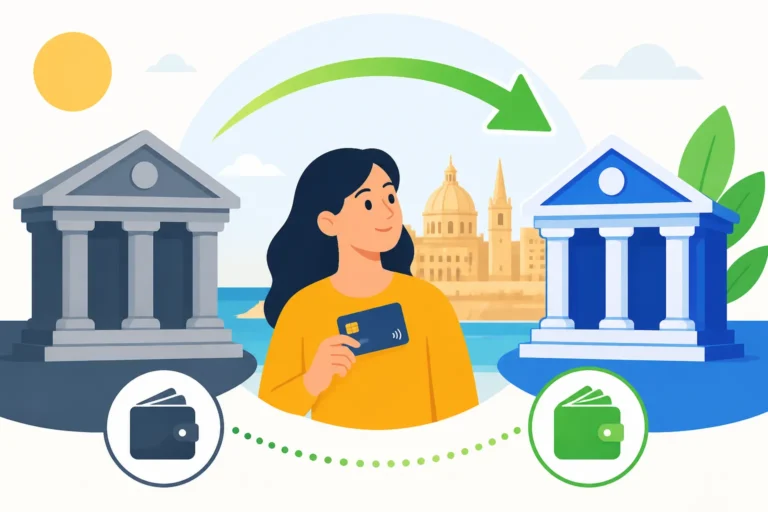
The most effective strategy for newcomers to Malta is often a hybrid approach: use Revolut for convenience and everyday spending, but open a traditional Maltese bank account for the essentials. As soon as you have your residence permit and ideally a stable job, make it a priority to How to Open a Maltese Bank Account as a Newcomer.
Use your local Maltese bank account for receiving your salary, setting up direct debits for critical utilities (like your ARMS bill for water and electricity), and paying your landlord if they prefer a local transfer. Then, you can easily transfer money from your Maltese bank account to your Revolut account for your daily spending as needed. This way, you satisfy all local requirements while still enjoying the flexibility and cost-effectiveness of Revolut for your discretionary spending and international needs. It really is about having the best of both worlds, ensuring you’re financially robust and compliant with local expectations.
Navigating Tax Implications for Digital Nomads and Expats
Malta has specific rules around tax residency and domicile, which can get complicated, especially for those who move frequently or have income from multiple countries, like many digital nomads. While Revolut itself doesn't directly influence your tax status, how you use it – particularly how you receive and spend money – can become relevant during tax assessments. It's easy to assume that because your bank is "online," your money is somehow outside the local tax net, but that's a dangerous misconception.
If you’re a tax resident in Malta, your worldwide income may be subject to Maltese tax, even if it stays in a Revolut account. The remittance basis of taxation in Malta is complex, and understanding what counts as "remitted" income is critical. For self-employed individuals, digital nomads, or those with complex income streams, it’s highly advisable to consult with a specialist. Services like Taxes for Expats can provide invaluable guidance, ensuring you understand your obligations and avoid any unpleasant surprises with the Maltese tax authorities down the line. It’s better to be proactive and informed rather than reactive and stressed.
Revolut vs. Traditional Maltese Banks: A Quick Comparison for New Arrivals
To help you visualise the pros and cons, here's a quick table comparing Revolut with traditional Maltese banks for new arrivals:
| Feature | Revolut | Traditional Maltese Bank (e.g., BOV, HSBC) |
|---|---|---|
| Account Opening | Fast, easy, often pre-arrival, minimal documents | Slow, complex, requires residence/local ID, many documents |
| Initial Requirements | Passport/ID, phone, temporary address | Maltese ID/eResidence, proof of address, employment contract |
| Multi-Currency Accounts | Excellent, easy to manage various currencies | Limited, usually EUR-centric, often with higher conversion fees |
| International Transfers | Low/no fees, interbank exchange rates | Higher fees, less favourable exchange rates, slower |
| Everyday Spending | Excellent, instant notifications, budgeting tools | Good, standard debit card functionality |
| Local Direct Debits | Possible, but some local providers may struggle or prefer Maltese IBAN | Generally seamless for all local services |
| Salary Payments | Accepted by many modern employers, but some traditional businesses prefer local IBAN | Universally accepted by Maltese employers, often preferred |
| Loan/Mortgage Access | Not offered in Malta | Essential for home loans, personal loans |
| Official Proof of Address | Accepted by some, but not always by all Maltese institutions | Universally accepted for most official processes |
| Customer Support | Primarily in-app chat, online | In-branch, phone, online portals |
| Perception by Local Institutions | Growing acceptance, but sometimes still seen as "non-traditional" | Established, trusted, and fully integrated with local systems |
Leveraging Both: Your Best Financial Foot Forward in Malta
Ultimately, for most newcomers settling in Malta, the ideal scenario isn't an either/or choice between Revolut and a traditional Maltese bank. It's about a smart, integrated approach. Revolut provides that instant gratification and flexibility, handling your multi-currency needs and daily spending with unparalleled ease. It's your financial friend for the first few weeks or months, cushioning the blow of moving to a new country.
However, as you establish yourself and delve deeper into the local administrative fabric, a traditional Maltese bank account becomes an indispensable anchor. It's what legitimises your financial presence in the eyes of landlords, utility providers, and the authorities. It’s the gateway to larger financial products like loans and provides that undeniable proof of residence when needed. Therefore, I highly recommend getting set up with Revolut for your immediate needs and then, as soon as feasible, starting the process of Opening a Bank Account in Malta: A Step-by-Step Guide with a local institution. This dual approach ensures you’re never caught out, giving you financial peace of mind and the practical tools to thrive as an expat in Malta.
Disclaimer
The information provided in this article is for general guidance only and does not constitute financial, legal, or tax advice. While we strive to provide accurate and up-to-date information, regulations and banking practices in Malta can change. It is always recommended to consult with relevant financial advisors, tax professionals, or official institutions for advice tailored to your specific situation.