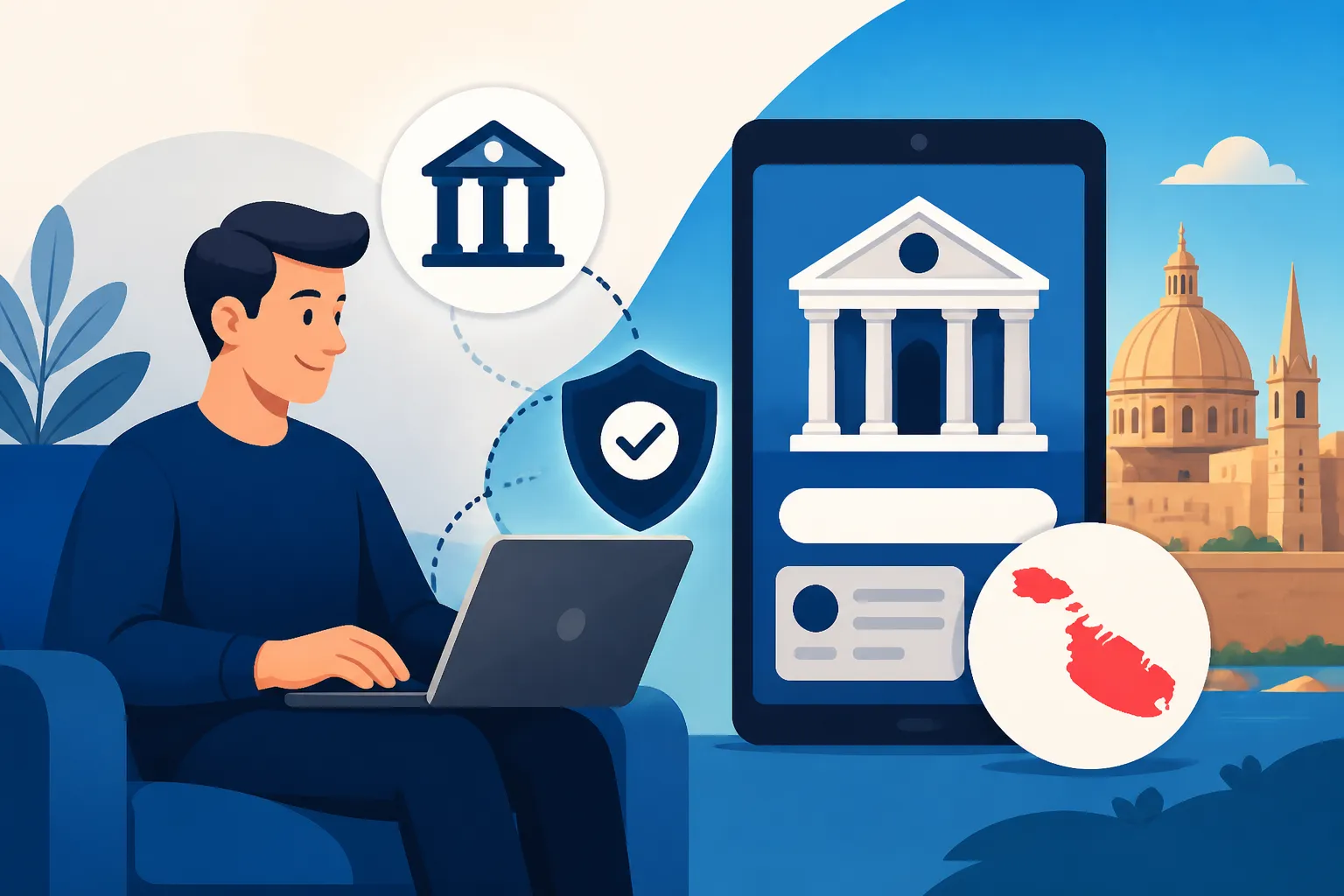
Can I Open a Maltese Bank Account Remotely?
Oh, the classic Maltese banking riddle for newcomers! It's one of those things that can truly test your patience when you first arrive. You’re often told you need a local bank account for everything from your salary to proving financial stability for your residence permit, but actually getting one opened, especially before you’ve firmly planted your feet on the island, can feel like trying to solve a Rubik's Cube blindfolded. This guide is here to shed some light on whether you can truly open a Maltese bank account remotely, or if it's another one of those administrative hurdles you'll just have to navigate once you're here.
The Reality of Remote Bank Account Opening in Malta
Let's cut right to the chase: the idea of fully opening a traditional Maltese bank account remotely, from another country, before you've even touched down, is largely a myth for the average expat. It’s a bit of a dream, isn’t it? To have everything sorted before you arrive. Unfortunately, Maltese banks, for various understandable reasons, tend to be quite traditional and stringent in their processes.
Why Maltese Banks Are So Cautious
Malta, being a small island nation and a financial hub within the EU, operates under strict anti-money laundering (AML) and know-your-customer (KYC) regulations. These aren't just local rules; they’re international standards that financial institutions everywhere are expected to uphold. For banks here, that means verifying your identity, understanding the source of your funds, and establishing your genuine connection to Malta is paramount. They need to be absolutely sure who you are and why you need a bank account here.
This heightened scrutiny became even more pronounced after Malta faced some international pressure regarding its financial compliance in recent years. This isn't to say it's impossible, but it means banks have ramped up their due diligence. So, when you walk into a branch (or try to apply online), expect them to ask for a multitude of documents: your passport, proof of address, an employment contract, proof of income, sometimes even your tax identification number from your home country, and a clear reason for wanting to bank in Malta. It can feel intrusive, but it's part of the process. For more on this, check out our guide on Why Maltese Banks Ask for So Much Documentation.
The "Catch-22" for New Arrivals
Here’s where it gets truly frustrating for many expats: you often need a Maltese address to open a bank account, but sometimes you can't secure a long-term rental contract without showing proof of funds or an employment contract, which might require a bank account. It’s a vicious cycle that many of us have been through.
Moreover, traditional Maltese banks typically require you to have your Maltese eResidence Card and the associated ID number. This little card is your golden ticket to almost everything official on the island, from healthcare to employment. The problem? You can't usually get your eResidence Card until you've physically arrived, completed your residency application, attended biometrics appointments, and waited for it to be issued. This means that, for all intents and purposes, you need to be physically present and well into your residency process before a traditional bank will even seriously consider your application. You can learn more about how crucial this number is in Getting Your Maltese ID Card Number: The Key to Accessing Healthcare.
The Short Answer: Generally, No, Not Fully
So, to definitively answer the question: for traditional Maltese banks like BOV, HSBC Malta, or APS Bank, no, you generally cannot open a full bank account completely remotely from abroad. While some might allow you to start an application online, nearly all will require an in-person visit to a branch in Malta to verify your identity, check original documents, and sign the necessary paperwork. They want to see you, physically present, with your documents in hand. The digital revolution has made some inroads, but not enough to bypass this fundamental requirement for non-residents or new residents.
What "Remote" Really Means for Maltese Banking
The term "remote" can be a bit misleading when it comes to Maltese banks. It's not the same as signing up for an online service in your home country with just a few clicks and a quick selfie.
The Initial Online Application vs. Final Steps
Many Maltese banks do offer online application forms. You can fill in your personal details, upload scans of some documents, and get the ball rolling. This can be helpful to pre-populate information and save some time later. However, this is just the initial application. Think of it as expressing interest.
The crucial distinction lies between an online application and actual account activation. After submitting your online form, you'll almost always receive an email or phone call inviting you to visit a branch in person. This is where the real work happens. During this in-person appointment, the bank will:
- Verify your identity using your original passport and Maltese eResidence card.
- Scrutinize your proof of address (a Maltese utility bill in your name is often preferred).
- Review your employment contract or other proof of income.
- Ask you a series of questions about your financial activities and your connection to Malta.
- Require your physical signature on various forms.
Without these final, in-person steps, your account will simply remain in a pending state, never fully active.
The Role of the eResidence Card and ID Number
As mentioned, your Maltese eResidence Card and the unique ID number printed on it are fundamental. It’s often the primary form of identification required by banks to prove your legal residency in Malta. Without it, you’re often treated as a tourist or temporary visitor, making traditional banking a non-starter.
This means that even if you manage to secure a job and a rental contract before arriving (which itself is a feat!), you won't be able to bypass the physical presence requirement for your eResidence Card application. Once you have applied for your permit and received your ID number, you are in a much stronger position to apply for a bank account. For a detailed rundown on what documents you'll eventually need, check out What Documents Do I Need to Open a Maltese Bank Account?.
Traditional Banks and Their Stance on Remote Opening
Let's look at the major players in Malta and what to expect from them regarding remote opening.
BOV, HSBC, and APS: The Big Players
Bank of Valletta (BOV): As Malta's largest bank, BOV is a popular choice, but they are very strict on their KYC procedures. You will absolutely need to visit a branch in person. They will require your Maltese eResidence Card, a local proof of address, and proof of your income/employment in Malta. While they have an online inquiry form, it's just that – an inquiry. Don't expect to have an active account without showing up.
HSBC Malta: HSBC operates similarly to BOV. They are also subject to stringent regulations. If you already have an HSBC account in another country, you might find the process slightly smoother due to existing international relationships within the bank. However, even then, it's highly improbable you'll activate a full Maltese account without a physical visit for document verification and signatures. Leveraging an existing international account might help with initial transfers, but it won't bypass the local account opening process entirely.
APS Bank: APS Bank is another significant player, often favoured by locals and increasingly by expats. Their process is also traditional. Expect the same requirements: in-person visit, Maltese eResidence Card, local proof of address, and proof of financial activity. They might offer some online initial application steps, but the final activation requires your physical presence.
For a comparative look at these and other banks, you might find our article Choosing a Bank in Malta: BOV, HSBC, APS, and Lombard helpful.
Smaller Banks and Their Approach
Banks like Lombard Bank also adhere to similar strict rules. While their customer service might sometimes feel a little more personal due to their smaller size, the regulatory hurdles remain the same. They still need to perform thorough KYC checks, which almost invariably means an in-person meeting and verification of your Maltese residency documents.
The common thread across all traditional Maltese banks is their strong emphasis on physical presence, original document verification, and a clear, established link to Malta, typically confirmed by your eResidence Card and a local address.
Digital Alternatives and How They Bridge the Gap
This is where the landscape truly changes for new arrivals. While traditional banks stick to their guns, FinTech companies have stepped in to offer solutions that are genuinely remote and incredibly useful in those initial weeks and months.
Revolut, Wise, and Other FinTech Solutions
For many expats, myself included, services like Revolut and Wise (formerly TransferWise) are absolute lifesavers when you first move to Malta. They offer the closest thing to "remote" banking you'll find here.
Revolut: This digital bank allows you to open an account from your home country with just your passport and proof of address (from your current location), and a quick selfie-verification. You can get a multi-currency account, often with a Maltese IBAN if you select Malta as your country of residence (once you've moved). You can then send and receive money, convert currencies at competitive rates, and use their debit card instantly. It’s fantastic for managing expenses, getting your first salary (though some Maltese employers prefer a traditional bank account initially), and making payments without incurring hefty foreign transaction fees. It’s truly a game-changer for easing into life here. Our guide Is Revolut a Good Option for New Arrivals in Malta? delves deeper into its benefits.
Wise: While primarily known for its excellent international money transfer services, Wise also offers multi-currency accounts with local bank details in several countries, including an EU IBAN. This means you can receive money into your Wise account as if it were a local EU bank account, even before you have a Maltese bank account. Their verification process is also fully remote, typically involving document uploads and sometimes a small initial transfer from another bank account in your name. Wise is invaluable for transferring larger sums from your home country to Malta, or for sending money home without excessive fees.
Why they work: These digital platforms are designed for the modern, mobile individual. Their verification processes are streamlined and embrace digital methods (video calls, advanced document scanning, biometric checks) that traditional banks are slower to adopt. They allow you to hit the ground running, financially speaking.
Limitations: While brilliant, it’s worth noting that some older Maltese government departments or very traditional employers might occasionally prefer an account with a physical, traditional bank. However, this is becoming less common as FinTech gains wider acceptance. For most daily transactions and receiving salaries, these digital solutions are perfectly adequate.
Using a Foreign Bank Account in the Interim
Don’t close your bank account in your home country immediately! It will be incredibly useful during your transition to Malta. You can use it for:
- Initial Funds: Transferring your initial savings or funds to Malta via services like Wise.
- Existing Direct Debits/Standing Orders: For bills or subscriptions that haven't yet been moved.
- Proof of Funds: For residency permit applications, showing statements from your foreign bank account is usually perfectly acceptable as proof of financial stability before you have a local Maltese account. This helps circumvent the "Catch-22" we discussed earlier, alleviating some stress about needing a Maltese account immediately for your permit. Our article Can I Open a Maltese Bank Account Before I Get My Residence Permit? provides more clarity on this.
It’s prudent to keep it active for at least a few months until you are fully settled with a local Maltese bank account and all your finances are in order here.
Practical Steps to Prepare for Bank Account Opening
Even though fully remote opening isn't quite a reality, you can still prepare meticulously to make the in-person process as smooth as possible once you're here.
Gather Your Documents (Even Before You Arrive)
Preparation is key to navigating the Maltese administrative maze. Start compiling these documents well in advance:
- Valid Passport: The original, of course. Make sure it has plenty of validity left.
- Proof of Address (from your home country): A recent utility bill (electricity, water, internet) or a bank statement showing your name and address from where you are currently residing. Banks often ask for this to establish your previous residential history.
- Maltese Rental Agreement: Once you arrive and secure accommodation, this will be your crucial proof of local address. Ensure it's registered with the Housing Authority, as banks might ask for proof of registration.
- Employment Contract: If you’re moving for work, this is vital proof of income and your reason for being in Malta. It should clearly state your salary, position, and start date.
- Payslips/Proof of Income: Recent payslips or a letter from your employer confirming your income. If self-employed, prepare your business registration documents and recent tax returns.
- Tax Identification Number (TIN): Your personal tax number from your home country. You'll also need to get a Maltese TIN, which is generally straightforward once you're employed and registered with Jobsplus. You can find out more in our guide Getting Your Maltese Tax Identification Number (TIN).
- Maltese eResidence Card (or application proof): As discussed, this is almost always required. Have your physical card ready, or at least proof that you have applied and are awaiting its issuance.
- Bank Statements from your home country: Banks often want to see your financial history, sometimes for the last 3-6 months, to understand your source of funds.
Crucial tip: Always have original documents. If any documents are not in English or Maltese, ensure you have certified translations. Keep digital copies for your records, but for the bank, originals are paramount.
Understand Local Requirements
Before you even step foot into a bank branch, do a little homework. Most banks have their requirements listed on their websites, though sometimes buried deep in the "for expats" or "new residents" sections. Be clear on what they need, and if in doubt, email their customer service or visit a branch to ask.
Malta’s banks are particularly interested in the "purpose" of your account. Is it for salary? For savings? For running a business? Be prepared to articulate this clearly. They're also keen to know the "source of funds" – where your money is coming from. Having a clear, legal explanation for your income and savings will significantly speed up the process.
Plan for the In-Person Visit
Since an in-person visit is almost inevitable, treat it like a crucial appointment.
- Book in Advance: Many bank branches, especially in busier areas like Sliema, St. Julian's, or Valletta, require appointments for opening new accounts. Don't just walk in and expect immediate service; you'll likely be turned away or asked to book.
- Allow Ample Time: Bank appointments can be lengthy, especially for new expat accounts. They'll go through your documents in detail and ask many questions. Don't rush it.
- Be Patient and Polite: This is a general rule for navigating Maltese bureaucracy. A little patience and a friendly attitude can go a long way. The staff are doing their job according to strict rules.
- Expect Follow-Ups: It's common for banks to request additional documents after your initial meeting. Don't be surprised or frustrated; just provide what they ask for as quickly as you can.
The entire process, from your first visit to receiving your debit card and having a fully functional account, can take anywhere from a few weeks to over a month. This is why those digital alternatives become so important for immediate needs.
What If I Need a Maltese Account for My Permit Application?
This is a common concern and a point of much confusion for newcomers. The good news is, for the initial stages of most residence permit applications (like the Single Permit or Nomad Residence Permit), you typically do not need an already opened Maltese bank account.
The Catch-22 of Proof of Funds and Residency
Identità (the agency responsible for identity, citizenship, and permits in Malta) usually requires proof of financial stability. This is to ensure you can support yourself and any dependents without becoming a burden on the state. However, "proof of financial stability" does not always equate to "proof of funds in a Maltese bank account."
- Foreign Bank Statements: For permit applications, statements from your bank account in your home country, showing sufficient funds, are usually perfectly acceptable.
- Letter from Foreign Bank: A letter from your overseas bank confirming your account balance or creditworthiness can also serve as proof.
- Employment Contract: If you have a job offer, your employment contract, detailing your salary, is often sufficient proof of your future income stream.
The key is to demonstrate that you have the means to support yourself, whether those funds are currently held in Malta or abroad. This means you don't have to scramble to open a Maltese bank account before your permit application is submitted. You can focus on getting your permit approved, and then tackle the local bank account opening process once you have your eResidence Card in hand. This distinction is critical and alleviates a huge amount of stress for new arrivals.
A Quick Comparison: Traditional vs. Digital for Remote Opening
To summarise the different avenues for managing your money as you arrive, here's a helpful table:
| Feature | Traditional Maltese Bank (e.g., BOV, HSBC, APS) | Digital Bank/FinTech (e.g., Revolut, Wise) |
|---|---|---|
| Truly Remote Opening | No (requires in-person visit eventually) | Yes (online verification) |
| Required Documents | Passport, Maltese eResidence Card, Maltese proof of address, employment contract, TIN. | Passport, current proof of address (any country), selfie verification. |
| Time to Account Active | Weeks to Months | Minutes to Days |
| Local IBAN | Yes | Yes (often for EU/Malta residents) |
| Physical Branches | Yes, for in-person services | No (support is online/app-based) |
| Primary Use | Long-term salary, official payments, loans, investments | Initial funds, daily spending, international transfers, managing multiple currencies |
| Acceptance for Official Use | Universally accepted for all purposes | Generally accepted, but some very traditional bodies might prefer traditional banks |
In conclusion, while the dream of truly remote bank account opening in Malta for traditional institutions remains largely out of reach for most expats, the reality is far from impossible. You will need to be physically present and have initiated your residency process to secure a traditional bank account. However, the incredible convenience of digital alternatives like Revolut and Wise means you don't have to navigate your first few weeks or months in Malta without access to essential banking services. They are your bridge, allowing you to settle in, get your eResidence Card, and then calmly approach the traditional banks when you're ready. So, take a deep breath, get your documents in order, and know that you’ve got options to manage your money effectively from day one.
Disclaimer
Please remember that immigration laws, banking regulations, and financial product offerings can change. While I strive to provide the most current and accurate information based on my experience and available data, it is always wise to verify details directly with the relevant Maltese authorities (like Identità for permits, or individual banks for their specific requirements) or a qualified professional before making any decisions.