How Do I Dispose of Bulky Items in Malta?
Oh, the joy of moving to a new country! You unpack, you settle in, and then… you’re faced with that hulking old sofa the previous tenant left, or perhaps your new washing machine arrived and now you’re staring at the old broken one. What on earth do you do with large, bulky items in Malta? It’s not like you can just leave them out with the regular rubbish! This guide is here to untangle the often-confusing world of bulky waste disposal, giving you clear, empathetic steps to keep your home tidy and Malta beautiful.
The Frustration of Bulky Waste in Malta and Why It's a Big Deal
Let's be real, the first time you're faced with a bulky item that needs to go, it can feel like a genuine administrative nightmare. In many countries, you might have specific collection days, or perhaps a dedicated service that just swoops in. Here in Malta, it's a bit different, and without knowing the local system, you can quickly find yourself feeling utterly bewildered. It's not just about getting rid of something; it's about doing it properly to avoid fines and contribute positively to your new community.
Why Bulky Waste Isn't Just "Rubbish" Here
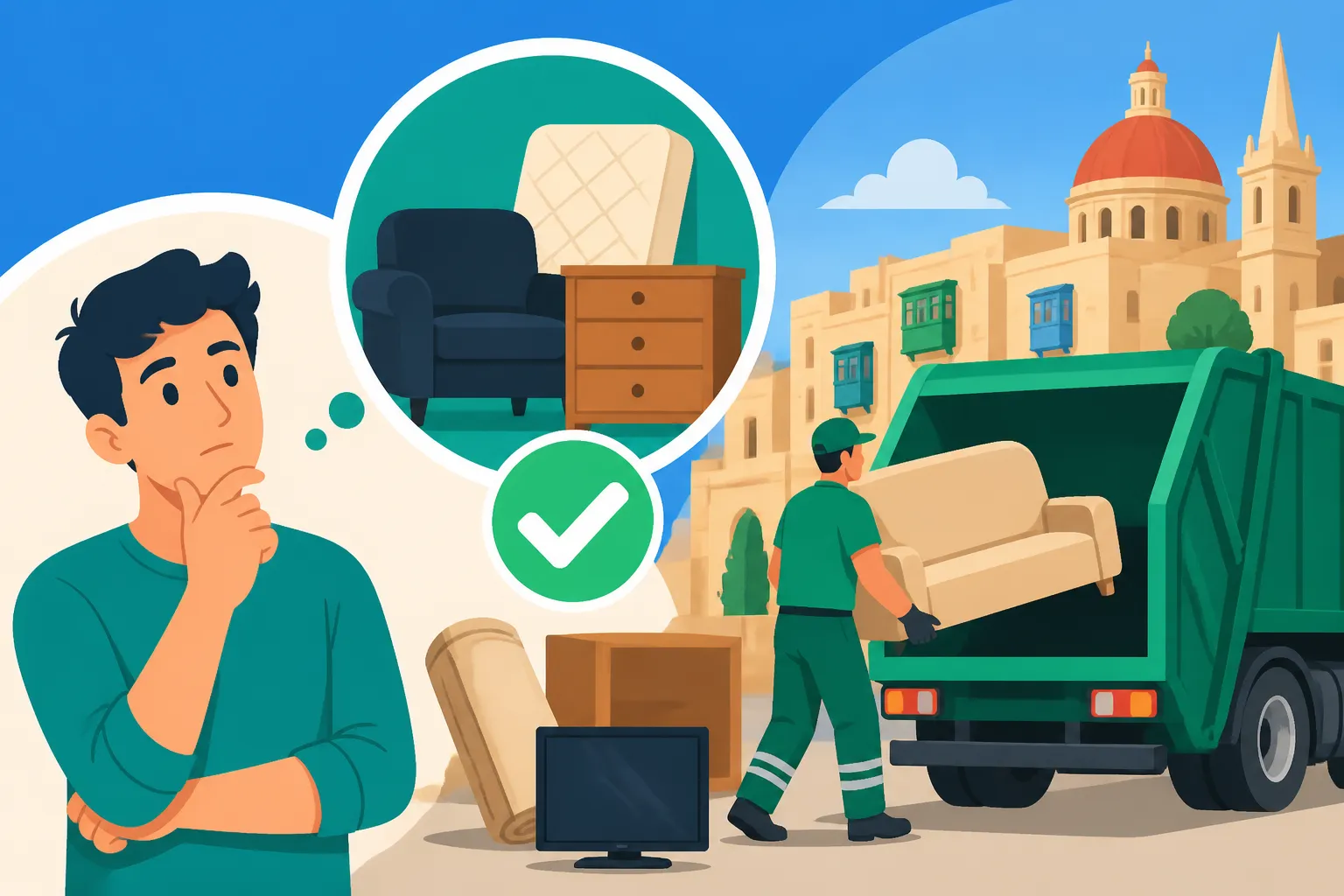
Unlike your daily black and grey bags, bulky waste items – think old furniture, large appliances, mattresses, and renovation debris – aren't part of the regular waste stream. They can't be thrown into the landfill, nor should they be dumped in the countryside (a real problem that Malta is actively trying to combat). Improper disposal creates eyesores, pollutes the environment, and is, frankly, illegal. The authorities take a dim view of fly-tipping, and for good reason. It impacts public health, wildlife, and the general cleanliness of the islands that we all call home.
Moreover, many of these items contain valuable materials that can be recycled or components that are harmful if left to break down in nature. White goods, for instance, often contain refrigerants, and electronics (WEEE – Waste Electrical and Electronic Equipment) are full of precious metals and toxic chemicals that absolutely need proper processing. The system here, while sometimes requiring a bit of legwork, is designed to encourage responsible disposal for the benefit of everyone.
The Dreaded "No One Takes This" Moment
I've been there, staring at a dilapidated wardrobe, wondering if it's going to become a permanent fixture in my living room. You might inherit old furniture from a rental apartment, or perhaps an appliance gives up the ghost unexpectedly. Your immediate thought might be to ask the garbage collector, or just leave it on the pavement. Please, resist that urge! You’ll quickly find that the regular refuse collectors will just drive right past it, leaving you with the exact same problem, but now it’s sitting shamefully on your doorstep.
The feeling of being stuck with something too big for the bin, too broken to sell, and too heavy to move easily is a very common expat frustration. It’s particularly tricky if you don't have a car large enough to transport things, or if you're not confident calling local councils in Maltese. But fear not, there are clear pathways to follow, and understanding them will save you a lot of headache (and potentially a fine!). This is where knowing the local mechanisms truly comes in handy. You'll want to get acquainted with your local council's services, as they are often your first and best port of call for such dilemmas.
Your Options for Responsible Bulky Waste Disposal
When you've got a bulky item that needs to go, you essentially have a few main avenues. Each has its own benefits and requirements, so it's worth understanding them to pick the best fit for your situation. Remember, the goal is always responsible disposal.
Council Collection: The Official, Often Free Route
This is typically your first and easiest option for large, unwanted items. Every local council (or Kunsill Lokali in Maltese) in Malta and Gozo offers a free bulky waste collection service for its residents. Yes, you read that right – free. This is a service paid for by your local taxes, so make sure you use it!
The process generally involves contacting your specific local council to schedule a collection. You can usually find your council’s contact number online with a quick search for "Kunsill Lokali [Your Town/Village Name]". When you call, you'll need to provide:
- Your address.
- Your contact number.
- A clear description of the item(s) you want collected (e.g., "one old sofa," "two broken chairs," "one washing machine"). Be specific, as they plan their truck space.
- They will then give you a specific date and often a time window for collection.
On the agreed-upon day, you are expected to place the item(s) outside your property, ideally on the pavement, in a visible and accessible spot, but without obstructing pedestrians or traffic. It’s best to put it out on the morning of collection, or the evening before, to prevent it from sitting there for days. Every council operates slightly differently. Some are incredibly efficient, others might take a week or two to schedule. Patience is key here. Don't be surprised if the truck is a bit late – this is Malta, after all! If you’re ever unsure about which council area you fall under, your eResidence card will have your registered address, which dictates your local council. For new arrivals, it's worth knowing How Do I Get My Maltese ID Card Number: The Key to Accessing Healthcare as this ID will be crucial for many administrative tasks, including identifying your council.
Civic Amenity Sites: When You Can Haul It Yourself
If you have access to a vehicle – especially a larger one like a van or a pickup truck – and prefer to get rid of things on your own schedule, then the Civic Amenity Sites are a fantastic resource. These are designated bring-in sites operated by WasteServ Malta, specifically for items that cannot be collected by regular garbage trucks or the bulky waste service.
You can take a wide array of items to these sites, including:
- Old furniture (even if your council collection isn't for a while).
- White goods (refrigerators, washing machines, ovens, etc.).
- Electronics (computers, TVs, small appliances – essentially any WEEE).
- Scrap metal.
- Batteries.
- Hazardous waste (paints, oils, chemicals – in smaller domestic quantities).
- Garden waste.
- Glass, paper, plastic, and cardboard recycling (for larger quantities than kerbside collection).
There are several civic amenity sites across Malta and Gozo. Some of the main ones include Luqa, Mrieħel, Ħal Far, and Xewkija in Gozo. You can find up-to-date locations and opening hours on the WasteServ Malta website. When you visit, you'll need to present your Maltese ID card or e-Residence card, as these sites are primarily for residents. They generally have clear signage indicating where different types of waste should be deposited. The staff are usually helpful, and most sites are quite well-organised, though they can get busy, especially on weekends. It's a great option if you have multiple different types of waste to dispose of in one go.
Donating and Reusing: Giving Items a Second Life
Before you even think about disposal, consider if your item still has life left in it. Malta has a vibrant second-hand market and several charitable organisations that might benefit from your unwanted goods. This is by far the most environmentally friendly option, and it helps others in the community.
For items that are in good, usable condition (e.g., a sturdy, slightly used table, a working appliance, or clothes):
- Charities: Some local charities, such as the Inspire Foundation or Hospice Malta, occasionally accept donations of furniture or appliances, especially if they can be easily resold or used in their facilities. It's always best to call them first to confirm what they are currently accepting and if they offer collection (some might).
- Online Marketplaces: Facebook groups like "Malta Second Hand," "Buy Sell Swap Malta," or "Expats in Malta" groups are incredibly popular for giving away or selling items. Malta Park is another local platform that's widely used. Posting good photos and an honest description of the item's condition will help it find a new home quickly. Sometimes, people are even willing to collect items themselves, saving you the hassle of transport.
- Friends and Networks: Don't underestimate the power of word-of-mouth! Ask around your friends, colleagues, or expat networks. Someone might be setting up a new home or looking for exactly what you're trying to get rid of.
Remember, for donations and resale, the item must be clean and in good working order. Charities are not waste disposal services; they rely on quality donations. If it's broken or heavily damaged, these options are generally not suitable.
Navigating the Specifics: What to Do with Common Bulky Items
Let's break down how to handle some of the most common bulky culprits you'll encounter during your time in Malta. Each type of item can have slightly different optimal disposal methods.
Old Furniture and Mattresses
These are the quintessential bulky items. You’ve just found a great new bed, but the old one is still taking up space, or perhaps you're finally replacing that ancient sofa.
Council Collection is King Here: For old sofas, armchairs, dining tables, chairs, and mattresses, contacting your local council for a free collection is almost always the easiest and most practical solution. As mentioned, call them, schedule a date, and place the items out. If you have very large pieces, like a bulky wardrobe, consider if it can be disassembled into smaller, more manageable parts before collection. This can sometimes make it easier for the collectors and prevents unnecessary street obstruction.
Civic Amenity Sites: If you have the means to transport furniture yourself (a van or a large SUV), a civic amenity site is a perfectly good alternative. It allows you to get rid of it on your own schedule, which can be useful if you’re under a tight deadline, like when you’re Moving House in Malta: The Complete Newcomer's Guide (2026). These sites are equipped to handle large volumes and can sort materials for recycling more efficiently.
Donation/Resale: If your furniture is still in good nick, don't forget the options of giving it away via Facebook groups or offering it to charities. A decent bed frame or a sturdy chest of drawers can be a real find for someone else.
White Goods and Electronics (WEEE)
These categories include washing machines, refrigerators, dishwashers, ovens, microwaves, TVs, computers, printers, and even small kitchen appliances. They require special handling due to their electronic components and sometimes hazardous materials.
Civic Amenity Sites are Best: For white goods and most electronics, civic amenity sites are generally the best and safest disposal method. They have dedicated sections for WEEE (Waste Electrical and Electronic Equipment) and ensure these items are processed responsibly, with hazardous materials removed and valuable components recycled. Again, remember to bring your e-residence card.
Council Collection for White Goods: Some local councils will also collect white goods as part of their bulky waste service. It’s important to clarify this when you call your council, as policies can vary. They might collect a washing machine but not a fridge, for example, or vice-versa. Always ask!
Retailer Take-Back Schemes: When you purchase a new appliance from a major retailer in Malta, they often offer to take away your old, equivalent appliance for free when they deliver the new one. This is a brilliant, hassle-free option that ensures proper disposal. Companies like Forestals, Scan, or Smart Supermarket (for appliances) typically offer this service. Always inquire about this when making a new purchase. It's a convenient service that saves you the trouble of coordinating a separate collection.
Renovation Debris and Construction Waste
This is where things get a bit different, and it's a common mistake for newcomers to assume this falls under regular bulky waste. Construction and demolition waste – bricks, tiles, plasterboard, cement, soil, shattered glass from windows, old bathroom suites – is not typically handled by the free council bulky waste collection service.
Private Skip Hire is Essential: For renovation debris, you will almost certainly need to hire a private skip. There are many private waste management companies in Malta that offer skip hire services. You can find them with a quick online search for "skip hire Malta." They will deliver a skip to your location, you fill it up, and they collect it once it’s full. This service comes at a cost, which can vary depending on the size of the skip and the type of waste.
Licensed Waste Contractors: For very large renovation projects, or if you prefer not to manage the skip yourself, you might need to engage a licensed waste contractor who can handle the removal of construction and demolition waste directly.
Legal Implications: It's absolutely crucial not to illegally dump construction waste. The fines are hefty, and the environmental impact is significant. Ensure you use a reputable skip hire company that disposes of the waste legally and responsibly.
Practical Tips and Avoiding Pitfalls
Successfully disposing of bulky items in Malta means being a bit proactive and knowing a few key details.
Essential Information Before You Act
Before you lift a finger (or a heavy sofa), gather the necessary information:
- Know Your Local Council: As mentioned, your local council is your primary point of contact for free bulky waste collection. Find their phone number and typical operating hours. A call to them is often the quickest first step.
- Check WasteServ Malta: For civic amenity sites, always check the official WasteServ Malta website. They provide the most up-to-date information on site locations, opening hours, and what types of waste are accepted at each site. This will save you a wasted trip.
- Your ID is Key: Remember that for civic amenity sites, your Maltese e-residence card or ID card is usually required. Don't forget it at home! If you're new to the island, the process of obtaining your ID card is fundamental for many services, including healthcare access, so it’s one of the first things you should sort out upon arrival. You can learn more about this by checking out posts like Getting Your Maltese ID Card Number: The Key to Accessing Healthcare.
The Cost Factor: Free vs. Paid Options
Understanding the financial implications of disposal is important for budgeting:
- Council Collection: Typically free for residents. This is your most cost-effective solution for standard bulky items.
- Civic Amenity Sites: Also free for residents, provided you transport the items yourself. The only cost here is your time and fuel.
- Donating/Reselling: Free (or even profitable if you sell!). This is a win-win situation.
- Private Skip Hire: This is a paid service and can be quite expensive, ranging from €100 to €300+ depending on skip size and duration. Budget for this if you’re doing renovations.
- Private Waste Contractors: Also a paid service, costs will vary based on the volume and type of waste.
Moving House? Planning Bulky Item Disposal
When you're packing up your life, whether moving within Malta or preparing for a big international relocation, like one you might arrange through a service such as Sirelo, bulky item disposal needs to be part of your moving checklist. You don't want to be scrambling at the last minute.
Plan Ahead: If you know you'll have old furniture or appliances that aren't coming with you, start the disposal process weeks in advance. This gives you time to contact the council for collection, arrange a visit to a civic amenity site, or list items for donation/sale.
Landlord Agreements: If you're leaving a rental property, ensure you understand your lease agreement regarding the removal of any items. Most contracts stipulate that the property must be returned in the condition it was received, free of your unwanted belongings. Leaving bulky items behind could result in your landlord deducting costs from your security deposit, or even charging you for professional removal, which is always more expensive than handling it yourself. Don't let unwanted items jeopardise your deposit return.
Minimising Waste During Moves: When packing up to leave, or even just clearing out, try to be mindful. Can things be repaired? Upcycled? Given to a friend? Every item you prevent from becoming waste is a small victory for your wallet and the environment.
Here's a quick reference table to help you:
| Disposal Method | Best For | Cost | Requirements/Notes |
|---|---|---|---|
| Local Council Collection | Old furniture, mattresses, some white goods | Free | Call local council, schedule appointment, place items on pavement on collection day. |
| Civic Amenity Sites | WEEE, white goods, hazardous waste, scrap metal, large furniture, garden waste | Free | Transport items yourself, present Maltese ID/e-Residence card, check opening hours. |
| Donating/Reselling | Usable furniture, working appliances, clothes | Free/Profitable | Items must be in good condition. Use online groups, charities, or word-of-mouth. |
| Private Skip Hire | Construction/renovation debris (bricks, tiles, cement, etc.) | Paid | Contact private waste management company, arrange delivery and collection, significant cost. |
Remember, moving to a new place like Malta comes with its own set of administrative quirks and challenges, and figuring out waste disposal is definitely one of them. But by understanding your options and planning ahead, you can manage your bulky items efficiently and responsibly.
Disclaimer
The information provided in this guide is for general informational purposes only and is subject to change. While we strive to provide accurate and up-to-date information, local council policies, waste management regulations, and civic amenity site operating procedures in Malta can be updated without prior notice. We recommend contacting your specific local council or WasteServ Malta directly for the most current and precise information regarding bulky waste disposal before taking any action.