Does My Child Need to Learn Maltese at School?
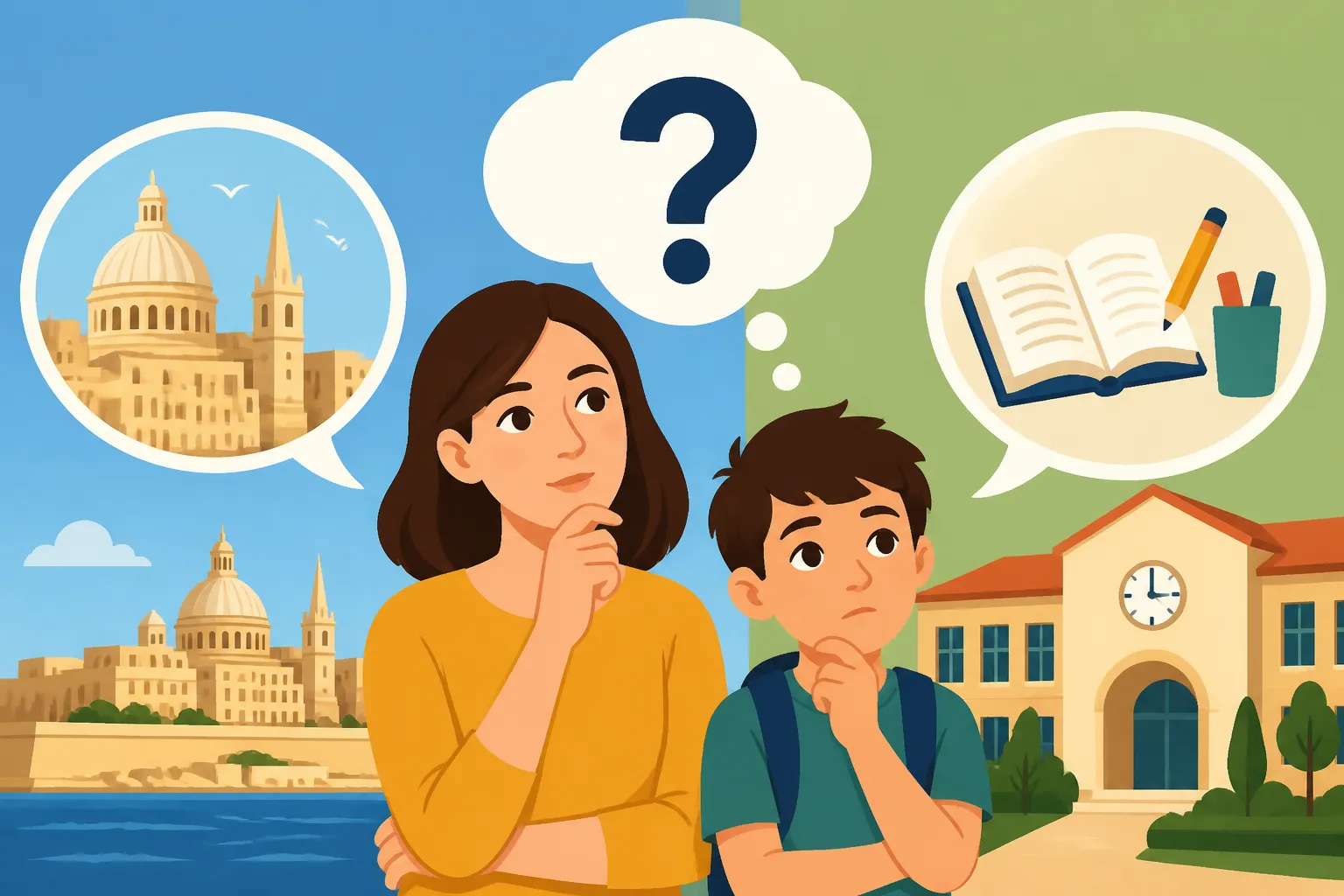
Oh, the perennial question that haunts every expat parent contemplating schools in Malta! It’s not just about textbooks and uniforms, is it? It’s about fitting in, making friends, and giving your child the best possible start in a new country. The worry about language barriers, specifically with Maltese, is totally legitimate and something many of us have grappled with. This guide is here to untangle the complexities of Maltese language requirements in schools, helping you understand what to expect and how to navigate this unique aspect of expat life on our sunny islands.
The Role of Maltese in Malta's Education System
Let's cut right to the chase: Malta is a bilingual country, with both Maltese and English holding official language status. This dual identity permeates almost every aspect of life here, and education is certainly no exception. For many Maltese families, the preservation and promotion of their unique Semitic language, rich in history and culture, is a point of national pride.
Maltese as an Official Language and a Core Subject
As one of the two official languages, Maltese holds a significant place in the national curriculum. In Malta’s state and Church schools, for children who are considered 'native' Maltese speakers or who have been here for a long time, Maltese is a compulsory core subject from primary school all the way through to secondary education. This means children learn to read, write, and speak Maltese, often to a fairly high academic standard, culminating in examinations like the SEC O-Level. The aim is to ensure that future generations maintain fluency and literacy in the national language. This can sometimes be a rude awakening for expat parents, who might assume English dominance in schools, only to find Maltese deeply embedded.
For children who are Maltese citizens, or those who have lived here for many years and are enrolled in these school systems, proficiency in Maltese is often expected for progression and eventually, for accessing higher education in Malta itself. It's not just a 'nice to have'; it’s a foundational part of their schooling, much like English or Mathematics. For newcomers, this creates an immediate hurdle, as their children are often thrown into an environment where their peers have been speaking and studying Maltese for years.
The Bilingual Reality: How English Integrates
Despite the prominence of Maltese, English is by no means a secondary player. It's the other official language, and frankly, the language of international business, tourism, and much of daily communication for foreigners on the island. In schools, particularly in secondary education, English is very often the medium of instruction for subjects like Science, Mathematics, and Social Studies. You'll find textbooks are predominantly in English, and lessons are conducted in English, even with Maltese teachers.
This creates a wonderfully bilingual environment that, for many expat children, eases the transition significantly. While Maltese might be a subject they study, they won't necessarily be learning all their subjects in Maltese, which would be an enormous burden. The ability for teachers to switch seamlessly between Maltese and English, or to explain concepts in English, is a common skill here. This dual-language approach reflects the practical reality of living in Malta, where both languages are constantly in use, albeit in different contexts. This unique blend is often what allows expat children to integrate socially and academically without being completely overwhelmed.
National Curriculum and Language Objectives
The national curriculum, established by the Ministry for Education, explicitly outlines the learning outcomes for both Maltese and English. For Maltese, the objectives typically focus on developing fluency, grammar, reading comprehension, and creative writing. For English, the focus is similar but also includes critical analysis of literature and effective communication.
For children who arrive in Malta without any prior knowledge of Maltese, state and Church schools are technically obliged to provide some level of support. This usually involves language support units or dedicated teachers who can assist new arrivals. However, the effectiveness and availability of these resources can vary greatly from one school to another, and from one academic year to the next. Some schools are incredibly proactive and have well-established systems, while others might struggle with the sheer number of non-Maltese speaking students. This is where parental advocacy and direct communication with the school become crucial. Don’t just assume it will all be sorted; ask specific questions about how your child will be supported in their Maltese language journey.
Different School Types and Their Language Expectations
The type of school you choose for your child will heavily influence the extent to which they need to engage with the Maltese language. This is perhaps the most significant factor for expat parents.
State Schools: Compulsory Maltese, but Support Systems Exist
If you opt for a state school in Malta, your child will almost certainly be enrolled in Maltese language classes as part of the curriculum. For children who are Maltese nationals, or who have been resident here long-term, Maltese is a mandatory subject throughout their schooling. For expat children with little or no Maltese, the situation can be challenging. While the intention is for all children to learn Maltese, the reality of integration for non-Maltese speaking students can be a mixed bag.
Upon arrival, your child might be placed in an introductory Maltese class, or they might be expected to join the regular class and pick it up as they go. Teachers are generally empathetic and understand the difficulty, often switching to English to explain instructions or concepts. However, the pace can be fast, and without dedicated, intensive support, some children can feel left behind, especially in the initial months. The support mechanisms are there, but they might not be as robust or frequent as an expat parent accustomed to structured ESL (English as a Second Language) programmes might expect.
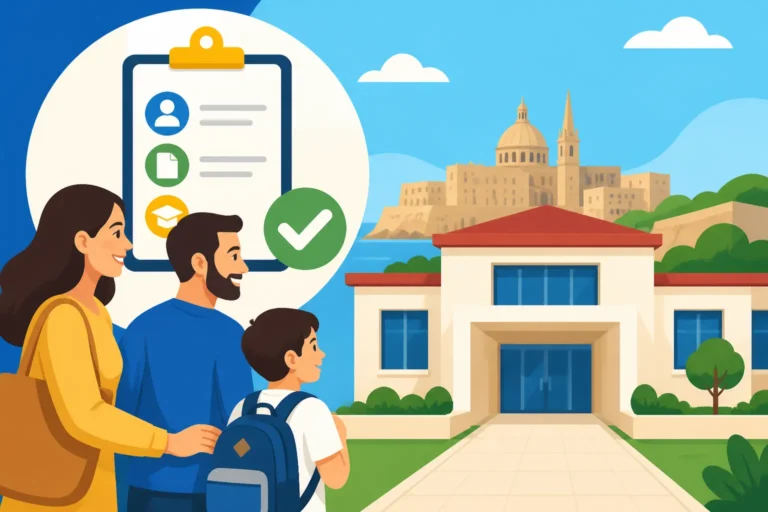
Consider the practicalities: enrollment in state schools is typically based on your residential address, so researching schools in your area is key. You'll need to sort out your child's eResidence card and have their ID card number to proceed with enrollment, alongside other documents. For a deeper dive into the enrollment process, check out our guide on How Do I Enrol My Child in School in Malta?.
Church Schools: Similar Approach to State Schools
Church schools in Malta, while privately run, are state-funded and largely follow the national curriculum. This means their approach to Maltese language instruction is very similar to that of state schools. Maltese is a core subject, and students are expected to achieve proficiency. Many Church schools have a strong academic reputation and often have long waiting lists, particularly for primary levels.
The same caveats apply regarding language support for non-Maltese speakers: it exists, but its efficacy can vary. Historically, Church schools might have had fewer non-Maltese speaking students compared to some state schools in expat-heavy areas, but this is changing rapidly. If you're considering a Church school, it’s imperative to speak directly with the school administration about their provisions for non-Maltese speaking children. Don't be afraid to ask tough questions about how they practically integrate new students and what resources are available. The selection process for Church schools is also different from state schools, often involving ballots, so planning ahead is crucial.
Independent and International Schools: English as the Primary Language
This is where many expat parents find their comfort zone. Independent and international schools in Malta predominantly use English as their language of instruction across almost all subjects. Schools like Verdala International School, St. Edward's College, QSI International School of Malta, and St. Michael's School (which, despite the name, follows a British curriculum) cater specifically to an international student body.
In these schools, Maltese is typically offered as a subject, but often as an additional language or an optional one, rather than a compulsory core subject with the same weight as for native speakers in state schools. The emphasis is on providing a globally recognised curriculum (IB, British, American), where fluency in English is paramount. This environment significantly reduces the immediate language barrier for expat children and allows them to integrate academically with less stress.
While the academic integration might be smoother, it's worth noting that children in international schools might have less organic exposure to the Maltese language outside the classroom. Their social circles might be more internationally diverse, and their daily interactions less likely to involve Maltese. This is a trade-off many expat families are willing to make for a less stressful academic transition. However, it’s still beneficial for children to learn some Maltese for cultural integration and just navigating daily life in Malta, even if it’s not academically compulsory. These schools come with significant tuition fees, which is a major budgeting consideration for expat families. To understand the different options and their offerings, you might find our guide on Schools in Malta: State, Church, and Independent Options or International Schools and Curricula in Malta quite helpful.
Here’s a quick overview of the general language approach across school types:
| School Type | Primary Language of Instruction | Maltese Language Status | Support for Non-Maltese Speakers | Typical Expat Choice |
|---|---|---|---|---|
| State Schools | English/Maltese Bilingual | Compulsory core subject for all | Varies, some dedicated units/teachers | Less common initially |
| Church Schools | English/Maltese Bilingual | Compulsory core subject for all | Varies, less structured than dedicated ESL | Less common initially |
| International Schools | English | Offered as a subject (often optional or additional) | Generally strong, tailored for expat children | Most common |
| Independent Schools | English | Offered as a subject (often optional or additional) | Varies, generally strong | Common |
Navigating the Maltese Language Journey for Your Child
So, is it strictly necessary for your child to become fluent in Maltese? Maybe not for their immediate academic success in international schools, but it opens up a world of benefits and connection.
The Benefits of Learning Maltese
Let's be real, while it might seem like a huge task, there are undeniable upsides to your child learning Maltese. Firstly, it's a huge step towards true cultural integration. Imagine your child being able to understand the snippets of conversation at the local pastizzeria, or engage with their Maltese friends' grandparents. It bridges gaps, breaks down barriers, and helps them feel truly at home in Malta. This can significantly enhance their social life, allowing them to make deeper connections with local children and truly experience Maltese culture, including local traditions and village feasts.
Beyond social integration, there are practical benefits. Understanding basic Maltese can be incredibly useful in everyday situations – navigating shops, asking for directions, or understanding public announcements. It also shows respect for the host country and its heritage. For families planning a long-term future in Malta, perhaps even considering Maltese citizenship down the line, language proficiency can be an advantage, though often not strictly required for residence permits. Still, a child who grows up with Maltese is far more likely to feel a sense of belonging.
Potential Challenges and Parental Concerns
Now, for the other side of the coin. The reality is that learning Maltese can be incredibly challenging, especially for older children. It’s a Semitic language, which means its grammar and vocabulary are fundamentally different from Indo-European languages like English, French, or Spanish. This isn’t like picking up Italian or Spanish where you might recognise a few words. It’s a whole new linguistic structure.
Many expat parents worry that the struggle with Maltese will negatively impact their child’s overall academic performance, especially if they are forced to learn it in a state or Church school. There’s the fear of feeling isolated, of not understanding the teacher, or of being unable to participate fully in class discussions. Resources for learning Maltese as a foreign language for children aren't as abundant as, say, French or German, which can add to the frustration. Many parents tear their hair out trying to find decent tutors or engaging materials. This feeling of being adrift, culturally and linguistically, is a valid concern and one that needs to be addressed empathetically. It’s not just about the child; it affects the whole family dynamic.
Strategies for Supporting Language Acquisition
If you decide that learning Maltese is important for your child, or if they are in a school where it's mandatory, there are several strategies you can employ to support them.
- Tutoring: This is often the most effective route. A private tutor who specialises in teaching Maltese as a foreign language to children can provide personalised attention and move at your child’s pace. This can be costly, but the benefits in confidence and progress are often worth it.
- Immersion: Encourage exposure outside of school. Look for local sports clubs, art classes, or youth groups where your child can interact with Maltese-speaking peers in a casual setting. Even if they don’t speak much Maltese, hearing it spoken naturally helps.
- Media: Introduce Maltese children's shows, songs, or books. Even simple things like identifying words on street signs or in supermarkets can help. Children's apps designed for language learning, even if not specifically for Maltese, can help build a foundation for linguistic concepts.
- Patience and Encouragement: This is paramount. Learning a new language, especially one as unique as Maltese, takes time and effort. Celebrate small victories, and don't put undue pressure on your child. Their mental well-being and integration are more important than perfect grammar.
- Utilise Technology: In this day and age, technology can be a huge asset. From online dictionaries to language exchange apps, or even just video calls with a remote tutor, staying connected is key. For those initial weeks, when you're settling in and juggling school applications, having instant mobile data is crucial. I've found that services like Airalo, which provide eSIMs, are a real godsend. You can get connected instantly upon arrival, ensuring you can research schools, find tutors, and keep the kids entertained with educational apps without hunting for a physical SIM card.
Practical Considerations and Making the Best Choice for Your Family
Choosing the right educational path for your child in Malta is a deeply personal decision, influenced by many factors beyond just language.
Residency and Long-Term Goals
Your long-term plans for living in Malta should heavily influence your school choice. If you envision only being here for a couple of years, an international school might be the most straightforward option, ensuring an English-centric education that aligns with curriculum standards back home or in future expat locations. Your child can get a taste of Maltese culture without the intense academic pressure of mastering the language.
However, if Malta is your forever home, or at least a very long-term one, then investing in Maltese language acquisition – either through state/Church schools or supplementary lessons – makes more sense. It will help your child integrate fully, access potential higher education opportunities in Malta, and truly feel like a part of the community. For those considering Maltese citizenship by naturalisation later on, while language isn't always a strict requirement, an understanding of the culture and language certainly can't hurt your application. If you’re thinking about the path to becoming a Maltese citizen, our guide on Becoming a Maltese Citizen: Naturalisation and the Requirements offers more detail.
Child's Age and Adaptability
This is a critical factor. Younger children, especially those starting primary school, are veritable sponges when it comes to language. They pick up new languages with remarkable speed and less self-consciousness than teenagers. If your child is young, immersing them in a state or Church school, even with Maltese as a core subject, could lead to impressive bilingualism within a few years. They'll often make friends faster and integrate more smoothly.
Older children and teenagers, on the other hand, face a more significant challenge. They have established academic foundations in their native language, and suddenly being expected to learn a complex new language like Maltese on top of a full curriculum can be incredibly stressful. The social aspect can also be harder if a significant language barrier exists. For older children, the smoother transition offered by international schools, with Maltese as an optional or less intensive subject, might be the kinder and more academically sensible choice.
The Financial Aspect of School Choices
Let's not shy away from the elephant in the room: money. State and Church schools in Malta are free to attend (though Church schools often request a voluntary donation, and you'll pay for uniforms, books, and extracurriculars). This makes them an attractive option for many expat families, especially if budget is a concern. The trade-off, as discussed, is the greater emphasis on Maltese language learning.
International and independent schools, while offering an English-centric education with often better-resourced language support for expats, come with hefty tuition fees. These can range from several thousand euros to well over ten thousand euros per year, per child. This financial outlay is often the deciding factor for families, outweighing the linguistic benefits. When considering your overall Cost of Living in Malta: Budgeting for the Real Numbers, school fees are a major line item that can’t be ignored.
Moving Logistics and Planning Ahead
Making the move to Malta is a massive undertaking, and school choices are just one piece of the puzzle. It’s overwhelming trying to coordinate everything, from shipping your belongings to finding a place to live. I still remember the endless checklists and the feeling of constantly forgetting something.
This is where advance planning becomes your best friend. Start researching schools before you arrive, if possible. Reach out to parent groups online or through expat networks. Understanding the school system and the language requirements upfront can save a lot of stress down the line. If you're coordinating an entire household move, dealing with the logistics of packing, shipping, and customs can feel like a full-time job. Reputable moving services, which you might find through platforms like Sirelo, can help streamline the process, leaving you more mental bandwidth to focus on these crucial decisions like your children's education. Don't underestimate how much mental energy relocating takes – any help you can get on the logistics front is a bonus.
Ultimately, whether your child needs to learn Maltese at school depends on a confluence of factors: the school type, your long-term plans, your child’s age, and your family's budget. It’s a nuanced decision, and there’s no single right answer. But armed with this information, you can make an informed choice that feels right for your family.
Disclaimer
The information provided in this guide is for general informational purposes only and does not constitute legal, financial, or educational advice. Regulations and school policies in Malta can change, and individual circumstances vary. Always consult with official government sources, school administrations, and qualified professionals for the most accurate and up-to-date information relevant to your specific situation.