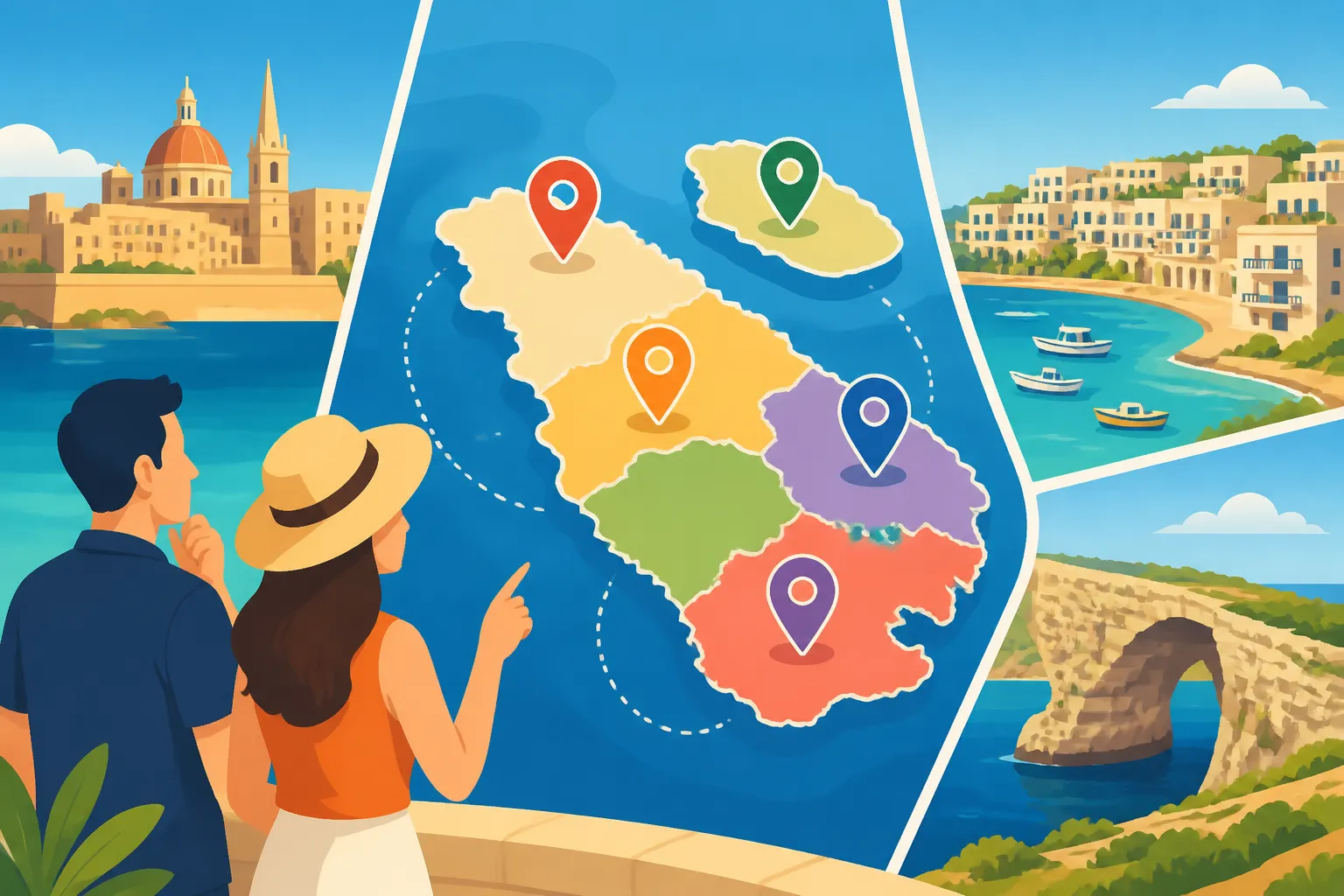
Choosing Where to Live in Malta: Towns, Regions, and Gozo
Ah, the age-old expat dilemma in Malta: "Where on earth do I actually live?" It's a question that plagues almost everyone who sets foot on these islands with the intention of staying a while. For such a tiny archipelago, Malta packs an astonishing punch when it comes to diverse living environments, from bustling urban centres to sleepy village life, and everything in between. This isn't just about finding a flat; it's about finding your home, a place that genuinely suits your lifestyle, your budget, and your sanity. Navigating this choice can feel overwhelming, especially when you're still grappling with the sheer novelty of Maltese life.
This guide is designed to cut through the noise, offering an insider's perspective on the various towns and regions across Malta and Gozo. We'll delve into the nitty-gritty of what each area truly offers, the pros and cons you might not read about in glossy brochures, and how to weigh your options before you commit to a place that might not be the right fit. Consider this your personal tour from someone who's seen it all, lived in a few of these spots, and heard countless stories from fellow expats trying to stake their claim on this Mediterranean rock. Before you even think about the specifics of your move, like sorting out international shipping or figuring out your permit, understanding the lay of the land here is paramount.
Understanding Malta's Diverse Landscape: More Than Just Sun and Sea
Malta might be small, but don't let its size fool you into thinking it's all the same. This archipelago is a vibrant mosaic of micro-climates, community vibes, and distinct lifestyles, each corner offering something unique. From the moment you land, you'll start to notice the subtle (and sometimes not-so-subtle) differences that make choosing a home here such a fascinating challenge.
The Maltese Islands: Malta, Gozo, and Comino
First things first, let's talk geography. When people say "Malta," they usually mean the main island, which is indeed where the vast majority of the population and activity reside. But Malta is more than just one island. We have Gozo, our smaller, greener, and often quieter sister island to the north, and then there's tiny Comino, mostly uninhabited and famous for its stunning Blue Lagoon, which isn't a place you'd live unless you're a hermit with a serious affinity for turquoise waters and day-trippers.
The decision between Malta and Gozo is perhaps the biggest one you'll make in terms of lifestyle. The main island of Malta is where the action is – the jobs, the nightlife, the big supermarkets, Mater Dei Hospital, and the busiest administrative hubs. It's bustling, often loud, and constantly developing. Gozo, on the other hand, offers a profoundly different experience. It's slower, more rural, and steeped in a palpable sense of community that many find incredibly appealing. The landscape is gentler, the pace of life feels decades behind, and the sense of calm is undeniable. However, living on Gozo means a reliance on the ferry service to access many of the services and opportunities on the main island, which is a factor that often gets underestimated by newcomers.
Geographical Divisions and Localities
Beyond the big island split, Malta itself can be loosely divided into several key regions, each with its own character. There's the Central/Harbour Area, stretching from Valletta and the Three Cities up through Sliema, St Julian's, and Swieqi. This is the beating heart of expat life, commerce, and tourism. Then you have the North, encompassing areas like St Paul's Bay, Mellieħa, and the more rural parts towards the ferry to Gozo. These tend to be more tourist-oriented but also offer quieter residential pockets. The South of Malta, including places like Marsascala, Birżebbuġa, and Marsaxlokk, is traditionally more Maltese, with a strong fishing heritage and a generally lower cost of living, but often with fewer direct expat amenities. Finally, the Central Inland areas, like Birkirkara, Mosta, and Attard, offer a glimpse into traditional Maltese town life, often without the sea views but with a strong local community feel and more affordable housing.
Understanding these broad strokes is crucial. Are you chasing the vibrant, English-speaking expat bubble, or do you want to immerse yourself in traditional Maltese culture? Do you dream of waking up to sea views, or do you prefer the quiet calm of an inland village? Each area has its trade-offs, and what's perfect for one expat might be another's nightmare. It’s a good idea to spend some time exploring different areas before you commit to a long-term rental or purchase. Think about how your chosen location will impact your daily commute and access to necessities, especially if you plan on relying on Malta's public transport system. For a wider view of what life on the island entails, consider delving into our full guide on Housing and Living in Malta: The Complete Newcomer's Guide (2027).
The Bustling Harbour Areas: Sliema, St Julian's, and Gzira
For many newcomers, especially those arriving for work or a vibrant social scene, the central harbour areas of Sliema, St Julian's, and Gzira are often the first port of call. This stretch of coastline is arguably the most urbanized and cosmopolitan part of Malta, a buzzing hub where the modern expat community truly thrives.
Living the Urban Dream: Pros and Cons of the Central Hub
The appeal of Sliema and St Julian's is immediately apparent. You're at the epicentre of everything: towering apartment blocks, endless cafes, restaurants, bars, and shops. English is predominantly spoken, making it incredibly easy to settle in without grappling too much with the Maltese language from day one. Many international companies and language schools are based here, meaning shorter commutes for a significant portion of the expat workforce. There's a tangible energy, a constant hum of activity that can be exhilarating for those coming from larger cities.
However, this urban dream comes with its fair share of realities. The central harbour areas are notoriously crowded. Traffic can be a nightmare, parking is a constant headache, and the sheer volume of people can feel overwhelming, especially during peak tourist season or summer evenings. The rapid development means that construction noise is a near-constant companion in many areas, and green spaces are few and far between. While convenient, the cost of living here, particularly for rent, is significantly higher than other parts of the island. You'll be paying a premium for a smaller space, often without much outdoor area. For those used to spacious living, the compact nature of Maltese apartments can be a bit of a shock.
Lifestyle and Amenities: What to Expect
Life in Sliema, St Julian's, and Gzira is characterized by convenience and entertainment. You'll find multinational supermarkets like Park Towers and Welbee's, independent grocery stores, pharmacies on every corner, and a plethora of gyms and fitness studios. The promenade stretching from Gzira through Sliema to St Julian's is a favourite for evening strolls and morning runs, offering stunning sea views. St Julian's is famous for Paceville, the island's main nightlife district, which is either a major draw or a reason to stay far away, depending on your preferences!
For families, these areas offer a mixed bag. While there are some excellent international schools within a reasonable commute, the lack of open play areas and the constant traffic can be a deterrent for those with young children. However, the abundance of activities, from cinema complexes to bowling alleys and various organised clubs, means there’s never a dull moment for older kids and teenagers. Healthcare access is excellent, with numerous private clinics and proximity to Mater Dei Hospital. But remember, for public services, you’ll still need to navigate the system, which starts with getting your Maltese ID Card Number: The Key to Accessing Healthcare.
Transport and Connectivity Challenges
Despite being central, getting around these areas, especially during rush hour, can be surprisingly slow. While Malta offers free bus travel, the buses themselves can be packed and often delayed, particularly on routes through the harbour areas. Finding a bus stop is easy, but finding a seat on a bus to take you to work or home can be a daily struggle. This is where many expats start to consider driving in Malta, but then you're back to the parking problem.
Walking is often the quickest way to cover short distances, but the pavements can be narrow and uneven, and pedestrian crossings are sometimes a leap of faith. The fast ferry services connecting Sliema and Valletta are a fantastic alternative for commuting, offering scenic views and avoiding traffic altogether. However, these services aren't comprehensive for all destinations. For a deeper dive into the realities of Maltese public transport, you can check out our guide on Getting Around Malta: Buses, Ferries, Driving, and the Gozo Connection. You might consider a temporary eSIM from providers like Airalo when you first arrive to ensure you have reliable data for navigation apps and communication while exploring these busy areas.
The Historic Grandeur: Valletta and The Three Cities
If you crave history, architectural beauty, and a sense of timeless elegance, then Valletta, Malta's capital, and the adjacent Three Cities (Vittoriosa, Senglea, and Cospicua) present a compelling, albeit very different, option from the bustling harbour towns. This is where Malta's rich past truly comes alive, offering a unique living experience.
A Dive into Malta's Rich Past: Charm and Character
Valletta, a UNESCO World Heritage site, is a magnificent fortified city perched on a peninsula. Its grid-like streets are a maze of baroque architecture, charming balconies, and hidden staircases, all bathed in honey-coloured limestone. Living within its walls means waking up to history, with stunning views of the Grand Harbour on one side and Marsamxett Harbour on the other. The city has undergone significant regeneration in recent years, blending its ancient charm with a growing number of boutique hotels, chic restaurants, and cultural venues.
Just across the Grand Harbour lie the Three Cities, often considered Malta's best-kept secret. These ancient fortified towns predate Valletta and offer an even more authentic glimpse into Maltese life. Vittoriosa (Birgu), Senglea (Isla), and Cospicua (Bormla) are smaller, quieter, and arguably even more picturesque than Valletta, with narrow alleys, historic churches, and impressive fortifications. Living here feels like stepping back in time, surrounded by centuries of maritime history and a strong sense of local community. The silence at night, broken only by the gentle lapping of water, is a stark contrast to the distant hum of St Julian's.
Practicalities of Living in a UNESCO World Heritage Site
Living in Valletta or the Three Cities comes with its own set of practical considerations. While incredibly beautiful, many of the residential properties are older, traditional Maltese townhouses. This often means multi-story homes, sometimes without lifts, and less spacious layouts than modern apartments. Renovation works can be extensive, but the reward is a truly unique home. Finding parking in Valletta is notoriously difficult, with strict residential parking schemes. The Three Cities offer slightly more parking, but it's still a challenge.
Accessibility can also be a factor. Valletta's hilly terrain means a lot of walking up and down stairs, which might not suit everyone. Supermarket options are more limited than in Sliema, often consisting of smaller corner shops and independent grocers. While charming, this might mean a weekly trip to a larger supermarket outside the city for a full shop. Utilities, as always, need careful management, and understanding Setting Up Your Home in Malta: Utilities, Internet, and Insurance is essential no matter where you choose to live. Despite these quirks, many expats find the trade-offs well worth it for the unparalleled character and historical ambiance.
Community and Atmosphere: A Different Pace
The atmosphere in Valletta and the Three Cities is distinctly calmer and more culturally rich than the central commercial hubs. While Valletta is bustling during the day with tourists and workers, it empties out considerably in the evenings, offering a more tranquil residential feel. There's a strong emphasis on culture, with numerous museums, art galleries, and theatres. The Manoel Theatre, one of Europe's oldest working theatres, is a local treasure.
In the Three Cities, the sense of community is even more pronounced. You'll find a higher proportion of Maltese residents, and integrating might require more effort to learn a few Maltese phrases, though English is still widely understood. Life moves at a slower pace, centred around local każini (band clubs) and village feasts. It’s a place where neighbours know each other, and children still play in the streets. If you're looking to truly immerse yourself in Maltese culture and history, and appreciate a quieter, more reflective lifestyle, these areas offer a deeply rewarding experience. However, if you thrive on the constant buzz of international bars and modern amenities, you might find it a little too quiet.
Quieter Coastal Escapes: Mellieħa, St Paul's Bay, and Marsascala
Beyond the immediate gravitational pull of the harbour areas and historic centres, Malta offers a variety of coastal towns that provide a more relaxed pace of life, often with a greater sense of community and stunning natural surroundings. Mellieħa and St Paul's Bay in the north, and Marsascala in the south, are popular choices for those seeking a balance between convenience and a quieter, more family-oriented existence.
Family-Friendly and Serene Living
These coastal towns are often chosen by families or those looking to escape the relentless hustle and bustle of Sliema or St Julian's. Mellieħa, perched on a hill overlooking Malta's largest sandy beach, Mellieħa Bay (Għadira), offers breathtaking views and a distinctly village-like atmosphere. It’s well-known for being very family-friendly, with good access to beaches, parks, and relatively quiet residential streets. St Paul's Bay, including its sub-districts like Bugibba and Qawra, is a larger, more sprawling area that combines tourist amenities with residential pockets. It offers a wide range of accommodation, from older apartments to newer developments, and a strong sense of expat community, though often a more budget-conscious one. Marsascala, in the south, is a traditional fishing village that has grown into a popular residential area, especially for Maltese families. It offers a beautiful promenade, a lovely harbour, and a more authentic Maltese feel compared to the northern coastal resorts.
The general vibe in these areas is noticeably calmer. While they still experience tourist influxes, especially in summer, the residential parts maintain a more local and serene atmosphere. Kids can often enjoy more outdoor space, and the roads are typically less congested than in the central regions. For families considering Malta, the availability of good schools and childcare facilities is a top priority. Our guide on Childcare in Malta: Free Childcare Scheme and Early Years and Schools in Malta: State, Church, and Independent Options can offer detailed insights into what’s available in these areas.
Access to Nature and Beaches
One of the biggest draws of these coastal towns is their proximity to Malta's natural beauty and beaches. Mellieħa boasts not only Għadira Bay but also easy access to some of the island's best northern beaches like Golden Bay and Ghajn Tuffieha. It's also a gateway to Gozo, with the ferry terminal just a short drive away. St Paul's Bay, while not having large sandy beaches directly, offers plenty of rocky bathing spots and is a short drive from other popular swimming areas. Marsascala, in the south, is close to St Thomas Bay and offers a rugged coastline perfect for walks and exploring coves.
Living in these areas means more opportunities for outdoor activities – swimming, hiking, cycling, and enjoying the Mediterranean climate without having to travel far. This significantly enhances the quality of life for many, offering a much-needed escape from urban concrete. The air often feels fresher, and the views are generally more expansive. For those who love the sea and nature, these locations offer a fantastic lifestyle that feels a world away from the bustling cities.
Balancing Tranquillity with Convenience
While offering peace and quiet, these areas still provide good access to essential amenities. Mellieħa has a charming village core with shops, restaurants, and a local market. St Paul's Bay, being larger, has multiple supermarkets, clinics, and a wider range of services. Marsascala also has a well-developed infrastructure with everything you need for daily life. However, if you need to commute to the central business districts of Sliema or Valletta for work, travel times can be longer, especially during peak hours. The bus network serves these areas, but journeys can be extensive, and relying solely on public transport might test your patience. This is where many residents in these areas consider purchasing a car, which then brings its own set of responsibilities and costs.
It's a balance: you gain tranquility and natural beauty, but you might sacrifice some of the immediate convenience and fast-paced social life found in the central areas. For those who prioritize a relaxed atmosphere, a strong sense of community, and easy access to the coast, these towns offer a compelling compromise that many expats find ideal for their long-term stay. The overall Cost of Living in Malta: Budgeting for the Real Numbers in these areas is generally more favourable than the harbour towns, especially for rent, allowing for a better lifestyle budget.
Rural Retreats and Village Life: Central and Southern Malta
Beyond the coastal fringes and the bustling urban core, lies the 'real' Malta for many – the quiet inland villages and the more traditional southern towns. If you're looking to truly embed yourself in local life, experience genuine Maltese culture, and enjoy a slower pace away from the tourist crowds, these areas might just be your perfect fit.
The Authentic Maltese Experience
Areas like Attard, Balzan, Lija (often referred to as the "Three Villages"), Mosta, Naxxar in the central region, or Żurrieq, Qrendi, Siġġiewi in the south, offer a profoundly different living experience. Here, life revolves around the parish church, the village pjazza (square), and the rhythm of daily Maltese life. You'll find traditional stone houses, narrow winding streets, and a tangible sense of history. Village feasts, with their vibrant fireworks and marching bands, are an integral part of life, not just a tourist attraction. You'll hear more Maltese spoken, encounter more traditional shops, and probably get to know your neighbours in a way that's rare in the more transient expat hubs.
This is where you truly connect with the island's heritage and the warmth of its people. The central villages offer proximity to the geographical centre of Malta, meaning no part of the island is ever too far, while the southern villages provide a gateway to some of Malta's most stunning, rugged coastline, ancient temples, and dramatic cliffs. For expats seeking immersion and a deep connection to their adopted home, rather than just a place to live, these areas are incredibly rewarding.
Challenges of Integration and Amenities
While immensely charming, living in these more traditional areas does come with its own set of challenges. Integration often requires a greater effort to learn at least basic Maltese, as English might not be as universally spoken as in Sliema. The social scene is less geared towards international meetups and more towards local customs and family gatherings. While welcoming, it can take time and conscious effort to break into these established communities.
Amenities, while sufficient for daily needs, might be less diverse than in the more expat-dense areas. Supermarkets tend to be smaller, independent shops, though larger chains are usually a short drive away. Restaurants will lean more towards traditional Maltese cuisine rather than international fare. Public transport connections might be less frequent or direct, making a car almost a necessity for many residents, especially if commuting for work or accessing specialist services. Access to specific healthcare facilities, beyond local GPs, might also require travel to Mater Dei Hospital, which you can learn more about in Healthcare in Malta for Foreign Residents: The Complete System Guide (2027).
Cost-Effectiveness and Space
One of the significant advantages of choosing a rural or traditional village location is the improved cost-effectiveness and often, more spacious living. Rent prices are generally lower than in the central harbour areas, allowing your budget to stretch further. You're more likely to find larger apartments or even traditional houses with outdoor spaces, like courtyards or gardens, which are a rarity and a luxury in the highly urbanised zones. This extra space and affordability can be a huge draw, especially for families or those seeking a more relaxed home environment.
The general pace of life encourages a more economical lifestyle too. There's less temptation for expensive nights out and more focus on community events, walks in nature, or cooking at home. For those looking to manage their finances wisely in Malta, these areas offer a tangible benefit. While you might initially consider the costs of your physical move, perhaps with services like Sirelo, remember to factor in the long-term savings these areas can offer on daily expenses. This choice isn't for everyone, but for those who value peace, authenticity, and a strong sense of local community over constant urban buzz, the villages of central and southern Malta are hidden gems waiting to be discovered.
Gozo: The Sister Island's Unique Appeal
Often described as Malta's greener, quieter, and more serene sister island, Gozo holds a special allure for expats seeking a significantly different pace of life. It’s a distinct choice that promises a return to nature, a stronger sense of community, and a slower rhythm that can feel like a world away from the main island.
A Slower Pace of Life and Natural Beauty
Gozo embodies a charm that is distinctly its own. The landscape is more verdant, dotted with traditional farmhouses, terraced fields, and dramatic coastal cliffs. Life here operates on "Gozo time," a colloquialism that perfectly encapsulates the relaxed, unhurried pace. Mornings are often heralded by the crowing of roosters, and evenings by the gentle sounds of village life. It’s a place where people still gather in the village squares, where local bakeries are community hubs, and where the sense of tradition is palpable.
For those who crave fresh air, wide-open spaces, and direct access to hiking trails and stunning beaches, Gozo is an absolute paradise. Popular areas like Xagħra, Marsalforn, and Nadur offer a mix of residential and holiday homes, while Victoria (Rabat), the capital, serves as the island's commercial and administrative centre. The natural beauty is breathtaking, from the iconic Ramla Bay with its red sand to the rugged cliffs of Sanap. If your ideal lifestyle involves more nature, less traffic, and a profound sense of calm, Gozo could be your answer. Many expats who make the move find it rejuvenates their spirit and significantly improves their quality of life. For an honest account, you should read What Is It Like to Live in Gozo as a Foreigner?.
Essential Services and Connectivity to Malta
While Gozo offers tranquility, it's not entirely cut off from modern conveniences. Victoria boasts a modern hospital (Gozo General Hospital), supermarkets, banks, and all essential services. Many villages also have their own small shops, pharmacies, and local eateries. However, for certain specialist services, larger shopping expeditions, or most administrative tasks, a trip to the main island of Malta is often necessary. This is the primary consideration for anyone contemplating a move to Gozo.
The Gozo Channel ferry connects Mġarr, Gozo, to Cirkewwa, Malta, with crossings typically taking about 25-30 minutes. There are also fast ferry services between Mġarr and Valletta. While the ferry service is generally reliable, it’s still an added layer of complexity to daily life, especially if you commute for work or have frequent appointments on Malta. Inclement weather can sometimes cause delays or cancellations, which can be frustrating. So, while Gozo is well-served, you must factor in this inter-island travel into your planning. If you want to know more about the ferry, check out How Do I Get from Malta to Gozo?.
Building a Community on Gozo
The expat community on Gozo is smaller and often more tightly knit than on the main island. While English is widely spoken, particularly in tourist-centric areas and among the younger generation, integrating into local Gozitan life often means embracing the local language and customs more deeply. There are various social groups and activities, but the choice might be less diverse than in Sliema or St Julian's.
However, many expats on Gozo find a profound sense of belonging and community that they might not experience in the more transient urban areas of Malta. People tend to know each other, look out for one another, and life feels more personal. If you're someone who thrives in a close-knit environment and is willing to invest in building local connections, Gozo offers a truly unique and enriching experience. For families, the slower pace and safer environment can be a huge plus, offering children more freedom to explore and connect with nature, though choices for International Schools and Curricula in Malta are largely on the main island.
Practical Considerations for Your Choice
Choosing where to live in Malta isn't just about aesthetics or vibe; it’s about practicalities. Your lifestyle, your daily routine, and your financial planning will all be heavily influenced by your chosen location. Ignoring these critical factors can lead to unforeseen frustrations down the line, trust me.
Budgeting for Rent and Utilities Across Regions
The financial impact of your location choice cannot be overstated. Rent is often the largest single expense for expats in Malta, and it varies wildly across the islands. The prime coastal areas of Sliema and St Julian's command the highest rents, often for smaller, modern apartments. For a decent two-bedroom apartment, you could easily be looking at €1000-€1500+ per month, sometimes more for sea views or premium locations. As you move away from these central hubs, into areas like St Paul's Bay or Marsascala, rents tend to drop to the €700-€1000 range for similar properties. Inland villages in Malta, and especially on Gozo, offer the most affordable options, with two-bedroom apartments sometimes starting from €500-€800, and traditional houses potentially available for similar prices.
Utilities, particularly electricity and water through ARMS, can also vary depending on your property's energy efficiency and your consumption habits. Older, less insulated properties in traditional villages might be cheaper to rent but could be more expensive to heat in winter or cool in summer. It’s vital to understand What Public Healthcare Costs in Malta: Free Services and Paid Extras and factor these into your overall living expenses. Always discuss utility billing with your potential landlord – are they included, or are you on a residential tariff? This is crucial for managing your Cost of Living in Malta: Budgeting for the Real Numbers. Don't forget, when you're looking at Renting a Home in Malta: Contracts, Deposits, and Tenant Rights, make sure these details are clear in your lease agreement.
Commute Times and Public Transport Realities
Malta's small size often misleads newcomers into thinking travel times are negligible. They are not. Traffic, particularly in the central regions during rush hour (7-9 AM and 3-6 PM), can bring the island to a crawl. A journey that looks like a 15-minute drive on a map can easily become 45 minutes to an hour. Public transport, while free for Tallinja card holders, faces the same traffic challenges and can sometimes be unreliable.
If you work in Sliema or Valletta, living in Mellieħa or Marsascala might mean a 45-minute to 1-hour commute each way by bus, or a potentially quicker but still congested car journey. Living in the central villages offers better access to most parts of the island, often reducing commute times. For those considering Gozo, the ferry journey adds a significant, non-negotiable block of time to any commute to Malta, not to mention the potential stress of weather-related delays. If you're working remotely, this might be less of a concern, but for daily office-based work, it's paramount to calculate your potential commute realistically.
Access to Schools, Healthcare, and Social Life
Your chosen location will heavily influence your access to various essential services and your social sphere. For families, proximity to preferred Schools in Malta: State, Church, and Independent Options is often a deciding factor. International schools tend to be clustered in the central and northern areas of Malta, making those regions more attractive for expat families. Similarly, access to healthcare, particularly private clinics and specialist services, is more concentrated in the central areas. While every region has local health centres, for more comprehensive care, you'll likely be heading to Mater Dei Hospital, which you can learn more about in Mater Dei and Beyond: A Guide to Malta's Public Hospitals and Health Centres.
Your social life will also be shaped by your location. The expat social scene is most vibrant in Sliema, St Julian's, and Swieqi, offering numerous meetups, international bars, and events. If you choose a quieter village, you might need to actively seek out social connections, perhaps by joining local clubs or community groups, and potentially travel to the central areas for larger expat gatherings. On Gozo, the expat community is strong but more dispersed, and social interactions might revolve more around smaller, local gatherings. Consider what kind of social environment you thrive in and how much effort you're willing to put into building a community in your chosen area.
Making Your Final Decision: Tips from an Expat
So, with all this information swirling, how do you make the ultimate choice? It's a big one, and it's okay to feel a bit overwhelmed. As someone who’s been through it and seen countless others navigate this, I’ve got a few pointers that might just save your sanity.
Temporary Stays and Neighbourhood Exploration
This is, hands down, the best piece of advice I can give you: Don't commit to a long-term rental sight unseen, and certainly don't buy property in an area you haven't thoroughly explored. Malta is small enough that you can easily spend a week or two living in one area, then move to another for a similar period, to truly get a feel for the rhythm of life. Book an Airbnb or a short-term rental in Sliema, then try one in Marsascala, then maybe a farm stay on Gozo. This gives you the invaluable opportunity to experience the commute, visit the local shops, see how noisy it is at night, and gauge the general atmosphere.
What feels idyllic on a Sunday afternoon might be a traffic nightmare on a Tuesday morning. What looks convenient on a map might turn out to be a lonely trek at night. Use this time to walk the streets, visit local cafes, and observe daily life. This is also a perfect time to ensure you have reliable internet. Consider an eSIM from providers like Airalo for instant, flexible data, so you can navigate, research, and stay connected without the hassle of a local SIM card until you're truly settled. This temporary exploration is an investment that will pay dividends in your long-term happiness.
The Importance of Personal Priorities
Ultimately, the "best" place to live is deeply personal. There's no one-size-fits-all answer. Before you even start looking at properties, sit down and honestly list your priorities. Are you a social butterfly who needs to be in the thick of the action? Then Sliema or St Julian's might be for you. Are you bringing a young family and value peace, open spaces, and a strong sense of community? Mellieħa, Marsascala, or even Gozo could be ideal. Do you crave cultural immersion and history? Valletta or the Three Cities might call your name.
Think about your work situation (remote or office-based?), your budget, your preferred mode of transport, and your social needs. Do you want to be surrounded by other expats, or are you eager to dive into local Maltese culture? What do you do on your days off? Will your chosen location facilitate those hobbies? Your happiness here hinges on finding a place that aligns with your core values and daily routines. What might be an expat "hotspot" for some could be a personal hell for others. Don’t let external pressures dictate your choice.
Don't Be Afraid to Relocate Later
Here's another truth bomb from an expat veteran: you don't have to get it perfect the first time. Malta is a small island, and while moving can be a pain (especially with all the administrative hoops involved with Registering Your Lease with the Housing Authority in Malta and other such fun), it's not impossible. Many expats start in the bustling harbour areas, get their bearings, make some friends, and then, after a year or two, decide they crave something quieter and move to a village or even Gozo. Others do the reverse, starting in a peaceful spot and later realizing they miss the urban buzz.
Your first choice of location is a stepping stone. It’s a chance to learn, to experience, and to understand what you truly need from your environment in Malta. So, if you make a decision that turns out to be less than ideal, don't despair. The beauty of Malta's size and diversity is that your perfect spot is probably just a short drive or ferry ride away. It's all part of the expat journey, and embracing the flexibility to adapt and change is key to a happy life here.
Disclaimer
Please note that the information provided in this guide is intended for general informational purposes only and represents current understandings and common experiences in Malta. While we strive to offer accurate and up-to-date advice, regulations and local conditions can change rapidly. It is always recommended to consult with relevant authorities, legal professionals, or financial advisors for specific guidance related to your personal circumstances. This content does not constitute professional advice.