What Is the eResidence Card and What Information Is On It?
Alright, let's talk about the eResidence card. If you've just landed in Malta, or you're deep in the labyrinthine process of applying for your stay, you’ll have heard this term whispered with a mixture of hope and exasperation. This little plastic card is the absolute cornerstone of your life here, essentially your official proof of permission to be in Malta. This guide will peel back the layers, showing you exactly what this elusive card is, what vital information it holds, and why it becomes your most prized possession on the island.
What Exactly is the eResidence Card? Your Maltese Golden Ticket
For many of us who've navigated the administrative waters of Malta, receiving that eResidence card feels like a genuine accomplishment. It's not just a piece of plastic; it's your official ID here, proving your legal right to reside, work, or study in Malta. Think of it as your Maltese 'golden ticket' – without it, everything from opening a bank account to accessing public healthcare becomes an uphill battle.
Before you get your eResidence card, you might feel a bit like you’re floating in administrative limbo. You’ve submitted your application to Identità, perhaps had your biometrics taken, and now you’re waiting. This waiting period can be incredibly frustrating, especially when you need official proof of residence for essential services. Many new arrivals find themselves constantly explaining their situation, which is why finally holding that card is such a relief. It brings a tangible sense of belonging and permission that makes daily life here much smoother. This card is issued under the authority of the Ministry for Home Affairs, Security, Reforms and Equality, through Identità – the agency responsible for identity management in Malta. It replaces previous paper permits and offers a more secure and efficient way to verify your identity and residence status. For non-EU nationals especially, it's the primary document that allows you to legally remain in Malta beyond the initial visa period.
The Physical Appearance of Your eResidence Card
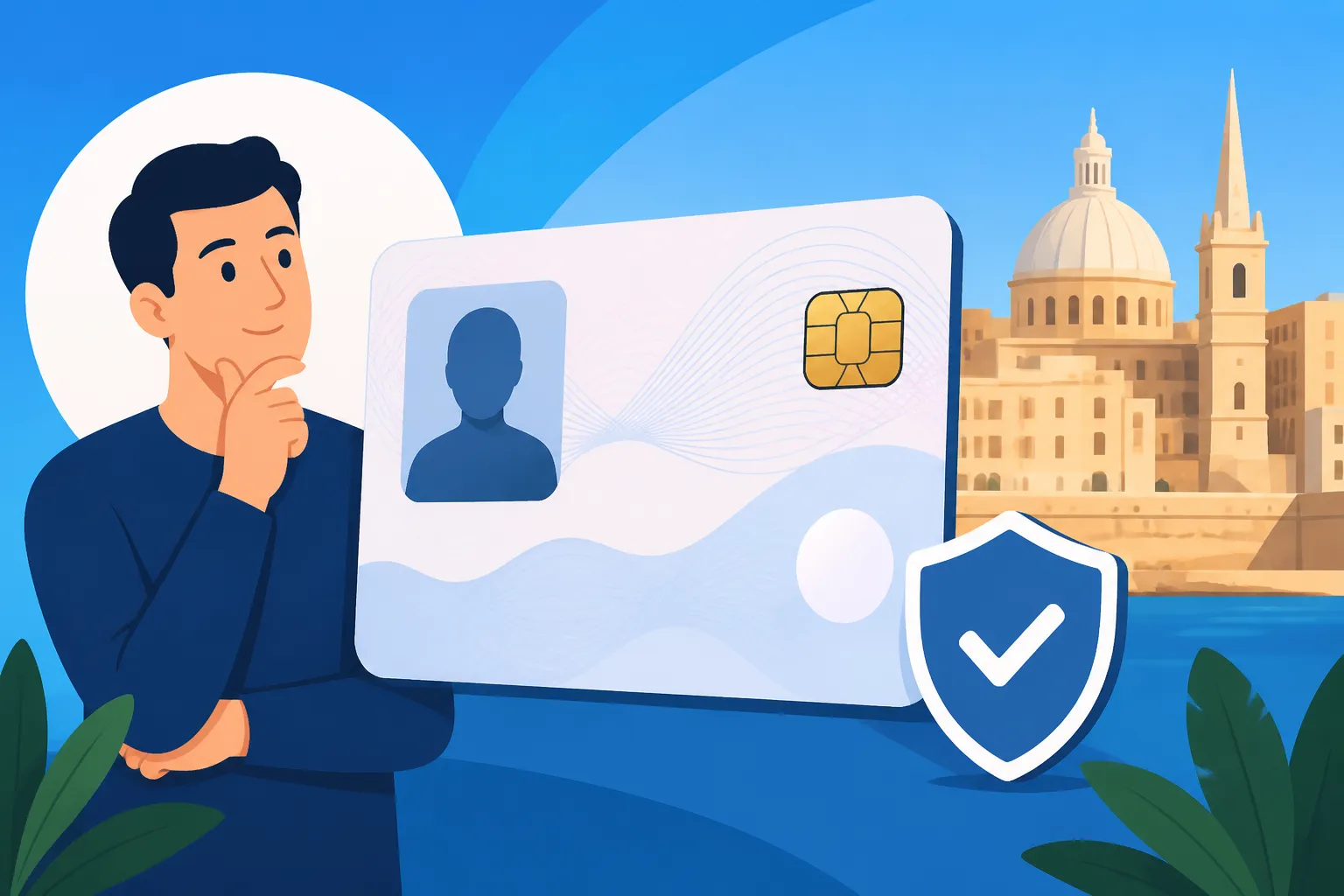
When you finally get your hands on it, you'll notice that the Maltese eResidence card looks very similar to an EU national ID card. It’s a standard credit-card sized piece of plastic, robust and designed for durability – which is good, because you’ll be flashing it a lot.
On the front, you'll find your photo, typically taken during your biometrics appointment, along with your signature. These personal identifiers are crucial for confirming your identity in various official and private settings. Below your photo, there's usually a small flag indicating your nationality. For EU citizens, this will be your country's flag. For third-country nationals, it often displays the EU flag or a generic indicator. The card's design incorporates security features like holograms and micro-printing, making it difficult to counterfeit, which is part of its strength as a legal document. It's truly a testament to how seriously Malta takes its immigration and residency controls. Many expats, myself included, have gone through the process of applying for an eResidence Document Through the Identità Portal, and let me tell you, that moment of collection is a sweet one.
The Embedded Chip and Security Features
What makes the eResidence card "e-Residence" isn't just the sleek design; it's the embedded microchip. This tiny chip holds a wealth of your personal data, including your biometric information (like fingerprints, if collected). This is a crucial security feature that allows authorities to verify your identity quickly and accurately using electronic readers.
This chip is compliant with EU standards for residence permits, which means it’s designed to be secure and interoperable across different member states. When you travel within the Schengen Area, your eResidence card, alongside your passport, is often enough to prove your right of residence in Malta, avoiding the need for additional visas in many cases. The chip technology helps prevent fraud and identity theft, providing an extra layer of protection for both you and the Maltese authorities. It also facilitates smoother border crossings within the Schengen zone, as border officials can quickly access and verify your data. This is particularly useful for those who travel frequently for work or leisure. It’s a sophisticated piece of tech that quietly goes about its job of securing your official presence here.
Unpacking the Information on Your eResidence Card
Every bit of information on your eResidence card serves a purpose, from the obvious to the subtle. Understanding what each field means can save you a lot of head-scratching when dealing with local bureaucracy. It’s like learning the secret code to getting things done here.
Personal Identification Details
This section is pretty straightforward but absolutely vital. It’s all about who you are.
- Full Name: Your complete legal name as it appears on your passport will be printed here. This is what banks, employers, and government departments will use to identify you. Any discrepancy, even a tiny one, can cause significant headaches down the line. Always double-check this against your passport as soon as you receive the card.
- Date and Place of Birth: Your birth details are fundamental for identification and demographic purposes. This helps cross-reference your identity with other official records.
- Nationality: Your country of citizenship. This is important because it dictates the type of residence permit you hold and any specific rights or obligations associated with your nationality within the EU framework.
- Sex: Your gender, as per official records.
- Unique Identity Number (ID Card Number): This is perhaps the most important identifier in Malta for residents. This number, often a seven-digit code with a letter at the end, is your unique identifier across almost all Maltese administrative systems. It’s used for tax, social security, healthcare (once you've registered with the Entitlement Unit), and pretty much anything official. You’ll be asked for it constantly, so get used to memorizing it! It's how Malta tracks your contributions and entitlements, so it's a number that truly links you into the fabric of the country. This ID number is distinct from your passport number and is issued specifically by the Maltese authorities. Having this number is key to accessing public services, so understanding its importance early on is crucial. For example, if you're trying to register with a health centre and choosing a GP in Malta, this ID number is the first thing they’ll ask for.
Residence-Specific Data
Beyond who you are, this section details why you're in Malta and the specifics of your residency.
- Type of Permit: This specifies the category under which you have been granted residence. Common types include "Worker," "Student," "Family Member," "Self-Employed," or "Nomad." Each type comes with its own set of rights and restrictions, so knowing yours is important. For instance, a "Student" permit holder usually has limitations on working hours, whereas a "Worker" permit implies full employment rights.
- Issuing Authority: This indicates which governmental body issued the card, which is always Identità for residence permits.
- Date of Issue and Expiry Date: These dates are paramount. The expiry date tells you how long your permit is valid for, and it's absolutely crucial for planning your Renewing Your Maltese Residence Permit Before It Expires application. Letting your card expire can lead to serious legal complications, including fines and even deportation, so always set a reminder well in advance! We all know how quickly time flies on this sunny island. This is where a lot of expats get caught out, underestimating the time it takes for Identità to process renewals. It's often recommended to start the renewal process at least three months before your card expires.
- Permit Number: A unique alphanumeric code assigned to your specific residence permit. This is often used for referencing your application or permit status.
- Remarks/Observations: Occasionally, you might find specific remarks here. These could be conditions related to your stay, such as "Family Member – Not Entitled to Work" or "Limited to Malta." While less common for standard permits, it’s always worth checking if there are any specific notes that apply to your situation. This helps ensure you're fully aware of any nuances in your residence status.
Your Signature and Photo
Your signature and photo are more than just identifying features; they're essential security elements. The photo provides a visual confirmation of your identity, particularly useful when checked against your physical presence. Think about showing it to a police officer during a routine check, or to a bank clerk – the photo is instant proof.
Your signature, captured during your biometrics appointment (or sometimes provided separately), acts as another layer of verification. It helps confirm that the card belongs to you, especially when used in conjunction with signed documents or transactions. These elements are standard across most modern ID documents globally, ensuring that your Maltese eResidence card is accepted and recognised when presented internationally. For instance, when travelling, border control officials rely on these features to quickly verify that you are indeed the rightful holder of the card. It's all part of the robust system designed to protect your identity and the integrity of Malta's borders.
Why Your eResidence Card is So Important in Malta
The eResidence card isn't just a formality; it's the gateway to almost every aspect of life in Malta. Without it, you’re basically an unregistered visitor, and trying to function normally is nearly impossible.
Essential for Day-to-Day Life
Imagine trying to buy groceries but not being able to pay. Or trying to get sick leave from work. That's the level of essential we're talking about.
- Banking: One of the very first hurdles for new arrivals is Opening a Bank Account in Malta. Maltese banks, like BOV and HSBC, are notoriously strict, and they will absolutely demand your eResidence card as primary proof of identity and residence. Without it, you’ll be stuck using international cards or digital banks like Revolut, which can be limiting for larger transactions or direct debits. Some digital banks can even be linked to services from providers like Sirelo if you're managing international moves and payments. The card proves you have a legal right to reside here, which is a fundamental requirement for financial institutions.
- Employment: For non-EU citizens, your eResidence card is your work permit. Employers must see it to legally employ you. It's proof that you’re permitted to work in Malta, dictating the terms under which you can be employed. If you lose your job, you also need to understand What Happens to Your Permit If You Lose Your Job in Malta.
- Healthcare: Accessing public healthcare, including registering with a doctor, is tied to your status as a legal resident and social security contributor. Your eResidence card is fundamental to this process. It helps confirm your eligibility for public services and helps you to register with the Entitlement Unit: Sorting Out Your Right to Treatment in Malta. This is particularly critical if you or your family need medical attention. Many expats choose private health insurance, like Cigna Global, to supplement public services, but even then, your eResidence card is often requested as basic ID.
- Renting Property: While you can often sign a lease with a passport, landlords are increasingly asking for proof of residence, especially when registering your lease with the Housing Authority, which is a legal requirement in Malta. Your eResidence card is the most definitive document for this.
- Utilities: Registering for electricity, water, and internet with ARMS, GO, or Epic requires proof of residence. Your eResidence card is essential for getting the correct residential tariffs and avoiding higher commercial rates. It’s also needed when you need to Set Up Electricity and Water with ARMS and Enemalta in Malta.
Legal Proof of Identity and Residence Status
Beyond daily tasks, your eResidence card carries significant legal weight.
- Travel: While your passport is your primary travel document, your eResidence card confirms your right to re-enter Malta and travel within the Schengen Area without requiring additional visas for short stays. Border control officials rely on it to verify your legal status.
- Police Checks: In Malta, police have the right to ask for your identification. Your eResidence card is the official document for this purpose. Carrying it (or at least a copy, with the original securely stored) is always advisable.
- Voting Rights (for EU Citizens): If you're an EU citizen residing in Malta, your eResidence card also establishes your eligibility to vote in local council and European Parliament elections here.
- Official Correspondence: When dealing with government departments, like the Inland Revenue Department (CFR) or Social Security, your eResidence card details (especially your unique ID number) are frequently required for official correspondence and processing.
Getting and Maintaining Your eResidence Card
The journey to getting your eResidence card can feel like a marathon, but understanding the steps helps manage expectations and frustration.
The Application Process: A Quick Overview
The path to your eResidence card typically starts with a residence permit application submitted to Identità. This is usually done online via their portal, followed by an in-person appointment for biometrics.
- Submission: You submit your initial application, usually linked to work (Single Permit), study, or family reunification. This means gathering a mountain of documents – everything from your passport to proof of accommodation and sufficient funds.
- Biometrics Appointment: Once your application is provisionally accepted, you'll be invited to Identità (usually in Msida) to provide your fingerprints and have your photo taken. This is a crucial step for the embedded chip. Booking appointments and submitting documents to Identità can be a bit of a process itself, so be prepared.
- Waiting Period: This is where the patience comes in. Processing times can vary wildly. During this time, you might have a temporary paper receipt. For many, the question "Can I Stay in Malta While My Residence Permit Is Being Processed?" is a common one, and thankfully, generally, yes, as long as you have valid proof of application.
- Collection: Eventually, you’ll receive an SMS or email informing you that your card is ready for collection. This usually happens at the Identità offices.
It’s a process that requires meticulous attention to detail and a fair bit of waiting, but the reward is that invaluable plastic card. Many expats use services like Sirelo to help them manage the move, which includes dealing with the logistical aspects of document collection.
Renewals and Keeping Your Information Up-to-Date
Your eResidence card isn't a one-and-done deal. It has an expiry date, and staying legally resident means keeping it current.
- Renewal Process: The renewal process is similar to the initial application but typically less arduous. You’ll need to prove continued eligibility for your permit type – for example, ongoing employment for a work permit. Start the renewal process well in advance of the expiry date. Trust me on this, waiting until the last minute is a recipe for stress and potential legal issues.
- Updating Information: If your circumstances change, such as Updating Your Address and Status with Identità in Malta, you have a legal obligation to inform Identità. This is vital because your card holds your official address, and if it's incorrect, it can cause problems with official mail and other services. Sometimes, depending on the change, you might even need a new card issued. This is why keeping an eye on your status and informing the authorities promptly is so important.
Lost, Stolen, or Damaged Cards
Losing your eResidence card can feel like losing a limb, given how important it is. But don't panic; there's a process for replacing it.
- Report to Police: If your card is lost or stolen, your very first step should be to report it to the nearest police station. You’ll need a police report (typically a 'Lost Property Report') for your Identità application.
- Apply for Replacement: With the police report in hand, you’ll need to apply to Identità for a replacement card. This will involve submitting a new application, possibly re-doing biometrics, and paying a fee. It’s a hassle, but it’s essential to restore your legal status.
- Keep a Copy: As a veteran expat, my strongest advice is to always keep a clear photocopy or digital scan of both sides of your eResidence card and your passport. Keep them separate from the originals. This won't replace the card, but it will make reporting a loss much easier and provide temporary proof of your details if you need it. It’s a small step that can save you immense stress down the line.
| Field Name | What it Shows | Why It's Important |
|---|---|---|
| Photo | Your current portrait | Visual identification at banks, stores, official checks. |
| Signature | Your recorded signature | Verification for official documents and transactions. |
| Full Name | Your complete legal name | Primary identifier for all official and personal dealings. |
| Date of Birth | Your birth date (DD.MM.YYYY) | Age verification and cross-referencing with other databases. |
| Nationality | Your country of citizenship | Determines specific rights and obligations under EU/Maltese law. |
| Sex | Your gender (M/F) | Demographic data and identification. |
| Unique ID Number | Seven-digit number + letter | Your primary unique identifier for ALL Maltese administrative systems (tax, health, social security). |
| Type of Permit | Category of residence (e.g., Worker, Student, Family) | Defines your rights and restrictions in Malta (e.g., ability to work). |
| Issuing Authority | Identità | Confirms the issuing body. |
| Date of Issue | When the card was created | Reference point for the permit's validity period. |
| Expiry Date | When your residence permit expires | CRUCIAL for timely renewal; dictates legal stay period. |
| Permit Number | Unique alphanumeric code for your permit | Internal reference for Identità and other authorities. |
| Remarks | Any specific conditions or limitations | Important for understanding specific nuances of your residence status. |
The eResidence card is a symbol of your journey in Malta. It represents the administrative hurdles you've overcome and your official place in this Mediterranean gem. Treat it with care, understand its details, and keep it updated. It truly is the key to unlocking everything Malta has to offer its residents.
Disclaimer
The information provided in this guide is intended for general informational purposes only and does not constitute legal, financial, or immigration advice. While we strive to keep the information up-to-date and accurate, regulations and procedures in Malta can change rapidly. Readers are strongly advised to consult with official Maltese government sources, such as Identità (Identity Malta Agency), or seek professional advice from qualified immigration lawyers, financial advisors, or other relevant experts for their specific situation. We cannot be held responsible for any inaccuracies or for actions taken based on the information provided herein.