How Does the Remittance Basis of Taxation Work in Malta?
When you first move to Malta, especially if you're coming from outside the EU, the thought of sorting out your taxes can feel like staring up at Dingli Cliffs – a beautiful but utterly daunting prospect. One of the biggest puzzles for many of us, particularly if you have income or savings back home, is figuring out how Malta will tax your foreign earnings. This guide is here to untangle the intricate web of Malta’s remittance basis of taxation, walking you through who it applies to, what actually gets taxed, and how you can navigate it without accidentally stepping on a fiscal landmine.
Demystifying Malta's Remittance Basis of Taxation
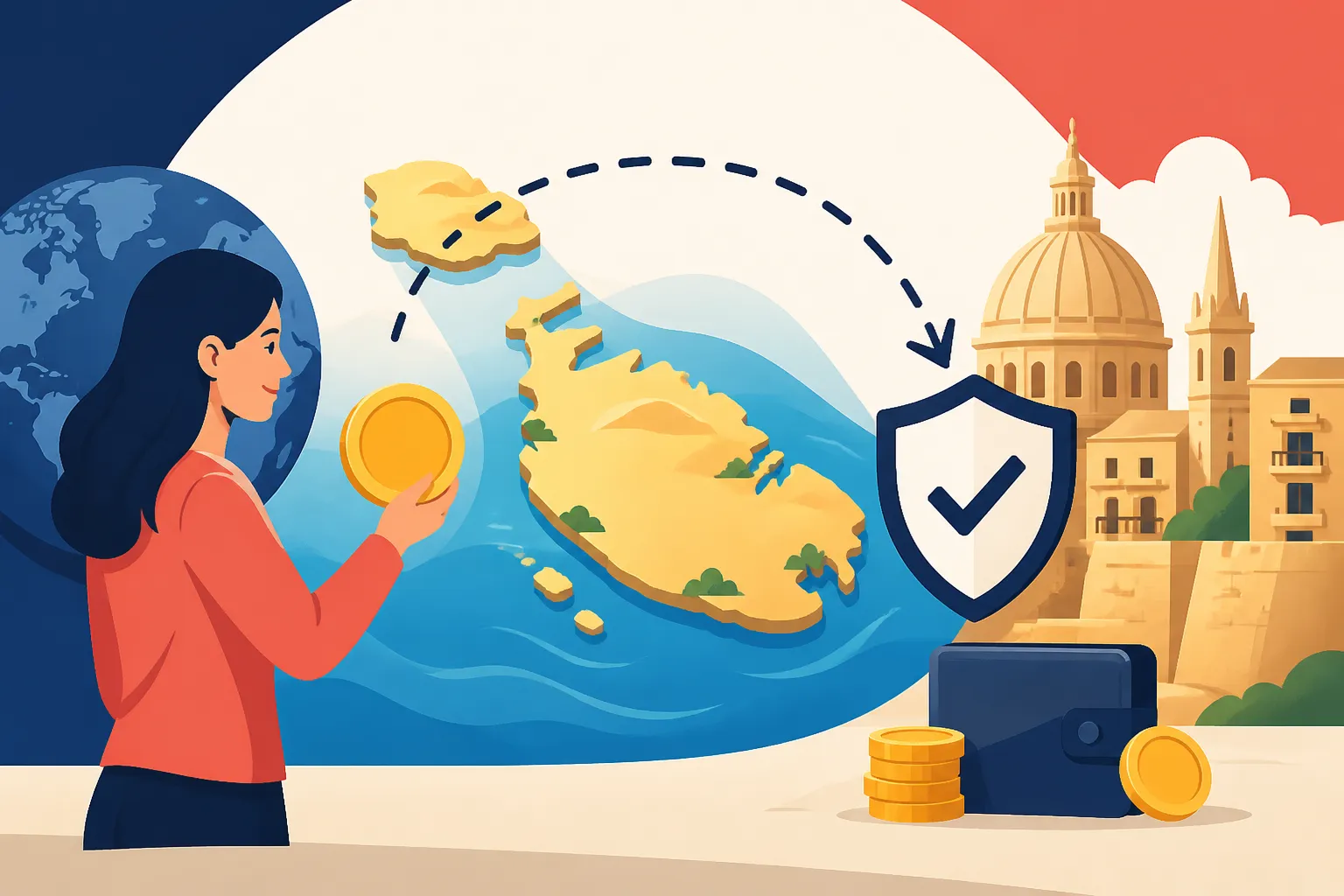
Let's cut to the chase: Malta has a unique approach to taxing foreign income for certain residents, and it's called the "remittance basis." For us expats, this often sounds like a mythical creature, but once you understand it, it can be quite advantageous. It essentially means that while you're living here, your foreign-sourced income or capital gains are generally only taxed if they are brought into, or "remitted" to, Malta. Your local Maltese income, on the other hand, is always taxed here, no matter what.
The Core Principle: Taxed When Brought In
Imagine you're earning a salary from a company based in Malta – that's Maltese-sourced income, and it's taxed here, full stop. But what if you have a rental property in your home country, or some investments generating dividends abroad, or even a side hustle paid into a foreign bank account? This is where the remittance basis comes into play. For non-domiciled residents (we'll get to that tricky concept in a moment), any income you earn outside Malta, from sources outside Malta, is only taxable in Malta if you literally bring that money onto the island.
This is a significant departure from what many of us are used to in countries that operate a "worldwide taxation" system, where every penny you earn, no matter where it comes from or where it sits, is subject to local tax. Under Malta's remittance basis, you have a degree of control over your tax liability on foreign income simply by deciding whether or not to transfer it to Malta. This can be a huge relief, or a source of major confusion, depending on how well you understand the rules. The key takeaway is: if you keep your foreign income and gains offshore, and don't spend them in Malta, they generally remain untaxed here.
Who Qualifies for the Remittance Basis?
Now, here's the crucial part: not everyone automatically qualifies for this sunny tax treatment. The remittance basis is specifically designed for individuals who are considered "tax resident" in Malta but are not "domiciled" here. These two terms, 'residence' and 'domicile', are often conflated, but in Malta's tax law, they are distinct and supremely important.
First, let's talk about tax residence. Generally, you become a tax resident in Malta if you spend more than 183 days here in a calendar year, or if you establish an intention to reside here permanently or for an indefinite period. It's often about physical presence. If you want to dive deeper into this, you can look up Tax Residency in Malta: The 183-Day Rule Explained. Many expats arriving to work or live long-term quickly become tax residents.
However, domicile is a much more complex and persistent legal concept. It's not about where you live right now, but rather where your legal "home" is – often, it's where your father was domiciled at your birth (your domicile of origin), or a new domicile you have chosen as your permanent home with an intention to live there indefinitely and sever ties with your previous domicile. For most expats, especially those planning to return to their home country eventually, their domicile of origin usually remains unchanged. Proving a change of domicile is incredibly difficult and requires a significant shift in intent and circumstances. This distinction is so vital that we even have a guide on Tax Residence vs Domicile in Malta: Why Both Matter. So, to benefit from the remittance basis, you must be:
- Resident in Malta for tax purposes (meaning you live here, even if temporarily).
- Not Domiciled in Malta (meaning your permanent, indefinite home is still considered to be elsewhere).
If you are a Maltese citizen, or if you are deemed domiciled in Malta, then you are taxed on your worldwide income and capital gains, irrespective of whether they are remitted to Malta or not. So, the remittance basis is primarily for those of us who have moved to this beautiful island but still maintain strong ties or future intentions towards another country.
What Exactly Counts as a "Remittance" to Malta?
This is where many expats get tripped up. The concept of "bringing money into Malta" isn't always as straightforward as a direct bank transfer. The Maltese tax authorities have a broad definition of what constitutes a remittance, designed to capture scenarios where foreign income is "enjoyed" here, even if it doesn't pass through a local bank account.
Direct Transfers and Cash
The most obvious form of remittance is a direct transfer. If you have a bank account in, say, the UK or Germany, and you instruct your bank there to send funds to your Maltese bank account, that's a clear remittance. These funds, if they originate from foreign income, will be subject to Maltese income tax. Similarly, if you withdraw a significant amount of cash from your foreign account while abroad and then physically bring that cash into Malta to spend or deposit, that also counts as a remittance of foreign income.
It's important to remember this distinction: if the money you're transferring is your original savings or the proceeds from selling a non-Maltese asset (like a house you owned before moving here) that constitutes capital, then generally, it's not taxed when remitted. We'll explore this more, but the onus is often on you to prove the nature of the funds. This is where meticulous record-keeping becomes your best friend.
Indirect Remittances: Enjoying Income or Capital in Malta
This is the tricky part, the silent killer of many expats' tax plans. A remittance doesn't just mean a direct bank transfer. It also includes using foreign-sourced income or gains to acquire goods or services in Malta, or for a benefit in Malta, even if the funds never physically touch a Maltese bank.
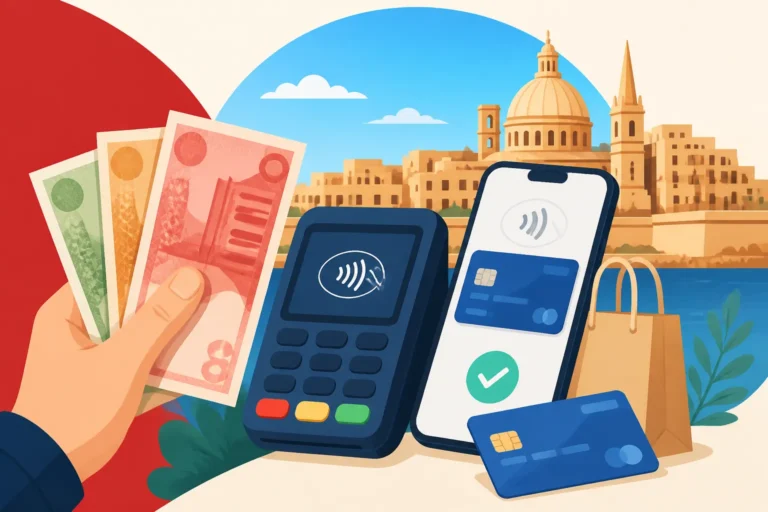
Consider this common scenario: you keep your foreign income in a bank account back home. You then use your foreign debit or credit card to pay for your groceries, your rent, or a new piece of furniture in Malta. Guess what? In many cases, the Maltese tax authorities view this as an indirect remittance of foreign income, because you are effectively enjoying that foreign income in Malta. It's as if you transferred the money to Malta, and then spent it. This is a common pitfall that catches many newcomers unaware, and it’s why understanding Avoiding Accidental Remittances on a Foreign Bank Card in Malta is crucial.
Here are some examples to illustrate what constitutes an indirect remittance:
- Online Purchases: You buy something online from a foreign retailer, but have it shipped to your address in Malta, and pay with a foreign card funded by foreign income. That's a remittance.
- Paying for Services: You pay a local Maltese contractor or service provider with your foreign bank card, or instruct a foreign bank to transfer funds directly to them for work done in Malta. Also a remittance.
- Offsetting Local Debts: If you have a debt in Malta (say, a mortgage payment) and you arrange for that debt to be settled directly from your foreign income account, that is also seen as a remittance.
- Bringing in Assets Purchased with Foreign Income: If you buy a car or a luxury item abroad using foreign income and then import it into Malta for your personal use, the value could be considered a remittance.
To make it clearer, let's look at a simple table:
| Scenario | Is it a Remittance (if funded by foreign income)? |
|---|---|
| Transferring funds from a foreign bank account to a Maltese bank account | Yes |
| Paying for groceries in a Maltese supermarket with a foreign debit card | Yes |
| Using a foreign credit card to pay your Maltese rent, with the card balance settled from foreign income | Yes |
| Buying clothes from an online store and having them delivered to your Maltese address (paid with foreign funds) | Yes |
| Paying for a holiday abroad with a foreign card, while you are physically in Malta | No |
| Leaving foreign income in a foreign bank account, untouched and unspent in Malta | No |
| Transferring original savings (capital) from a foreign bank account to a Maltese bank account | No (usually, if proven) |
| Selling a property in your home country and transferring the proceeds (capital) to Malta | No (usually, if proven) |
Capital vs. Income: A Crucial Distinction
This is perhaps the most important nuance for non-domiciled residents on the remittance basis. While foreign income is taxed upon remittance, foreign capital generally is not. Understanding the difference is paramount for managing your tax liability effectively.
Foreign Income includes things like:
- Salaries from foreign employment.
- Rental income from properties outside Malta.
- Interest earned on foreign bank accounts or investments.
- Dividends from foreign shares.
- Pensions from foreign sources.
If you remit any of these to Malta, they are taxable.
Foreign Capital refers to:
- Your existing savings that you accumulated before becoming a tax resident in Malta, or savings that clearly originated from non-income sources (e.g., an inheritance, a gift).
- The proceeds from selling a fixed asset (like a house, land, or investments) located outside Malta, provided it's a capital gain and not considered trading income. You can learn more about this in How Foreign Income and Capital Gains Are Treated in Malta.
The key here is that if you sell a property in your home country and transfer the entire sale amount to Malta, this is typically considered a transfer of capital and would generally not be taxed in Malta. Similarly, if you transfer personal savings you've built up over years before you ever set foot on Maltese soil, those are capital.
However, the burden of proof often lies with you to demonstrate to the tax authorities that the funds you are remitting are indeed capital and not income. This means having clear, documented evidence of the source of these funds. Without it, the taxman might assume it's income, and then you've got a headache on your hands. This is why having a strong understanding of How Do I Keep Capital and Income Separate for Maltese Tax? can save you a lot of trouble.
Practical Implications and Common Pitfalls
Navigating the remittance basis effectively requires diligence and a clear strategy. It's not enough to simply know the rules; you need to apply them in your daily financial life.
The €5,000 Minimum Tax Rule
For certain individuals benefiting from the remittance basis, there's a minimum tax payable. If you are a non-domiciled resident and your chargeable income (this includes both your Maltese-sourced income and any foreign income remitted to Malta) exceeds €35,000 in a calendar year, you are subject to a minimum tax of €5,000. This is an important detail to be aware of, as it can significantly impact your financial planning.
It's vital to note that this €5,000 minimum tax does not apply to EU/EEA/Swiss citizens who are non-domiciled and whose income does not exceed €35,000. These individuals are still taxed on their Maltese-sourced income and remitted foreign income, but without that minimum threshold. This is a common point of confusion for many. For a more thorough explanation, make sure to read The €5,000 Minimum Tax Rule for Non-Doms in Malta. This rule exists to ensure that those who are substantial earners benefiting from Malta's favourable tax regime contribute a certain amount to the local coffers.
Record Keeping and Compliance
I cannot stress this enough: meticulous record-keeping is non-negotiable. When dealing with the remittance basis, you must be able to clearly demonstrate the source and nature of all funds transferred into Malta, or used for benefits enjoyed in Malta.
This means:
- Keeping detailed bank statements for all your foreign and Maltese accounts.
- Retaining all transfer confirmations, clearly noting the purpose of the transfer.
- Maintaining evidence distinguishing between capital and income, such as investment statements, property sale agreements, inheritance documents, or proof of when savings were accumulated.
- Tracking your spending on foreign cards in Malta.
If you ever face an inquiry from the Maltese tax authorities, these records will be your shield. Without them, you might struggle to prove that certain funds were capital, or that foreign income was never remitted, potentially leading to unexpected tax bills and penalties. Many expats find it incredibly helpful to work with tax specialists, like the team at Taxes for Expats, who understand the nuances of these rules and can assist with maintaining proper records and filing.
Navigating Transfers with Care
Given the broad definition of remittance, you need to be very intentional about how you handle your finances.
- Separate Accounts: A good strategy is to keep foreign income separate from foreign capital in different bank accounts abroad. This makes it easier to demonstrate to the tax authorities which type of funds you are transferring.
- Remit Only What You Need: Don't just transfer large sums of foreign income to Malta "just in case." Only bring in what you genuinely need for your living expenses here. Leave the rest invested or saved offshore.
- Use Maltese Accounts for Maltese Expenses: Try to live off your Maltese-sourced income (e.g., your salary here) and any foreign capital you've decided to bring over. For everyday spending in Malta, use a Maltese bank account and debit card. This significantly reduces the risk of accidentally remitting foreign income through card transactions.
- Consider International Transfer Services: When you do need to transfer funds from abroad, services like Wise (formerly TransferWise) can be incredibly useful. They provide clear records of transfers, exchange rates, and recipients, which can aid in your record-keeping. Make sure to clearly label transfers to indicate if they are capital or income, if your bank allows.
- Foreign Pensions: If you receive a foreign pension, this is considered foreign income. If you have it paid directly into a Maltese bank account, it will be taxed. You can explore your options for managing this, perhaps by having it paid into a foreign account and only remitting portions as needed. More on this can be found in Do I Pay Maltese Tax on a Foreign Pension?.
Strategic Tax Planning for Non-Domiciled Residents
Understanding the remittance basis isn't just about avoiding penalties; it's about smart financial planning to legitimately minimise your tax burden in Malta.
Maximising the Benefits of the Remittance Basis
The core advantage of being a non-domiciled resident on the remittance basis is the ability to keep your foreign-sourced income and gains untaxed in Malta, as long as they stay offshore. This opens up several strategic avenues:
- Offshore Investments: If you have investments (stocks, bonds, property, etc.) outside Malta that generate income or capital gains, you can choose to keep these funds in accounts outside Malta. As long as you don't remit the income or the proceeds from selling these assets (if they generated a taxable gain) to Malta, they won't be subject to Maltese tax. This allows for significant tax deferral or avoidance on foreign earnings.
- Budgeting and Lifestyle: Carefully budget your expenses in Malta. Only remit the amount of foreign income that you genuinely need to cover your lifestyle here. The less foreign income you bring in, the lower your Maltese tax liability on those foreign earnings will be. For example, if your Maltese salary covers your rent and bills, you might not need to touch your foreign income at all.
- Capital vs. Income Segregation: As mentioned, maintaining clear segregation between your foreign capital and foreign income accounts is a proactive step. If you need to bring funds into Malta, transferring from a clearly defined capital account is usually non-taxable, simplifying your tax position. For a thorough understanding, check out How Do I Keep Capital and Income Separate for Maltese Tax?.
Remember, this isn't about hiding money; it's about adhering to the specific rules of the Maltese tax system that are designed to attract foreign residents.
The Role of Tax Advice
While this guide aims to be comprehensive, Maltese tax law, especially around concepts like domicile and remittance, can be highly complex and subject to individual circumstances. What applies to one person might not apply to another, even with similar-looking situations.
This is why engaging a qualified tax advisor in Malta is often not just helpful, but essential, especially when you first arrive or if your financial situation is complex. They can:
- Help you determine your domicile status.
- Review your current financial setup and advise on the most tax-efficient way to structure your assets and income.
- Assist with accurate record-keeping and preparation for your tax return.
- Ensure you comply with all Maltese tax regulations, avoiding costly mistakes.
- Help you understand how to report foreign income to the Commissioner for Revenue (CFR) in Malta, if and when you remit it. A good starting point for reporting can be found in How Do I Report Foreign Income to the CFR in Malta?.
Services like Taxes for Expats are specifically geared towards helping non-domiciled individuals navigate these waters, providing tailored advice that a general accountant might not be equipped to offer. Don't fall into the trap of thinking you can manage it all on your own unless your finances are incredibly simple. For further reading, consider Do I Need an Accountant to File Taxes in Malta?.
What If My Domicile Changes?
It's crucial to understand that while a change in domicile is difficult, it is not impossible. If, over time, your intentions shift, and you genuinely decide that Malta is your permanent, indefinite home, severing all ties and intentions to return to your domicile of origin, then your domicile could change to Malta.
The consequences of this change are profound: you would then be taxed on a worldwide basis, meaning all your income and capital gains, wherever they arise globally, would be subject to Maltese tax, regardless of whether you remit them or not. This is why the concept of domicile, as explained in What Is the Difference Between Residence and Domicile in Malta?, is so fundamental to your tax planning. Any strategic long-term planning must consider this eventuality, however distant it may seem.
For those of us settling in Malta, the remittance basis offers a unique and potentially advantageous tax environment for our foreign earnings. It rewards careful planning and strict adherence to the rules. By understanding what counts as a remittance, distinguishing between capital and income, and maintaining diligent records, you can truly make the most of your financial life on this beautiful island.
Disclaimer
The information provided in this article is for general guidance only and does not constitute professional tax advice. Tax laws are complex and can change. Individual circumstances vary greatly. It is highly recommended to consult with a qualified tax advisor in Malta to discuss your specific situation and ensure compliance with all local tax regulations.