Avoiding Accidental Remittances on a Foreign Bank Card in Malta
Most expats moving to the Maltese islands are lured by the promise of 300 days of sunshine and a Mediterranean lifestyle, but few realize that a simple swipe of their home-country bank card at a local supermarket can trigger an unforeseen tax liability. This guide provides a comprehensive roadmap to navigating the complex world of the remittance basis of taxation, ensuring you protect your foreign-sourced income while living in Malta.
Understanding the Non-Dom Tax Basis in Malta
The concept of "non-domiciled" status is one of the most significant administrative nuances you will encounter upon moving here. In many countries, you are taxed on your worldwide income the moment you become a resident. Malta operates differently for those who are resident but not domiciled. If you were born outside of Malta and do not intend to stay here permanently as your ultimate "home," you are likely considered a non-dom. This status is a double-edged sword; it offers incredible tax efficiency, but it requires meticulous management of how you bring money into the country.
The Difference Between Domicile and Residence
When you first land at Luqa airport and start looking for an apartment in Sliema or St. Paul's Bay, your focus is likely on getting your eResidence card. However, for the Commissioner for Revenue (CFR), your residence is merely a matter of where you spend your time. Domicile is a much deeper legal concept, usually tied to the country where you were born or where your father was domiciled at the time of your birth. Understanding Tax Residence vs Domicile in Malta: Why Both Matter is the first step in realizing that while you may live in a penthouse in Gzira, your tax home—in the eyes of the law—might still be elsewhere.
The frustration many foreigners face is that these terms are often used interchangeably in casual conversation, but they mean very different things on a tax return. As a resident non-dom, you are only taxed on income arising in Malta (like a local salary) and foreign income that is "remitted" or brought into Malta. Foreign capital—money you earned before moving here—can usually be brought in tax-free. The headache begins when you start mixing your pre-move savings with post-move foreign dividends or interest.
The Remittance Basis of Taxation
The core of the Maltese system for expats is the remittance basis. Effectively, if you earn dividends from a portfolio in the UK or rental income from a property in Germany, that money is not taxed by Malta as long as it stays in a bank account outside of Malta. This is why The Non-Dom Remittance Basis in Malta: How It Works is the most discussed topic among the expat community at Friday night drinks in Valletta. The system is designed to attract high-net-worth individuals and professionals, but it assumes you will be proactive in your financial planning.
The trap is that "remittance" is defined very broadly. It doesn't just mean a bank transfer from your Lloyds account to a Bank of Valletta (BOV) account. It includes any way that foreign income is used to satisfy a debt or a payment within the Maltese borders. This is where the "accidental" part of accidental remittance comes into play. If you use a foreign card to pay for your daily life, the Maltese authorities could argue that you are remitting your foreign income to fund your Maltese lifestyle, making that income taxable at the standard progressive rates.
What Counts as a Remittance The Foreign Card Trap
Many expats arrive in Malta and continue using their US or UK credit cards for everything because it’s "easier" than dealing with the local bank queues. They think that because the money stays in their home currency and the bill is paid from a home account, Malta has nothing to do with it. This is a dangerous misconception. Every time you tap that card at a restaurant in Marsaxlokk or buy a new television at a shop in Birkirkara, you are technically bringing the value of that money into the country to pay for a local service.
Spending on Foreign Cards for Local Purchases
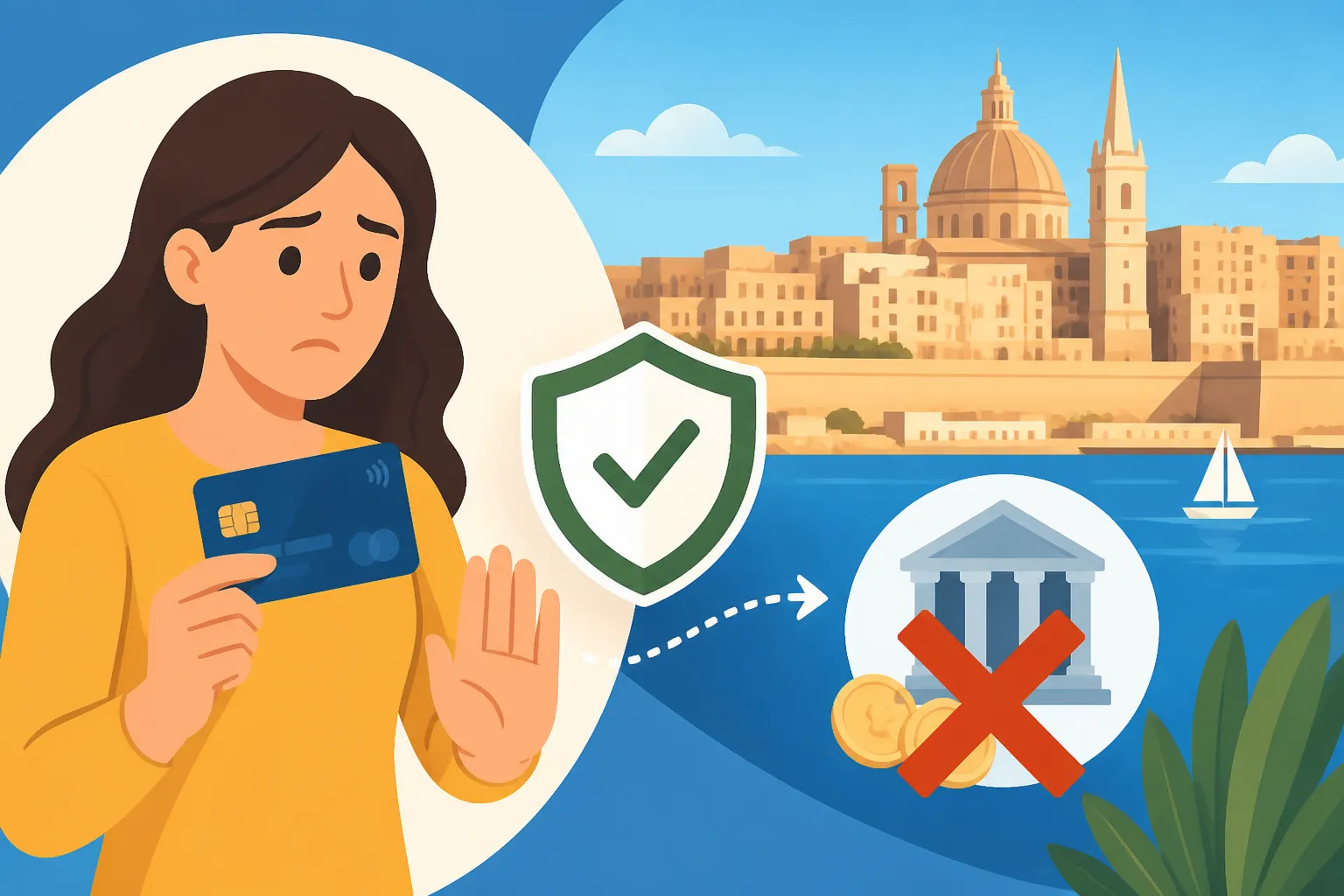
When you use a foreign bank card to buy groceries at Welbee’s or clothes at The Point Shopping Mall, you are performing an act of remittance. The Maltese tax authorities view this as you bringing your foreign funds into the local economy to sustain yourself. If the money sitting behind that card is foreign income—such as interest or dividends earned while you have been living in Malta—then that specific amount becomes taxable here. This is exactly what we mean when we discuss Does Spending on a Foreign Card in Malta Count as a Remittance? in professional tax circles.
The nuance here is the "source" of the funds. If you can prove that the card is linked to an account that only contains "capital" (money earned before you became a Maltese resident), you might be safe. But the moment you deposit a fresh dividend check into that same account, you have "polluted" the fund. Under Maltese law, if you spend from a mixed account, it is often presumed that you are remitting the income portion first, which carries the highest tax burden.
Cash Withdrawals from ATMs in Malta
Withdrawing Euros from a Maltese ATM using a foreign card is perhaps the most direct form of remittance. You are literally pulling physical currency out of the Maltese banking system, backed by your foreign holdings. For many newcomers, this feels like a loophole, but the CFR is well aware of this practice. If you are a non-dom and you are withdrawing €500 a week to pay for your lifestyle, you are remitting €26,000 a year. If you don't have a local salary that covers your expenses, the tax man will rightfully ask where that money is coming from.
Many people find themselves in a situation where they are Opening a Bank Account in Malta: A Step-by-Step Guide simply to have a place to deposit a local salary, but they continue to use their foreign ATMs for "extra" cash. This creates a messy paper trail. If your local salary is only €20,000 but your bank statements show you are spending €50,000, the discrepancy will eventually trigger an inquiry. This is why keeping a clear distinction between your local earnings and your foreign withdrawals is vital for your annual filings.
Paying for Services and Utility Bills
Another common pitfall is using a foreign card to pay for recurring local expenses like your ARMS utility bills or your Melita internet subscription. It seems logical to keep these on a card that offers rewards or cashback in your home country. However, these are clear examples of remitting funds to satisfy a Maltese debt. Even paying your rent via a foreign bank transfer directly to your landlord’s Maltese account is a remittance of those funds into Malta.
The administrative burden of Understanding Tiered Utility Tariffs and Registered Residents in Malta is already high enough without adding tax complications. To stay clean, it is always recommended to pay for all Maltese services from a Maltese bank account that is funded by either a local salary or by "clean capital" that has been properly documented. If you must use a service like Wise to move money, you should ensure that the source of the transfer is clearly identified as capital rather than current-year income to avoid accidental triggers.
The Financial Consequences of Accidental Remittances
The Maltese tax authorities are generally fair, but they are also increasingly digital and sophisticated. The days of "hiding" foreign spending are rapidly coming to an end thanks to international data sharing agreements. If you are caught remitting income without declaring it, you aren't just looking at a back-tax bill; you are looking at interest, penalties, and a potential audit of your entire financial history since arriving on the island.
Tax Liabilities and Penalties
If you accidentally remit €10,000 of foreign income through your foreign credit card, that €10,000 is added to your taxable income for the year. Depending on your total earnings, this could be taxed at 15%, 25%, or even 35%. If you didn't declare this on your tax return, you will be liable for an additional penalty for under-reporting. This is why Malta's Progressive Tax Brackets: Single, Married, and Parent Rates are so important to understand; an accidental remittance can easily push you into a higher tax bracket, increasing the tax due on your local salary as well.
Furthermore, there is the "Minimum Tax Rule" for non-doms. If you earn more than €35,000 outside of Malta and you are a resident, you may be subject to a minimum tax of €5,000 even if you don't remit a single cent. However, if you do remit money, that remitted amount is taxed normally, and the tax paid on it counts toward that €5,000 minimum. It’s a complex balancing act that requires a firm grasp of The €5,000 Minimum Tax Rule for Non-Doms in Malta to ensure you aren't paying more than you legally owe.
The Impact on Your Tax Return
Every year, residents must face the task of Filing Your Maltese Tax Return: The CFR, FS3, and TA22/TA24. If you have been using a foreign card, your tax return becomes infinitely more complicated. You cannot simply report your local salary. You must calculate every Euro remitted from abroad. If you have been swiping a foreign card for three years without declaring it, correcting those returns retroactively is an administrative nightmare that often requires professional intervention.
The CFR uses the information provided on your tax return to cross-reference with other data points. For instance, if you apply for a home loan, the bank will want to see your tax returns. If your returns show you only live on a tiny local salary but your bank statements show massive foreign card spending, the bank will flag this as a compliance risk. Maintaining a "clean" tax record in Malta isn't just about avoiding fines; it’s about ensuring your future financial mobility on the island.
Strategies to Prevent Remittance Triggers
Prevention is always better than cure, especially when it comes to the Maltese tax man. The goal for any savvy expat is to create a "firewall" between their foreign income and their Maltese life. This doesn't mean you can't enjoy your wealth; it means you need to be strategic about how you move it. By setting up the right structures from day one, you can save thousands of Euros in tax and avoid the stress of an audit.
Segregating Capital from Income
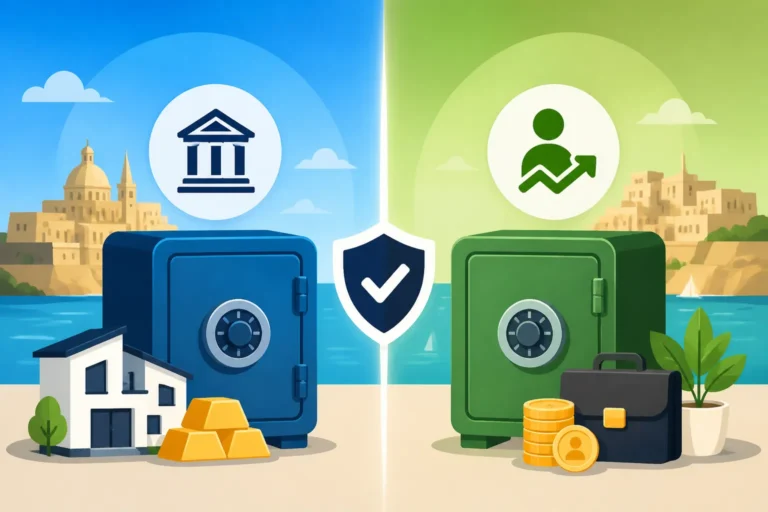
The most effective strategy is the segregation of accounts. You should have one account (Account A) that contains only "capital"—this is the money you had in the bank the day before you moved to Malta. You should have another account (Account B) where all your "income" (dividends, interest, rent) earned after moving to Malta is deposited. When you need to bring money into Malta for a car or a house deposit, you transfer only from Account A.
By doing this, you can clearly demonstrate to the authorities that you are remitting capital, which is generally not taxable in Malta for a non-dom. This is a core part of Understanding the FSS (Final Settlement System) on Your Payslip and your broader financial planning. If you mix these two, you lose the ability to prove the source, and the law will almost always assume you remitted the income first. This simple administrative step of having two separate accounts in your home country can save you a lifetime of tax headaches.
Using Local Banking Solutions
The easiest way to avoid the foreign card trap is to stop using them for daily Maltese expenses. Once you have your ID card, you should prioritize Choosing a Bank in Malta: BOV, HSBC, APS, and Lombard. Use your local Maltese account for everything within the 27 miles of the island. Fund this account with your local salary. If your local salary isn't enough, fund it with a lump-sum transfer of capital from your foreign "Account A" (your capital account).
Living entirely out of a local account makes your tax reporting incredibly straightforward. When you sit down to file your return, you can point to your local statements and say, "This is what I lived on." You won't have to worry about whether a dinner at a restaurant in St. Julian's was paid for with a foreign dividend or a local wage. This level of clarity is highly valued by the CFR and will make your life as an expat much smoother.
Leveraging Digital Wallets and Modern FinTech
Modern tools like Wise have revolutionized how expats manage money, but they must be used carefully within the Maltese tax framework. You can use these services to convert your home currency into Euros and transfer them to your Maltese bank account. The key is to ensure the source of the funds in your digital wallet is "clean capital." If you link your Wise card to an account that receives your foreign salary or dividends, you are back in the same trap.
The advantage of using FinTech is the transparent record-keeping. You can easily download reports that show exactly where every Euro came from and where it went. This is incredibly helpful when Managing a Chronic Condition in Malta: Schedule V Medicines and Care or dealing with other unexpected large expenses. Just remember: these apps are not "invisible" to tax authorities. They are regulated financial institutions that share data. Use them as a tool for efficiency, not as a way to circumvent your remittance obligations.
| Spending Method | Tax Implications for Non-Doms | Recommendation |
|---|---|---|
| Maltese Debit Card | No tax on spending from local salary. | Best for all daily expenses. |
| Foreign Card (Capital) | Generally tax-free, but requires proof of source. | Use only for large, one-off capital purchases. |
| Foreign Card (Income) | Fully taxable in Malta at progressive rates. | Avoid at all costs for local spending. |
| Cash Withdrawals | Counts as remittance; taxable if source is income. | Keep withdrawals to a minimum from foreign cards. |
| Digital Wallets (Wise) | Tax-free if funded by capital; taxable if funded by income. | Excellent for transfers, dangerous for direct spending. |
Managing Your Documentation and Compliance
In the world of Maltese tax, if you can't prove it, it didn't happen. The burden of proof for the source of remitted funds lies entirely with you, the taxpayer. If the CFR asks why you transferred €20,000 from a UK account to your Maltese account, and you can't provide a bank statement showing that money was there before you moved to Malta, they will likely treat it as taxable income.
Tracking Sources of Funds
You should keep a digital "tax folder" that contains your bank statements from the period immediately preceding your move to Malta. This "snapshot" of your wealth is your most valuable asset during a tax inquiry. It proves what constitutes your "clean capital." Every time you make a transfer into Malta, keep a record of which foreign account it came from and why. If you are Registering for Tax When You Arrive in Malta, having these documents ready will make the process much faster.
It’s also wise to keep track of any large foreign expenses paid from your foreign income accounts. For example, if you use your foreign dividends to pay for a holiday in Japan or to buy a car in your home country, that is not a remittance to Malta. Keeping a record of these "out-of-Malta" expenses helps you account for where your foreign income went, proving that it never touched Maltese soil and therefore remains outside the scope of Maltese tax.
When to Seek Professional Advice
The Maltese tax system for non-doms is nuanced and, at times, contradictory. If your financial situation involves multiple foreign income streams, rental properties, or stock options, trying to DIY your compliance is a recipe for disaster. This is where services like Taxes for Expats become essential. They specialize in the intersection of international tax laws and can help you structure your remittances in a way that is both legal and efficient.
Getting professional help is especially important if you are considering one of the Special Tax Programmes in Malta: GRP, MRP, and the Residence Schemes. These schemes often have very specific requirements regarding how much tax must be paid and how income must be handled. A specialist can help you navigate The Path to Long-Term and Permanent Residence in Malta without tripping over an accidental remittance that could disqualify your residency status or lead to a massive bill.
Practical Tips for Daily Spending in Malta
Transitioning your financial life to a new country takes time, but you should aim to be fully "localized" within your first three months. The longer you rely on foreign cards, the more you are exposed to the risk of an accidental remittance. Malta is a cash-friendly society, but it is also rapidly modernizing, and having the right local tools will make your life much easier.
Best Practices for New Arrivals
During your first few weeks, while you are still Getting Your Maltese ID Card Number: The Key to Accessing Healthcare and waiting for your residence permit, you might have no choice but to use a foreign card. During this transition period, try to use a card that you know is linked to a capital-only account. Keep every receipt. If you have to pay a security deposit for a flat in Sliema, do it via a bank transfer and label it clearly as "Capital – Rental Deposit."
Avoid the temptation to "live off" your foreign credit card just because of the points. The "cost" of those points is the risk of a 35% tax rate on every Euro spent. Instead, use your first few weeks to find where you will be doing your regular shopping and check if they accept local cards or cash. For those wondering, Do Shops in Malta Still Accept Cash?, the answer is yes, and for small daily purchases, it remains the safest way to avoid a digital paper trail that could be misinterpreted as an income remittance.
Transitioning to Maltese Accounts
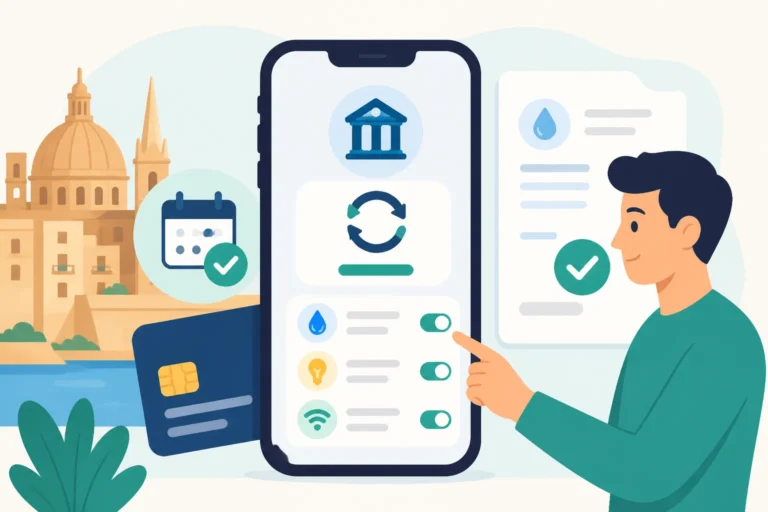
As soon as your Maltese bank account is active, set up your "living fund." Transfer a large, documented lump sum of capital into it to cover your first six months of expenses. Then, ensure all your local bills—electricity, phone, rent—are paid via direct debit from this account. This creates a clean, closed loop of Maltese spending. You can learn How Do I Set Up Direct Debits for Bills in Malta? through your bank’s online portal, which is usually quite straightforward.
By following this "local first" approach, you effectively opt-out of the accidental remittance trap. You can then let your foreign income grow in its separate, offshore account, untaxed by Malta, until you decide to leave the island or until you need to make a major, planned remittance for which you have already budgeted the tax. This is the hallmark of a veteran expat who has mastered the art of living in Malta: enjoying the lifestyle without the administrative and financial burden of unnecessary tax liabilities.
Disclaimer
The information provided in this guide is for general informational purposes only and does not constitute legal, financial, or tax advice. Tax laws in Malta are subject to change and vary based on individual circumstances, including your nationality, domicile, and specific residence permit. You should always consult with a qualified tax professional or accountant who specializes in Maltese tax law before making any financial decisions or filing tax returns. The author and publisher are not responsible for any tax liabilities, penalties, or legal issues arising from the use of this information.