Can I Bring My Unmarried Partner to Malta?
Moving to a new country like Malta is exciting, but it often throws up some incredibly frustrating questions, especially when you’re trying to navigate the system with a loved one. One of the most common worries I hear from expats is whether their unmarried partner can actually join them here. The good news is yes, it's possible. The not-so-good news? It requires a hefty dose of patience and meticulous documentation. This guide will walk you through the specifics of bringing your unmarried partner to Malta, detailing the requirements, the process, and what you can expect from the sometimes-mystifying Maltese bureaucracy.
Can My Unmarried Partner Join Me in Malta? The Short Answer and the Reality
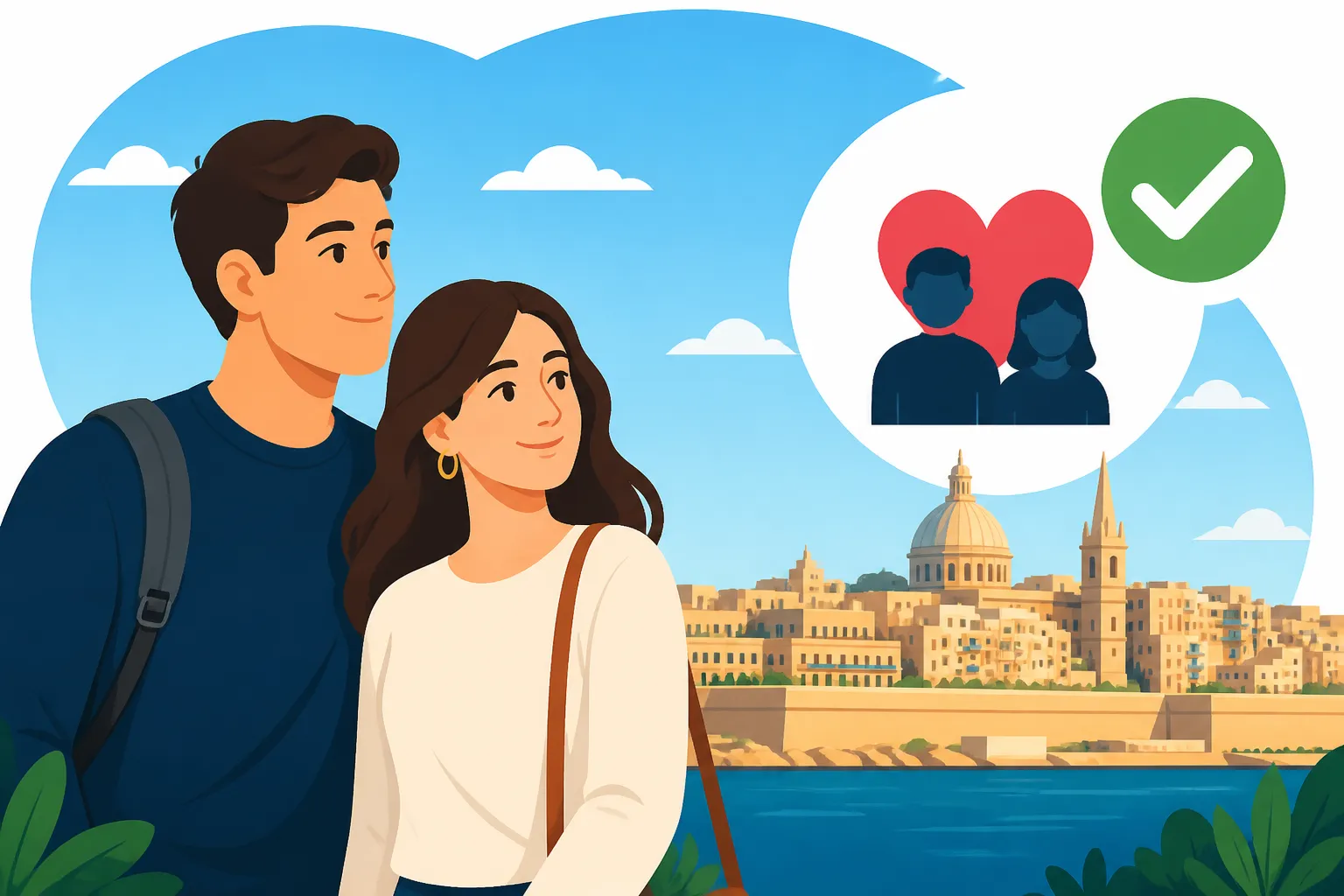
So, you’ve landed a job or secured your residence in Malta, and now you’re wondering if your long-term, unmarried partner can come along for the ride. The straightforward answer is yes, absolutely! Malta, like many other EU countries, acknowledges stable and cohabiting relationships for the purposes of family reunification, even if you’re not legally married or in a civil partnership. This is a huge relief for many, as plenty of us are in committed relationships without the ring or the certificate.
However, and this is where the reality check comes in, just because it’s possible doesn’t mean it’s a walk in the park. Identità (the Maltese agency responsible for identity, passports, and citizenship, including residence permits) is incredibly thorough, and they need to be convinced that your relationship is genuine, durable, and not just a convenient arrangement to get a residence permit. They are looking for substantive evidence that you are a bona fide couple sharing a life together. You're essentially applying for a family-member residence permit, and the burden of proof is firmly on your shoulders to demonstrate this relationship. This is a common hurdle for many who are trying to navigate Family Reunification in Malta: Bringing Your Loved Ones.
For those of us from outside the EU/EEA, this process will typically fall under the banner of a "family reunification" permit. This means your partner will apply as a dependant of the main permit holder (you). If you are an EU/EEA citizen, the process for your unmarried partner might be slightly different, often relying on demonstrating a stable relationship in the same vein. The key takeaway here is to prepare for detailed scrutiny, gather every piece of evidence you can think of, and understand that delays are common.
Navigating the "Proof of Relationship" Minefield for Unmarried Partners
This is arguably the trickiest part of the entire application. Unlike married couples who can simply present a marriage certificate, you and your partner need to build a compelling case that your relationship is akin to a marriage. Identità is looking for a "durable" relationship – one that is long-standing, committed, and provable through various means. Generally, they are looking for evidence of a relationship lasting at least two years, but more evidence of a shorter, intensely cohabiting relationship might be considered.
Let’s talk specifics. What kind of evidence are they actually looking for? It’s a mix of official documents and personal proofs that paint a picture of shared life. Think of it as telling your love story through paperwork.
Official Co-habitation Evidence
First, you need to prove you’ve been living together. This is paramount.
- Joint Lease Agreements or Property Deeds: If you’ve rented or owned property together, these are golden. Make sure both your names are on the official documents. The longer the period of cohabitation, the stronger your case.
- Utility Bills: Bills for electricity, water, internet, or gas addressed to both of you at the same address, or showing one person's name with the other listed as residing there. Consistent bills over several years are excellent.
- Joint Bank Statements: Accounts that show you share finances, pay bills together, or have savings as a couple are very strong indicators. This demonstrates a financial interdependence that is typical of a committed relationship.
- Official Correspondence: Letters, statements, or government documents addressed to both of you at the same address.
Personal and Social Proof
Beyond the official paperwork, you'll need to show that your lives are intertwined.
- Photographs: Not just holiday snaps, but a range of photos showing you together over the years, with family, friends, at different events. Dated photos are best. Don't go overboard with hundreds, but a good selection is helpful.
- Travel Itineraries/Tickets: Proof of shared holidays, demonstrating you travel together as a couple.
- Correspondence: Evidence of communication, such as emails, chat logs, or even old letters, showing the history and nature of your relationship. Be selective here; only include what genuinely helps.
- Letters of Support: Affidavits or letters from family, friends, or even employers, confirming your relationship. These need to be genuine and ideally notarised or officially attested.
- Shared Responsibilities: Do you have a pet together? Joint insurance policies (life, car, home)? Joint memberships to clubs or gyms? These little details add up.
- Birth Certificates of Shared Children: If you have children together, their birth certificates listing both of you as parents are incredibly strong evidence and can often simplify parts of the process, as it removes much of the ambiguity.
- Previous Residence Permits (if applicable): If you’ve lived in other countries together and obtained visas or residence permits as an unmarried couple, this is excellent proof of a recognised, durable relationship.
The key is to provide a comprehensive package that leaves no room for doubt about the authenticity of your relationship. Gather everything you can, even if it feels excessive. When Identità is scrutinising your application, they prefer too much information over too little. This is part of the broader requirement for What Documents Do I Need for a Maltese Residence Permit?
Financial Stability and Accommodation: Showing You Can Support Your Partner
Beyond proving your relationship, you, as the main permit holder, need to demonstrate that you can financially support your unmarried partner without them becoming a burden on the Maltese state. This is a standard requirement for anyone bringing dependants to Malta and is heavily scrutinised.
The Financial Threshold
Identità has specific income thresholds for family reunification. These thresholds are designed to ensure that the main applicant has sufficient funds not only for themselves but for each dependant. These figures can change, so it's always best to check the latest guidelines directly on the Identità website or through a reliable immigration consultant. Typically, you need to demonstrate an income significantly above the Maltese minimum wage, with an additional amount for each dependant. For a rough idea, you might need your annual income to be the equivalent of Malta's minimum wage PLUS 20% of the median wage for each dependant. For current figures, you should consult guides like What Income Do I Need to Bring My Family to Malta?.
- Proof of Income: This usually means recent payslips (at least 6 months), an employment contract showing your salary, and bank statements clearly indicating regular income deposits. If you're self-employed, you'll need tax returns, audited accounts, and business bank statements.
- Savings: While not always sufficient on its own, substantial savings can bolster your case, especially if your income is borderline. These should be in an accessible bank account.
- Consistent Employment: A stable job in Malta is crucial. If you're on a temporary contract, it might raise questions about long-term stability.
Adequate Accommodation
You also need to show that you have suitable accommodation for both yourself and your partner. Malta has specific space requirements per person. A studio apartment might be fine for one, but it won’t cut it for two.
- Lease Agreement: A valid lease agreement for a property of adequate size, with both your names on it if possible, is ideal. The lease should be properly registered with the Housing Authority, as is now legally required under the Private Residential Leases Act.
- Proof of Residential Utility Tariffs: Ensure your utility bills are on the residential tariff, indicating you are a registered resident, not a secondary resident or a tourist. This is part of the Lease Agreement Attestation Requirement for Non-EU Tenants in Malta.
- Property Size: Be realistic. A small one-bedroom apartment is generally considered adequate for a couple, but check specific guidelines. Identità officers may sometimes request to inspect the property, though this is less common for standard family reunification applications unless there are concerns.
Health Insurance
For non-EU/EEA nationals, comprehensive private health insurance is an absolute must for your unmarried partner, covering all risks in Malta. The public healthcare system is generally available to those paying social security contributions, but your partner won't be covered until their permit is approved and their entitlement secured. Even then, private insurance is often a wise choice for speedier access or specific treatments. Companies like Cigna Global are popular choices for expats needing robust international coverage. For more details, consult Private Health Insurance Requirements for Non-EU Permit Holders in Malta.
Remember, the goal is to convince Identità that your partner will be fully supported and integrated into your life in Malta, financially and practically. This foresight into your living situation is fundamental to any permit application, and a major factor in What Accommodation Do I Need to Reunite My Family in Malta?.
The Application Journey: What to Expect with Identità and Beyond
Once you've diligently gathered all your evidence for your durable relationship, financial stability, and accommodation, you’re ready to tackle the application process itself. Dealing with Identità (formerly Identity Malta) can be an experience in patience and persistence. They handle all Residence Permits in Malta: Types, Requirements, and How to Apply.
Submitting the Application
The first step is typically to book an appointment with Identità, specifically for family reunification or dependent applications. This is usually done online via their portal. These appointments can sometimes have a waiting list, so book in advance.
When you attend your appointment, you will need to:
- Submit all original documents and their copies. This includes passports, birth certificates, your main residence permit, proof of address, financial statements, and critically, all the evidence of your durable relationship. Ensure any documents not in English or Maltese are accompanied by a certified translation.
- Complete the application forms. These are usually available online to fill out in advance, but you’ll sign them at the appointment. Make sure every section is filled out accurately.
- Pay the application fees. There are administrative fees associated with processing residence permits.
- Undergo biometric data capture. Your partner will have their fingerprints and photograph taken for their eResidence card. This is a crucial step in Dealing with Identità: Applications, Biometrics, and the eResidence Card.
The Waiting Game
After submission, the waiting game begins. This can be the most challenging part, as processing times vary wildly. Identità might tell you it takes a few weeks, but in reality, it can easily stretch into several months. It's not uncommon for applicants to be left wondering How Long Does Identità Take to Decide a Residence Permit?.
- Further Information Requests: Don’t be surprised if Identità contacts you to request additional documents or clarification. This is quite common. Respond promptly and comprehensively. Any delay on your part will extend the overall processing time.
- Interview (Rare, but Possible): In some cases, particularly if the relationship evidence is not crystal clear or if there are inconsistencies, Identità might request an interview with both you and your partner. This is a formal interview where they will ask detailed questions about your relationship, shared history, and future plans. Be honest and consistent in your answers.
- Legal Considerations: While your application is pending, your partner may not have the right to work or legally reside in Malta beyond any initial visa period. This is a critical point; clarify your partner's legal status during the processing period. They definitely cannot just start working. While you can typically Can I Stay in Malta While My Residence Permit Is Being Processed? if you were already here, for a new arrival partner, it's more complex if their initial visa expires.
Receiving the eResidence Card
If your application is successful, your partner will be notified to collect their eResidence card. This card is their official proof of residence in Malta and will contain their unique ID number. This number is essential for everything from opening a bank account to accessing public services. You'll want to familiarise yourself with The eResidence Card: What It Shows and How to Read It.
Life After Approval: Maintaining Status and Addressing Challenges
Once your partner has their eResidence card, they will enjoy similar rights to other residents, including access to public services. However, there are still things to keep in mind:
- Changes in Circumstances: If you change address, job, or if your relationship status changes, you must inform Identità. This is crucial for Updating Your Address and Status with Identità in Malta.
- Renewal: Residence permits are not indefinite. You will need to renew your partner’s permit periodically, usually annually or every few years, depending on the initial permit length. The renewal process often mirrors the initial application, requiring updated documents and proof of continued financial stability and cohabitation.
- Challenges: The cost of living in Malta can be higher than expected, particularly for housing and imported goods. While you've demonstrated financial stability for the permit, daily budgeting can be a challenge. Get acquainted with the Cost of Living in Malta: Budgeting for the Real Numbers to plan effectively. Furthermore, finding a job for your partner can take time, especially if they are a non-EU national and need a work permit. While their dependant status allows them to apply, the job market still has its quirks.
Bringing your unmarried partner to Malta is a journey that demands patience, meticulous preparation, and a thick skin for bureaucracy. But with the right approach and a clear understanding of the requirements, it’s a perfectly achievable goal, allowing you to build your life here together. For help with the physical move, many expats rely on international relocation services like Sirelo to handle the logistics of moving their belongings. Remember, keep all your documents organised, be prepared for questions, and always provide more evidence than you think is necessary.
Disclaimer
The information provided in this guide is for general informational purposes only and does not constitute legal advice. Immigration laws and policies in Malta are subject to change. It is highly recommended to consult with Identità directly or seek professional advice from a qualified immigration lawyer or consultant for your specific situation.