Can I Bring My Spouse to Malta on My Residence Permit?
Moving to Malta is an adventure, a dream for many, but the excitement can quickly be overshadowed by the daunting thought of navigating the infamous Maltese bureaucracy – especially when it comes to bringing your loved ones with you. Many of us expats have been there, staring at an Identità checklist, wondering if our dream of a family life on this sunny island is just a bureaucratic nightmare waiting to happen. If you’re a foreign resident in Malta and you’re asking, "Can I bring my spouse to Malta on my residence permit?", this comprehensive guide is here to walk you through the process, the pitfalls, and exactly what to expect.
The Foundations of Family Reunification in Malta
The good news is, yes, Malta generally allows foreign residents to bring their spouses over under the process of family reunification. This isn't a guaranteed right in every single case, mind you, but for the vast majority of employed individuals, students, or those on certain residence programmes, it's a very real possibility. The key is understanding that your spouse won't just 'join' your permit; they will apply for their own residence permit, specifically a "Family Member Residence Permit" or, as Identità (Malta's agency for identity, citizenship, and expatriate affairs) sometimes refers to it, a residence document based on family reunification.
Think of it this way: your residence permit is the anchor, providing the stability and legal basis for your stay in Malta. Your spouse's permit is then tethered to yours. This means the type of permit you hold, your financial stability, and your accommodation all directly impact their application. It’s not just about proving your marriage; it’s about proving that you, the main applicant, can genuinely support another person in Malta without burdening the state. This can be a significant hurdle for many, as the financial thresholds and accommodation requirements are often more stringent than people initially anticipate. You'll soon discover that patience is not just a virtue, but a necessity when dealing with these applications.
Eligibility and Essential Requirements for Your Spouse's Permit
Okay, so you know it's possible. Now, let's get down to the nitty-gritty of who qualifies and, more importantly, what mountain of paperwork you'll need to gather. The requirements are quite detailed, and missing even one tiny document can send your application back to the drawing board for weeks or even months. Trust me, I’ve seen it happen.
Proving Your Relationship and Identity
First and foremost, you need to prove your relationship is legitimate and legally recognised. This might sound obvious, but there are layers to it:
- Marriage Certificate: This is the cornerstone. It needs to be an original or a certified true copy, and crucially, it must be apostilled or legalised. If your marriage took place outside of Malta or a country that's part of the Hague Apostille Convention, you’ll need to go through the legalisation process with the Maltese embassy or consulate in that country. This is not a quick task, so start early!
- Passport Validity: Both your passport and your spouse's passport must be valid for at least the entire duration of the requested permit, and ideally, for much longer. Identità typically requires at least 6 months beyond your intended stay.
- Birth Certificates: While not always explicitly listed as a primary requirement for spouses, having your birth certificate and your spouse's (again, apostilled/legalised if from outside Malta/EU) can sometimes be requested, especially if there are any discrepancies or further proof of identity is needed. It’s better to have it and not need it.
- Police Conduct Certificates: Both you and your spouse will need a recent police conduct certificate (or equivalent criminal record check) from your country of origin and any country you've resided in for more than six months over the past six years. These usually have a strict validity period (e.g., three months), so time your requests carefully.
Financial Sufficiency: The Unspoken Hurdle
This is where many aspiring family reunifiers hit a snag. Malta wants to ensure that newcomers are self-sufficient. This means you, as the primary resident, must prove you have stable and sufficient financial resources to support both yourself and your spouse without recourse to Malta's social assistance system.
- Income Thresholds: While Identità doesn't always publish an exact, hard-and-fast figure, generally, they look for an income that is at least the national average wage plus a percentage, or a significant multiple of the minimum wage. For 2024, the minimum wage in Malta is around €835 per month. Expect the requirement for family reunification to be substantially higher, likely in the range of €1,200 – €1,500+ net income per month for a couple, after tax and social security. This amount is also reviewed regularly, so ensure you check the latest figures or seek advice. This money needs to come from a legitimate, declared source within Malta, such as employment or a registered self-employment activity. Bank statements showing consistent salary payments are crucial.
- Proof of Funds: You'll need recent bank statements (usually for the last 3-6 months) showing consistent income and a healthy balance. If you have significant savings, these can bolster your application, but steady income is usually prioritised.
- Employment Contract/Self-Employment Registration: Your employment contract, recent payslips, and FS3 forms (the annual income statement in Malta) are vital. If you're self-employed, your VAT registration, tax returns, and audited accounts will be scrutinised. Remember, "How Maltese Health Entitlement Fits with Social Security Contributions" is also tied into your employment status, ensuring you both have access to healthcare.
Adequate Accommodation: More Than Just a Roof
Malta, being a small island, has strict rules about living spaces. Your accommodation needs to be suitable for both of you.
- Lease Agreement: You’ll need a valid rental contract, registered with the Housing Authority, clearly stating the property address, the names of all occupants (including your spouse, even if they aren't here yet), and the duration of the lease. For non-EU nationals, this lease agreement often needs to be attested for residence permit purposes. The size of the property will be checked – there are minimum square footage requirements per person, and studios or tiny one-bedroom flats might not be considered "adequate" for two people.
- Proof of Address: Recent utility bills (ARMS bills for electricity and water) in your name, showing the address, will serve as proof that you genuinely reside there and are registered as a resident for utility purposes.
- Declaration of Accommodation: You might need to provide a formal declaration stating that your spouse will reside with you at the specified address.
Health Insurance: A Critical Component
Unless your spouse is immediately covered by Malta's public healthcare system (which usually requires them to be working and paying social security contributions themselves, or covered as your dependent once their permit is processed), they will need private health insurance. Even if they might eventually be covered, having it for the application period is often a strict requirement for non-EU nationals.
- Comprehensive Coverage: The insurance policy must cover all medical expenses, including hospitalisation, emergency treatment, and repatriation, up to a certain minimum amount (usually €30,000 per person).
- Validity: The policy needs to be valid for at least one year or the duration of the requested permit. Providers like Cigna Global offer excellent expat health insurance options that meet Malta's requirements, ensuring peace of mind during your spouse's initial period in Malta. Remember, understanding "Private Health Insurance Requirements for Non-EU Permit Holders in Malta" is absolutely key.
Overview of Key Documents for Your Spouse's Application
To make things a little easier to digest, here’s a table summarising the key documents for your spouse’s family reunification permit in Malta:
| Document Type | Specifics | Notes |
|---|---|---|
| Applicant's Documents | Valid Passport & Copies | All pages, valid for duration of permit + 6 months. |
| Marriage Certificate | Original or certified true copy, apostilled/legalised. English translation if not in English/Maltese. | |
| Birth Certificate | Original or certified true copy, apostilled/legalised (recommended, not always mandatory). | |
| Police Conduct Certificate | From country of origin & any country resided in for >6 months in last 6 years (valid for 3 months). | |
| Passport Photos | Specific dimensions (usually biometric standard). | |
| Comprehensive Private Health Insurance | Minimum €30,000 coverage, including repatriation, valid for permit duration. For example, Cigna Global offers policies tailored for expats. | |
| Sponsor's (Your) Documents | Valid Residence Permit & eResidence Card | Copies of your current permit. |
| Employment Contract / Proof of Self-Employment | Latest contract, official registration documents. | |
| Payslips / Income Statements | Last 3-6 months' payslips; latest FS3/tax returns if self-employed. | |
| Bank Statements | Last 3-6 months, showing consistent income and sufficient funds to support two people. | |
| Registered Rental Agreement | Valid lease, registered with Housing Authority, showing suitable accommodation. See "Registering Your Lease with the Housing Authority in Malta". | |
| Utility Bills (ARMS) | Latest bills in your name for the registered address. | |
| Police Conduct Certificate | As above, from relevant countries (valid for 3 months). | |
| Other Supporting Docs | Declaration of Accommodation | Formal statement that your spouse will reside with you. |
| Cover Letter | Optional, but highly recommended, explaining the purpose of the application and listing all submitted documents. |
The Application Process: Navigating Identità
Once you have your ducks (and documents) in a row, it’s time to face Identità. This is often the most anxiety-inducing part of the process, mainly due to the waiting times and the sheer volume of information they process.
Where to Apply: From Abroad or In-Country?
Generally, the rule of thumb for non-EU/EEA nationals is that your spouse should apply for their residence permit from their country of origin or legal residence. They might first need to obtain a D-Visa (National Long-Stay Visa) to enter Malta specifically for the purpose of residence. This visa is usually valid for a limited period, allowing them to enter Malta and finalise the residence permit application locally. It's crucial not to enter on a short-stay Schengen tourist visa with the intention of applying for residence, as this can cause complications and potential refusal.
However, there can be exceptions, especially for EU/EEA citizens or if specific circumstances mean an in-country application is more appropriate. Always check the most up-to-date guidelines directly on the Identità website or by contacting them.
Booking Your Identità Appointment and Submission
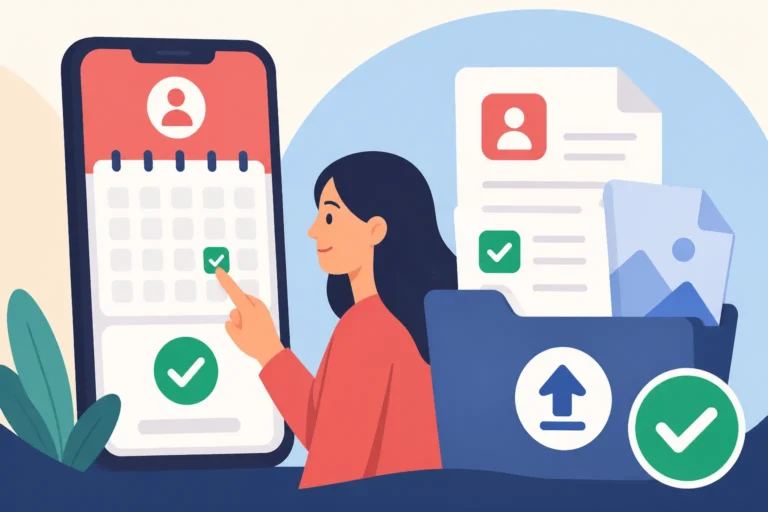
"How Do I Apply for a Maltese Residence Permit?" starts with an appointment. In the past, you could just walk in, but now, virtually all applications require a pre-booked appointment through Identità's online portal. These slots can be hard to come by and often fill up quickly, so be persistent. You'll usually book an appointment for "Family Member" applications.
On the day of the appointment, bring all your original documents and at least two sets of photocopies. The Identità officials will scrutinise every single piece of paper. Be prepared for questions, and don't be surprised if they ask for something that wasn't on the official checklist – it happens. They’ll take your spouse's biometric data (fingerprints and a digital photo) and issue a receipt. This receipt is very important as it serves as temporary proof that your application is being processed. Keep it safe!
Processing Times: The Test of Patience
Let’s be realistic: Maltese immigration processing times can vary wildly. While Identità states general timelines, in practice, family reunification applications, particularly for non-EU nationals, can take several weeks to several months. I've known people who waited three months, and others who waited six or more. This is where "How Long Does Family Reunification Take in Malta?" becomes a very real question.
- During Processing: Your spouse should not travel outside Malta (especially not outside the Schengen Area) while their residence permit application is pending, unless they have a valid D-Visa that allows re-entry. Leaving the country during this period can sometimes invalidate the application or lead to issues upon re-entry. It's a stressful waiting game, and unfortunately, direct contact with Identità for updates often leads to generic responses or simply being told "it's being processed." You'll have to develop thick skin and learn patience.
- The eResidence Card: If approved, your spouse will be notified to collect their eResidence card. This card is their official proof of residence in Malta and usually states "Family Member" as the basis of residence. This is their golden ticket, proving their legal status and allowing them to work if their permit explicitly allows it. For more details on what this card contains, check out "The eResidence Card: What It Shows and How to Read It".
Can My Spouse Work or Study?
This is a frequently asked question, and the answer can be a bit nuanced. For non-EU nationals on a family reunification permit, the ability to work or study isn't always automatic.
- Working: In many cases, a spouse on a family member permit will need to apply for their own work permit (employment licence) through Jobsplus. However, Malta has been moving towards integrating the right to work into certain family permits, so it's essential to check the specific conditions printed on your spouse's eResidence card or any accompanying documentation from Identità. If they need a separate work permit, their employer will have to go through the usual application process.
- Studying: Generally, obtaining a student visa or permit to study in Malta while on a family member permit is less complicated, but always confirm with the educational institution and Identità.
It's a long road, filled with forms, waiting, and probably a few exasperated sighs. But with careful preparation, a deep breath, and a good understanding of the process, you can successfully bring your spouse to join you in beautiful Malta. For those planning a bigger move, remember that companies like Sirelo can help coordinate international shipping and logistics, making the physical transition of your belongings a bit smoother once the paperwork is sorted.
Common Pitfalls and Tips for a Smoother Process
Having navigated the Maltese administrative labyrinth myself, and seen countless others do the same, I can tell you that preparedness is your best friend. Here are some common pitfalls and how to avoid them:
Incomplete or Incorrect Documentation
This is the number one reason for delays or outright rejections. Identità is incredibly strict.
- Double-Check Everything: Before your appointment, go through every single document against the official checklist, then do it again. Get a friend to check too. One missing signature, an expired police certificate, or an un-apostilled marriage certificate can mean you have to rebook and restart.
- Translations: Any document not in English or Maltese must be translated by an officially recognised translator. Some countries have specific requirements for this, so investigate well in advance.
- Authenticity: Ensure all documents are authentic and correctly legalised. Don't try to cut corners; it will only lead to trouble.
Financial Requirements Misinterpretation
It’s not just about having money; it’s about proving that money is stable, sufficient, and legally obtained.
- Consistent Income: A sudden surge in your bank balance just before applying might raise eyebrows. They want to see consistent, declared income over several months.
- Official Statements: Only present official bank statements, not screenshots or printouts from online banking unless they are stamped by the bank.
Accommodation Issues
The "adequacy" of your accommodation is subjective but has clear minimum standards.
- Space: A one-bedroom apartment might be fine for a couple, but a tiny studio might not. Ensure your lease clearly indicates the number of residents.
- Registration: Make absolutely sure your lease is registered with the Housing Authority. An unregistered lease is essentially invalid in the eyes of Identità. Learn more about "Registering Your Lease with the Housing Authority in Malta".
Communication Gaps with Identità
Trying to get updates or clarification from Identità can be frustrating.
- Email Trail: Always communicate in writing (email) so you have a record.
- Patience and Persistence: Don't expect instant replies. Follow up politely but regularly if you feel your application is taking an unusually long time.
The D-Visa vs. Schengen Visa Trap
This is critical for non-EU spouses.
- Purpose of Entry: A Schengen (short-stay) visa is for tourism, business, or visits. It does not grant you the right to reside in Malta long-term or apply for a residence permit while here, except in very specific, limited circumstances (e.g., marriage to an EU citizen after arrival). If your spouse intends to join you and reside, they need a D-Visa (long-stay national visa) or to apply for their residence permit from their home country.
Bringing your spouse to Malta is a significant step, both emotionally and administratively. It requires meticulous planning, a deep dive into paperwork, and an unwavering commitment to navigating bureaucracy. But when you finally see that eResidence card in your spouse's hand, knowing you’ve overcome the hurdles, it will all be worth it.
Disclaimer
The information provided in this guide is for general informational purposes only and does not constitute legal or immigration advice. While we strive to provide accurate and up-to-date information, immigration laws and procedures in Malta are subject to change. It is highly recommended to consult directly with Identità (Malta's agency for identity, citizenship, and expatriate affairs) or a qualified immigration lawyer in Malta for personalised advice regarding your specific situation. This guide is based on current understanding and common experiences as of the date of publication.