Can I Claim Tax Deductions in Malta?
One of the most common questions I hear from fellow expats in Malta, right after "Where can I find decent hummus?", is always about taxes. Specifically, people coming from countries with elaborate tax systems often ask, "Can I claim tax deductions in Malta?" It’s a completely fair question, born from years of navigating complex forms and looking for every legitimate way to reduce a tax bill. However, the Maltese tax system, while generally straightforward, operates a bit differently from what many of us might be used to, and the concept of "deductions" as you might know it is often quite distinct. This guide will walk you through what you can, and perhaps more importantly, what you cannot, deduct or claim relief for under Maltese income tax laws.
Navigating the Maltese Tax Landscape: An Expat's Primer
When you first arrive in Malta, the entire administrative process can feel like a labyrinth, and taxes are no exception. Many of us arrive with a preconceived notion of how a tax system should work, often shaped by our home countries where itemized deductions for everything from mortgage interest to union dues are commonplace. In Malta, the system is designed with a slightly different philosophy, often favoring simpler, progressive tax brackets and specific allowances rather than a lengthy list of deductible expenses. It's less about calculating every single expense you've made throughout the year and more about your income type, your residency status, and whether you fall into specific relief categories.
Understanding your tax status here is the absolute first step before you even think about deductions. Are you considered ordinarily resident and domiciled in Malta? Or perhaps ordinarily resident but not domiciled, which impacts how foreign income is taxed under the remittance basis? Your answers to these questions profoundly influence your tax obligations and any potential reliefs. For instance, someone on the non-domicile remittance basis only pays tax on income earned in Malta or foreign income that is remitted (brought into) Malta. This inherently means certain "deductions" for foreign expenses wouldn't apply, as that income itself isn't being fully taxed here.
It's a system that, for many, turns out to be surprisingly simpler than expected, but only once you shed the assumptions you've carried from elsewhere. It means less time poring over receipts for every small purchase hoping for a tax break, and more focus on ensuring your primary income streams are correctly declared and that you apply for any allowances or reliefs that are relevant to your personal situation. This distinction between a "deduction" (an expense reducing taxable income) and a "relief" (a reduction in the tax payable, or a specific allowance against income) is key in Malta.
Unpacking Deductions: What Malta Offers (and What It Doesn't)
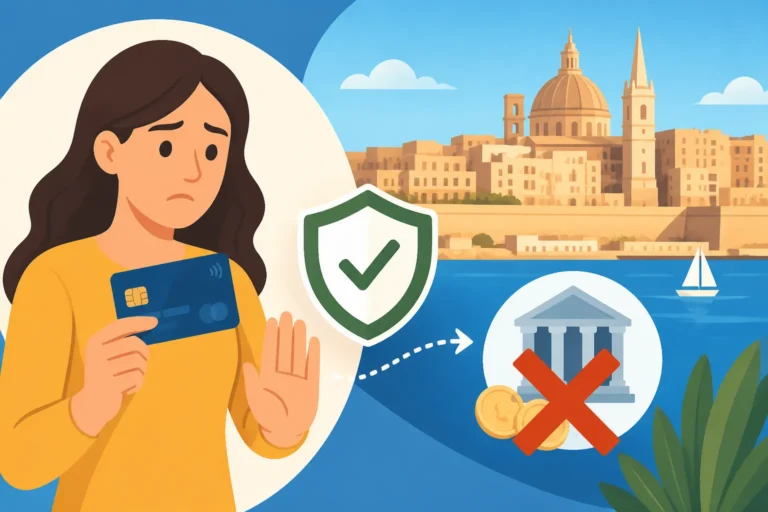
Let's get straight to the point: if you're expecting to deduct things like personal mortgage interest payments, general medical expenses (unless they are for a specific Schedule V condition), or charitable donations (beyond specific scenarios) from your taxable income in Malta, you're likely to be disappointed. Malta's tax code, by and large, does not offer these broad, itemized deductions for individuals that are common in many other jurisdictions. This is often a significant culture shock for new arrivals, leading to frustration and confusion.
What Malta does offer are primarily "allowances" or "reliefs" that reduce your taxable income or your tax liability, rather than direct deductions for a wide array of personal expenses. These are often applied automatically or are quite specific.
Educational Expenses
One area where some form of relief is available is related to education. If you are pursuing a course of studies at a recognised local or foreign institution, you might be eligible for certain tax credits or deductions for fees paid. This typically applies to higher education, and the specifics can vary based on the type of course and institution. For example, individuals undertaking certain Masters or Doctoral programmes, or those pursuing specific vocational qualifications, may be able to claim a tax credit for a portion of their tuition fees. It’s not an open-ended deduction for any educational expense, but rather targeted relief to encourage skill development and higher learning. This is a vital point for those considering further studies while working on the island.
Childcare Expenses
For parents, one of the most welcome reliefs is the deduction for childcare expenses. This applies to fees paid for children attending licensed childcare centres, including summer schools and even certain extra-curricular activities. The aim is to support working parents, acknowledging the costs involved in ensuring children are cared for while parents are at work. There's typically a cap on the amount you can claim per child per year, but it can make a noticeable difference to your tax bill, especially if you have multiple children. Remember to keep proper receipts from licensed providers, as these will be essential for substantiating your claim when filing your tax return. It's a pragmatic relief that helps families manage the Cost of Living in Malta: Budgeting for the Real Numbers.
Pension Contributions
While Malta has a state pension system funded by Social Security contributions, there are also provisions for private pension schemes. Contributions to approved Third Pillar pension schemes can qualify for a tax credit. This is a direct incentive from the government to encourage individuals to save for their retirement beyond the state provision. There's usually a maximum amount you can contribute to these schemes annually that qualifies for the tax credit, and it’s well worth looking into if you plan to stay long-term and want to boost your retirement savings. It’s a solid way to make your money work harder for you, reducing your current tax while building future security. You can read more about it in Pensions in Malta: The State Pension and Private Provision.
Dependent Maintenance Relief
For individuals supporting certain dependents, there may be a specific allowance. This typically applies to cases where you are financially responsible for elderly relatives (like parents or grandparents) who are not claiming social security benefits and meet specific income thresholds. This relief is intended to ease the burden on those caring for vulnerable family members. It’s a niche relief but can be very important for those it applies to.
No Deductions for Common Expenses
To reiterate, many common expenses that expats might be used to deducting are generally not deductible in Malta for individuals. This includes:
- Mortgage Interest: Unlike many countries, personal home loan interest is generally not deductible from income tax in Malta.
- Most Medical Expenses: While public healthcare is largely free for entitled residents and Schedule V medicines are covered, private medical expenses, consultations, or insurance premiums are typically not deductible for individuals from their income tax. This is why many opt for Private Healthcare and Insurance in Malta: When You Need Cover.
- Commuting Costs: Expenses related to travelling to and from work are not deductible.
- Utility Bills: Your electricity and water bills, while a significant expense, are not deductible from income tax.
- Rent Payments: For individual tenants, rent paid for your primary residence is not a deductible expense against your income tax.
This table summarises some key differences in what expats might expect versus the Maltese reality:
| Expense Category | Common Expectation (e.g., from US/UK) | Maltese Reality for Individuals |
|---|---|---|
| Mortgage Interest | Often deductible for primary residence. | Generally NOT deductible from personal income tax. |
| Medical Expenses | Can often deduct significant out-of-pocket medical costs/insurance. | Private medical expenses (consultations, insurance) generally NOT deductible. Public care is free. |
| Charitable Donations | Often deductible to approved charities. | Generally NOT deductible for individuals from income tax. |
| Work-Related Travel (Commuting) | Sometimes deductible, especially if using personal vehicle for work. | NOT deductible for commuting to/from a regular place of work. |
| Childcare Expenses | Often tax credits or deductions available. | Yes, a specific deduction/tax credit for fees paid to licensed childcare/summer schools. |
| Pension Contributions | Often tax-advantaged savings, contributions may be deductible. | Yes, tax credit available for contributions to approved Third Pillar pension schemes. |
| Union Dues / Professional Fees | Often deductible for professional bodies or unions. | Generally NOT deductible for individuals from income tax. |
| Educational Expenses | Various credits or deductions for higher education, student loan interest. | Specific tax credits for certain higher education and vocational training fees. |
Special Scenarios and Additional Tax Reliefs
While the general rule of thumb is "fewer deductions," there are specific scenarios and broader allowances in the Maltese tax system that are worth noting, particularly for those who aren't just salaried employees.
Self-Employed Individuals
If you're self-employed or running your own business, the landscape for deductions changes considerably. Unlike salaried employees, sole traders and companies can deduct a wide range of business expenses incurred wholly and exclusively for the purpose of generating income. This is a fundamental principle of business taxation everywhere.
For example, a self-employed graphic designer can deduct the cost of their computer, software subscriptions, office rent (if separate from home), professional training directly related to their work, marketing costs, and even a portion of their utility bills if they work from a dedicated home office. The key is that the expense must be directly and exclusively for the business. This is where professional advice becomes invaluable. An accountant familiar with Maltese tax laws can help you identify all legitimate business expenses to reduce your assessable income. This can be complex, and getting it right is crucial, especially when dealing with Provisional Tax and Settlement Tax for the Self-Employed in Malta.
For those self-employed individuals who might also be managing their finances across borders, using platforms like Wise for business expenses or income can simplify record-keeping and reduce currency conversion costs, making it easier to track what's coming in and going out for tax purposes.
Parent Rates and Married Rates
Malta's progressive tax system offers different rates for single individuals, married couples (electing to be assessed jointly), and parents. These aren't "deductions" in the traditional sense, but they are significant reliefs that reduce the overall tax burden. The parent rates, for example, have a wider tax bracket at the lower end, meaning more of your income is taxed at a lower rate or is tax-free. This is particularly beneficial for families and acts as a de facto reduction in tax liability, even if you’re not deducting specific expenses. It’s always worth checking if you qualify for the Malta's Progressive Tax Brackets: Single, Married, and Parent Rates as it can significantly impact your How Much Income Tax Will I Pay on a Maltese Salary?.
Social Security Contributions
While not a "deduction" you claim separately, your mandatory Social Security Contributions (SSC) play a crucial role in your tax calculation. For employed individuals, these are deducted directly from your salary along with income tax under the Final Settlement System (FSS). For the self-employed, these are paid quarterly. These contributions entitle you to various benefits, including public healthcare and pensions, but they are factored into your overall tax and benefit landscape rather than being a separate "deduction" you claim back. Understanding How Maltese Health Entitlement Fits with Social Security Contributions is key.
Investment Income and Property Rental
Specific tax treatments apply to income from investments and property rental. For instance, rental income can often be taxed at a flat rate of 15% on the gross rent, which is an elective final tax that replaces the need to declare it with other income. This is a significant relief for property owners, as it simplifies the process and often results in a lower tax burden than if it were added to your standard income. Similarly, certain investment gains or dividends might be subject to a final withholding tax, meaning you don't declare them on your annual tax return. These are not "deductions" but special tax regimes that offer relief from the standard progressive income tax rates.
For expats, especially those with diverse income streams, it's easy to get confused. Many tax advisory firms, like Taxes for Expats, specialise in helping foreigners understand how their global income is treated in Malta and how to best structure their finances to take advantage of available reliefs and avoid pitfalls like accidental remittances if you're on the non-domicile basis. This is particularly relevant if you're trying to separate capital from income if you're a non-domiciled resident under The Remittance Basis: Taxing Only What You Bring Into Malta.
Practicalities of Claiming: Filing Your Maltese Tax Return
So, you've identified a few areas where you might qualify for a relief or allowance. Now comes the practical part: how do you actually claim them?
Understanding the Forms
For most employed individuals, the Maltese tax system operates primarily through the Final Settlement System (FSS). Your employer deducts tax (PAYE) and Social Security contributions directly from your salary throughout the year. At the end of the year, your employer issues an FS3 Form, which summarises your income and tax paid. For many, especially those with only one employer and no other significant income or complex claims, this means their tax affairs are "settled" by the employer's deductions, and they don't need to file an annual tax return unless specifically requested or if they want to claim a relief.
However, if you are claiming specific reliefs (like childcare or certain educational expenses), are self-employed, have multiple income sources, or simply need to correct something, you will need to file a tax return. This is typically done through the Commissioner for Revenue (CFR) portal, using form TA22 (for individuals) or TA24 (for rental income). You'll need your e-ID or Maltese ID card number to access the online portal. This online platform is where you declare your income, enter any applicable allowances, and calculate your final tax liability or refund. For the self-employed, this process is essential, as explained in Filing Your Maltese Tax Return: The CFR, FS3, and TA22/TA24.
Documentation is King
Just like anywhere else, when it comes to taxes in Malta, documentation is absolutely crucial. While you might not submit every single receipt with your online tax return, the CFR can request proof for any claims you make for up to five years after filing. This means:
- Childcare: Keep official receipts from licensed childcare providers, summer schools, or recognised activity centres. Ensure they clearly state the child's name, the period covered, and the amount paid.
- Education: Hold onto invoices or statements from educational institutions detailing tuition fees and the course of study.
- Pension Contributions: Keep statements from your Third Pillar pension provider confirming your contributions.
- Dependent Reliefs: You’ll need documentation to prove dependency and income thresholds of the person you are supporting.
Don't assume anything. If you think an expense might be eligible for relief, save the proof. It’s always better to have it and not need it than to need it and not have it.
What to Watch Out For and Seek Advice
The Maltese tax system, while simpler in some aspects than others, still has its nuances. Here are a few things to keep in mind:
- Tax Residence vs. Domicile: This is perhaps the most critical distinction for many expats. Your tax residency determines where you pay tax, and your domicile (often your "home" country in a legal sense) determines what income is taxable in Malta, especially if you're not domiciled here. Mistakes in understanding this can have significant financial consequences. Delve deeper into Tax Residence vs Domicile in Malta: Why Both Matter.
- Foreign Income: If you have income from abroad, how it's taxed depends heavily on your residency and domicile status. If you are a non-domiciled resident, only foreign income remitted to Malta is taxable. This can make the use of a separate foreign bank account crucial for managing non-taxable foreign capital.
- Deadlines: Missing tax filing deadlines can result in penalties. Always be aware of the annual deadlines for submitting your tax return, usually by the end of June for the previous year's income.
- Professional Advice: For complex situations, especially if you are self-employed, have significant foreign income, or multiple income streams, engaging a local tax advisor is highly recommended. While this blog provides general information, it cannot substitute for personalised professional advice. Firms like Taxes for Expats can be a good starting point for tailored guidance. They can help navigate specific forms, interpret rulings, and ensure you are optimising your tax position correctly within Maltese law.
Understanding the limits and opportunities for tax deductions and reliefs in Malta is key to managing your finances effectively as an expat. While it might mean letting go of expectations from your home country's tax system, embracing Malta's approach can lead to a more straightforward (if less "deduction-rich") tax experience. Always keep good records, and when in doubt, consult a professional.
Disclaimer
Please remember that this article provides general information and guidance based on current Maltese tax laws and common expat experiences. Tax regulations can change, and individual circumstances vary widely. This content should not be considered professional tax or legal advice. For personalized advice, it is always recommended to consult with a qualified tax advisor or accountant in Malta.