International Schools and Curricula in Malta
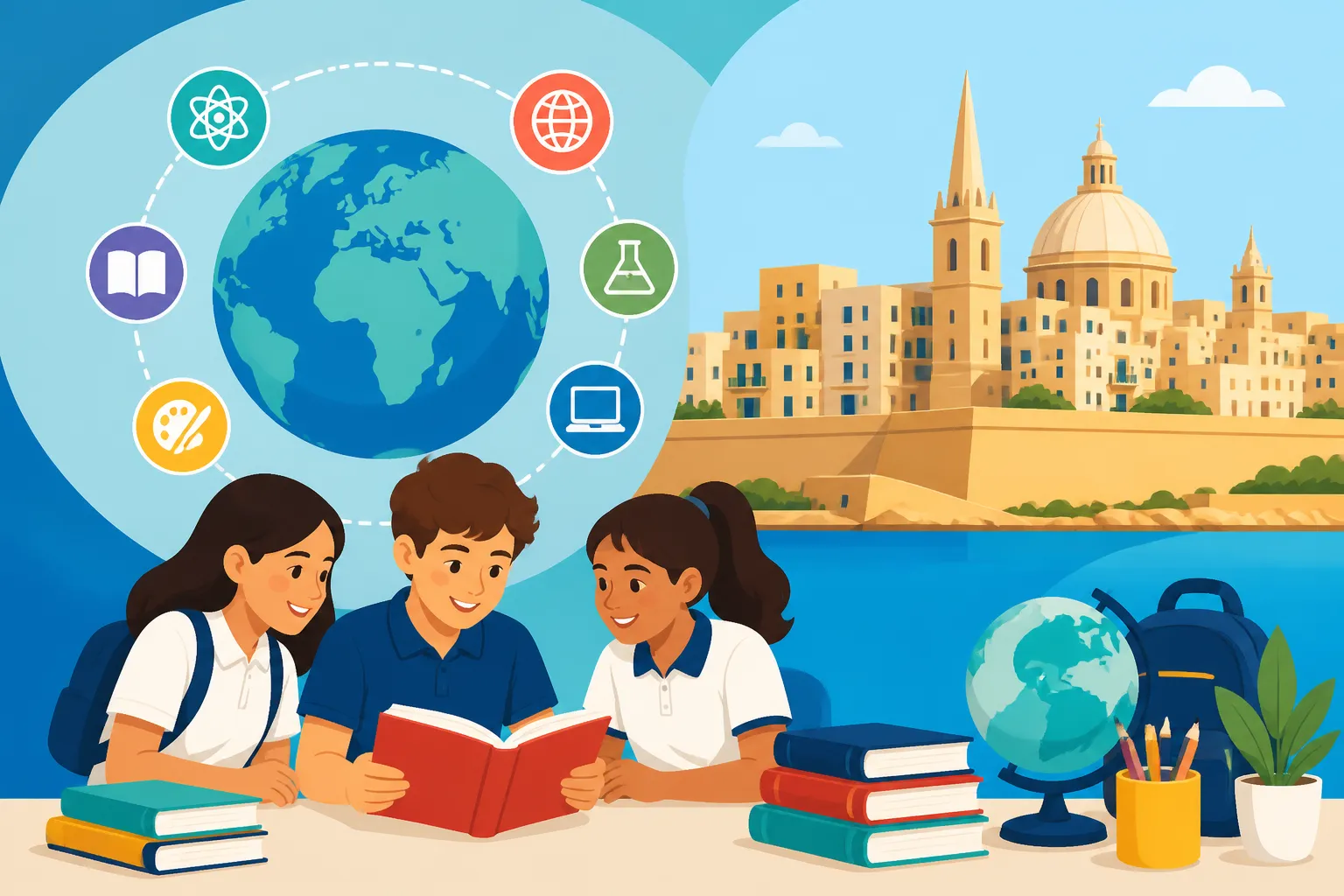
One of the biggest anxieties for any expat parent moving to a new country like Malta is undoubtedly ensuring their children receive a quality education that supports their development and future prospects. It’s a massive decision, picking the right school in a foreign land, and the public and church school systems here, while excellent for many, can feel a bit overwhelming if you’re not familiar with the local language and curriculum. This guide is here to walk you through the landscape of international schools and their diverse curricula available in Malta, helping you understand your options and make an informed choice for your family.
The Unique Appeal of International Schools for Expat Families in Malta
When you’re uprooting your family and settling into a new life on this beautiful island, the last thing you want is for your children to struggle academically or socially due to a radical shift in their schooling environment. Many families grapple with this, and it’s completely normal to feel a bit overwhelmed by the choices. This is where international schools often step in, offering a sense of familiarity and stability during what can already be a tumultuous time of transition.
Seeking Educational Continuity and Familiarity
Imagine your child has been thriving in a British curriculum school back home, or perhaps they’ve been part of an International Baccalaureate (IB) programme in another expat posting. The thought of them suddenly having to adapt to the Maltese national curriculum, which is primarily delivered in Maltese and English but with a different pedagogical approach, can be daunting. You worry about them falling behind, losing confidence, or simply feeling out of place. This is a very real and valid concern.
International schools in Malta are specifically designed to cater to this need for continuity. They typically offer globally recognised curricula like the International Baccalaureate (IB) or the British system (IGCSEs and A-Levels), which means your child can often pick up exactly where they left off. This consistency in curriculum, grading, and even teaching methods can be a huge relief, not just for your child but for you as a parent. It smooths the transition, reduces academic stress, and allows your child to focus on adapting to their new surroundings rather than battling an entirely new educational framework. For families who anticipate further international moves, this continuity is priceless, ensuring academic records and qualifications are easily transferable across borders. It eliminates the dreaded "lost year" often associated with major educational shifts and allows your children to maintain their academic trajectory without interruption.
A Multicultural Environment and English-Medium Instruction
Beyond the curriculum, the environment within an international school is often a major draw for expat families. Malts’s public schools are fantastic for local children and those looking for full immersion, but they are primarily geared towards the Maltese context. For many expat children, especially those coming from non-English speaking backgrounds or who have only ever learned in English, the language barrier in public schools can be a significant hurdle, at least initially.
International schools almost universally offer English as their primary language of instruction. This immediately removes a huge layer of complexity and stress for children who are already fluent in English. They can understand their teachers, engage with lessons, and communicate with their peers from day one. But it’s not just about language; it’s about the cultural melting pot that these schools represent. Your child will be in classrooms with students from dozens of different nationalities, each bringing their unique background and perspective. This diverse environment fosters a global mindset, broadens cultural understanding, and teaches invaluable lessons in empathy and cross-cultural communication – skills that are incredibly important for children growing up in our increasingly interconnected world. It’s like a mini-United Nations within the school gates, where differences are celebrated, and a shared sense of global citizenship is nurtured. This vibrant social scene also extends to parents, offering ready-made communities where you can connect with other expat families who understand exactly what you’re going through.
Exploring Malta's International Curricula: IB, British, and American Systems
When you start looking into international schools in Malta, you'll quickly realise that they don't all follow the same academic path. Just like back home, there are different curricula designed with various educational philosophies and future pathways in mind. Understanding these differences is key to choosing the right fit for your child. It’s not just about what sounds good on paper; it's about what genuinely aligns with your child's learning style and your family's long-term educational goals.
The Globally Recognised International Baccalaureate (IB) Programme
The International Baccalaureate, or IB, is a curriculum framework that has gained immense popularity worldwide, and for good reason. It's not just a collection of subjects; it's a holistic educational philosophy designed to develop well-rounded individuals who are critical thinkers, lifelong learners, and active global citizens. Believe me, you’ll hear a lot about it when you're looking at schools for your children.
The IB programme is structured across three main stages: the Primary Years Programme (PYP) for ages 3-12, the Middle Years Programme (MYP) for ages 11-16, and the Diploma Programme (DP) for ages 16-19. The PYP focuses on inquiry-based learning, encouraging young children to explore concepts and develop a strong foundation in key skills. The MYP builds on this, fostering critical thinking and interdisciplinary learning, often through projects that connect different subjects. Finally, the DP is a rigorous pre-university course that is highly respected by universities globally. It requires students to study a broad range of subjects, undertake a research project (Extended Essay), engage in community service (Creativity, Activity, Service – CAS), and explore the nature of knowledge (Theory of Knowledge – TOK). This comprehensive approach means students aren’t just memorising facts; they’re learning how to learn, how to think critically, and how to apply their knowledge in real-world contexts. If you're planning for your children to attend university abroad, particularly in North America or continental Europe, an IB Diploma can often provide a distinct advantage and simplify the application process, sometimes even earning them university credits before they even start their degree.
Familiarity and Rigour with the British Curriculum
For many families, especially those from the UK, the British Curriculum offers a reassuring sense of familiarity. It's a structured and progressive system that many of us grew up with, and its global presence means that schools in Malta offering this curriculum are often a straightforward choice for continuity. You know what you're getting, and that can be a huge comfort when you're navigating so many other changes.
The British Curriculum typically moves from Key Stages in primary education, building foundational literacy and numeracy skills, to a more specialised approach in secondary school. The most recognisable benchmarks are the International General Certificate of Secondary Education (IGCSEs) taken at age 16, followed by A-Levels at age 18. IGCSEs provide a broad base of knowledge across various subjects, allowing students to explore different interests before specialising. A-Levels, on the other hand, are more in-depth and typically involve studying 3-4 subjects in preparation for university. This specialisation can be a great fit for students who already have a clear idea of their academic passions and future career paths. The British system is known for its academic rigour and prepares students very well for universities in the UK, Europe, and many Commonwealth countries. The emphasis on individual subject mastery and standardised exams is something many parents appreciate, as it provides clear metrics of progress and achievement.
The American System: Flexibility and Broad Learning
While perhaps less common than the IB or British curricula in Malta, the American curriculum offers a distinct approach that can be a perfect fit for some families. It's often characterised by its flexibility, broader range of subject choices, and an emphasis on continuous assessment over high-stakes final exams. This can be particularly appealing if your child thrives in an environment that values participation, project-based learning, and a more well-rounded academic experience.
The American system typically culminates in a High School Diploma, which is recognised globally. Instead of rigid subject groupings, students often have more choice in the courses they take, allowing them to tailor their education to their interests and strengths. There’s usually a strong focus on core subjects like English, Math, Science, and Social Studies, but also plenty of electives in arts, sports, and technology. Grades are often based on a combination of assignments, quizzes, tests, and classroom participation throughout the year, which can reduce the pressure of single, make-or-break exams. This continuous assessment style can be beneficial for students who might not perform their best under intense exam conditions. For families considering US universities, this curriculum provides a direct pathway, and the High School Diploma is well understood by admissions committees. Furthermore, many American-curriculum schools place a significant emphasis on extracurricular activities, fostering leadership skills, teamwork, and community engagement, which are all highly valued in university applications.
Prominent International Schools in Malta: What to Expect
Now that you've got a grasp of the different curricula, let's talk about the specific international schools here in Malta. These aren't just names on a list; they are vibrant communities, each with its own character, facilities, and academic ethos. Choosing between them often comes down to a feeling, a gut instinct, after you’ve done your research. I highly recommend actually visiting them if you can, to get a real sense of the atmosphere.
Verdala International School: A Diverse IB Hub
Verdala International School (VIS) stands out as one of the most established and well-known international schools on the island, a true institution for expat families. Located in Pembroke, overlooking the Mediterranean Sea, its campus offers a fantastic setting. It’s often the first school many expat parents look into, and for good reason.
VIS is primarily an International Baccalaureate (IB) World School, offering the full continuum from the Primary Years Programme (PYP), through the Middle Years Programme (MYP), and culminating in the highly respected IB Diploma Programme (DP) for secondary students. This means that if you enroll your child at a young age, they can experience a consistent educational philosophy right through to graduation. The school prides itself on its incredibly diverse student body, representing over 50 nationalities. This multicultural environment is truly enriching, exposing students to a broad range of perspectives and fostering a global outlook. Facilities at VIS are generally excellent, including modern classrooms, science labs, art studios, a theatre, sports facilities, and a swimming pool. The application process is thorough, typically involving previous school reports, teacher recommendations, and often an assessment or interview for the child. Due to its popularity and the relatively small size of Malta, waiting lists can be a factor, particularly for certain year groups, so applying early is always advisable. The academic year generally runs from late August/early September to early June.
St Edward's College: Tradition Meets Modern British Education
St Edward's College, nestled in the historic Three Cities area of Birgu (Vittoriosa), offers a unique blend of tradition and modern education. It’s a truly beautiful setting with impressive historic buildings, making for a rather grand learning environment. For a long time, St Edward's was known as an all-boys school, but it has gradually transitioned to co-education in its early years, with plans to expand further, reflecting a more inclusive approach.
The college primarily follows the British curriculum, preparing students for IGCSEs and A-Levels, which, as we discussed, is a popular choice for families seeking continuity with the UK system. However, they also offer the International Baccalaureate Diploma Programme (IBDP) in the Sixth Form, providing students with a choice of pathways for university entry. This flexibility is a huge advantage, allowing students to opt for the curriculum that best suits their strengths and future aspirations. St Edward's has a strong emphasis on character development, sports, and extracurricular activities, often leveraging its historic grounds for various clubs and pursuits. While not exclusively expat, it has a significant international student population, creating a diverse yet close-knit community. Parents often praise its traditional values coupled with a forward-thinking academic approach. Like VIS, it’s a well-respected institution, and places can be competitive, so early engagement with their admissions team is recommended to understand their specific entry requirements and any potential wait times.
QSI International School of Malta: Focused American Academics
For families specifically seeking an American-style education, the QSI International School of Malta in Mosta is the primary option. QSI is part of a larger network of Quality Schools International, which operates schools in many countries where there is a need for an American curriculum for globally mobile families. This network provides a consistent educational model across its schools, which is a big plus if you've been at another QSI school previously or anticipate moving to a city with one.
QSI Malta focuses on providing an intensive, mastery-based American curriculum. This means that instead of simply moving on when the academic year ends, students are expected to achieve a certain level of understanding in a topic before progressing. This approach ensures a strong foundation in core subjects. The school typically caters to students from elementary through secondary, culminating in a US High School Diploma. Class sizes are often smaller than other schools, allowing for more individualised attention from teachers, which can be incredibly beneficial for students adapting to a new country or who simply thrive with more one-on-one support. Their programme is designed to prepare students for entry into universities in the United States and elsewhere. QSI schools are known for their commitment to academic excellence and for supporting students as they transition between international postings. The school community often feels very close-knit due to its size, which can be a comforting factor for children who are frequently moving. If you value a clear, mastery-focused American curriculum, QSI Malta is certainly one to explore.
| School Name | Primary Curriculum | Location | Indicative Annual Tuition Range (2024/2025) | Key Features |
|---|---|---|---|---|
| Verdala International School | IB (PYP, MYP, DP) | Pembroke | €9,000 – €18,000+ | Full IB continuum, highly diverse student body, excellent facilities, strong university preparation. |
| St Edward's College | British (IGCSE, A-Level), IBDP (Sixth Form) | Birgu | €6,000 – €10,000+ | Historic campus, co-ed in early years, strong emphasis on character, sports, choice of pathways. |
| QSI International School of Malta | American | Mosta | €12,000 – €24,000+ | Mastery-based learning, small class sizes, individualised attention, US High School Diploma focus. |
Note: Tuition fees are indicative and subject to change annually. Always contact the schools directly for the most accurate and up-to-date fee schedules.
Navigating the Admissions Process and Financial Commitments
So, you've identified a few international schools that pique your interest. Excellent! Now comes the practical part: getting your child in and understanding what it's all going to cost. This stage can feel like another mini-adventure in itself, filled with forms, deadlines, and a fair bit of number crunching. But don't worry, it's a well-trodden path for expat families.
Understanding Application Steps and Essential Documents
The application process for international schools in Malta generally follows a similar pattern, but each school will have its own specific requirements and nuances. The golden rule, based on my own experience and that of countless others, is to start early. Seriously, as soon as you know you're moving to Malta, get those applications in motion. Some schools, especially for popular year groups, fill up incredibly quickly.
Typically, you'll start by filling out an online inquiry or application form. This will be followed by a request for a comprehensive set of documents. Expect to provide copies of your child's passport and birth certificate, as well as yours. Crucially, you'll need detailed academic records from their previous school, usually for the past two to three years. These should include transcripts, report cards, and any standardised test results. Most schools will also ask for confidential teacher recommendations, particularly from current or previous headteachers or subject teachers. Some schools may also require a personal statement from the student, especially for older children applying to secondary or IB Diploma programmes. Finally, expect some form of assessment. This could be an interview, an online entrance exam, or an in-person assessment, depending on the child's age and the school's policy. The schools are looking for academic readiness but also for an indication that your child will thrive in their specific environment. Ensure all documents are in English, or officially translated if not.
The Real Cost: Tuition Fees and Hidden Expenses
Let's talk money, because international schooling is undoubtedly a significant financial investment. The tuition fees for international schools in Malta are comparable to those in other European countries, and they are generally much higher than the nominal costs associated with Malta's public or even church schools. This is definitely a factor that weighs heavily on every expat family's budget.
As indicated in the table above, annual tuition fees can range quite considerably depending on the school, the curriculum, and the child's year group. For instance, you might be looking at anywhere from €6,000 for younger primary years at some schools, soaring up to €24,000 or more for older secondary students in others. But here’s the kicker: tuition fees are rarely the only expense. You'll often encounter a one-off application fee (non-refundable), a registration or enrolment fee upon acceptance, and a capital levy or development fund contribution. Then there are the recurring annual costs: uniforms (often specific to the school), school transport (if you opt for it, which many do given Malta's roads!), textbooks, specific stationery or technology requirements (like iPads or laptops), and a plethora of extracurricular activities, clubs, and school trips. Don't forget school lunches, if they're not included in the basic fee. It's vital to get a full breakdown of all potential costs from the admissions office to avoid any nasty surprises down the line. Budgeting for the actual cost of living in Malta and incorporating these school fees can be a complex task, and it is something to meticulously plan for.
Daily Logistics: Transport, Activities, and Parent Involvement
Once your child is in, the daily grind of school life begins, and this comes with its own set of logistical considerations. Malta is a small island, but traffic can be… character-building, shall we say? So, thinking about how your child gets to school is important.
Most international schools offer organised school transport, often with dedicated bus routes covering various parts of the island. This is a popular option for many expat families, as it frees up parents from the daily school run and provides a safe, reliable way for children to commute. Alternatively, you might choose to drive them yourself, which means factoring in travel time and parking, especially in busier areas. Consider how services like Airalo, for reliable eSIMs, could keep you connected for navigation or school communication on the go, making those school runs a little smoother. Beyond transport, international schools typically boast a wide array of extracurricular activities, from sports teams and music lessons to drama clubs and academic societies. These activities are incredibly important for helping children settle in, make friends, and pursue their passions. They're also fantastic opportunities for parents to get involved, perhaps by volunteering or attending school events, which can help you build your own social network in Malta. Attending parent-teacher associations, school fetes, and sports days will not only show your children you're engaged but also connect you with other parents who are in the same boat, navigating expat life with kids.
Beyond International Schools: Other Educational Avenues in Malta
While international schools offer a fantastic pathway for many expat families, they are by no means the only option. It’s important to remember that Malta has a robust local education system, and for some families, it might actually be a better fit, offering different advantages. It’s all about finding what works best for your unique circumstances and your child’s personality.
Malta's Public and Church School Systems: A Local Immersion
Malta's educational landscape is primarily divided into three categories: state (public) schools, church schools, and independent (private, which include most international schools) schools. The state and church schools educate the vast majority of Maltese children and are largely free at the point of use for residents. This can be a huge financial relief for families compared to the significant costs of international schooling.
State schools are government-funded and follow the Maltese national curriculum, with instruction predominantly in Maltese and English. Church schools, also state-funded and free, are run by the Catholic Church and also follow the national curriculum, often with a strong emphasis on religious and moral education. For non-Maltese speaking children, entry into state or church schools can involve additional language support, particularly in the early years. The biggest advantage here is full immersion into Maltese culture and language, which can be invaluable for children who are staying long-term and for families who want to fully integrate into local life. While challenging at first, particularly with the Maltese language component, children are incredibly adaptable, and many expat kids thrive in these environments, quickly picking up the local language and making Maltese friends. It’s a route that demands more of the child initially, but the rewards in terms of cultural integration can be immense.
Weighing the Pros and Cons of Different Schooling Paths
Deciding between an international school and a local school system is not a trivial matter, and it comes with a complex set of pros and cons that only your family can truly weigh. Families often agonise over this, and there's no single right answer.
Opting for an international school offers the benefits of curriculum continuity, English-medium instruction, diverse peer groups, and often excellent facilities, preparing students for global university pathways. This path generally eases the academic transition for children coming from similar systems. However, the financial cost is substantial, and children might have less exposure to everyday Maltese life and language, potentially creating a "bubble" effect. On the other hand, enrolling your child in a state or church school means zero tuition fees (beyond incidental costs like uniforms or school trips), deep cultural immersion, and the invaluable opportunity to become fluent in Maltese, which can be a huge asset for future life and work on the island. The downside can be the initial language barrier if your child doesn't speak Maltese, a curriculum that might differ significantly from what they're used to, and potentially larger class sizes. Some parents also worry about the breadth of extracurricular activities compared to international schools, although many local schools have robust offerings too.
Ultimately, the choice comes down to your family's priorities. Is immediate academic continuity and a multicultural environment paramount, even with the higher cost? Or is deep cultural integration, language acquisition, and financial savings a higher priority, even if it means a tougher initial transition? It's a deeply personal decision that requires careful thought about your child's personality, your family’s long-term plans in Malta, and your financial situation. Many expat families, if they plan to stay long-term, might even consider starting in an international school and transitioning to a local one later, or vice-versa, depending on how their children adapt and their linguistic progress. To prepare for your move, platforms like Sirelo can help manage the logistics, so you can focus more on these important decisions.
Making the Best Educational Decision for Your Family in Malta
Making an educational decision for your children when moving country is a monumental task. It’s not just about finding a good school; it’s about finding the right school, one that will nurture your child, challenge them appropriately, and set them up for future success, all while adapting to a new country. There’s no magic formula, but by carefully considering several factors and doing your homework, you can confidently choose the best path for your family.
Key Factors to Consider for Your Child's Success
When you’re sifting through brochures and websites, it's easy to get caught up in the glossy images of happy children and impressive facilities. But dig deeper. Think about your child as an individual. What are their unique needs? Do they thrive in a highly structured environment, or do they benefit from more flexibility and inquiry-based learning? A child who is naturally shy might struggle more with a sudden immersion into a completely foreign language system, whereas a resilient, outgoing child might flourish.
Consider their previous educational background. If they’ve been in a British system their whole life, transitioning to an IB programme might be smoother than to a purely American one, or vice-versa. Also, think about your family's future plans. Do you anticipate moving again in a few years to another country with a different curriculum? If so, a globally transferable curriculum like the IB or a widely recognised national curriculum might offer better continuity. If Malta is your forever home, or at least a very long-term one, then investing in learning Maltese and fully integrating into the local school system might be a more attractive option. Lastly, and let’s be brutally honest here, your family budget is a huge factor. International school fees are a significant commitment, and you need to be realistic about what you can comfortably afford without undue stress. Sometimes, a slightly less expensive independent school might be a better fit if it means you can maintain a good quality of life outside of school hours. Exploring all these angles is part of finding a balanced solution for your family.
The Importance of Research, Visits, and Community Insights
The internet is a powerful tool, but nothing beats firsthand experience and real-world advice when it comes to choosing a school. I cannot stress enough how important it is to do thorough research and, if at all possible, visit the schools you're considering. This gives you a true feel for the campus, the classrooms, and the overall atmosphere. Engage with the admissions staff, ask probing questions about class sizes, teacher-to-student ratios, support for special educational needs, and how they integrate new students. If they offer an open day or a virtual tour, take advantage of it. It's an opportunity to see the school in action and to picture your child there.
Beyond official channels, leverage the expat community in Malta. Join online forums, Facebook groups, and local expat meetups. Ask other parents about their experiences. They’ll offer honest, unfiltered insights into everything from the quality of teaching and pastoral care to the school run woes and the true cost of uniforms. Sometimes, the best advice comes from someone who has already walked a mile in your shoes. These networks can also provide valuable information on other aspects of raising children in Malta, such as childcare options or where to find family-friendly activities. Every school has its strengths and weaknesses, and what works beautifully for one family might not be the right fit for another. By combining official information with anecdotal evidence from trusted sources, you can build a comprehensive picture and make a decision that feels right for your family and, most importantly, for your child.
Disclaimer
Please remember that while this guide aims to provide comprehensive and up-to-date information, circumstances and regulations in Malta can change. School fees, curricula, and admissions policies are subject to review by individual institutions and government bodies. It is always recommended to verify all information directly with the respective international schools and relevant Maltese authorities for the most current and accurate details before making any decisions.