Driving in Malta: Licences, Roads, and Buying a Car
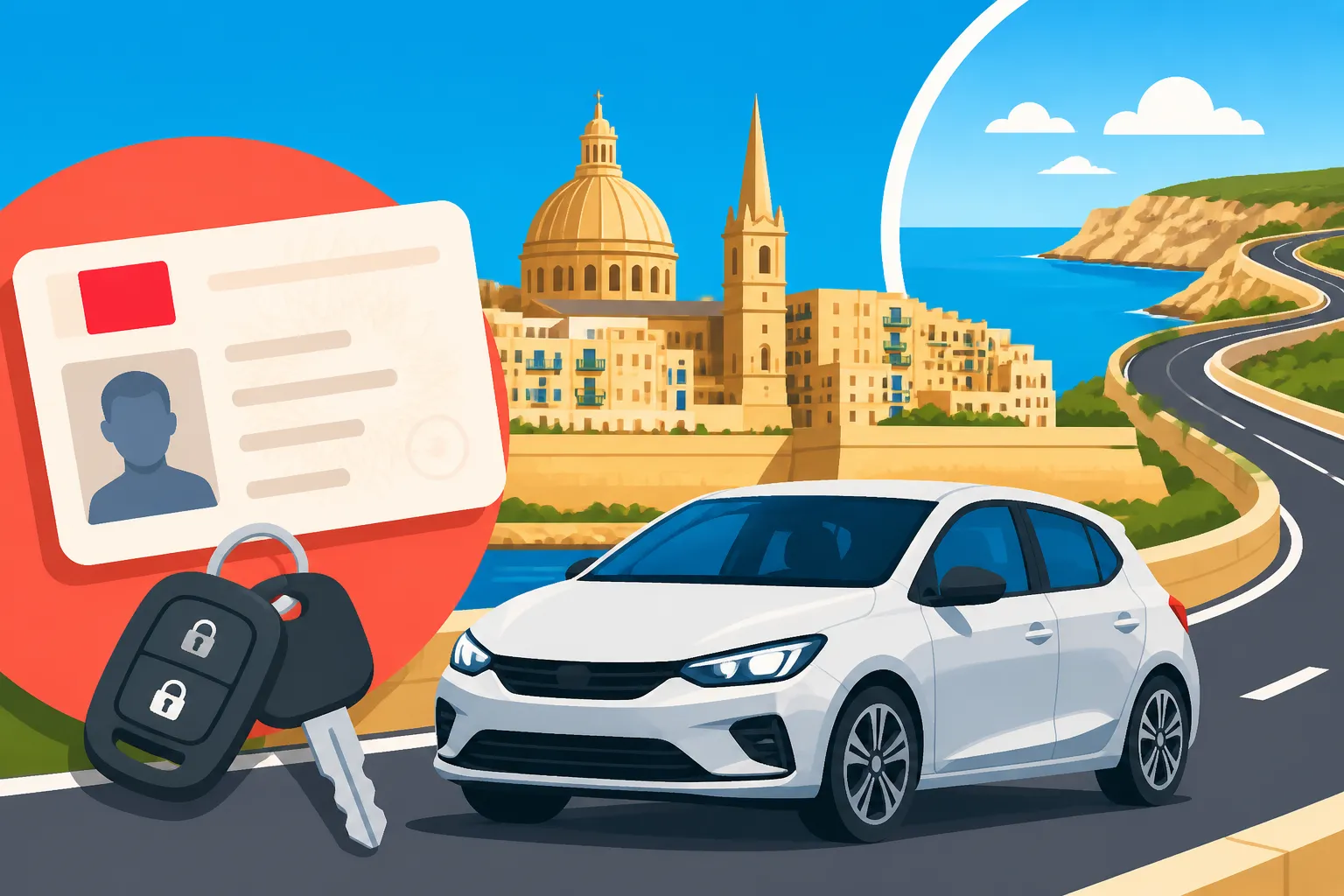
The moment you land in Malta, the bustling streets and somewhat… unique… approach to traffic can be a real eye-opener. From navigating the seemingly endless roadworks to deciphering the unwritten rules of the road, it’s enough to make even seasoned drivers think twice. This guide is here to untangle the complexities of driving in Malta, covering everything from exchanging your foreign licence to understanding local road etiquette and finding your perfect set of wheels.
Navigating Driving Licences for Expats in Malta
Getting your head around the driving licence rules when you first arrive can feel like a bureaucratic maze, especially if you’ve just moved here. Malta has specific regulations depending on where your original licence was issued and how long you plan to stay. It's crucial to get this right from the start to avoid any headaches or, worse, fines.
Using Your Foreign Driving Licence in Malta
When you first land, you’re usually able to use your existing driving licence for a certain period, but the specifics vary. If you’re from an EU/EEA member state, good news! Your licence is generally recognised and valid in Malta indefinitely, as long as it’s current and you're within the legal age to drive the relevant vehicle category in Malta. You don’t have to exchange it, though many opt to after settling in for ease of administration.
For those of us from outside the EU/EEA, the rules are a bit different. Typically, you can use your foreign driving licence for a period of up to twelve months from the date you establish ordinary residence in Malta. This means you can get a feel for the local roads and decide if driving is for you without immediate pressure. However, it’s often highly recommended, and sometimes legally required depending on your country of origin, to carry an International Driving Permit (IDP) alongside your national licence, especially if your licence isn't in English or Maltese. The IDP essentially acts as a translation and official validation of your licence for foreign authorities. Be sure to check the specific requirements for your country with Transport Malta as soon as you can, as the rules can be subject to change and exceptions. This initial grace period is great for getting oriented, but don’t let it lull you into a false sense of security; the clock starts ticking the moment you become a resident.
Exchanging Your Driving Licence to a Maltese One
Once you’ve been here for a while and established your residency, if you’re a non-EU/EEA national, or if you simply prefer the convenience, you’ll need to exchange your foreign licence for a Maltese one. The process, like much of the local admin, requires patience and meticulous documentation. First, you’ll need to prove you’ve been ordinarily resident in Malta for at least 185 days in the last 12 months. This is where your eResidence card becomes absolutely essential.
The actual application involves a trip to Transport Malta in Paola, which can sometimes feel like a pilgrimage. You’ll need to fill out specific application forms (DRV40 and DRV45), present your original driving licence, your eResidence card, and a recent passport-sized photograph. Expect to also provide a medical certificate (Form DRV/MED) from a Maltese doctor, certifying that you are fit to drive. For some countries, especially those outside the EU/EEA, you might even need a letter from your country's driving authority confirming the validity and categories of your original licence. There’s a fee involved, of course, and once everything is submitted, it can take several weeks or even a few months for your new Maltese licence to be issued. It’s worth noting that British citizens, post-Brexit, also generally need to exchange their UK licences for Maltese ones after a certain period of residency. The good news is that Malta has reciprocal agreements with many countries, meaning you won't usually have to retake your driving test if you're exchanging an existing valid licence. You can find more specific details on the process in this guide: Importing or Exchanging Your Driving Licence in Malta.
Applying for a Maltese Driving Licence from Scratch
In some cases, exchanging your foreign licence simply isn’t an option. This applies to individuals whose original licence isn’t from a country with a reciprocal agreement with Malta, or if you’ve let your initial 12-month period expire without exchanging your non-EU/EEA licence. In such scenarios, you’ll have to apply for a Maltese driving licence from scratch, just like a new driver. This means undergoing the full process of obtaining a learner's permit, taking both a theory test and a practical driving test.
The theory test is a multiple-choice exam covering Malta's road rules, signs, and general driving safety. There are plenty of resources online and through driving schools to help you prepare. Once you pass the theory, you can get a learner's permit, which allows you to drive with a qualified instructor or another licensed driver over the age of 25 who has held their licence for at least five years. This is your chance to get comfortable with Malta’s unique driving environment. The practical test assesses your driving skills, adherence to road rules, and ability to navigate various traffic situations. Many expats choose to enroll in a local driving school to get professional instruction and increase their chances of passing the tests, as instructors are well-versed in what the examiners look for. It's a longer, more involved process, but it's the only route if your existing licence isn't eligible for exchange.
Understanding Malta's Road Network and Driving Culture
Driving in Malta is an experience, to say the least. It’s a mix of stunning coastal drives, charming village streets, and urban traffic that can test the patience of a saint. Getting to grips with the road network and understanding the local driving culture is key to a smoother journey.
Road Conditions and Infrastructure
Malta’s road infrastructure has seen significant investment in recent years, with new bypasses and widened roads improving connectivity, especially in the central areas. However, for every new stretch of smooth tarmac, you'll find plenty of older roads that tell a different story. Many village roads are incredibly narrow, often barely wide enough for two cars to pass comfortably, especially if there are parked vehicles on either side. Potholes can still be a common sight, particularly after heavy rains, so keep an eye out. In historic town centres, like Valletta or Mdina, cars are often restricted or prohibited altogether due to the pedestrian-friendly and ancient nature of the streets.
Away from the main arterial routes, you might also encounter roads where pavements are non-existent or cars are parked haphazardly, forcing pedestrians into the road. Construction is a constant, with cranes and roadworks signs being almost as common as the ubiquitous Maltese buses. These works, while ultimately aimed at improving the infrastructure, can lead to frequent diversions, sudden lane closures, and unexpected delays, so always build in extra time for your journeys. It's truly a mixed bag, and flexibility is your best friend when behind the wheel here.
Local Driving Habits and Etiquette
Okay, let's talk about the driving. Maltese driving culture is, shall we say, spirited. You’ll quickly learn that indicators are often seen as optional, and horn usage is more common than in many other European countries – sometimes to signal impatience, sometimes as a friendly greeting, and sometimes just because. Drivers can often be quite assertive, and defensive driving is less a suggestion and more a survival strategy. Don’t be surprised by last-minute lane changes or drivers pulling out without much warning.
Parking, or the lack thereof, heavily influences driving habits. Drivers will often double-park, squeeze into impossibly small spaces, or stop momentarily in traffic to pick someone up, creating bottlenecks. Roundabouts, in particular, seem to have their own set of unwritten rules that defy conventional European logic; expect cars to enter from any lane and often without indicating. Pedestrians also tend to cross wherever and whenever, so constant vigilance is required. On the plus side, most drivers are surprisingly accommodating if you need to merge or turn, often flashing their lights as a sign to go ahead, though this can sometimes be ambiguous. Just try to go with the flow, don't take anything personally, and remember that everyone is just trying to get from A to B in their own way.
Key Traffic Regulations and Rules of the Road
Despite the informal etiquette, Malta does, of course, have formal traffic regulations. Crucially, Malta drives on the left-hand side of the road, and cars are right-hand drive, a legacy of British rule. This can be a significant adjustment for those coming from right-hand traffic countries. Speed limits are generally 50 km/h in urban areas, 80 km/h on open roads, and sometimes lower in specific zones or tunnels. Always pay attention to road signs, as these can vary.
Parking rules are strictly enforced, particularly in popular areas like Sliema and St Julian's. Yellow lines mean no parking or stopping at any time. Blue boxes usually indicate paid parking or residents-only parking during certain hours, while white boxes are general parking. Keep an eye out for signs detailing restricted hours or permit requirements. Seatbelts are mandatory for all occupants, and using a mobile phone while driving is strictly prohibited, unless hands-free. Drink-driving laws are also in effect, with legal alcohol limits that are regularly enforced. While the roads can feel a bit chaotic, adhering to the official rules will keep you on the right side of the law.
The Process of Buying a Car in Malta
Deciding to buy a car in Malta is a big step, often driven by the desire for more independence and convenience, especially if you live in an area not well-served by public transport. The process involves understanding the local market, legal requirements, and ongoing costs.
New vs. Second-Hand Cars: Pros and Cons
The choice between a new and a second-hand car largely depends on your budget and how long you plan to stay. New cars offer reliability, the latest features, and a warranty, but they come with a higher price tag and significant depreciation. Malta has various official dealerships for popular brands like Toyota, Volkswagen, and Mercedes, but the selection might not be as vast as in larger European markets. Import duties and registration taxes can also make new cars relatively more expensive than in some other countries.
Second-hand cars are a very popular option in Malta due to their lower upfront cost. The market is quite active, with options ranging from private sellers to used car dealerships. Websites like Maltapark are popular for finding private sales, while established dealerships offer more peace of mind with guarantees and a formal sales process. When buying second-hand, a thorough inspection is crucial. Consider having a trusted mechanic check the vehicle, especially for rust (given the humid climate) and any accident history. Ensure the VRT (Vehicle Roadworthiness Test) certificate is up-to-date and check its past records with Transport Malta. The age and mileage, coupled with the driving conditions here, can significantly impact the car's condition. While a new car is shiny and hassle-free, a well-chosen second-hand car offers excellent value in Malta.
Vehicle Registration, Licencing, and Insurance
Once you’ve found your perfect car, the next step is transferring ownership and getting it legally on the road. The transfer of ownership happens at Transport Malta, requiring both the buyer and seller to be present, or at least have correctly completed the transfer form (Form VEH50) and signed it in front of a lawyer or notary if not both present. You'll need your eResidence card and the car's logbook (registration certificate). There's a transfer fee, which is usually a percentage of the car's value or a flat fee, depending on its age and engine size.
Alongside the transfer, you’ll need to ensure the car has a valid annual road licence (also known as circulation tax or road tax). This fee varies based on the car's engine size, age, and carbon emissions. It's paid annually, and you'll receive a reminder via post or email. Without a valid road licence, you cannot legally drive the car. Finally, mandatory third-party insurance is essential. Several providers operate in Malta, including reputable names like Mapfre Middlesea and GasanMamo. Shop around for quotes, as prices can vary. If you have a no-claims bonus from a previous country, it might be recognised here, so be sure to get proof from your previous insurer. Some non-EU citizens might find insurance slightly more expensive initially. Remember, your car also needs to pass a VRT inspection every two years (or annually if older), which ensures it meets road safety and environmental standards.
Additional Costs and Considerations
Owning a car in Malta involves more than just the purchase price and insurance. Fuel prices can fluctuate, but generally, they are comparable to other parts of Europe. Maintenance costs are also a factor; given the wear and tear from local roads and stop-start traffic, regular servicing is vital. Garages are plentiful, and mechanics are generally skilled, but it’s always wise to find a reputable one through recommendations.
Parking, as we've already touched upon, can be a constant battle, especially in high-density areas. Factor in potential parking fines if you're not careful. If you plan to visit Gozo frequently, remember to factor in the Gozo ferry costs, which apply per vehicle and driver. Resale value is another consideration. While popular models tend to hold their value reasonably well, less common cars might be harder to sell when you eventually decide to leave the island. If you're considering bringing your own car from abroad, be prepared for potentially complex import regulations, duties, and registration taxes, which can sometimes make it financially unviable compared to buying locally. It's often easier to sell your car before moving and then consider buying one here.
Parking and Tolls: Navigating Malta's Urban Landscape
Parking in Malta often feels like a competitive sport. In densely populated areas, finding a spot can be a daily challenge that impacts your route planning and overall stress levels. While actual toll roads don't exist, there are other access fees to be aware of.
Parking Solutions in Busy Areas
The most sought-after parking spots are usually the free ones, marked by white boxes. Good luck finding them in popular towns like Sliema, St Julian's, or certain parts of Mosta! These areas often have controlled parking zones. Blue boxes typically indicate timed parking where you'll need to use a parking disc (often available for free from local shops or Transport Malta) to display your arrival time, allowing you to park for a limited period, usually 1-2 hours. Some blue zones are exclusively for residents with permits during certain hours. Yellow lines, as mentioned, are no-parking zones and are strictly enforced.
If street parking proves impossible, your next best bet is public or private car parks. These are usually paid, either by the hour or with a flat daily rate. Examples include the multi-storey car parks in Sliema, Valletta, and Floriana. While they offer peace of mind, the costs can add up quickly. Some local councils also offer residential parking permits, which allow residents to park in designated zones near their homes without time limits, but these are only available to registered residents and often involve an application process. For those relying heavily on their phones, apps like Maltaparking can sometimes help locate available spaces or facilitate payment in certain areas, though their coverage might vary. The eternal quest for a parking spot is a truly Maltese experience!
Understanding Local Enforcement and Fines
Local wardens and police are quite vigilant when it comes to parking infringements. Ignoring yellow lines, overstaying in a blue zone, or parking illegally (e.g., blocking driveways, double-parking, parking on a pavement) will almost certainly land you with a ticket. The fines can be hefty, often starting from €25-€35 for minor infractions and escalating for more serious offences or repeat offenders. Wardens often use handheld devices to issue electronic tickets, which are then mailed to the vehicle's registered owner.
It's important to pay fines promptly, as delays can lead to increased penalties and even points on your driving licence. You can usually pay fines online through the Local Enforcement System Agency (LESA) website or at local council offices. In more extreme cases, illegally parked vehicles, especially those causing obstructions, may be towed away or clamped. Retrieving a towed vehicle involves significant fees for both the towing and daily storage, plus the original fine, so it’s an expense best avoided. Always double-check parking signs and road markings, especially when in an unfamiliar area.
No Toll Roads, But Other Fees Apply
Unlike many other European countries, Malta does not have traditional toll roads where you pay a fee to drive on a specific highway. This is a small island, and the road network is relatively compact. However, there is a controlled vehicular access (CVA) scheme in place for Valletta.
The CVA system operates for vehicles entering the capital city of Valletta during certain hours. Cameras at entry points record vehicles, and a fee is charged based on the time spent inside the CVA zone. The first 30 minutes are usually free, and charges apply for longer stays, up to a maximum daily amount. Residents and certain vehicle types might be exempt or have reduced rates. You can check your CVA charges and pay them online, or you might receive a bill in the post. Failure to pay CVA charges can also result in fines. Additionally, as mentioned previously, if you frequently travel between Malta and Gozo with your car, you'll need to factor in the ferry costs. The Gozo ferry operates regularly, and while the passenger fare is paid on the return journey, the vehicle fare is usually paid upon boarding from Cirkewwa. For internal travel convenience within the country, having a reliable internet connection on your phone is crucial, and providers like Airalo can offer eSIM options to ensure you're always connected without hassle.
Essential Tips for Safe and Stress-Free Driving in Malta
Driving in Malta can be an adventure, but a few practical tips can make it a much less stressful and safer experience. From navigating unfamiliar routes to handling unexpected situations, being prepared is key.
Planning Your Routes and Using Navigation Apps
Don't underestimate the usefulness of navigation apps like Google Maps and Waze here, but also understand their limitations. While they are indispensable for turn-by-turn directions and real-time traffic updates, Malta's unique road characteristics can sometimes outwit them. Very narrow village streets, sudden diversions due to construction, or roads that seem to exist only in theory can sometimes lead to interesting detours. Always have a rough idea of your route and perhaps a secondary option.
When planning, try to avoid peak hour traffic, especially around the major urban corridors connecting areas like Msida, Birkirkara, and St Julian's. Mornings (around 7:00-9:00 AM) and evenings (around 4:00-6:00 PM) can see significant congestion. If you need to make an important appointment, give yourself ample buffer time. Staying updated on current roadworks is also beneficial; local news outlets and Transport Malta often announce major closures or diversions. Having a reliable mobile data connection for your navigation app is non-negotiable, and using a portable Wi-Fi device or an eSIM from a provider like Airalo can be a lifesaver.
Staying Prepared for Emergencies
No one wants to think about breakdowns or accidents, but being prepared is vital. Most car insurance policies offer roadside assistance, so make sure you know your provider’s emergency number. The Malta Automobile Club (MTA) also offers breakdown services and membership plans. Keep these numbers stored in your phone and perhaps a physical copy in your glove compartment.
In the unfortunate event of an accident, ensure your safety and the safety of others first. If it's a minor bump without injuries, and the cars can be moved, try to exchange details quickly and move to the side of the road to avoid further obstruction. Always take photos of the scene and damage from multiple angles. If there are injuries or significant damage, call 112 immediately for emergency services (police, ambulance). Then, contact your insurance company. Having a small first-aid kit, a reflective vest, and a warning triangle in your car is highly recommended, though not strictly mandatory for private vehicles in Malta. Knowing what to do in these situations can significantly reduce stress and ensure proper procedures are followed.
Defensive Driving and Patience
We’ve touched on the "spirited" nature of Maltese driving, and the best way to counteract it is with an unwavering commitment to defensive driving and an abundance of patience. Always assume other drivers might make unexpected moves. Keep a safe distance from the car in front, even if others are tailgating you. Be extra cautious at junctions and roundabouts, making sure you’ve made eye contact or confirmed intentions with other drivers if possible.
Patience is perhaps the most important virtue you can adopt behind the wheel in Malta. Traffic jams are frequent, parking is scarce, and drivers can be unpredictable. Getting frustrated won't make the traffic move faster; it will only make you miserable. Use the time to listen to a podcast, some music, or simply observe the world outside your window. Summer driving brings its own challenges, with intense heat, bright sunshine, and increased tourist traffic. Make sure your car's air conditioning is in good order, always carry water, and take breaks if you're feeling tired or overwhelmed. Embrace the relaxed Mediterranean pace, even when driving, and you’ll find the experience much more enjoyable.
Is Driving a Car in Malta Really Necessary?
This is a question many expats ponder shortly after arriving. While a car offers undeniable freedom, it also comes with its own set of burdens. Weighing these factors against Malta's compact size and developing public transport system is crucial for making the right choice for your lifestyle.
Weighing the Pros and Cons of Owning a Car
Let's be honest, having your own car in Malta offers unparalleled freedom and convenience. You're not beholden to bus schedules, you can explore the quieter, more remote parts of the island or Gozo at your leisure, and it's particularly helpful for families with children or anyone with mobility issues. Grocery shopping becomes a breeze, and weekend trips to the beach or countryside are effortlessly planned. It certainly makes daily life simpler for many.
However, the cons are equally significant. The initial cost of buying a car, along with ongoing expenses like insurance, annual road tax, fuel, and maintenance, can add up. Then there's the relentless challenge of finding parking, which can turn short errands into frustrating sagas. Traffic congestion, especially during peak hours in urban areas, can be a major source of stress and delay. Environmentally, adding another car to Malta's already crowded roads contributes to pollution and noise. For some, the financial and mental toll of car ownership simply outweighs the benefits. Thinking about your commute, where you live, and your personal priorities is key. If you're pondering a move and all these logistics, companies like Sirelo can offer broader guidance on moving services to Malta, helping you plan effectively.
Alternative Transportation Options
For those who decide against car ownership, or simply want to reduce their reliance on a private vehicle, Malta offers a growing number of alternative transportation options. The public transport network, operated by Malta Public Transport, covers most of the island and Gozo. With the introduction of free bus travel for Tallinja card holders (which includes residents who apply for the personalised card), it has become an incredibly cost-effective way to get around. While buses can be prone to delays and sometimes get very crowded, especially in summer, they are a viable option for many daily commutes and leisure trips. You can learn more about this by checking out Public Transport in Malta: Free Bus Travel and the Tallinja Card.
Beyond buses, ride-hailing apps like Bolt and eCabs are widely available and popular, offering convenient, on-demand transport at competitive prices. For shorter distances or specific needs, car-sharing services like GoTo and Wheels Malta provide access to vehicles for short periods, allowing you the flexibility of a car without the commitment of ownership. These services often have dedicated parking spots, mitigating some of the parking headache. For the adventurous, walking and cycling are options, though they come with caveats: Malta’s hilly terrain, narrow roads, and sometimes challenging pedestrian infrastructure mean these aren't always the most comfortable or safest choices, especially outside dedicated paths. Ultimately, Malta's compact size means that even without a personal car, you can still get around quite effectively with a bit of planning and adaptability.
| Aspect | Own Car (Pros) | Own Car (Cons) | Alternatives (Pros) | Alternatives (Cons) |
|---|---|---|---|---|
| Flexibility & Convenience | Go anywhere, anytime; ideal for remote areas. | Traffic congestion; parking challenges. | On-demand ride-hailing; free bus travel for residents. | Bus delays/crowding; less spontaneity. |
| Cost | High initial purchase; ongoing insurance, tax, fuel. | Depreciation; maintenance costs. | Free/low cost (Tallinja); ride-hailing can be cheaper. | Can add up for frequent ride-hailing. |
| Parking | Constant struggle to find spaces; fines. | Dedicated spots for car-sharing. | No parking worries. | Limited by bus routes/schedules for some areas. |
| Travel to Gozo | Drive directly onto ferry. | Ferry costs for vehicle. | Walk-on ferry passenger. | Need separate transport on Gozo. |
| Environmental Impact | Contributes to pollution & traffic. | Personal choice, but adds to urban congestion. | Reduces personal carbon footprint. | Buses still contribute to emissions. |
| Suitability | Families, those with specific needs, rural residents. | Commuters in dense urban areas. | Single individuals, urban residents, eco-conscious. | Those needing constant flexibility or heavy loads. |
Disclaimer
The information provided in this guide is intended for general informational purposes only and does not constitute legal, financial, or professional advice. While we strive to ensure the information is accurate and up-to-date, regulations and procedures in Malta can change frequently. It is always recommended to consult with relevant authorities, such as Transport Malta, Identità, or a legal professional, for the most current and specific advice pertaining to your individual circumstances. We cannot be held responsible for any errors or omissions, or for any actions taken based on the information provided herein.