How Do I Exchange My Driving Licence in Malta?
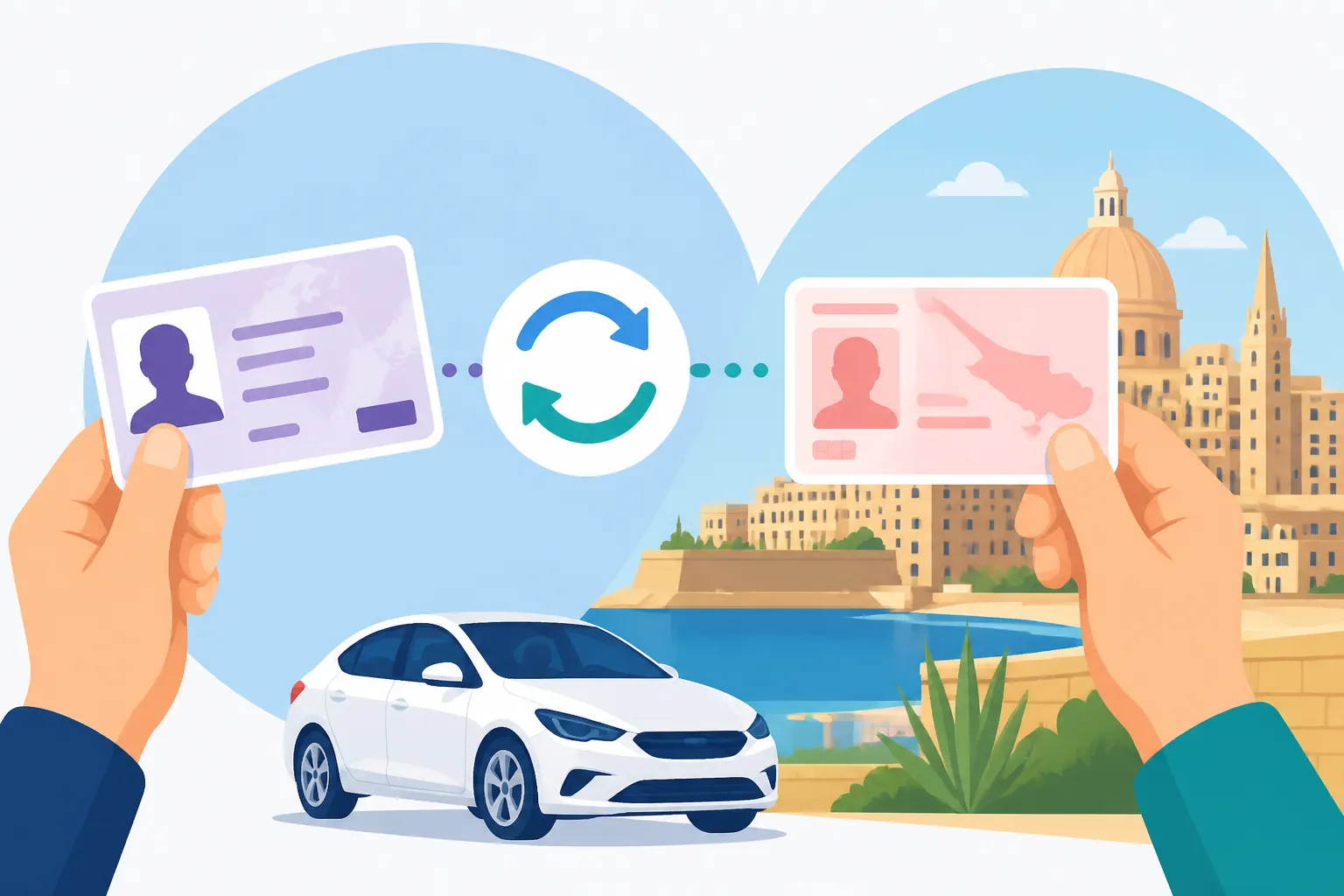
Moving to a new country like Malta brings a whirlwind of administrative tasks, and one of the most pressing for many expats is figuring out how to get around. If you’re planning on driving, one of the first questions you’ll probably have is what to do with your existing driving licence. Navigating the requirements for exchanging your driving licence in Malta can feel like untangling a particularly stubborn knot, especially when you're still grappling with the sheer volume of other paperwork. This comprehensive guide will walk you through the entire process, clarifying who needs to do what, when, and how, so you can hit Malta's charming, albeit sometimes chaotic, roads legally and confidently.
Understanding Malta's Driving Licence Exchange Requirements
First things first: not everyone has the same requirements. Your nationality and where your current licence was issued are the biggest factors in determining whether you need to exchange your licence, or merely register it, and how straightforward that process will be. Malta, being an EU member state, follows specific regulations that differentiate between licences issued by EU/EEA countries and those from so-called ‘third countries.’ It’s crucial to understand these distinctions right from the start to avoid any unnecessary stress or, worse, driving illegally.
EU/EEA and Swiss Citizens: The Simpler Path
If you hold a valid driving licence issued by an EU/EEA member state or Switzerland, you’ll generally find the process much less daunting. The good news is that your existing licence is recognised in Malta. You don't have to exchange it for a Maltese one immediately. However, there’s a crucial "185-day rule" to be aware of. If you take up normal residence in Malta, you must exchange your licence within 185 days of becoming ordinarily resident. Even if you don't exchange it, you are required to register your EU/EEA licence with Transport Malta within 185 days of establishing your ordinary residence here. This registration ensures that local authorities are aware of your driving entitlements and makes it easier for them to communicate with you regarding your licence, such as for renewals or any administrative updates.
So, while your licence remains valid, if it's nearing expiry, or if you accumulate points on your Maltese record, you might still need to exchange it for a Maltese one. For instance, if your EU licence is lost, stolen, damaged, or expires while you're resident in Malta, you’ll typically be required to obtain a Maltese replacement rather than going back to your home country to renew it. Many expats choose to exchange their EU/EEA licence simply for convenience, as it aligns their driving documents with their new country of residence and can simplify matters like insurance or dealing with traffic incidents. You’ll need to provide proof of residency, like your Maltese eResidence Card, as part of this process. It's often a good idea to consider all your documents when moving, and perhaps planning your entire relocation with a service like Sirelo can help keep track of such details.
Third-Country Nationals: The Full Exchange Process
Now, if you're joining us from outside the EU/EEA – what we call a 'third country' – things are a bit different, and the exchange process is mandatory and often more complex. You are generally allowed to drive on your foreign licence for a period of up to 185 days from the date you establish 'ordinary residence' in Malta. Beyond this 185-day window, your foreign licence will no longer be valid for driving in Malta, and you must exchange it for a Maltese one. This isn't optional; driving on an unexchanged third-country licence after this period is considered driving without a valid licence, which carries serious legal consequences, including fines, potential vehicle impoundment, and even imprisonment in severe cases.
The key here is whether Malta has a reciprocal agreement with your home country for the exchange of driving licences. Many countries, such as Australia, the United Kingdom, South Africa, and the United States (in some states), have such agreements. These agreements mean that Malta recognises your driving qualifications, and you won’t typically need to take a driving test here, although there might be specific conditions. However, if your country doesn't have such an agreement, you're in for a longer haul: you’ll likely need to go through the full Maltese driving test process, including both theory and practical exams, as if you were a new driver. This can be a significant hurdle, so it's vital to research this aspect thoroughly before your 185 days are up. Having all your documents, including your Maltese ID Card Number, ready makes this process smoother.
The Step-by-Step Guide to Exchanging Your Licence
Even with a reciprocal agreement, exchanging your licence involves a few distinct steps. It's not always a quick in-and-out affair, so prepare yourself for some typical Maltese bureaucracy. Patience, as with many things here, is your best friend. Make sure you're properly equipped before you head off to Transport Malta.
Gathering Your Documents: What You'll Need
This is often the most critical and time-consuming part. Having all your ducks in a row before you visit Transport Malta will save you multiple trips and a lot of frustration. Here's a typical checklist, though always verify the latest requirements on the Transport Malta website:
- Current Driving Licence: Your original, valid foreign driving licence. This will be surrendered to Transport Malta once your Maltese licence is issued.
- Proof of Identity: Your valid passport or national ID card.
- Proof of Residence: Your Maltese eResidence Card is paramount. If you're a recent arrival and only have your temporary permit or proof of application, check with Transport Malta if this is sufficient. Without a confirmed residential status, they won't proceed. If you're wondering, "How Do I Get a Maltese eResidence Card?", make sure that process is well underway.
- Photographs: Two recent passport-sized coloured photographs. These need to meet specific requirements, usually taken against a white background. It's generally safer to get these done at a professional photo studio in Malta, as they'll be familiar with the local standards.
- Application Form: The official application form, typically DRT40 (for exchange of foreign licences). This can usually be downloaded from the Transport Malta website or picked up at their offices.
- Medical Certificate (DRT 40/A): This is a critical one. For certain licence categories (e.g., C, D, or older applicants), or if you have specific medical conditions, you will need a medical certificate completed by a registered Maltese doctor. The doctor will need to fill out a specific form (DRT 40/A), attesting to your fitness to drive. Even for standard car licences, if you are over a certain age (e.g., 70 years old), a medical certificate becomes mandatory. It's a good idea to factor in a doctor's appointment for this early on. You can typically find a GP at your local health centre after you’ve completed your registration, or visit a private clinic.
- Police Conduct Certificate: In some cases, Transport Malta may request a Police Conduct Certificate from Malta, to ensure you have no outstanding driving offences.
- Certified Translations: If your foreign driving licence is not in English, you will need an official translation into English or Maltese. This must be carried out by a recognised translator, often vetted by the Maltese courts or a local notary. Don't just show up with a Google Translate printout – they won't accept it.
Keep copies of everything you submit, and be prepared for potential requests for additional documentation. It’s part of the game.
Navigating Transport Malta: The Application Process
Once you’ve assembled your documents, your next stop is the Transport Malta offices in Floriana (A3 Towers, Triq l-Arkata, Floriana). This is the main hub for all driving licence-related matters.
- Submit Your Application: Head to the appropriate counter for driving licence exchanges. You’ll hand over your completed DRT40 form and all supporting documents. The staff will review everything. Be prepared for questions or requests for clarification. If anything is missing or incorrect, they will send you away to rectify it, so double-check beforehand.
- Pay the Fee: There is a fee for the exchange of your licence. The exact amount can vary, so it’s wise to check Transport Malta’s website for the latest fee schedule. Payment is typically accepted by cash or card.
- Interim Permit: Once your application is accepted and the fee paid, you should be issued with a temporary driving permit. This document is incredibly important! It allows you to legally drive in Malta while your full Maltese licence is being processed. It’s a paper document, so keep it safe and carry it with you at all times when driving. Do not, under any circumstances, drive without this interim permit after your 185-day window for your foreign licence has passed. Driving without a valid document can invalidate your insurance and lead to severe penalties. Ensure your insurance provider is aware you are in the process of exchanging your licence and using an interim permit. If you're still getting organised with your general living setup, remember that reliable phone connectivity, perhaps through a service like Airalo, can be invaluable for navigating maps or contacting offices.
The process of exchanging your driving licence is just one piece of the puzzle when it comes to Getting Around Malta: Buses, Ferries, Driving, and the Gozo Connection. It’s important to align this with your overall plan for transport.
The Waiting Game and Collecting Your Maltese Licence
After submitting your application, you enter the dreaded waiting game. Processing times can vary significantly depending on the volume of applications, the time of year, and how complex your particular case is (e.g., if Transport Malta needs to verify your licence directly with the issuing authority in your home country).
- Realistic Expectations: Don't expect your new licence to arrive in a week or two. It could take several weeks, or even a couple of months. While frustrating, this is a normal part of the process in Malta.
- Checking Status: Transport Malta usually doesn't have an online tracking system that provides real-time updates for licence applications. You might need to call their offices if you haven't heard anything after a reasonable period (e.g., 4-6 weeks). Keep your application reference number handy.
- Collection: Once your licence is ready, you will typically receive a notification (either by post or SMS) instructing you to collect it from the Transport Malta offices in Floriana. You'll need to present your interim permit and your identification (passport/eResidence Card) to collect your new Maltese driving licence. At this point, you will surrender your original foreign licence to them. This marks the successful completion of the exchange process!
Common Challenges and Pro Tips for Expats
Even with all the right documents, the process can throw a few curveballs. Being prepared for these can save you a lot of grief. Understanding the nuances of the system will certainly make your life easier.
Reciprocal Agreements and Non-Recognised Licences
As mentioned, the reciprocal agreement is everything. If your country has one, you're usually spared the driving test. If not, it means you'll have to undertake the full Maltese driving theory and practical tests. This is not a trivial undertaking. The theory test is available in English, but the practical test can be a source of anxiety for many. Driving conditions in Malta are unique, with narrow streets, sometimes aggressive driving, and unique parking challenges. It's a completely different ballgame from many other countries.
- Countries with Agreements: Examples include Australia, United States (specific states), South Africa, United Kingdom, Canada, and several others. It's essential to check the latest list on the Transport Malta website, as these agreements can change.
- Countries Without Agreements: If your country isn't on the list, you will need to apply for a Maltese learner's permit, undergo driving lessons with a registered Maltese instructor, and then pass both the theory and practical driving tests. This is a significant investment of time and money, so plan accordingly. You might want to get started on this as soon as possible after arriving if you intend to drive long-term.
Remember, the goal is to drive legally and safely. If you’re ever unsure, it’s always best to err on the side of caution and contact Transport Malta directly.
Timing, Temporary Permits, and Driving Legally
The 185-day rule is firm. It's 185 days from the date you establish your ordinary residence in Malta, not from your arrival date as a tourist. This usually correlates with the date your residence permit is issued. Many expats fall into the trap of delaying the exchange process, only to find themselves driving illegally.
- Early Application: Start the application process well before your 185 days are up. Bureaucracy can be slow, and you don't want to be caught out.
- The Interim Permit is Key: Your foreign licence is only valid for those 185 days. After that, your interim permit is your only legal document to drive until your full Maltese licence arrives. Always carry it.
- Insurance Implications: Driving without a valid licence (or valid interim permit) will invalidate your car insurance. This means if you're involved in an accident, you will be personally liable for all damages and injuries, which could be financially devastating. When setting up your home, don't forget the importance of proper insurance, as discussed in Setting Up Your Home in Malta: Utilities, Internet, and Insurance.
Beyond the Exchange: Driving Rules and Road Etiquette in Malta
Once you have your Maltese licence, the real adventure begins – driving on Malta's roads! It's an experience, to say the least.
- Drive on the Left: Malta drives on the left-hand side of the road, inherited from its British colonial past. This is a significant adjustment for many.
- Road Conditions: Roads can be narrow, sometimes poorly maintained, and traffic can be dense, especially in urban areas like Sliema and St Julian's.
- Parking: Finding parking is a national sport. Be prepared for challenges, especially in popular areas.
- Speed Limits: Generally 50 km/h in urban areas, 80 km/h on open roads. Speed cameras are present.
- Aggressive Driving: Some drivers can be impatient or drive aggressively. Defensive driving is a must. Don't take anything personally.
- Roundabouts: Familiarise yourself with roundabout rules, which are generally well signposted.
- Indicators: Use your indicators religiously; not everyone else does.
- Horn Usage: While the horn is sometimes used for expressive purposes, use it sparingly and appropriately.
Adapting to Maltese driving culture takes time and patience. It's part of the wider cultural adjustment you'll experience, alongside understanding things like How Maltese Health Entitlement Fits with Social Security Contributions or the ins and outs of local banking as detailed in Money and Finance in Malta: A Complete Guide for Foreigners.
Costs, Validity, and Future Renewals
Understanding the financial and temporal aspects of your new Maltese driving licence is the final piece of this puzzle. Like any official document, there are fees involved and specific validity periods.
Understanding the Fees and Validity Periods
The total cost will vary depending on your specific situation, mainly whether you need a medical certificate or certified translations.
- Exchange Fee: Transport Malta charges an administrative fee for the licence exchange. As of recent times, this could be around €80-€100, but always check their official website for the most current figures.
- Medical Certificate: If required, a private doctor's visit for the medical certificate typically costs between €15-€30, on top of any public health centre consultation fees (if applicable and if you're entitled to free care).
- Photographs: Passport photos from a professional studio usually cost around €5-€10.
- Certified Translations: This can be the most variable cost, potentially ranging from €30-€100 or more, depending on the length and complexity of the document and the translator’s rates.
Validity Periods: Your new Maltese driving licence will generally be valid for 10 years for car (Category B) and motorcycle (Category A) licences, up to the age of 70. After 70, the validity period typically shortens, often requiring more frequent medical checks. For higher categories (lorries, buses), validity periods are shorter and require regular medical examinations regardless of age.
Renewing Your Maltese Licence
Once you have your Maltese driving licence, future renewals are much simpler. You won't need to go through the entire exchange process again.
- Notification: Transport Malta typically sends out renewal notices as your licence expiry date approaches.
- Process: Renewals can often be done online through the Transport Malta portal, or by submitting an application form and relevant documents (including an updated medical certificate if required) to their offices. There's a renewal fee, of course.
- Ongoing Medicals: Be mindful of ongoing medical requirements, especially as you age or if you develop any health conditions that might affect your driving fitness. Maintaining your licence means keeping up with these requirements, much like keeping your Residence Permits in Malta: Types, Requirements, and How to Apply up to date involves ongoing checks.
Exchanging your driving licence in Malta is a rite of passage for many expats. It requires some effort and patience, but once it’s done, you'll have one less thing to worry about and can enjoy the freedom of exploring this beautiful island nation by car.
Disclaimer
The information provided in this guide is for general informational purposes only and does not constitute legal or professional advice. While we strive to keep the information accurate and up-to-date, requirements and procedures related to driving licence exchange in Malta can change. It is always recommended to consult the official Transport Malta website or contact their offices directly for the most current and specific advice pertaining to your individual situation.