How Do I Get Water Delivered or Filtered in Malta?
One of the first little "culture shocks" you might encounter when settling into Malta, beyond the driving and the constant building, is the water situation. You arrive, parched from the sun, turn on the tap, and… well, it tastes a bit different, doesn’t it? Many of us expats have been there, wondering if it's safe to drink or if we're doomed to carry heavy bottles from the supermarket forever. This guide is here to walk you through all your options for getting good, clean water for your household, whether that’s delivered right to your door or filtered right from your tap.
The Maltese Water Situation: Understanding the Basics
Let’s be honest, the water here in Malta is a topic of frequent discussion among newcomers and old-timers alike. It's not like many places where you just fill a glass without a second thought. There's a certain "flavour" to Maltese tap water that takes some getting used to – or, for many of us, inspires a quest for alternatives.
Tap Water – Is It Drinkable?
This is usually the very first question everyone asks, and it’s a valid one! Technically, yes, Maltese tap water is potable. It meets all EU drinking water standards, meaning it's generally safe from harmful bacteria and contaminants. The Water Services Corporation (WSC) does a commendable job of desalinating seawater and treating groundwater to supply the islands. However, "potable" doesn't always mean "palatable."
The unique taste often comes from the desalination process. Malta relies heavily on reverse osmosis plants to turn seawater into fresh water, and this process can leave the water with a slightly different mineral profile and, sometimes, a lingering taste or smell of chlorine that many people find off-putting. It can also be quite hard, meaning it has a high mineral content, which can be tough on kettles and showerheads, and sometimes your hair and skin! While it's fine for cooking, washing, and brushing your teeth, many expats, including myself, eventually gravitate towards alternatives for drinking. I remember my early days, desperately trying to convince myself the taste was "fine," but after a few weeks, the sheer convenience and taste of bottled water won me over, at least initially.
Why Bottled Water is a Way of Life
Given the taste of tap water, it's no surprise that bottled water became such an integral part of daily life for many residents, both local and foreign. You'll see locals buying it in bulk, and supermarkets dedicate entire aisles to it. For many, it's not just about taste; it’s about peace of mind and convenience.
Walking into any Maltese supermarket, you’ll be faced with an array of choices: local brands like San Michel and Kristal, and international names. They come in various sizes, from small individual bottles to large 5-litre or even 19-litre dispenser bottles. The sheer volume of bottled water consumed here is staggering, and it quickly becomes a habit. When you're just getting settled, perhaps still managing your initial move with services like Sirelo helping you sort out your logistics, adding heavy water bottles to your shopping list feels like just another part of the adjustment. It’s certainly easier than trying to figure out a complex filtration system when you’ve just arrived and are trying to wrap your head around things like Setting Up Electricity and Water with ARMS and Enemalta in Malta.
Getting Bottled Water Delivered to Your Door
For many years, and still today, the most common solution for expats who don't love the tap water is getting bottled water delivered. It saves your back, your car's suspension, and the endless trips to the supermarket. Trust me, lugging a few 5-litre bottles up three flights of stairs in July is not anyone's idea of fun.
Major Delivery Services and How They Work
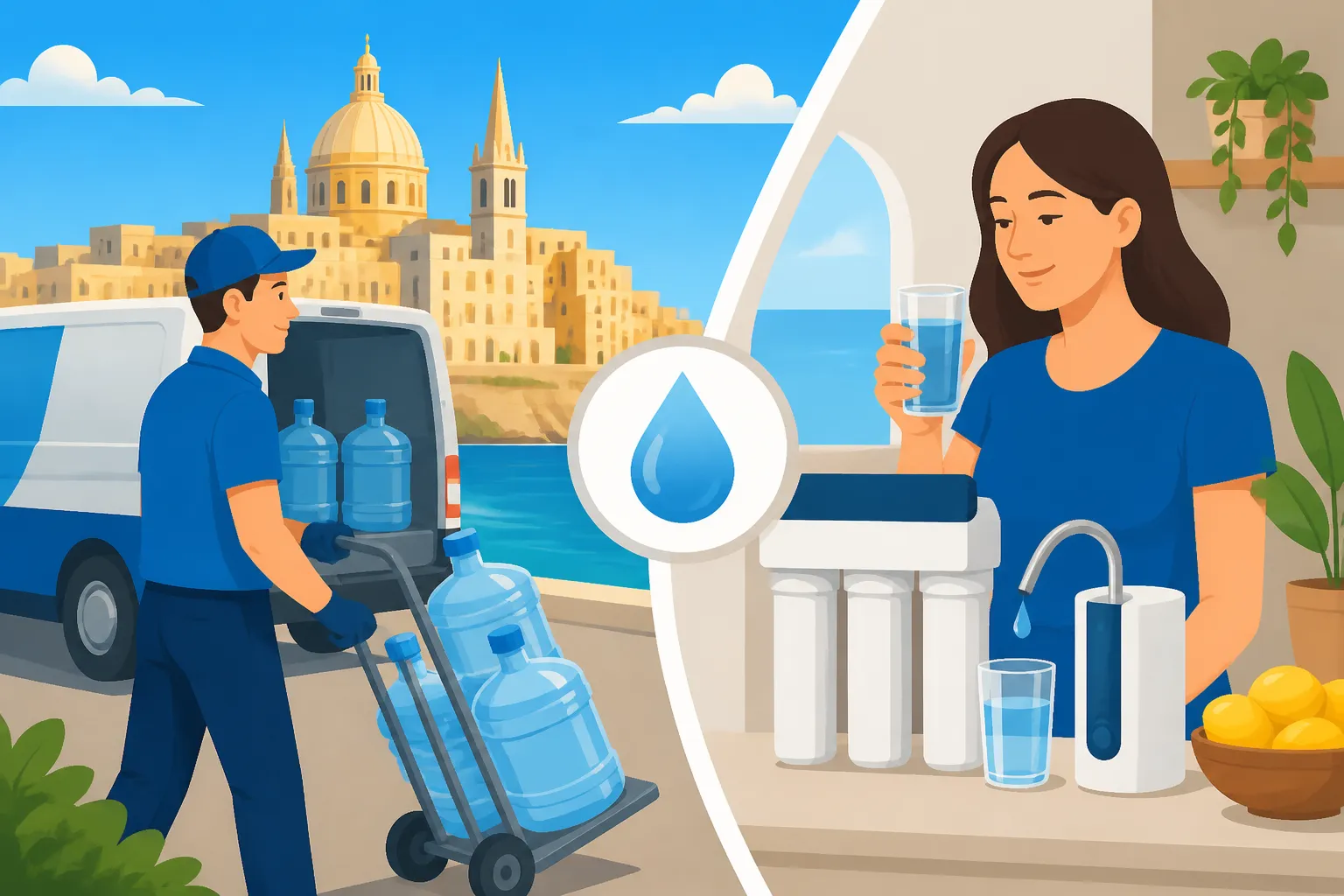
Several companies in Malta specialise in delivering bottled water directly to homes and businesses. These services typically offer large 19-litre or 11-litre bottles, designed to be used with a water cooler/dispenser, as well as smaller multi-packs or 5-litre bottles.
One of the most prominent players you'll encounter is San Michel Water Delivery. They are well-established and reliable. The general process usually involves:
- Ordering: You can typically order online through their website or by phone. Some even have dedicated apps. Initial orders might require a deposit for the reusable bottles. When you're new to the island and maybe still figuring out your mobile data plan (perhaps using an eSIM from a provider like Airalo), having a reliable internet connection to place these online orders is a blessing.
- Delivery Schedule: Deliveries are usually on a set schedule for your area, often once a week or every two weeks. You typically leave your empty bottles out for collection, and they'll swap them for full ones.
- Cooler Rental/Purchase: If you opt for the large 19-litre bottles, you'll likely want a water cooler. You can often rent these directly from the water delivery company or purchase one from an electronics store. These coolers provide hot, cold, and ambient water, which is a game-changer during the scorching Maltese summer!
- Payment: This can vary. Some operate on a credit system, others require payment on delivery, and some offer monthly invoicing for regular customers.
Another popular choice for many is to simply use online supermarket delivery services for smaller bottles or multi-packs. Stores like Wolt, Bolt Food (for quick buys), or larger supermarkets like Pavi, Smart, and Greens, all offer home delivery. While this can be convenient for smaller quantities, the cost per litre is generally higher than the large dispenser bottles. It also means more plastic waste unless you’re meticulous with your Waste Separation and Recycling Rules in Malta.
Ordering and Logistics: Tips for Smooth Deliveries
To make your water delivery experience as seamless as possible, here are a few hard-earned tips:
- Establish a Routine: Once you know your delivery day, try to stick to a regular order. This helps avoid running out of water at the worst possible moment – usually when you’re craving a cold drink after a long, hot day.
- Storage Space: Those 19-litre bottles are bulky! Make sure you have designated storage space. If you live in a smaller apartment, this can be a challenge. I learned this the hard way when a delivery driver nearly toppled a stack in my tiny kitchen!
- Accessibility: If you live in an apartment building with no lift or a complicated entrance, communicate this clearly with the delivery service. Some might charge a small extra fee for carrying bottles up multiple flights, or they might simply refuse if it's too difficult. Don't be shy about explaining the situation upfront.
- Empty Bottle Management: Keep your empty bottles clean and ready for collection. Most services won't take dirty or damaged bottles. This also means you need to keep track of how many empties you have versus how many full ones you need.
- Payment Method: Clarify the payment method when you order. Do they accept cash, card, or Revolut? Having the correct change ready if paying cash can save hassle and delays for the driver.
- Emergency Stock: Always keep a backup 5-litre bottle or two for emergencies, just in case a delivery is delayed or you miscalculate your consumption. It’s like having a backup generator for your hydration!
Filtering Your Tap Water: A Greener & Often Cheaper Alternative
As awareness of plastic waste grows and technology improves, more and more expats (and locals) are turning to water filtration systems. It's an investment upfront, but it can save money in the long run and significantly reduce your environmental footprint. Plus, never running out of drinking water is a perk you can't put a price on.
Types of Water Filters Available in Malta
There's a wide range of filtration solutions, each with its pros and cons:
- Water Filter Pitchers: These are the simplest and most affordable option. Brands like BRITA are readily available in Maltese supermarkets and homeware stores. You fill the pitcher with tap water, and it slowly filters through a carbon filter.
- Pros: Inexpensive, portable, no installation required.
- Cons: Slow, small capacity, requires frequent filter changes (every 4-6 weeks), and still doesn't remove all impurities. Best for individuals or small households with low consumption.
- Tap-Mounted Filters: These attach directly to your kitchen tap, allowing you to switch between filtered and unfiltered water.
- Pros: More convenient than a pitcher, relatively easy to install yourself.
- Cons: Can look clunky on your tap, filter cartridges still need regular replacement, and they don't always offer the most comprehensive filtration.
- Under-Sink Filters: These are installed beneath your kitchen sink, with a dedicated faucet for filtered water. They offer a more robust filtration system, often involving multiple stages (sediment, carbon, sometimes reverse osmosis).
- Pros: Excellent filtration quality, clean look (only a small tap on the counter), large volume of filtered water on demand.
- Cons: More expensive upfront, requires professional installation (unless you’re very handy), and filters are larger and more costly to replace, though less frequent. Many prefer this option for its effectiveness and aesthetics.
- Whole-House Filtration Systems: As the name suggests, these systems filter all the water entering your home.
- Pros: Filters water for drinking, showering, and all household uses, improving water quality for skin, hair, and appliances.
- Cons: The most expensive option, requires professional installation, and may involve more complex maintenance. Generally, this is a choice for homeowners rather than renters, as it’s a significant investment and modification to the property.
You can find these systems or components at local hardware stores, plumbing suppliers, and some larger electronics or homeware shops. For more complex systems, local water treatment companies specialise in sales and installation.
Installation, Maintenance, and Costs of Filtering
The practicality of filtration systems varies significantly:
- Pitcher Filters: No installation. Just buy, wash, insert filter, and fill. Easy.
- Tap-Mounted Filters: Usually a simple screw-on attachment. Most people can manage this themselves with basic tools.
- Under-Sink Filters: This is where it gets a bit more involved. While some DIY-savvy individuals might tackle it, it often involves drilling a hole for the separate tap, connecting to the cold water line, and ensuring no leaks. Hiring a plumber is often the safest bet. When budgeting for your Cost of Living in Malta: Budgeting for the Real Numbers, remember to factor in potential installation costs.
- Whole-House Systems: Definitely a job for a qualified plumber or water treatment specialist.
Maintenance:
All filters need replacement! For pitcher filters, it's typically monthly. For under-sink systems, it might be every 6-12 months for pre-filters and annually or biannually for main carbon or RO membranes. Neglecting filter changes will reduce effectiveness and could even lead to bacterial build-up. Always follow the manufacturer’s recommendations.
Costs:
- Pitcher filters: €20-€40 for the pitcher, €15-€25 for a pack of 3-4 filters. Annual cost: ~€50-€80.
- Tap-mounted filters: €30-€60 for the unit, €15-€30 for replacement cartridges. Annual cost: ~€60-€100.
- Under-sink systems: €150-€500 for a multi-stage system, plus €50-€150 for installation. Replacement filters (often in sets) can cost €50-€100 annually.
- Whole-house systems: €500-€2000+ for the unit, plus €100-€300+ for installation. Annual filter costs can range from €80-€200+.
The initial outlay for a good under-sink or whole-house system might seem steep, but when you consider the recurring cost of bottled water (which can easily be €30-€50+ per month for a family), the long-term savings often make it worthwhile. Plus, you'll feel a lot better about your plastic consumption. It's a big step towards a more sustainable expat life on the islands.
Making the Choice: Delivery vs. Filtering
Deciding between water delivery and filtration really boils down to your personal priorities, budget, and lifestyle. There's no single "best" option, as what works for one person might not work for another. Let's look at a quick comparison to help you weigh things up.
Cost-Benefit Analysis
When you're trying to manage your budget and considering the overall How Much Does It Cost to Live in Malta Each Month?, water costs can add up.
| Feature | Bottled Water Delivery | Water Filtration System |
|---|---|---|
| Initial Cost | Low (maybe cooler deposit) | Moderate to High (system + installation) |
| Running Cost | Moderate to High (per bottle/delivery) | Low (replacement filters) |
| Convenience | High (delivered, ready to drink, no DIY) | Moderate to High (on-demand filtered water, no heavy lifting once set up) |
| Effort | Ordering, storing bottles, swapping empties | Initial setup, periodic filter changes |
| Water Quality | Consistent, good taste | Varies by system, generally good once chosen carefully |
| Storage Space | Requires space for full and empty bulky bottles | Minimal (under-sink or countertop for pitcher) |
| Environmental Impact | High (plastic waste, transportation emissions) | Low (less plastic waste, reduced transportation) |
| Flexibility | Easy to stop/start service | Fixed investment, less flexible for short-term stays |
For a transient expat who's only in Malta for a year or two, especially if you're alone or a couple, a pitcher filter or even just smaller bottled water deliveries might be the most practical. The upfront cost of a good under-sink system might not amortise over such a short period.
However, if you're planning on being here for the long haul, say three years or more, and particularly if you have a family, investing in an under-sink filtration system becomes a very attractive option. The savings on bottled water, both financially and in terms of physical effort, quickly add up. Plus, you’ll never have that moment of panic when you realise you’re out of drinking water and the shops are closed.
Environmental Considerations and Practicalities
For many of us, the environmental impact of bottled water is a growing concern. Malta, being a small island nation, faces particular challenges with waste management. While there are initiatives like the Beverage Container Refund Scheme (BCRS), which allows you to return plastic bottles for a small refund, the sheer volume of single-use plastic still puts a strain on resources. Choosing a filtration system significantly reduces your household's plastic footprint, which feels good and aligns with broader efforts towards sustainability.
Then there are the practicalities:
- Weight: Remember those heavy bottles? Filtering eliminates the need to haul water from the supermarket or wait for deliveries of cumbersome containers. This is particularly appealing if you live in an apartment without a lift or have mobility issues.
- Storage: Finding space for several 19-litre bottles, both full and empty, can be a headache, especially in Malta’s often compact apartments. A filter system only takes up a small amount of space, typically under the sink.
- Continuous Supply: With a filter, you have an endless supply of filtered water directly from your tap. No more running out of water on a Sunday when everything is closed, or stressing about whether your delivery will arrive during a How Do I Cope with the Summer Heat in Malta? heatwave. This on-demand access is incredibly liberating.
- Taste Consistency: While delivery services provide consistent bottled water, a good filtration system ensures your tap water tastes consistently good, and you have control over the type of filtration you prefer.
Ultimately, both methods solve the "Maltese tap water taste" problem. The choice really boils down to your individual needs, your stance on environmental impact, and how long you plan to call this beautiful, sun-drenched island home. I encourage you to consider all factors, perhaps starting with a pitcher filter and gradually upgrading if you find yourself here for the long term. It’s all part of making your new life in Malta as comfortable and convenient as possible.
Disclaimer
The information provided in this guide is for general informational purposes only and does not constitute professional advice. While we strive to ensure accuracy, regulations, services, and costs in Malta can change. Always verify information with official sources or relevant service providers. Individual experiences with water quality and taste may vary.