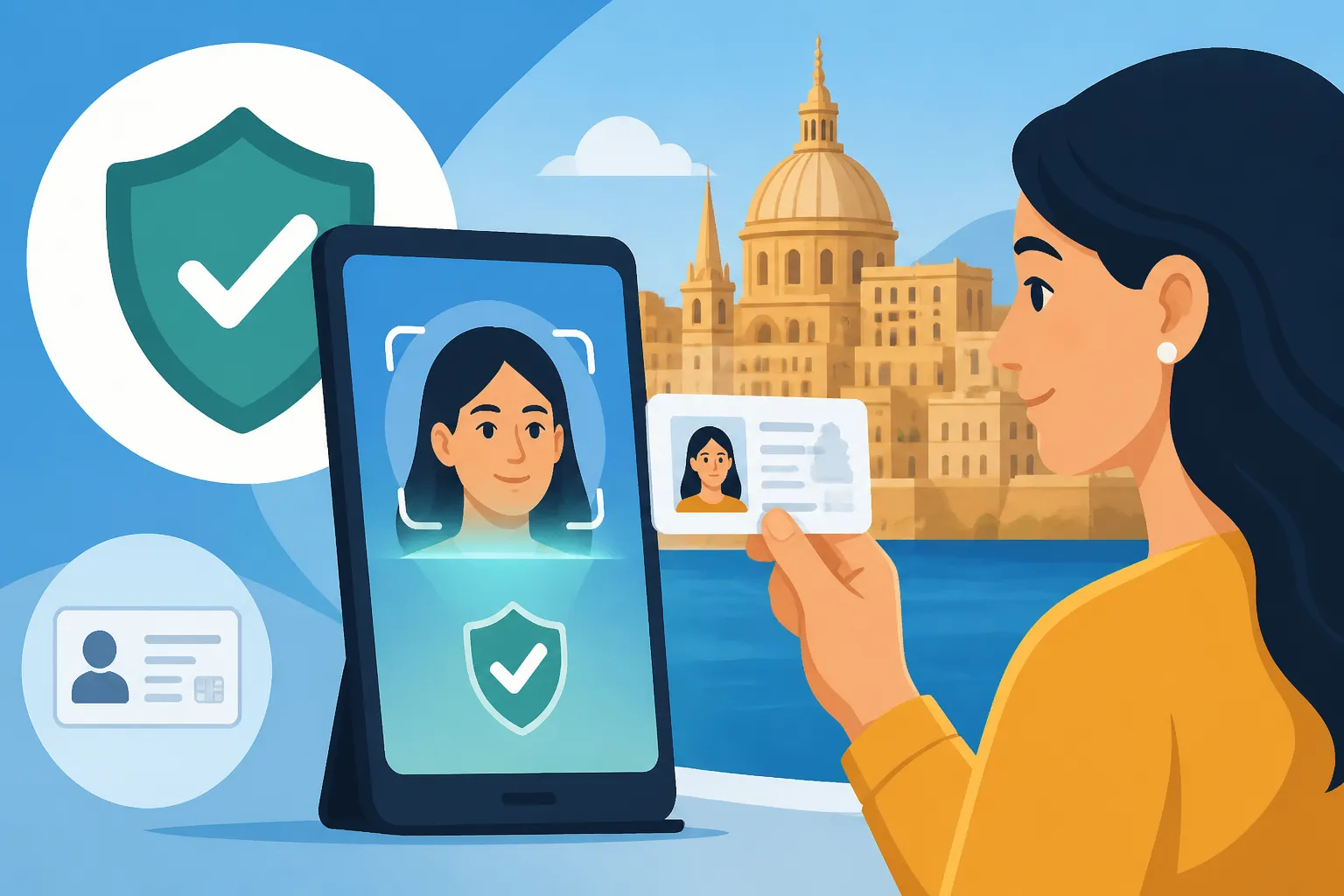
How Do I Prove My Identity to Identità in Malta?
Navigating the labyrinthine halls of Maltese bureaucracy, particularly when it comes to proving who you are to Identità, can feel like a never-ending quest. For anyone moving to this beautiful island, understanding the exact documents and processes required to establish your identity is crucial, yet often fraught with confusion and unexpected hurdles. This guide will meticulously break down how to effectively prove your identity to Identità, ensuring you’re well-prepared for your residence permit application and beyond.
The Basics of Proving Your Identity to Identità
When you interact with Identità, Malta's agency responsible for identity management and citizenship, you're stepping into a system built on precision and legal compliance. It's a fundamental step for any foreigner looking to live, work, or study here, as your identity is the cornerstone of your legal status on the island. This initial verification sets the stage for everything from your eResidence card to accessing services, so getting it right from the start is paramount.
Why Identità Needs So Much Proof
Identità's meticulous approach to identity verification isn't just about making your life difficult, although it often feels that way. Their stringent requirements stem from a need for robust national security, adherence to international immigration laws, and the prevention of identity fraud. As a sovereign nation and a member of the European Union, Malta must maintain high standards for who is granted legal residence within its borders. Every document you provide helps them build a comprehensive and legally sound profile of you, ensuring that your presence in Malta is legitimate and properly recorded.
For newcomers, this level of scrutiny can be quite jarring, especially if you come from a country with more relaxed administrative procedures. You might wonder why they need your birth certificate when your passport clearly states your date of birth, or why an apostille is necessary for a document that seems self-explanatory. This is simply how the system operates: it's designed to be exhaustive, leaving little to no room for ambiguity. They need to ensure that every piece of information they hold about you is consistent and verifiable from multiple official sources. This detailed process ultimately contributes to the integrity of Malta’s identity system, which, once you’re officially registered, then benefits you by clearly establishing your legal rights and status.
The Golden Rule: Your Passport is King (Usually)
When it comes to proving your identity to Identità, your valid passport is almost always the undisputed monarch of all documents. For non-EU/EEA citizens, it's not just preferred; it's virtually mandatory as your primary form of identification. This robust travel document, issued by your home country, contains your photograph, full name, date of birth, nationality, and a unique identification number, making it the most universally accepted proof of who you are.
It’s crucial to understand that "valid" means far more than just "not expired yet." Identità typically requires your passport to have at least six months of validity remaining beyond your intended period of stay or the expiry date of the residence permit you are applying for. Imagine the frustration of finally getting your documents in order, only to be told your application is on hold because your passport expires in five months and your permit would only be valid for a year. It's a common stumbling block. If your passport is nearing its expiry date, the best advice I can give you, based on countless expat tales of woe, is to renew it before you even start your Identità application. Trying to renew it mid-application will undoubtedly lead to significant delays and added stress, pushing back your entire timeline. This proactive step can save you immense hassle and prevent unnecessary complications during an already complex process.
Common Identification Documents and Their Nuances
While your passport is paramount, Identità often requires a constellation of other documents to fully establish your identity and circumstances. Each document plays a specific role, contributing to the comprehensive picture they build of you. Understanding which ones are typically requested and why can help you prepare more effectively and avoid common pitfalls.
The Core Documents: Passport and National ID Card
For non-EU/EEA citizens, your passport is unequivocally the primary document. When you attend your Identità appointment, staff will meticulously scan your passport, verify its authenticity, and take copies for your file. This isn't a quick glance; it's a thorough examination, including checking security features and ensuring it's not tampered with. It's the definitive proof of your nationality and often serves as the legal basis for your right to reside in Malta. Any discrepancies between your passport and other documents could trigger further investigation, so ensure all details match perfectly. This foundational document establishes your identity on an international level, and it’s the gateway to your legal stay in Malta.
For EU/EEA and Swiss nationals, a valid National ID Card issued by your home country can often serve as a primary form of identification. However, even if you’re an EU citizen, it’s not uncommon for Identità to still request your passport as supplementary proof, especially for first-time residence applications. This might seem redundant, given the EU's freedom of movement, but Malta's administrative bodies are notoriously thorough. They sometimes prefer the passport because it’s a globally recognised travel document with more robust security features than some national ID cards. Don't be surprised if you present your ID card and they politely ask, "Do you have your passport with you today, please?" Always have both ready, just in case. Other photo IDs, like driving licenses, are generally not accepted as primary proof for Identità applications, though they might be useful as secondary, supplementary identification in certain very specific contexts if explicitly requested.
Supporting Documents: Birth Certificates, Marriage Certificates, and Police Conduct
Beyond your primary identification, Identità frequently requests supporting documents to corroborate details about your personal status and background. These aren't just extra paperwork; they're essential for painting a complete and accurate picture of who you are within the legal framework of your application.
Your birth certificate, for instance, becomes critical in several scenarios. If you're applying for residence permits for your children, or if you're pursuing family reunification in Malta, your birth certificate establishes your relationship to your dependents. Similarly, if you ever aspire to Maltese citizenship by naturalisation, your birth certificate is a foundational document in verifying your lineage and identity. A key point to remember is the need for apostille or legalisation for certificates issued in countries that are not party to the Hague Apostille Convention. For instance, a birth certificate from the UK needs no apostille in Malta, but one from the Philippines would. Failing to legalise or apostille these documents can bring your application to a grinding halt, so clarify these requirements well in advance.
Marriage certificates follow a similar pattern. They are indispensable for spouses seeking family reunification and for individuals applying for permits based on their marital status. Just like birth certificates, these often require legalisation or an apostille, depending on the issuing country. If your marriage certificate isn't in English or Maltese, you'll also need an official, certified translation. This is not a task for Google Translate; it must be done by a sworn translator recognised in Malta or your home country. These documents are vital for proving your legal relationship status, which directly impacts your eligibility for certain permit types.
Perhaps one of the most significant supporting documents, and often a source of anxiety, is the Police Conduct Certificate. This document essentially certifies your criminal record – or lack thereof – and is a fundamental requirement for many residence permits in Malta. Identità uses it to ensure that individuals residing in Malta pose no threat to public order or national security. You’ll typically need one from your country of origin and, if you've been living in Malta for a certain period, you’ll also need one issued by the Maltese Police Force. This is a non-negotiable step in the identity verification process. If you’re unsure about the specific requirements or the process, it’s worth checking out our detailed guide on the topic: "The Police Conduct Certificate and Document Requirements in Malta". This document validates your identity by vouching for your character in a legal sense, adding a crucial layer of trust to your application.
The eResidence Card and Its Significance
Once you've navigated the initial hurdles, submitted all your documents, and attended your biometrics appointment, the holy grail for any expat in Malta is receiving your eResidence Card. This card, a sleek plastic ID, becomes your primary proof of identity and legal residence within Malta. It’s far more than just a piece of plastic; it’s your key to interacting with virtually all government services and proving your identity in everyday situations.
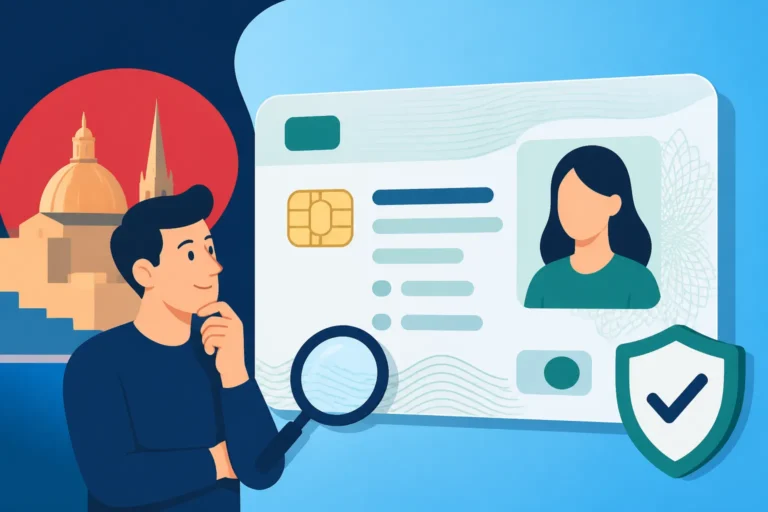
The eResidence card is designed to be comprehensive and secure. It prominently features your photograph, full name, date of birth, nationality, and, critically, your unique Maltese ID Card Number. This number is your individual identifier within the Maltese system and will be requested by banks, employers, healthcare providers, and virtually any official entity you interact with. The card also clearly states the type of residence permit you hold (e.g., Single Permit, Nomad Residence Permit, EU Citizen registration) and its expiry date. For anyone needing to understand the intricacies of this vital document, our article, "The eResidence Card: What It Shows and How to Read It", offers a deeper dive into its features. Once you have this card in hand, it streamlines almost every future interaction you have with Identità and other governmental departments, reducing the need to carry your passport around constantly and proving that your identity has been fully accepted by the Maltese authorities.
What If Your Documents Aren't Straightforward?
Life, especially expat life, rarely runs smoothly, and sometimes your documents present unforeseen challenges. These situations can range from lost passports to name changes, all of which Identità views with a very strict, procedural lens. Anticipating these potential roadblocks and knowing how to address them is crucial to avoiding significant delays and unnecessary stress during your application process.
Lost, Stolen, or Expired Documents
Few things induce immediate panic quite like discovering a lost or stolen passport just when you need it most for an Identità application. If this nightmare scenario happens, your first port of call is the police to file a report. This report is absolutely essential, not only for your own peace of mind but as official proof for your embassy and, subsequently, for Identità. Next, you must contact your country’s embassy or consulate to apply for an emergency travel document or a new passport. This process can be lengthy and frustrating, especially if your embassy isn’t in Malta. Only once you have a police report and have initiated the replacement process can you even begin to approach Identità with your predicament. They will require proof of your report and confirmation that you are actively seeking a replacement. This usually means a hold on your application until a valid travel document is in your hands.
Expired documents, while less dramatic than lost ones, are equally problematic. As discussed earlier, proactive renewal is key. Identità will not process an application with an expired passport, and they are generally very strict about documents that expire mid-application. Imagine you’ve applied, you’ve waited, and then they contact you to say your passport will expire in two months, invalidating your potential permit. The stress is immense, and it sets you back significantly. Our guides, "What If My Passport Is Close to Expiry When Applying in Malta?" and "How Much Passport Validity Do I Need to Apply in Malta?", offer specific advice on navigating these particular issues. It’s always better to over-prepare and renew early than to face the inevitable delays caused by out-of-date identification.
When Translations and Legalisation are Needed
This is another common tripwire for many foreigners. Malta has two official languages: Maltese and English. Any official document you submit to Identità that is not in one of these languages must be accompanied by a certified translation. This isn't a suggestion; it's a strict requirement. Don't think you can get away with a quick translation from a friend or an online tool. These translations must be carried out by a sworn translator, often recognised by a court or governmental body in either Malta or the country where the document was issued. The translation must also be officially stamped and signed, verifying its accuracy. If you’re getting your documents ready, contact the Maltese embassy in your home country or a legal firm in Malta to get a list of recognised translators.
Beyond translation, many documents require legalisation or an apostille. This process verifies the authenticity of the signature, seal, or stamp on a public document. The requirement for an apostille applies to documents issued in countries that are signatories to the 1961 Hague Apostille Convention. If your country is not part of this convention, your documents will likely require a more complex process called legalisation, which involves authentication by the Ministry of Foreign Affairs in your home country and then by the Maltese embassy or consulate there. This step is particularly vital for birth certificates, marriage certificates, and police conduct certificates. For instance, if you are moving your family to Malta, "Family Reunification in Malta: Bringing Your Loved Ones" explains the importance of correctly legalised documents. The golden rule here is: if in doubt, assume legalisation or an apostille is needed, and always clarify with Identità or a reputable legal professional well in advance.
Dealing with Name Changes or Discrepancies
Life circumstances often lead to name changes – perhaps through marriage, divorce, or a legal deed poll. While perfectly normal in personal life, these changes can become a bureaucratic nightmare when dealing with Identità if not handled correctly. Identità is a stickler for consistency across all official documents. If your passport states one name, but your marriage certificate or a previous permit states another, you will need to provide comprehensive supporting documentation to explain the discrepancy.
This means if you've changed your name due to marriage, you'll need to present your marriage certificate. If you've reverted to a maiden name after divorce, your divorce decree will be required. For any other name change, a legal deed poll or equivalent official document from your home country is necessary. It’s absolutely vital that the chain of evidence is clear and unbroken. Any gap in this explanation or inconsistencies between the documents you present will trigger queries and delays. For example, if you have a new passport with your married name but your birth certificate still has your maiden name, you must provide the marriage certificate to bridge that gap. Without this clear paper trail, Identità simply cannot verify your identity to their stringent standards. Always ensure that the name on your primary identification matches, or is clearly reconciled with, every other document you submit.
After Submission: What Happens Next and How to Prepare
So, you’ve meticulously gathered your documents, filled out the forms, and perhaps even survived your first Identità appointment. What comes next, and how can you navigate the waiting period and subsequent steps? Understanding the final stages of the identity verification process, particularly biometrics, and knowing how to manage your expectations during the inevitable waiting game, is crucial for maintaining your sanity as a newcomer to Malta.
Biometrics: The Final Piece of the Identity Puzzle
Once your application documents have been submitted and initially reviewed, the next critical step in proving your identity to Identità is the biometrics appointment. This is where your physical identity is captured and linked directly to your application and, eventually, to your eResidence card. During this appointment, you will have your fingerprints taken, a high-resolution photograph will be captured, and you will provide a digital signature. These biometric data points are vital for creating a secure and unique identifier for you within Malta’s national system, aligning with international security standards for identity documents.
The biometrics appointment typically takes place at the Identità offices in Msida. It’s a relatively quick process, but it’s essential to be prepared. Ensure you arrive on time, well-rested, and with your eyes clear for the photograph – no hats, sunglasses, or anything that obstructs your face. This data forms the bedrock of your eResidence card, making it incredibly difficult for someone else to impersonate you. This final step is not just about bureaucracy; it's about solidifying your unique identity within the Maltese administrative system, preventing fraud, and ensuring that the eResidence card you receive is unequivocally yours. For a deeper understanding of this step, you might find our article, "Biometrics and Collecting Your eResidence Card in Malta", particularly helpful.
The Waiting Game and Proactive Steps
Ah, the infamous waiting game – a rite of passage for almost every expat in Malta. After submitting your documents and completing biometrics, the next phase is often characterised by silence and uncertainty. Identità processing times can vary significantly, ranging from a few weeks to several months, depending on the type of permit, the time of year, and the complexity of your case. This period of limbo can be incredibly frustrating, leaving you feeling adrift and unable to plan effectively.
While you’re in this holding pattern, it’s vital to be patient but also prepared. Keep all copies of your submitted documents and any correspondence from Identità meticulously organised. Avoid making non-essential travel plans outside Malta, especially if you’re a non-EU national. While technically you might be allowed to travel while your permit is being processed, the reality can be complex and risky, as you might face issues re-entering Malta without your eResidence card. For insights into what to expect during this period, our guide, "Understanding Identità Processing Times and Delays", offers some much-needed context.
During this administrative pause, you’ll want to ensure other aspects of your move are progressing. For instance, while you’re waiting for your permit, ensuring you have the right private health insurance is crucial, as providers like Cigna Global often require clear identity proof for their onboarding process. Similarly, if you're still in the throes of relocating your belongings, services like Sirelo can help ease the logistical burden, allowing you to focus on the bureaucratic side of things. It’s a time to be proactive in other areas of your life in Malta, understanding that Identità operates on its own timeline. By being patient, organised, and prepared for the long haul, you can mitigate some of the stress that comes with the waiting game.
| Document Type | Typical Use Case | Specific Requirements / Notes |
|---|---|---|
| Passport | Primary ID for all, especially non-EU/EEA | Must be valid (6+ months beyond permit expiry). Ensure no discrepancies with other documents. |
| EU National ID Card | Primary ID for EU/EEA citizens | Often supplemented by passport, so have both ready. |
| Birth Certificate | Family reunification, children's permits, citizenship | Requires apostille/legalisation if from non-Hague Convention country. Certified translation if not English/Maltese. |
| Marriage Certificate | Spousal permits, family reunification | Requires apostille/legalisation if from non-Hague Convention country. Certified translation if not English/Maltese. Proof of name change if applicable. |
| Police Conduct Cert. | All residence permit applications | From country of origin and/or Malta, depending on residency history. Specific expiry dates often apply. |
| eResidence Card | Primary ID once issued (for renewals, etc.) | Your official Maltese ID; contains unique ID number, permit type, expiry. Essential for all local interactions. If lost, see "How Do I Replace a Lost or Stolen eResidence Card in Malta?". |
| Lease Agreement | Proof of address, permit applications | Must be registered with the Housing Authority. Non-EU tenants often need an attestation form. |
Disclaimer
The information provided in this guide is intended for general informational purposes only and does not constitute legal advice. While we strive to keep the content accurate and up-to-date, immigration laws and procedures in Malta can change rapidly. Always consult with Identità (Malta’s national agency for identity management and citizenship), a qualified immigration lawyer, or a legal professional for advice tailored to your specific situation. Reliance on any information in this guide is solely at your own risk.