How Do I Set Up as a Freelancer in Malta?
Navigating the labyrinth of Maltese bureaucracy while trying to launch a freelance career can feel like trying to find a parking spot in Sliema on a Saturday night—frustrating and seemingly impossible. This guide simplifies the entire process, from registering with Jobsplus to managing your first VAT return, ensuring you spend less time on paperwork and more time enjoying the Mediterranean lifestyle.
The Reality of Freelancing in the Maltese Islands
Starting your own journey as a freelancer in Malta is a bold move, and honestly, it is one of the most rewarding ways to experience life here. Unlike the rigid structures of a traditional 9-to-5, being self-employed allows you to balance your work with the island's unique rhythm. However, many newcomers trip up because they assume the process is as digital or streamlined as it might be in Northern Europe or the US. Here, "u ejja" (a local phrase meaning "come on" or "don't worry about it") is a way of life, but the tax man definitely does not share that sentiment.
Before you dive into the forms, you need to decide if you are truly ready for the administrative burden. As a freelancer, you are your own HR department, accountant, and legal advisor. You will be dealing with multiple government entities: Jobsplus, the Commissioner for Revenue (CFR), and the Social Security department. It can be a lot to handle, especially if you are also managing clients across different time zones. For those with complex international tax obligations, services like Taxes for Expats can be a lifesaver, helping you navigate the overlap between Maltese tax residency and your home country’s requirements.
If you are just starting to look at the landscape, I highly recommend reading Self-Employment in Malta: Registering a Business and Going Freelance to get a broader perspective on the entrepreneurial climate here. The transition is manageable, but it requires patience and a very thick folder to keep all your physical receipts and stamped documents.
Step One Obtaining Your Foundation Documents
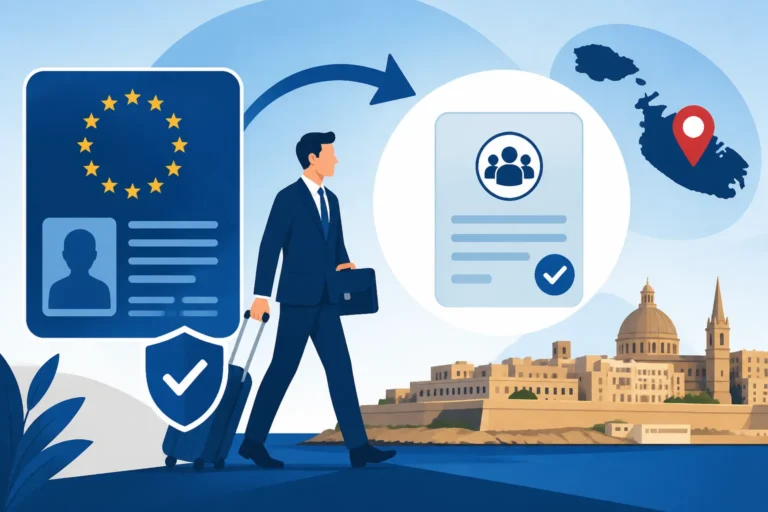
You cannot do anything in Malta without an ID card. If you are an EU citizen, this is relatively straightforward, but for third-country nationals (TCNs), the hurdle is significantly higher. You must first ensure your residence status allows for self-employment. For many, this starts with Working in Malta as a Foreigner: The Complete Guide (2027) to understand which permit category fits your situation.
Once you have your eResidence card, your next stop is the Social Security department. You need a Social Security number to register as self-employed. This number is the key to the entire kingdom; without it, Jobsplus won't talk to you, and the CFR won't be able to issue a tax identification number. You can apply for this online, but occasionally, a trip to the local District Office is necessary if the system stalls.
After you have that number in hand, you must register with Jobsplus. This is the national employment agency, and they need to know that you are no longer an employee (if you were one) and are now operating as a "Self-Employed" person. You will fill out an engagement form, specifically marking the self-employed box. For a deeper dive into this specific interaction, check out Registering as Self-Employed with Jobsplus and the CFR in Malta.
Registering for Tax and VAT
This is where most expats start to feel the heat—and not the pleasant 35-degree summer heat. In Malta, the tax system for freelancers is progressive. You are taxed on your net income (your total earnings minus your business expenses). Once Jobsplus processes your engagement, the Commissioner for Revenue is usually notified, but you should never assume the systems talk to each other perfectly. You will likely need to register for a Tax Identification Number (TIN) if you don't already have one from previous employment.
You should also look into Registering for Tax When You Arrive in Malta to make sure you are in the system correctly from day one. If you are moving from a country with very different tax rules, using a consultant or a platform like Taxes for Expats can prevent you from making costly errors in those first few months.
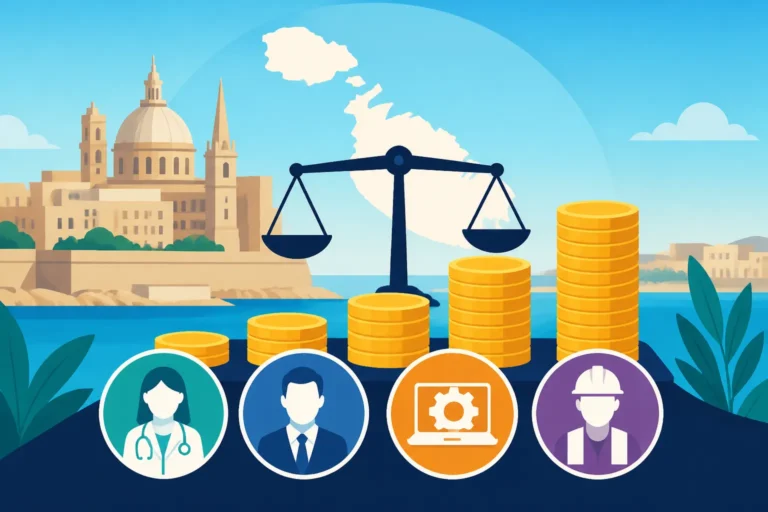
Then comes the VAT (Value Added Tax) question. In Malta, even if you don't expect to earn a lot initially, you often need to register for VAT. Most freelancers register under "Article 11," which is for "exempt small undertakings." This means you don't charge VAT to your clients, but you also can't claim it back on your expenses. If your turnover exceeds a certain threshold (usually €30,000 for services), you must register under "Article 10," which involves charging 18% VAT. You can find more detail on this in the guide on Do I Charge VAT as a Freelancer in Malta?.
| Registration Type | Target Audience | Key Feature |
|---|---|---|
| Jobsplus Engagement | All Freelancers | Mandatory to legally work on the island. |
| Social Security Class 2 | Self-Employed | Fixed weekly payments based on previous year's income. |
| VAT Article 11 | Small Freelancers | No VAT charged to clients; no VAT recovery on costs. |
| VAT Article 10 | High Turnover | 18% VAT charged; allows for VAT recovery on business assets. |
| Income Tax (Progressive) | All Residents | Rates vary from 0% to 35% based on earnings. |
Managing Social Security Contributions
As a freelancer in Malta, you fall into the "Class 2" social security category. Unlike employees who have their contributions deducted from their paycheck by their boss, you are responsible for paying these yourself three times a year: in April, August, and December. The amount you pay is based on your income from the previous year. If you are just starting out, you will usually pay the minimum rate until your first tax return is filed.
It is a common pitfall to forget these payments. If you miss them, you might face interest charges, and more importantly, you might lose your entitlement to sickness benefits or the state pension. Many freelancers get caught out when they realize they haven't paid their "bolla" (as locals call it) for a year. To avoid this, read How Do I Pay My Social Security Contributions if Self-Employed in Malta? for a clear payment schedule.
For a broader understanding of how these contributions actually benefit you in the long run, especially regarding healthcare and future stability, Social Security Class 1 and Class 2 Contributions in Malta provides an excellent breakdown of the two tiers. Generally, Class 2 contributions are higher than what an individual employee pays, because you are essentially covering both the "employer" and "employee" share of the contribution.
The Annual Tax Return and the TA22 Form
Every year, usually by the end of June, you will need to file your income tax return. For freelancers, this involves declaring your gross income and itemizing your expenses. This is where you calculate your "Chargeable Income." Malta is quite fair with what you can deduct—internet bills, a portion of your rent if you work from home, stationery, and professional software are usually all fair game.
The specific form you need to become familiar with is the TA22. This is the self-assessment form for self-employed individuals. If you find the manual forms confusing, the online portal for the Commissioner for Revenue is actually quite functional once you get your e-ID set up. You can find a step-by-step walkthrough in our article on What Is the TA22 Form for the Self-Employed in Malta?.
One thing I always tell new freelancers is to save at least 25-30% of every invoice they receive into a separate "tax" savings account. Because you pay tax in arrears in Malta, it is very easy to spend your earnings and then be hit with a massive tax bill eighteen months later. Being disciplined is the only way to survive the first two years of self-employment here.
Networking and Integrating into the Local Scene
Malta is an island built on relationships. While you can certainly find work on global platforms, the best "local" rates and the most interesting projects often come through word-of-mouth. There are several co-working spaces in areas like Valletta, Gzira, and Mosta where freelancers congregate. These are great spots to meet other people who have survived the registration process and can give you "the real scoop" on which accountants are best or which bank is currently being most difficult about opening business accounts.
While English is the primary language of business, learning a few words of Maltese can go a incredibly long way in smoothing over administrative hiccups. When you show up at a government office and can offer a friendly "Bonġu" (Good morning) or "Grazzi ħafna" (Thank you very much), the atmosphere often shifts from bureaucratic to helpful. I personally used iTalki to get some basic conversational Maltese under my belt when I first moved here, and it was a game-changer for my local networking. If you are curious about the linguistic side of things, check out Learning Maltese: Why and How Newcomers Pick It Up.
Common Pitfalls and How to Avoid Them
The most common mistake is starting work before your Jobsplus engagement is processed. Technically, you are working illegally during this window. Another big one is failing to update your address. If the tax department sends a letter to your old apartment in St. Julian's and you've moved to Mellieħa, you might miss a deadline that results in a heavy fine.
Lastly, don't ignore the social security aspect. Many newcomers ask, Do I Pay Social Security as a Self-Employed Person in Malta? thinking they can opt-out if they have private insurance. The answer is a firm yes—it is mandatory. Even if you have the best private health cover in the world, the Maltese government requires these contributions to maintain your legal status and access to the public system.
Setting up as a freelancer here is a test of your resolve, but once the paperwork is in order, the freedom is unmatched. You can spend your Wednesday mornings at a cafe in Marsaxlokk watching the fishing boats, knowing your administrative house is in order.
Disclaimer
This guide is intended for informational purposes only and does not constitute legal, financial, or tax advice. While every effort has been made to ensure the accuracy of this information based on 2026 guidelines, Maltese regulations and procedures can change frequently. You should always consult with a qualified professional, such as a certified accountant or a registered tax advisor in Malta, before making any decisions regarding your self-employment or tax status.