What Should British Citizens Do to Stay in Malta After Brexit?
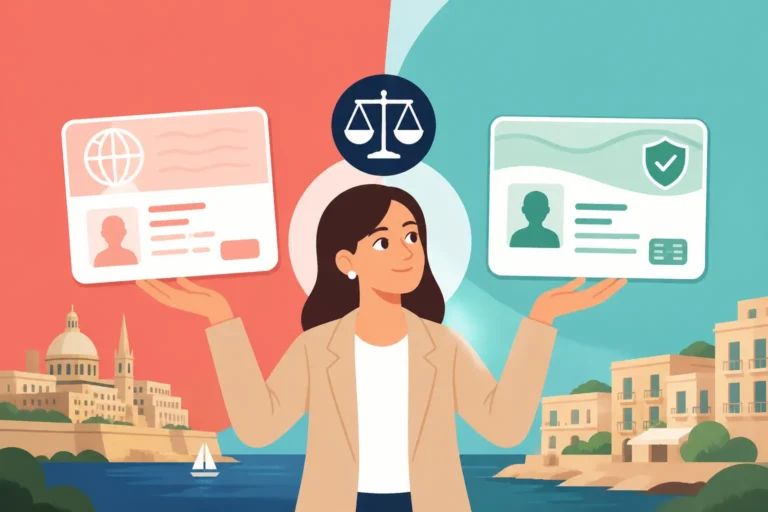
Navigating Malta's immigration system as a British citizen post-Brexit can feel like trying to solve a Rubik's Cube blindfolded – especially with the goalposts constantly shifting. The days of simply turning up with your passport and settling in are long gone, replaced by a maze of permits and requirements for those of us from the UK. This comprehensive guide is here to shed light on your options, offering realistic, step-by-step advice on what British citizens need to do to secure their right to live and work in Malta today.
Understanding Your Post-Brexit Status in Malta
Let's cut right to the chase: Brexit changed everything. For British citizens, Malta is no longer just a short flight and an easy move within the EU. Now, you’re considered a ‘third-country national’ in the eyes of the Maltese government, which comes with a whole new set of rules. This fundamental shift is the source of much frustration and confusion, and it’s important to understand where you stand.
The Withdrawal Agreement: Your Rights and Limitations
For many British citizens who were already living in Malta before the end of 2020, the EU-UK Withdrawal Agreement was a lifeline. This agreement protected the rights of those who had established their residence in Malta before 1st January 2021. If you were one of the proactive ones who applied for your new eResidence card under the Withdrawal Agreement – often referred to as getting ‘pre-settled’ or ‘settled’ status – then congratulations, your rights to live, work, and access services in Malta are largely protected, very similar to how they were before Brexit.
However, it’s crucial to remember that this agreement does not apply to British citizens who moved to Malta on or after 1st January 2021. For you, the rules are different, and you'll need to pursue other avenues for residency, as if you were from any non-EU country. This distinction is the source of many misunderstandings, with new arrivals sometimes mistakenly believing the Withdrawal Agreement applies to them. It’s a hard truth, but facing it head-on is the first step to finding your correct pathway.
New Arrivals vs. Existing Residents
The divergence in status is perhaps the most critical point for British citizens contemplating Malta.
Existing Residents (Pre-2021 Arrivals with Withdrawal Agreement Status):
If you successfully obtained your eResidence card under the Withdrawal Agreement, your rights are quite robust. You generally have the right to reside, work (or be self-employed), access public healthcare (provided you meet the social security contributions or S1 form criteria), and have your qualifications recognised, much as before. You still need to carry your eResidence card, and ensure you renew it when required. This card is your definitive proof of legal status. You should still ensure that any long periods away from Malta don't inadvertently impact your status, though the Withdrawal Agreement provides quite generous allowances for absences. Keeping your address updated with Identità is also vital.
New Arrivals (Post-2021 and without Withdrawal Agreement Status):
If you arrived in Malta on or after 1st January 2021, or if you were eligible for the Withdrawal Agreement but didn't apply in time, your situation is different. You now fall under the immigration rules for 'third-country nationals'. This means you typically cannot simply move to Malta and then look for a job. You will generally need a purpose for your stay – employment, study, investment, or demonstrating sufficient independent means – and you’ll usually need to apply for a visa and/or residence permit before or very soon after arriving, depending on the type of permit. This mirrors the process for citizens from countries like Australia, Canada, or India.
This shift means that finding a job offer in Malta that sponsors your permit, or qualifying for a specific residence programme, becomes paramount. You'll likely need to ensure you have comprehensive private health insurance, for instance, which is a significant change from the previous system where your European Health Insurance Card (EHIC) would suffice for initial periods.
The Importance of the eResidence Card
For all British citizens living in Malta, the eResidence card is your golden ticket. For those covered by the Withdrawal Agreement, it's proof of your protected rights. For those who arrived later, it’s the document that formalises your new status under whichever permit you secure (e.g., Single Permit, Nomad Residence Permit, etc.). Without this card, you risk being in an irregular situation, which can lead to severe complications.
The eResidence card contains your unique Maltese ID number, which is essential for almost everything here: opening a bank account, registering for utilities, accessing certain public services, and even getting your mobile phone contract. It’s not just an identity document; it’s your key to functioning within Maltese society. You'll interact with Identità (the Agency for Identity, Citizenship and Foreigners) for all matters related to this card, from initial application to renewals and changes of address. Be prepared for a bureaucratic process that often requires patience and meticulous documentation. Understanding Identità processing times and delays can save you a lot of anxiety.
Pathways to Maltese Residence for British Citizens Post-Brexit
Since the post-Brexit landscape treats British citizens as third-country nationals, your options for residing in Malta are now predominantly tied to specific purpose-based permits or investment schemes. Let’s explore the most common pathways.
Applying for the New Single Permit (Work Permit)
For many British citizens looking to work and live in Malta, the Single Permit is the most common route. This permit combines your work and residence authorisation into one document. Essentially, it means you need a job offer from a Maltese employer before you can apply for residency.
The process typically involves:
- Securing a Job Offer: This is the critical first step. Your prospective employer in Malta must be willing to sponsor your application. They often need to demonstrate to Jobsplus (Malta's public employment service) that they couldn't find a suitable candidate from Malta or the EU/EEA, a process that can sometimes involve advertising the role.
- Application Submission: Once you have a job offer, your employer typically starts the application process on your behalf with Identità. You'll need to submit a range of documents, including a valid passport, academic qualifications (often needing recognition through MQRIC), a Police Conduct Certificate from your home country, a signed employment contract, and proof of accommodation in Malta.
- Approval in Principle: If your application is initially successful, you might receive an 'Approval in Principle'. This allows you to apply for a D-Visa (National Long-Stay Visa) to enter Malta if you're not already here.
- Arrival and Biometrics: Upon arrival in Malta (or if already here), you’ll attend an appointment with Identità to submit your biometrics (fingerprints and photo).
- eResidence Card Issuance: After all checks are complete, your eResidence card will be issued, confirming your legal right to reside and work.
This pathway can be time-consuming, and waiting times can vary. It's a significant commitment from both you and your employer, but it’s the most direct route for those seeking traditional employment. Be aware that changing employers on a Single Permit in Malta requires a new application process, which can be disruptive.
The Nomad Residence Permit: A Popular Alternative
The Malta Nomad Residence Permit has become an increasingly popular option for British citizens (and other non-EU nationals) who can work remotely. This permit allows you to legally reside in Malta while working for an employer or clients located outside of Malta, or running your own remote business registered outside Malta. It’s tailored for the growing digital nomad community.
Key requirements for the Nomad Residence Permit include:
- Remote Work Capability: You must be able to perform your work remotely, using telecommunications technology.
- Non-Maltese Employer/Clients: Your employer must be registered in a foreign country, or your clients must be outside Malta, or your business must be registered abroad.
- Minimum Income Threshold: Applicants need to demonstrate a gross monthly income of at least €2,700 (or equivalent in foreign currency). This is a crucial financial requirement.
- Health Insurance: You must have comprehensive private health insurance cover for Malta. This is where options like Cigna Global come into play, offering plans specifically designed for expats and digital nomads, ensuring you meet the visa requirements and have peace of mind for any medical needs while living here.
- Accommodation: Proof of accommodation in Malta is required.
- Clean Criminal Record: A Police Conduct Certificate is mandatory.
The Nomad Residence Permit is issued for one year initially, renewable for up to three years, as long as you continue to meet the criteria. It's attractive because it doesn't tie you to a Maltese employer, offering greater flexibility. However, it's important to understand the tax implications of living in Malta while earning foreign income, as you will likely become a tax resident.
Other Residence Schemes for British Citizens
Malta offers several other residence programmes that may appeal to British citizens, particularly those with higher financial means or those looking to retire. These are generally more complex and often require significant investment or demonstrable wealth.
- The Global Residence Programme (GRP): This is a tax residency programme designed for non-EU/EEA/Swiss nationals who are not permanent residents of Malta. It offers a special tax status with a flat rate of 15% on foreign income remitted to Malta, subject to a minimum annual tax payment. To qualify, you need to purchase or rent qualifying property in Malta and meet minimum financial criteria.
- The Malta Retirement Programme (MRP): Specifically for retirees from non-EU/EEA/Swiss countries who receive a pension as their main source of income. Similar to the GRP, it offers special tax rates and requires property ownership or rental, along with other conditions.
- Malta Permanent Residence Programme (MPRP): This programme offers permanent residency to non-EU/EEA/Swiss nationals and their families through a combination of property investment (purchase or rent), a government contribution, and a donation to a local NGO. It's a more significant financial commitment but provides long-term stability.
These programmes are designed for specific profiles and come with their own set of benefits and rigorous requirements. They often appeal to individuals seeking a favourable tax regime or a clear path to long-term residence without direct employment.
Practical Considerations for British Expats in Malta
Moving to a new country, even one as welcoming as Malta, comes with a myriad of practical challenges. For British citizens post-Brexit, some aspects have become more complicated than they used to be.
Healthcare and Social Security
Healthcare in Malta operates on both public and private systems. For British citizens, your access to public healthcare now largely depends on your residency status and contributions.
- If covered by the Withdrawal Agreement: Your access to public healthcare remains largely as it was. If you’re employed and paying social security contributions, you’ll be entitled to public healthcare services. If you’re a UK state pensioner, you can apply for an S1 form from the UK, which entitles you to the same healthcare rights as a Maltese national, funded by the UK. You can learn more about How Malta's Public Healthcare Works: Entitlement, Contributions, and Costs.
- For New Arrivals (Post-Brexit, without Withdrawal Agreement status): You typically gain access to Malta's public healthcare system once you are legally employed and paying social security contributions. Until then, or if you're on a permit that doesn't include social security contributions (like the Nomad Residence Permit), you must have private health insurance. As mentioned earlier, comprehensive private cover from providers like Cigna Global is not just a good idea, but often a mandatory requirement for your residence permit application. Even with public healthcare entitlement, many expats opt for private insurance or use private clinics for faster access to specialists and shorter waiting times. Keep in mind that for a long-term stay, registering for health entitlement with the Entitlement Unit in Malta is a critical step.
Driving and Vehicle Registration
Driving in Malta can be an experience in itself, with narrow roads and a distinctive local driving style! For British citizens:
- Driving Licence Exchange: If you were resident in Malta before 1st January 2021 and hold a UK driving licence, you generally could continue to use it and exchange it for a Maltese one when it expired or after a certain period. For those covered by the Withdrawal Agreement, a mutual recognition of driving licences is often still in place.
- New Arrivals: If you moved to Malta after 1st January 2021, you might need to exchange your UK driving licence for a Maltese one within 185 days of becoming resident. After this period, your UK licence may not be valid for driving here, and you could face fines or insurance complications. The process involves submitting your UK licence, an eye test, and application forms to Transport Malta. This is a crucial administrative task that often gets overlooked.
- Vehicle Importation: Importing a car from the UK now involves customs duties and VAT, as the UK is outside the EU single market. This can make it a costly exercise, often outweighing the benefits compared to buying a car locally.
Financial Planning and Banking
Opening a bank account in Malta as a British citizen post-Brexit can be more challenging than it once was. Maltese banks (like BOV, HSBC, or APS) have heightened compliance requirements for non-EU nationals.
- Documentation: Expect to provide extensive documentation, including your eResidence card, proof of address, proof of income/funds, and sometimes a declaration of your tax residency status. Why Maltese Banks Ask for So Much Documentation is a common frustration for newcomers.
- Tax Implications: Understanding Malta's tax system is vital. If you’re working here, you’ll pay income tax and social security. If you’re on a Nomad Residence Permit or retired, you’ll need to understand Malta's remittance basis of taxation, particularly how foreign income and capital gains are treated in Malta. Professional advice can be invaluable here to avoid accidental remittances.
- Money Transfers: For sending money to and from Malta, especially back to the UK, you'll want to use services that offer competitive exchange rates and low fees. Many expats use online platforms for this rather than traditional bank transfers.
Moving Your Belongings
The logistics of moving your possessions to Malta from the UK have also become more complex due to Brexit. The days of free movement of goods are over, and you now need to contend with customs procedures, duties, and VAT.
- Customs Declarations: Your household goods and personal effects will now be subject to customs declarations upon entry into Malta. While you may be eligible for relief from customs duties and VAT on certain items if you are transferring your normal place of residence, strict conditions and timelines apply (e.g., items must have been used by you for at least six months and imported within 12 months of your move).
- Professional Movers: Engaging a reputable international moving company is highly recommended. Companies like Sirelo, which specialises in international relocations, can provide invaluable assistance in navigating the customs paperwork, packing, shipping, and delivery processes. They can help ensure your items clear customs smoothly and without unexpected delays or costs. Without professional help, the process can be incredibly frustrating and expensive.
- Pet Relocation: If you’re bringing pets, the requirements have also changed. Your pet will need a microchip, an up-to-date rabies vaccination, and an Animal Health Certificate issued by an official vet in the UK. Rules can be stringent, so plan well in advance.
Maintaining Your Status and Planning for the Future
Your journey in Malta doesn’t end once you receive your first eResidence card. It’s an ongoing process of renewal and, potentially, planning for long-term residency or even citizenship.
Renewal and Long-Term Residence
Residence permits in Malta, especially for non-EU nationals, are typically issued for a fixed period (e.g., one year for a Single Permit or Nomad Residence Permit). It’s crucial to understand the renewal process and application deadlines.
- Renewal Application: You must apply to renew your permit before its expiry date. Identità usually advises applying several months in advance to account for processing times. The renewal process often mirrors the initial application, requiring updated documentation, proof of continued eligibility (e.g., employment contract, income), and sometimes a new Police Conduct Certificate. What happens if your Maltese permit expires before you renew it? You risk falling out of status, which can have serious repercussions.
- Long-Term Residence: After five years of continuous legal residence in Malta, you may become eligible to apply for Long-Term Residence Status. This status offers greater stability and rights, making your position in Malta much more secure. However, there are specific criteria regarding the nature of your residence (e.g., time spent on student permits might not fully count), and limits on absences from the country. This is a significant milestone for many expats aiming to make Malta their permanent home.
Citizenship by Naturalisation
For those British citizens who envision a much longer future in Malta, the ultimate step might be citizenship by naturalisation. This is a long and rigorous process, typically requiring:
- Extended Residence: You must have resided in Malta for a significant period – usually a minimum of five years, with at least 12 months immediately preceding the application. This period often extends to seven years or more, depending on specific circumstances and discretionary decisions.
- Good Character: You must demonstrate good character, typically requiring a clean criminal record and adherence to Maltese laws.
- Intention to Reside: You need to show a clear intention to continue residing in Malta.
- Language and Culture: While not always a formal examination for naturalisation (unlike some other EU countries), demonstrating integration into Maltese society, including some understanding of its language and culture, is generally looked upon favourably.
It’s important to note that Malta allows dual citizenship, meaning you would not necessarily have to renounce your British nationality to become a Maltese citizen. This can be a huge benefit for those who want to retain their ties to the UK while fully integrating into their new home. You can find more details on Maltese Citizenship by Naturalisation: Who Qualifies if this is a path you wish to explore.
While the post-Brexit landscape has undoubtedly added layers of complexity for British citizens moving to Malta, it's certainly not impossible. With careful planning, a clear understanding of the new rules, and a dose of patience, you can absolutely make Malta your home.
Disclaimer
This article is for general informational purposes only and does not constitute professional advice. Laws, prices and regulations vary by location and change over time. Consult a qualified professional for guidance on your specific situation.