How Do I Pay My ARMS Bill in Malta?
Ah, the infamous ARMS bill. For many of us expats, that envelope landing in the mailbox often brings a mix of dread and confusion. It’s not just about the amount, but figuring out how to pay it, understanding the cryptic breakdown, and avoiding those dreaded high tariffs that seem to appear out of nowhere. This guide is going to walk you through everything you need to know about paying your ARMS utility bill in Malta, easing some of that administrative headache and helping you navigate a system that often feels designed to trip up newcomers.
Unravelling the Mystery of Your ARMS Bill
Let's be honest, those ARMS bills rarely arrive with a welcoming smile or a clear explanation. When you first get one, it can feel like you’re looking at a foreign language, even if it’s technically in English. But understanding what you’re being charged for is the crucial first step before you even think about paying.
Decoding the Charges: Water, Electricity, and More
Your ARMS bill is typically a quarterly statement, meaning you receive it every three months. It covers both your electricity and water consumption, along with any associated standing charges and VAT. The layout can be a bit dense, but if you look closely, you’ll find sections detailing your consumption for both services.
Often, the biggest source of confusion, and frankly, frustration, stems from estimated meter readings. ARMS often uses estimated readings if they haven't been able to physically access your meter or if you haven't submitted your own readings. While this might seem convenient on paper, it can lead to wildly inaccurate bills. Imagine getting a bill for €300 when you've barely been home, only to find out it was an estimate, and your actual consumption was much lower! Conversely, you might get a low bill for a quarter, only to be hit with a massive catch-up bill later when an actual reading is taken. This can seriously mess with your budgeting, especially if you're trying to figure out the true Cost of Living in Malta: Budgeting for the Real Numbers.
Each bill will show your meter number, the start and end dates of the billing period, and the readings themselves – both the previous one and the current one. If it’s an 'E' for estimated, take note! If it's an 'A' for actual, that's generally a more reliable figure. There will also be a breakdown of consumption units, whether in kilowatt-hours (kWh) for electricity or cubic meters (m³) for water, and the corresponding rates applied. It’s a lot to take in, but once you start to recognise these elements, it becomes a little less daunting. For a deeper dive into the mechanics of these statements, you might find our guide on How Do ARMS Utility Bills Work in Malta? particularly helpful.
The Dreaded Residential vs. Non-Residential Tariff Nightmare
This is, without a shadow of a doubt, the single biggest administrative headache and financial pitfall for newcomers to Malta. If you take away one thing from this guide, it’s this: ensure you are registered on the correct residential utility tariff. The difference in cost between the residential tariff and the non-residential (or commercial) tariff is monumental, often leading to bills that are two or three times higher, or even more.
The non-residential tariff is for properties not registered as a primary residence. This includes holiday homes, vacant properties, or properties where the occupants haven't bothered to update their residency status with ARMS. Unfortunately, many landlords, either out of ignorance or pure laziness, will keep properties registered under the higher non-residential tariff. When you move in, unless you actively change this, you'll be paying through the nose. I've heard countless horror stories of expats getting bills for €600, €800, or even €1,000+ for a single quarter, only to discover they've been paying commercial rates. The shock, the anger, the feeling of being ripped off – it's a rite of passage for many here, and it’s entirely avoidable.
To get onto the cheaper residential tariff, you need to prove to ARMS that you are living in the property as your ordinary residence. This typically involves registering your lease agreement with the Housing Authority, providing a copy of your eResidence card (your Maltese ID card), and a copy of your signed rental contract. The process is annoyingly bureaucratic and requires diligence, but it is absolutely essential. Our comprehensive guides, How Do I Register as a Residential Utility User in Malta? and Understanding Tiered Utility Tariffs and Registered Residents in Malta, break down this exact process step by step, so you can avoid this costly mistake. Trust me, it's worth every bit of effort. If you find your electricity bill is unexpectedly Why Is My Electricity Bill So High in Malta?, the first thing to check is almost always your tariff status.
Your Options for Settling Your ARMS Account
Once you’ve wrestled with understanding your bill and, hopefully, confirmed you’re on the right tariff, the next step is actually paying it. Thankfully, ARMS offers several ways to do this, ranging from modern online portals to more traditional in-person methods. Each has its pros and cons, depending on your preferences and technical comfort.
The Online Payment Portal: Convenience with a Caveat
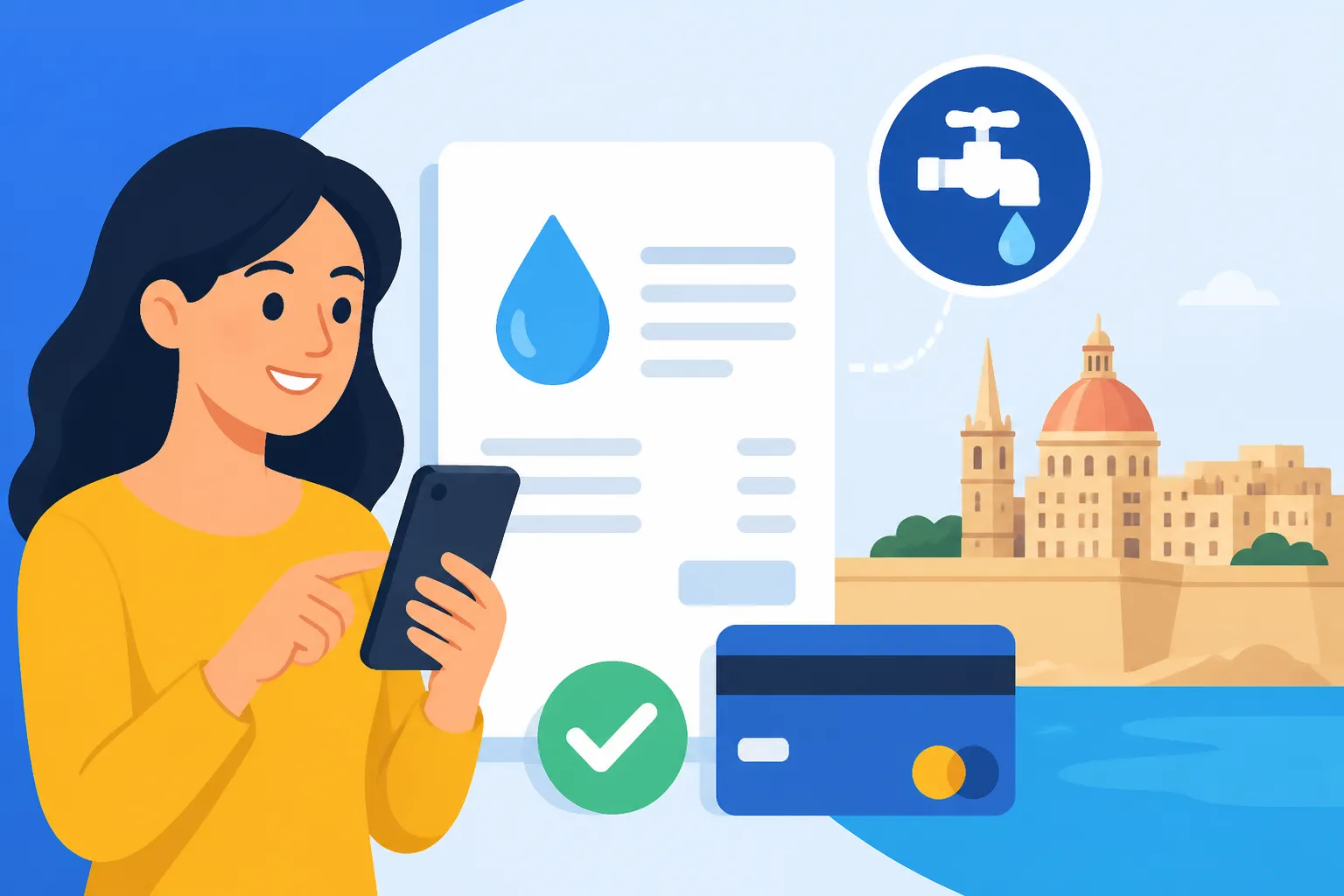
ARMS has an online portal, imaginatively called myARMS, which allows you to view your bills, track consumption (if your meter readings are up to date), and, crucially, make payments. In theory, it's the most convenient option, giving you 24/7 access from anywhere with an internet connection.
How it (Supposedly) Works: You register an account, link your utility account number, and then you can log in to see your current balance. Payments are usually made via credit or debit card. For new arrivals, relying on mobile data for everything, from finding directions to navigating government portals or even just looking up ARMS’s sometimes-hidden contact info, is common. That’s where a reliable eSIM provider like Airalo can be a lifesaver, ensuring you’re always connected without the hassle of local SIM registration initially.
The Caveat: While the online portal should be smooth sailing, the reality for many expats is that government online services in Malta can sometimes be a bit clunky, slow, or prone to occasional glitches. Payments might not process instantly, or you might struggle with the user interface. Don’t be surprised if it takes a few attempts or if you encounter error messages. If you're using a non-Maltese card, ensure your bank doesn't flag the transaction as suspicious. Always double-check for a confirmation email or a transaction ID to prove your payment went through.
Direct Debit: Set It and (Mostly) Forget It
For those who prefer a "hands-off" approach and want to avoid the quarterly scramble, setting up a direct debit is a popular choice. This means ARMS will automatically deduct the bill amount from your designated bank account on the due date.
Setting It Up: You can usually set up a direct debit through your Maltese bank or directly with ARMS. You'll need your ARMS account number and your bank account details. This method requires having a local bank account, which can be another administrative hurdle for new arrivals. Our guide on How to Open a Maltese Bank Account as a Newcomer has more on that.
Pros: The biggest advantage is that you won't miss a payment, thus avoiding late fees or, in extreme cases, disconnections. It provides peace of mind.
Cons: You need to ensure you always have sufficient funds in your account. If a direct debit bounces, you could incur bank charges and still face ARMS late fees. Also, if there's a dispute over a bill, stopping a direct debit can sometimes be more complicated than simply not making a manual payment. While generally reliable, it's still a good idea to keep an eye on your bank statements and cross-reference them with your ARMS bills. Imagine moving house and forgetting to update your direct debit – you could end up paying for utilities at your old address for months! When you're Setting Up Electricity and Water with ARMS and Enemalta in Malta, enquiring about direct debit is a smart move. You can find more specific instructions on How Do I Set Up Direct Debits for Bills in Malta?.
Traditional Payment Methods: Post Offices and Banks
For those who prefer the tactile reassurance of a receipt or simply aren't keen on online transactions, traditional payment methods are still available.
- MaltaPost Branches: You can take your ARMS bill to any MaltaPost branch across the islands and pay it over the counter. They accept cash or card payments.
- Pros: You get an immediate, physical receipt, which can be very reassuring. You can also ask basic questions to the staff, though their knowledge of ARMS-specific issues might be limited.
- Cons: Queues can be long, especially during peak times, and opening hours are limited. This option might not be practical if you work full-time or live in a more remote area.
- Banks: Some local banks, like BOV and HSBC, allow you to pay utility bills directly at their branches.
- Pros: Similar to the post office, you get a physical receipt and face-to-face service.
- Cons: Bank queues can be notoriously long in Malta, especially on particular days. Always check with your specific bank if they offer this service, as policies can change.
These traditional methods are reliable, but require a bit more planning and time out of your day.
ARMS Customer Care Offices: For When You Need a Human
When all else fails, or if you have a complex issue that can't be resolved online or over the phone, a visit to an ARMS customer care office is your next step. The main office is in Blata l-Bajda, and there are sometimes satellite offices open periodically.
Best For: Disputes, meter reading discrepancies, tariff registration problems, applying for new services, or sorting out long-standing issues. If you’re trying to change your tariff from commercial to residential, you’ll likely end up here with all your documentation.
What to Expect: Prepare for a wait. Bring all relevant documents – your eResidence card (or at least your How Do I Get a Maltese ID Card Number? if you're still waiting for the physical card), rental contract, previous bills, proof of payments, and any correspondence you’ve had. Be polite but firm. The staff can be very helpful, but the system itself can be slow. It’s a good idea to go during off-peak hours if possible. Always get a reference number or written confirmation of any actions taken or agreements made during your visit. This paper trail can be invaluable if issues resurface later.
| Payment Method | Pros | Cons | Best For |
|---|---|---|---|
| Online Portal | 24/7 access, track history (sometimes) | Can be clunky, occasional glitches, unreliable | Tech-savvy, independent management |
| Direct Debit | Automatic, no missed payments, convenient | Requires sufficient funds, disputes can be tricky to stop | Consistent income, hands-off approach |
| Post Office | In-person receipt, human interaction | Queues, limited hours, less convenient | Less tech-savvy, prefer physical proof of payment |
| Bank Branches | In-person receipt, human interaction | Often long queues, specific bank requirements | Older generation, prefer traditional banking |
| ARMS Office | Direct support for complex issues & disputes | Long waits, specific opening hours, bureaucratic | Disputes, registration problems, tariff changes |
Tackling Common ARMS Bill Challenges
Let’s face it, your journey with ARMS probably won’t be entirely smooth. There are common bumps in the road that many expats encounter. Being prepared for these can save you a lot of stress.
When Your Bill is Sky-High: Investigations and Explanations
The sudden appearance of an unexpectedly huge ARMS bill is a common shock for new residents. It’s disheartening and can lead to immediate panic, especially when you’re still finding your feet in a new country.
Common Causes:
- Wrong Tariff: As we discussed, this is the prime culprit. If you're on the non-residential tariff, your bills will be significantly higher, regardless of your consumption. This is the first thing you MUST check.
- Estimated Readings: If previous bills were based on low estimates, an actual reading can result in a massive catch-up bill covering several quarters of undercharged consumption.
- High Actual Consumption: Perhaps you genuinely used more electricity than you realised. Air conditioning in Malta's scorching summers, especially if left on continuously, can easily rack up huge costs. Older, inefficient appliances can also be energy guzzlers.
- Leakage or Faulty Appliances: Less common, but a hidden water leak or a constantly running appliance could also contribute.
Steps to Take:
- Check Your Tariff IMMEDIATELY: Call ARMS or visit their office. Have your account number, eResidence card, and lease agreement ready. This is paramount.
- Verify Meter Readings: Compare the readings on your bill with your physical meter. Take a photo of your meter for proof. If there's a significant difference, you’ll need to contact ARMS to get it corrected.
- Review Your Consumption History: The myARMS portal or previous bills can show you your consumption patterns. See if this bill is an outlier or part of an upward trend.
- Consider Your Habits: Did you use the AC more? Were there extra guests? Was anything left on by mistake? Sometimes, it’s simply a case of adjusting to Malta’s climate and the energy demands that come with it. Understanding How Does the Tiered Utility Tariff Work in Malta? will help you grasp how the more you use, the higher the unit cost per band.
- Document Everything: Keep a log of your meter readings, dates, who you spoke to at ARMS, and what was discussed. This paper trail is vital if you need to dispute the bill. The stress of high bills can be overwhelming, especially when managing an international move; that's why services like Sirelo, which help streamline the logistical nightmares of moving, are so valuable – allowing you to focus on crucial local admin like ARMS without the added stress of coordinating removals.
Dealing with Payment Discrepancies and Unexplained Charges
There are times when you’re convinced you’ve paid a bill, but ARMS records show otherwise, or you see a charge that just doesn't make sense. These situations are incredibly frustrating and can be time-consuming to resolve.
Scenario: You paid your bill online last month, but this month's bill includes a "previous balance due." Panic sets in.
What to Do:
- Gather Proof of Payment: This is where keeping receipts and checking bank statements is crucial. If you paid online, look for a transaction ID or confirmation email. If in person, locate that physical receipt.
- Contact ARMS Customer Care: Present your proof of payment. Be patient and polite but firm in your insistence that the payment was made.
- Payment Processing Delays: Sometimes, there can be a delay between your payment being made and ARMS updating their system. Give it a few working days, then follow up if it's still not reflected.
- Unexplained Charges: If you see charges you don't recognise, or for services you don't have, query them immediately. It could be an error in their system.
Remember, the onus is often on you to prove your case. Staying organised with your utility records from the moment you move into Malta (which should be one of the first things on your list from What Should I Do in My First Week After Moving to Malta?) will save you headaches down the line.
Proactive Steps for a Smoother ARMS Experience
While dealing with ARMS can feel like navigating a bureaucratic labyrinth, there are proactive steps you can take to make your life easier and keep those bills under control.
Regular Meter Readings: Your Best Defence
One of the simplest yet most effective ways to avoid bill shock is to regularly submit your own meter readings. This ensures you're always billed for your actual consumption, eliminating the guesswork of estimated bills.
How to Do It:
- Locate Your Meter: Electricity meters are usually outside your property or in a common area for apartments. Water meters are also typically outside, often near the pavement.
- Read the Numbers: Take a clear photo of the meter reading, noting the date and time.
- Submit to ARMS: You can usually submit readings via the myARMS online portal, a dedicated phone app (if available and functional at the time), or sometimes through their automated phone line. ARMS also has specific days when they request meter readings, usually communicated through a small notice left at your door.
Benefits:
- Accurate Billing: No more nasty surprises from under or over-estimated bills.
- Early Issue Detection: If you notice a sudden spike in consumption that doesn't match your usage, you can investigate immediately before it becomes a huge bill.
- Better Budgeting: Knowing your actual consumption helps you budget more accurately for your utility expenses.
Making this a routine – perhaps once a month or once a quarter, coinciding with the billing cycle – can significantly reduce stress and improve your control over your household expenses. This is a critical piece of advice for anyone Housing and Living in Malta: The Complete Newcomer's Guide (2027).
Effective Communication with ARMS
Communicating with ARMS can sometimes feel like shouting into the void, but having a strategy can help. Patience is key, but so is persistence.
Channels of Communication:
- Email: Use their official email address for non-urgent queries. Always include your account number, address, and a clear description of your issue. Keep a copy of all correspondence.
- Phone: For more urgent matters, calling customer care is often the fastest way to speak to someone. Be prepared for hold times. Have your account number ready, and if possible, note down the name of the person you spoke to and the date/time of the call.
- In-Person: As mentioned, for complex issues, an office visit with all your documents is often the most effective, albeit time-consuming, method.
Tips for Effective Communication:
- Be Clear and Concise: State your problem clearly, provide all necessary details, and explain what resolution you are seeking.
- Document Everything: Every call, every email, every visit – keep a record. This includes dates, times, names of staff, and any reference numbers provided. This paper trail is invaluable if you need to escalate an issue.
- Follow Up: Don't assume an issue is resolved because you've made one call or sent one email. Follow up regularly until you receive confirmation of resolution.
- Persistence Pays: It can be draining, but being politely persistent is often the only way to get complex issues resolved in the Maltese administrative system.
Remember, the goal is to get your utility situation stable and transparent, allowing you to settle into your new home without the constant worry of an unexpected bill. Whether you're dealing with initial setup or ongoing queries, being informed and proactive will serve you well. For a more general overview of Setting Up Your Home in Malta: Utilities, Internet, and Insurance, you’ll find further helpful advice. Whether you're moving from across the continent or further afield, the sheer volume of administrative tasks can be mind-boggling. Services that simplify the big picture, like finding reputable movers through Sirelo, can free up precious mental energy to tackle the smaller, but equally critical, tasks like understanding your new utility system.
Disclaimer
The information provided in this guide is for general informational purposes only and does not constitute professional advice. While we strive to keep the information up-to-date and accurate, utility policies and procedures in Malta can change. Always consult the official ARMS Ltd website or contact their customer service directly for the most current and specific information regarding your account. We recommend seeking professional assistance for any complex legal or financial matters.