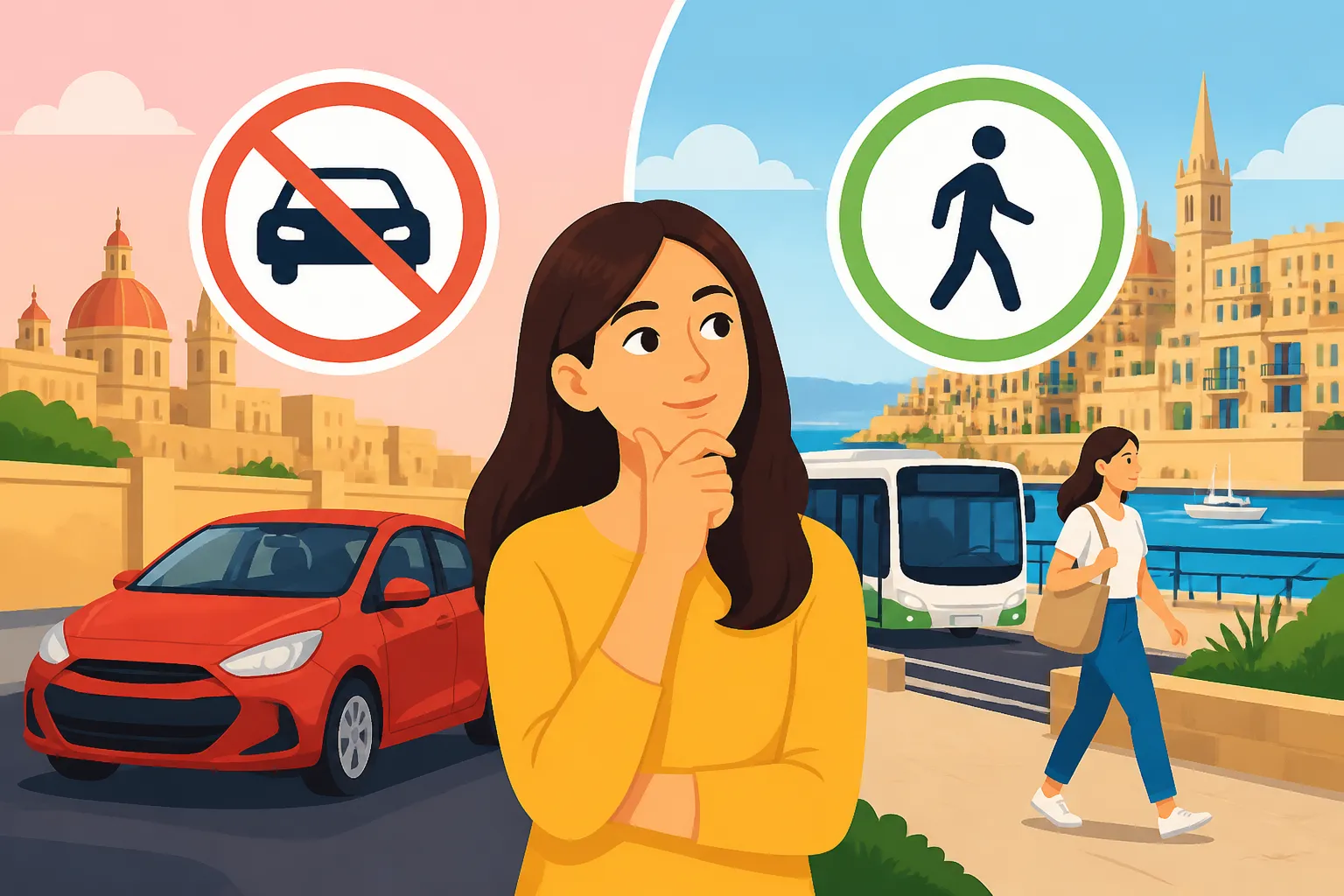
Do I Need a Car to Live in Malta?
Ah, the age-old question that plagues every newcomer to our little rock: "Do I really need a car in Malta?" It's a question that gets tossed around countless expat groups, often met with a chorus of emphatic "yes!" and equally passionate "absolutely not!" The truth, like most things here, is a bit more nuanced than a simple yes or no. This guide aims to cut through the noise, offering you a veteran expat's candid perspective on navigating Malta's roads and public transport, helping you decide if getting behind the wheel is truly for you.
The Realities of Driving in Malta: A Love-Hate Relationship
Let's be honest, the thought of zipping around a new country in your own car, windows down, sea breeze in your hair, sounds idyllic, doesn't it? In Malta, that dream often crashes head-on with the very tangible realities of our roads. It’s a place where driving can be both a blessing for freedom and a curse for your blood pressure.
Traffic, Parking, and Road Conditions
Anyone who’s spent more than a week here will tell you that traffic in Malta can be an absolute nightmare. Our tiny island nation has one of the highest car ownership rates in Europe, and during peak hours, particularly in the urban sprawl of Birkirkara, Marsa, and the areas surrounding Sliema and St Julian's, you'll find yourself crawling along at a snail's pace. What looks like a 10-minute drive on a map can easily become a 45-minute ordeal, testing the patience of even the most zen-like drivers. If your daily commute involves traversing these bottlenecks, consider the impact on your mental well-being and your schedule.
Then there's the parking situation. Oh, the parking! Finding a spot in popular areas like Valletta, Sliema, St Julian's, or even your own residential street can feel like winning the lottery. You'll spend ages circling blocks, eyeing up every parallel parking challenge with a mixture of dread and determination. Many residential areas have specific permit zones or time limits, while commercial areas often rely on paid parking lots or sometimes elusive parking attendants (known locally as 'parkers') who expect a tip. Factor in the sheer number of vehicles crammed into such a small space, and you quickly realise that owning a car doesn't automatically mean easy access to everywhere.
And let's not forget the roads themselves. While significant improvements have been made in recent years, you'll still encounter plenty of narrow, winding streets, some with surprising potholes that appear out of nowhere, especially after a good downpour. The Maltese driving style is, shall we say, assertive. Indicate? Sometimes. Give way? Often, but not always. Beeping? Absolutely, for everything from "hello" to "hurry up!" You’ll need a thick skin and quick reflexes to navigate the everyday dance of Maltese traffic.
Fuel Costs and Insurance: The Hidden Expenses
Owning a car isn't just about the upfront cost; it's the ongoing expenses that can really add up. Fuel prices in Malta, while generally regulated and sometimes subsidised to keep them relatively stable, are still a significant drain on your wallet. They might not fluctuate wildly like in some other countries, but they are certainly not cheap. A full tank can set you back a fair bit, and if you’re driving daily, those costs quickly accumulate into a substantial monthly outgoing.
Then there's car insurance. By law, you need at least third-party insurance, but comprehensive cover is often recommended, especially if you have a newer vehicle. As a new expat, you might find your initial premiums are higher, as you won't have a local no-claims bonus. You’ll need to shop around, but expect insurance to be a notable annual expense. And don't forget the annual road licence fee, which varies depending on your car's engine size and age. These aren't hidden fees; they're just part of the package when you own a vehicle here.
Maintenance is another factor. The hot climate and sometimes rough roads can take their toll on a car. Regular servicing is essential, and you’ll also need to pass the VRT (Vehicle Roadworthiness Test) periodically. Tyre wear, air conditioning maintenance, and minor repairs due to daily wear and tear can all chip away at your budget. It's not just about getting from A to B; it's about keeping your vehicle in roadworthy condition on an island that puts cars through their paces.
Navigating Malta Without Your Own Wheels: Public Transport and Alternatives
For many expats, especially those new to the island, diving headfirst into car ownership might not be the immediate answer. Thankfully, Malta has a pretty robust public transport system and a growing array of alternatives that can make car-free living a genuine possibility.
The Tallinja Bus Network: Free, But Not Always Fast
Malta's public transport system, operated by Malta Public Transport and branded as Tallinja, is a double-edged sword. On one hand, it's incredibly extensive, covering virtually every village and town on the islands, and for residents, it's actually free! Once you've registered for your personalised Tallinja card – which requires your Maltese ID Card Number: The Key to Accessing Healthcare – you can tap on and off the buses without paying a cent. This is a massive financial benefit, especially if you're on a tighter budget.
However, "free" doesn't always mean "fast" or "convenient." Bus routes often take indirect paths, designed to serve as many localities as possible, meaning a direct 15-minute drive could easily translate into a 45-minute bus journey, often requiring a change in Valletta. During peak summer tourist season, or simply during rush hour, buses can get incredibly crowded, sometimes so full that they drive past your stop without stopping. Punctuality can also be an issue; while improvements have been made, delays are not uncommon. It’s always a good idea to check the Tallinja app for real-time tracking, but sometimes even that can't save you from a bus that's running twenty minutes late. For more on this, check out our guide on Public Transport in Malta: Free Bus Travel and the Tallinja Card.
Ride-Sharing, Taxis, and Other Options
When the buses aren't cutting it, or you need to get somewhere quickly and directly, ride-sharing apps like Bolt and eCabs are your best friends. These services are hugely popular in Malta, offering a convenient way to get around, particularly in the evenings or when you're loaded with groceries. They're generally reliable, and while more expensive than the bus, they're often more affordable than traditional white taxis (which usually operate on fixed fares, especially from the airport, and can be quite pricey). For short distances, especially within the more populous areas, they provide a quick and easy solution, often arriving within minutes.
Car-sharing schemes, such as GoTo, have also emerged, offering another layer of flexibility. These allow you to rent a car, scooter, or even a moped for short periods, paying by the minute or hour. It's a fantastic option if you only need a car occasionally – perhaps for a specific errand, a trip to a less accessible beach, or exploring a distant village without the commitment of ownership. Being able to access these services quickly and reliably often depends on having good mobile data, so make sure you're set up with a local SIM or an international eSIM from providers like Airalo to keep your navigation and booking apps running smoothly.
Getting to Gozo and Inter-Island Travel
One of the great joys of living in Malta is the easy access to its sister island, Gozo. If you’re without a car, getting there is still a breeze. The main Gozo Channel ferry from Ċirkewwa (Malta) to Mġarr (Gozo) runs frequently, carrying both vehicles and foot passengers. While taking your car is an option, it does add to the cost, and once on Gozo, you might find the public bus network, or even hiring a scooter or quad bike for the day, to be a more charming way to explore the island's quieter charms.
For those looking for a faster crossing, there are also fast ferry services connecting Valletta to Mġarr, Gozo, and even to the Three Cities (Cospicua) on the main island. These are for foot passengers only and offer a scenic, efficient way to travel, bypassing the traffic up to Ċirkewwa. For a comprehensive look at how to make the journey, our guide on Getting to Gozo: The Ferry, Fast Ferry, and Inter-Island Travel is a must-read. You certainly don't need a car to enjoy Gozo, and in some ways, it might even enhance your experience there.
Weighing Your Options: When a Car Makes Sense (and When It Doesn't)
Ultimately, the decision of whether or not to own a car in Malta comes down to your personal circumstances, lifestyle, and priorities. There's no universal answer, as what works for one expat might be a complete non-starter for another.
Lifestyle Considerations: Family, Work, and Leisure
Think about your daily life. If you have a young family, a car can be an absolute lifesaver. Juggling school runs, doctor's appointments, grocery shopping, and weekend activities with children, particularly in the Maltese heat, is significantly easier with your own vehicle. Trying to haul a week's worth of groceries onto a crowded bus with a toddler in tow quickly loses its romantic appeal. For families, the convenience often outweighs the costs and frustrations.
Your work situation is another key factor. If your job is in a central, well-connected area like Sliema, St Julian's, or Valletta, and you live within walking or easy bus distance, then a car might be superfluous. Many offices in these hubs are easily accessible via public transport or ride-sharing. However, if your workplace is in one of the more industrial zones, a business park outside a main town, or if your role requires frequent travel between different locations, a car becomes almost essential. Also consider your working hours; if you start very early or finish late, public transport options become less frequent.
For leisure, a car offers unparalleled freedom. Malta is full of hidden gems – secluded beaches, ancient ruins, charming rural villages, and breathtaking viewpoints that are difficult, if not impossible, to reach by bus. Having your own wheels means you can spontaneously decide to chase the sunset at Dingli Cliffs, explore the silent city of Mdina at your own pace, or discover a new pastizzeria off the beaten track. Without a car, your explorations might be limited to more accessible areas, or you'll be relying on costly day tours. Understanding Choosing Where to Live in Malta: Towns, Regions, and Gozo will also inform this decision, as living in a rural area like Mellieħa will almost certainly require a car, whereas living in central Sliema might not.
Cost-Benefit Analysis: Public vs. Private Transport
To truly make an informed decision, it's worth doing a quick cost-benefit analysis. While public transport is free for residents, it costs time and sometimes convenience. A car, on the other hand, costs money in various forms but buys you flexibility and often, speed.
Let's look at a hypothetical monthly breakdown:
| Cost Category | Car Ownership (Estimate per month) | Public Transport + Ride-Share (Estimate per month) |
|---|---|---|
| Upfront (amortised) | Car Purchase (e.g., €200/month) | €0 |
| Fuel | €100 – €250 (depending on usage) | €0 |
| Insurance | €40 – €80 (avg. annual spread) | €0 |
| Road Licence/VRT | €15 – €30 (avg. annual spread) | €0 |
| Parking (paid) | €20 – €100 (if frequent use) | €0 |
| Maintenance | €30 – €60 (incl. wear & tear) | €0 |
| Ride-Sharing/Taxis | €10 – €50 (occasional use) | €80 – €200 (frequent use for convenience) |
| Total (Indicative) | €415 – €770+ | €80 – €200+ |
Note: These are rough estimates and can vary significantly based on car model, driving habits, insurance provider, and how often you use ride-sharing services.
As you can see, the financial disparity can be quite stark. Before bringing a vehicle to Malta or purchasing one here, it's important to understand these costs. If you're looking at the broader picture of your move, services like Sirelo can help you compare the costs of shipping personal belongings, and perhaps even your car, from abroad, giving you a clearer financial picture of the true "upfront" cost before you even consider the running expenses. For a wider view of personal finances, our guide on Cost of Living in Malta: Budgeting for the Real Numbers offers excellent insights.
Ultimately, you need to weigh the value of your time and stress levels against the financial outlay. If waiting for buses, transferring in Valletta, and being limited by routes doesn't bother you, then saving hundreds of euros a month could be very appealing. If, however, your daily routine involves complex logistics, or you value the freedom and convenience a car offers, then the investment might be worthwhile. Consider test-driving both options for a few weeks upon arrival. Rely on public transport and ride-sharing initially, and then rent a car for a week or two to experience the difference. You’ll also need to get to grips with how to Importing or Exchanging Your Driving Licence in Malta if you choose to drive, as your foreign licence might only be valid for a limited period. Our detailed guide on Driving in Malta: Licences, Roads, and Buying a Car can provide more specific details.
Disclaimer
The information provided in this article is for general guidance and informational purposes only, and does not constitute professional advice. While we strive to provide accurate and up-to-date information, circumstances in Malta can change, and individual situations may vary. It is always recommended to seek advice from relevant authorities, financial advisors, or legal professionals for specific situations.