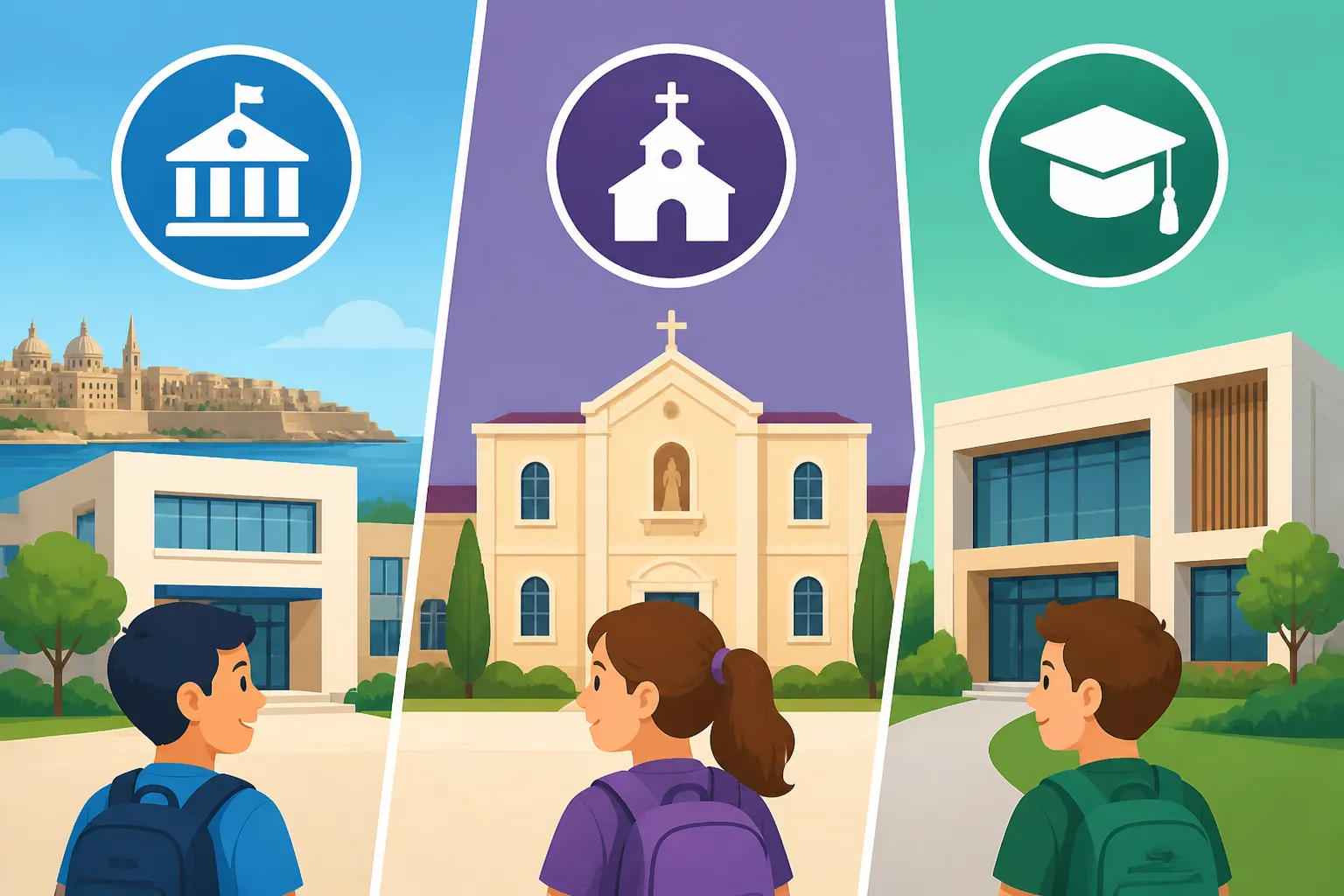
What Is the Difference Between State, Church, and Private Schools in Malta?
Choosing the right school for your child in a new country like Malta can feel like navigating a maze blindfolded. You've just tackled residency, found a place to live, and now you're faced with a system that has three distinct types of schools – state, church, and private – each with its own quirks, admission processes, and cultural nuances. It's enough to make any parent's head spin, especially when you're trying to figure out what’s best for your family and where your child will truly thrive. This guide will meticulously break down the differences between these three educational pathways in Malta, giving you the clarity you need to make an informed decision.
Navigating Malta's Educational Landscape as an Expat Parent
When you first arrive in Malta, the educational system can seem a bit opaque, particularly if you’re coming from a country with a very different structure. The good news is that Malta offers a variety of choices, catering to different needs and budgets. However, understanding the distinctions and, more importantly, the realities of gaining admission to each can be a significant hurdle for expat families. It’s not just about looking at a website; it’s about understanding the unspoken rules, the demand, and the cultural expectations that shape each institution.
For many, the immediate thought is often, "Which one is 'best'?" but the truth is, 'best' is subjective and depends entirely on your family's unique circumstances, your child's personality, your budget, and how deeply you wish to immerse yourselves in local Maltese culture. Whether you're planning a short stay or envisioning long-term residence, the school choice will have a profound impact on your child's integration and overall experience. When you're first thinking about moving your life and family over here, comparing removal services on platforms like Sirelo can save you a world of headache and money before you even get to school applications, ensuring a smoother transition for everything, not just school.
State Schools: The Public Option and Its Realities
Malta's state schools are publicly funded and managed by the Ministry for Education. They are, at face value, the most straightforward option for many expat families because they are completely free, from tuition to basic textbooks. However, 'free' doesn't always mean 'easy to access' or 'a perfect fit' for everyone, and it's crucial to understand the practicalities involved.
Cost, Curriculum, and Language
The primary draw of state schools is undoubtedly the cost – or lack thereof. This includes tuition, most school materials, and even transportation in some cases. This can be a huge relief for families managing the often-high cost of living in Malta.
The curriculum followed by state schools is the National Curriculum Framework for Malta. This means that subjects are taught in both Maltese and English. While English is widely spoken across the islands and is an official language, Maltese is the primary language of instruction for certain subjects, especially in the early years. This can be a significant challenge for non-Maltese speaking children, particularly those entering primary school without any prior exposure to the language. While schools do offer some support for English as an Additional Language (EAL), the level and availability of this support can vary widely between schools and may not always be sufficient for rapid integration.
For parents concerned about their child’s language development, especially if Malta is a temporary home, this bilingual approach requires careful consideration. You might find yourself juggling school communication in both languages, and relying on online translation tools or helpful local friends.
Admissions for Expats and Integration
Admission to state schools is primarily based on geographical zoning. Your child will typically be assigned to a school within your residential catchment area. This means that securing a school place often hinges on where you live, and you'll need to have your Maltese eResidence Card and ID number sorted before you can properly register. This ties into the broader administrative hurdles you face when you first arrive. You can find more details on how to get started with the identification process in our guide on Getting Your Maltese eResidence Card and ID Number.
The application process usually involves submitting forms to the local council or directly to the school, along with proof of residence, birth certificates, and sometimes even medical records. If your child is joining mid-year, finding an immediate place might be easier in less densely populated areas, but schools in popular expat hubs like Sliema, St. Julian's, or Swieqi can be quite full.
From an integration perspective, state schools offer an unparalleled opportunity for children to immerse themselves directly into Maltese culture and make local friends. They will learn Maltese, participate in local traditions, and truly experience daily life on the island. This can be a huge positive for families planning a long-term stay and valuing deep cultural assimilation. However, for children who struggle with language or are highly sensitive to change, this environment might initially be overwhelming. It's a balance of cultural richness versus potential initial academic and social challenges.
You can delve deeper into the overall process and expectations by reading our guide on How Do I Enrol My Child in School in Malta?. Also, understanding When Does My Child Start School in Malta? can help you plan ahead for admission windows and age requirements.
Church Schools: Faith, Tradition, and High Demand
Malta is a predominantly Catholic country, and church schools play a very significant role in the education system. They are often perceived as offering a higher standard of education and discipline, making them incredibly popular among both Maltese and some expat families. However, gaining admission to a church school is notoriously challenging, and it’s an experience that often requires a significant dose of patience and, frankly, luck.
Funding, Ethos, and What to Expect
While church schools are officially free from tuition fees, they are not entirely without cost. Parents are usually expected to contribute towards school maintenance, supplies, extra-curricular activities, and school uniforms. These contributions are generally much lower than private school fees but are still a financial consideration. Church schools receive funding from the government as well as from the Church itself.
The curriculum is the same National Curriculum Framework as state schools, meaning education is delivered in both Maltese and English. However, religious instruction, based on Catholic principles, is an integral part of the school day. This faith-based ethos extends beyond the classroom into the school’s general environment and values. If you are not Catholic or prefer a secular education, this aspect needs careful thought.
Church schools are known for fostering a strong sense of community and traditional values. Many have excellent reputations for academic achievement and pastoral care, which is a major reason for their popularity. They often have longer school days or offer more extra-curricular activities than some state schools.
The Admissions Lottery: A True Test of Patience
This is where the reality check for expats often hits hardest. Admissions to church schools are primarily conducted through an annual lottery system, typically held in January or February for the following academic year. The number of places available is significantly lower than the demand, especially for popular schools. Priority is usually given to:
- Children who already have siblings attending the school.
- Children of school employees.
- Children from specific feeder schools (especially for secondary schools).
- Children from specific parishes, for some schools.
- Children identified with social or special needs.
After these categories are filled, any remaining places are allocated through a random draw, which is often live-streamed and witnessed by parents. For expat families without existing connections (siblings in the school, parish ties), securing a place through this lottery is incredibly difficult. Many expat parents express deep frustration with this system, as it feels like a genuine roll of the dice with very low odds. The application period is usually quite narrow, so you'll need to be on the ball and aware of the dates. You can expect to provide similar documentation as for state schools, including proof of residence and your child's The National Immunisation Schedule for Children in Malta records.
For non-EU citizens, there are often even fewer places available, if any, in certain church schools, due to the sheer demand from the local population and EU citizens. It’s important to research specific school policies well in advance. While you're figuring out the school run, having a reliable eSIM from Airalo can keep you connected for navigation or school communication, especially in those initial chaotic weeks where every little bit of convenience helps.
Private Schools: Diverse Curricula and Tailored Learning
Private schools, also known as independent schools, offer an alternative that often appeals directly to expat families due to their international curricula, English-centric instruction, and often more streamlined admissions processes for newcomers. These schools are entirely self-funded through tuition fees, which means they come with a significant financial commitment.
Costs, Curricula, and Support Systems
The most immediate difference with private schools is the cost. Tuition fees vary widely depending on the school, the child’s age, and the curriculum offered, but they can range from a few thousand to over ten thousand euros per year, per child. On top of tuition, there are usually additional fees for registration, uniforms, extracurricular activities, transportation, and sometimes even technology. It's a substantial investment, and you should factor these costs into your overall budget if you're exploring this route. Our guide to Money and Finance in Malta: A Complete Guide for Foreigners (2027) can help you understand the broader financial landscape.
Many private schools in Malta offer internationally recognized curricula, such as the British curriculum (leading to IGCSEs and A-Levels), the International Baccalaureate (IB) Programme, or American curricula. This can be a huge advantage for expat families who anticipate moving again, as these qualifications are widely recognized globally. The primary language of instruction is almost always English, with Maltese often offered as a subject or an optional language. This makes the transition significantly smoother for non-Maltese speaking children.
Furthermore, private schools often boast better facilities, smaller class sizes, and a wider range of extracurricular activities, from sports to arts and music. They tend to have dedicated English as an Additional Language (EAL) support programmes, which are often more comprehensive than those found in state or church schools, helping children integrate academically and socially more quickly.
Admissions and the Expat Experience
Admissions to private schools are typically handled directly by the schools themselves. The process usually involves an application form, submission of previous school reports, possibly an interview with the child and parents, and sometimes an entrance assessment. While popular private schools can have waiting lists, particularly for certain year groups, the process is generally less arbitrary than the church school lottery and more accommodating to families arriving from abroad.
Some prominent private schools in Malta include:
- Verdala International School: Offers an American curriculum and IB Diploma, popular with families seeking a truly international environment.
- QSI International School of Malta: Provides an American curriculum with a focus on mastery learning.
- St. Edward's College: An all-boys school offering the British curriculum and IB Diploma, known for its strong pastoral care.
- San Andrea School & San Anton School: Sister schools offering a Maltese-English bilingual curriculum with a strong focus on holistic development, from kindergarten to secondary. These are sometimes referred to as 'independent' schools rather than purely 'private' because while fee-paying, they often blend local and international approaches.
Private schools often attract a diverse student body, comprising both expat and Maltese children whose parents prefer an English-medium, internationally-focused education. This can create a supportive 'expat bubble' for families, which can be both a blessing and a curse. While it eases the social transition for children, it might offer less exposure to traditional Maltese culture compared to state or church schools. For a deeper dive into these options, check out International Schools and Curricula in Malta.
Deciding What's Best for Your Child in Malta
Ultimately, there's no single "best" choice when it comes to schools in Malta; it's about finding the best fit for your family. Here’s a quick overview to help you compare:
| Feature | State Schools | Church Schools | Private/International Schools |
|---|---|---|---|
| Cost | Free (tuition, books, transport) | Free tuition, parental contributions for extras | Fee-paying (tuition, registration, uniforms, etc.) |
| Curriculum | National Curriculum (Maltese & English) | National Curriculum (Maltese & English), religious | International (British, IB, American) or hybrid |
| Language | Bilingual (Maltese primary for some subjects) | Bilingual (Maltese primary for some subjects), religious | Primarily English, EAL support available |
| Admissions | Zoned by residence, relatively straightforward for residents | Highly competitive lottery, priority categories | Direct application, assessments, waiting lists possible |
| Ethos | Community-focused, secular | Faith-based (Catholic), strong community | Diverse, international, often holistic development |
| Expat Fit | Good for full immersion, budget-friendly | Difficult access, strong local integration | Smoother transition, international outlook, costly |
| Key Challenge | Language barrier, varying resources | Admissions difficulty, religious focus | High cost, potential "expat bubble" |
When making your decision, consider these factors:
- Your Budget: Be realistic about what you can afford for school fees and associated costs.
- Your Child's Needs:
- Language: How well does your child adapt to new languages? How much EAL support will they need?
- Personality: Is your child outgoing and quick to adapt, or do they need a more structured, familiar environment?
- Academic Path: Are you looking for an international curriculum that easily transfers if you move again, or are you happy with the national system?
- Your Family's Long-Term Plans: If you plan to stay in Malta for many years, deeper integration through state or church schools might be appealing. If your stay is shorter or uncertain, private international schools might offer more consistency.
- Cultural Integration: How important is it for your child to immerse themselves fully in Maltese culture versus maintaining an international perspective?
My advice, as someone who’s been through the expat journey, is to visit schools if you can. Speak to other expat parents – their unfiltered experiences are invaluable. Attend open days, and if possible, try to get a feel for the school environment. Don't underestimate the power of word-of-mouth here.
The administrative side of things, like registering for school and understanding how your child's health records fit in, is also key. For a broader perspective on what life is like for children here, take a look at our article on Raising Children in Malta: Childcare, Schools, and Family Life. If you're weighing the pros and cons of state versus other options, our detailed guide on Schools in Malta: State, Church, and Independent Options might offer even more granular insights.
Ultimately, your child will adapt, and you will find a way. The Maltese school system, while it has its unique challenges, offers a robust education. It's all about finding the path that best suits your family's journey on this sunny island.
Disclaimer
The information provided in this guide is for general informational purposes only and does not constitute professional advice. Educational policies, admissions procedures, and fee structures in Malta can change. While we strive to keep the information up-to-date, we recommend verifying all details directly with the respective educational institutions or the Maltese Ministry for Education.