How Do I Cope with the Summer Heat in Malta?
Oh, the Maltese summer heat! Believe me, as a seasoned expat who's melted through more than a few Augusts here, I truly get it. That feeling of stepping out of your air-conditioned haven into what feels like a giant hairdryer, or waking up in a sweat despite your best efforts – it’s a universal expat initiation ritual on these islands. It’s not just "hot"; it's a humid, relentless heat that can seriously test your patience and well-being. This comprehensive guide is here to walk you through exactly how to not just survive, but truly cope with the summer heat in Malta, drawing on years of personal experience and plenty of trial and error.
The Reality of Maltese Summer Heat
Malta's summers are legendary, and not always in a good way for those unaccustomed to the specific brand of heat we experience. It's more than just high temperatures; it's a whole climate conundrum that can make everyday life feel like an endurance sport.
The Climate Conundrum: More Than Just High Temperatures
When you check the forecast in Malta during July or August, you might see temperatures in the low to mid-30s Celsius (around 90-95°F). "Not too bad," you might think, especially if you're from a place that regularly hits higher numbers. But here’s the kicker: Malta's summers are incredibly humid. The island is surrounded by the Mediterranean Sea, which acts like a giant humidifier, constantly pumping moisture into the air. This high humidity means your body's natural cooling system – sweating – becomes far less effective. Sweat doesn't evaporate as readily, leaving you feeling sticky and overheated, even when the thermometer itself isn't showing extreme highs.
The "feels like" temperature often soars into the high 30s or even low 40s Celsius, making a significant difference to how you experience the day. The sun itself is also incredibly intense, with very high UV indices from late spring right through to early autumn. The summer season typically kicks off in June and can easily stretch well into October, with July and August usually being the absolute peak. Unlike a dry heat, which can be intense but dissipates once you're in the shade, Malta's humid heat lingers, permeating everything and everywhere, making finding true relief a constant quest.
Why Your Apartment May Feel Like an Oven
Many newcomers are surprised by how quickly their apartments heat up, and how long they retain that heat, even after the sun goes down. There are several factors at play here. Firstly, a lot of Malta's traditional buildings are constructed from soft, porous limestone. While this material helps keep homes cool in the thick of summer by absorbing and slowly releasing heat, it also means that once the heat has permeated the walls, it takes ages to dissipate. If your apartment is on the top floor, or particularly exposed to direct sunlight for most of the day, it's going to absorb a tremendous amount of thermal energy.
Modern buildings, especially those with large glass windows or poor insulation, can become veritable greenhouses. South-facing apartments, while lovely in winter for the sun exposure, become almost unbearable in summer if not properly shaded. Furthermore, many older Maltese apartments weren't designed with cross-ventilation in mind, making it difficult to create a cooling breeze even when you do open windows. The struggle is real, and it's not just you; it's a common complaint among residents trying to figure out how to keep their homes comfortable. If you’re still in the planning stages of your move and thinking about how to manage your belongings in a new, hot climate, looking into services via platforms like Sirelo might give you an idea of how best to store or transport items sensitive to heat.
Master Your Home Environment
Turning your home into a sanctuary from the heat is paramount for mental and physical well-being during Maltese summers. It often requires a combination of technology and smart habits.
Air Conditioning: Your Best Friend (and Biggest Bill)
Let’s be honest: for most expats, air conditioning isn't a luxury in Malta; it's a necessity, especially for getting a decent night's sleep. Without it, you might find yourself tossing and turning, soaked in sweat, and utterly exhausted by morning. However, relying on AC comes with its own set of challenges, primarily the electricity bill. Malta's electricity isn't cheap, and constant AC use can send your utility costs skyrocketing. For insights into managing these expenses, you might want to read our guide on Why Is My Electricity Bill So High in Malta?.
To use your AC efficiently, it’s not always about blasting it on the lowest setting. A more effective strategy is to set it to a comfortable but not frigid temperature (say, 24-25°C / 75-77°F) and let it run, rather than turning it off completely and then having to re-cool a super-heated room later. Keeping the doors and windows closed in the room you're cooling is vital. Regularly cleaning your AC filters also makes a huge difference to its efficiency – dirty filters make the unit work harder, consuming more energy.
Smart Cooling Without Breaking the Bank
While AC is a lifesaver, it's not the only trick up your sleeve. Fans, for instance, are incredibly useful. Ceiling fans can circulate air effectively, and portable fans can provide direct relief. Position them strategically to create a flow of air through your living space.
Investing in good quality blackout curtains or blinds is another essential step. During the day, keep these closed, especially on windows that get direct sunlight. This blocks a significant amount of solar heat from entering your home. As soon as the sun goes down and temperatures drop slightly, open your windows and doors (if safe to do so) to create cross-ventilation. This is often called "flushing" the hot air out and letting cooler evening air in. Some people even hang damp sheets or towels in front of open windows to cool the incoming air through evaporation, though in high humidity, this effect is limited. Taking cold showers throughout the day can also offer temporary relief. Before you move in, understanding how to register your utility accounts is crucial; check out our guide on How Do I Set Up Electricity and Water When I Move in Malta? for detailed steps.
Practical Adjustments to Your Daily Routine
To truly master your home environment, you need to adapt your daily habits to the climate. This means shifting many activities to cooler parts of the day. Avoid using heat-generating appliances like ovens, dishwashers, and washing machines during peak heat hours. Instead, cook lighter meals that require minimal stove time, or embrace outdoor barbecues if you have the space. Running the dishwasher or doing laundry late in the evening or early morning can prevent additional heat buildup in your home.
Consider adopting a "siesta" culture, even if it's just an hour of quiet downtime during the hottest part of the afternoon. This isn't laziness; it's a sensible way to conserve energy and avoid the worst of the heat. Plan your errands and outdoor activities for early mornings or late evenings. Even mundane tasks like cleaning or watering plants can become much more comfortable when done before the sun fully exerts its power or after it has begun to set.
Navigating the Maltese Outdoors
While your home might be your sanctuary, life in Malta means you'll eventually need to venture outside. Knowing how to do so comfortably and safely is key.
Dress for Success: Clothing and Accessories
Your wardrobe choices become critical in the Maltese summer. Forget anything tight-fitting, dark-coloured, or made from synthetic materials that don't breathe. Opt for light-coloured, loose-fitting clothing made from natural fabrics like cotton, linen, or bamboo. These materials allow air to circulate around your body and help sweat evaporate more easily.
A wide-brimmed hat is an absolute must-have to protect your face, neck, and ears from the relentless sun. Sunglasses are also essential to protect your eyes. Footwear should be open and comfortable, allowing your feet to breathe. Sandals or flip-flops are the norm, but ensure they provide adequate support if you plan on doing a lot of walking. Remember, exposed skin will burn quickly, so consider lightweight long sleeves or sun-protective clothing if you're particularly sensitive or spending extended time outdoors.
Hydration is Non-Negotiable
This isn't just about sipping water when you feel thirsty; it's about constant, proactive hydration. You'll sweat more than you realise, even when sitting still. Carry a reusable water bottle everywhere you go and refill it frequently. Many cafes and shops are happy to top you up, and public water fountains are becoming more common.
While water is primary, supplementing with electrolyte drinks can be beneficial, especially if you're very active or sweating profusely. Fresh fruits and vegetables, like watermelon, cucumber, and oranges, are also excellent sources of hydration and essential nutrients. Try to limit excessive alcohol and caffeine, as both can contribute to dehydration. Consider packing some ice packs in your bag, or keeping a refreshing face mist handy. Staying connected on the go is also important, so a reliable eSIM from providers like Airalo can ensure you can always find a water refill station or an air-conditioned spot on Google Maps.
Timing is Everything: When to Venture Out
The general rule of thumb for outdoor activities in Malta during summer is to avoid the hours between 11 AM and 4 PM. This is when the sun's rays are at their most potent, and the heat and humidity are usually at their peak. Schedule errands for early mornings, and save your leisurely walks, swims, or explorations for late afternoons or evenings.
If you absolutely must be out during peak hours, seek shade whenever possible. Maltese towns, with their narrow streets and tall buildings, often offer pockets of shade. Plan your routes to take advantage of these. Utilize public transport where possible, as buses are usually air-conditioned, offering a brief respite. When enjoying the island's many beautiful beaches or pools, choose locations with natural shade or rent an umbrella, and take frequent dips in the sea or pool to cool down.
Making the Most of Malta's Water
Malta is an island, and its surrounding waters are your greatest ally against the summer heat. Swimming, snorkeling, or simply wading in the crystal-clear Mediterranean Sea offers instant, refreshing relief. Many beaches and rocky inlets provide easy access to the water. Some popular spots even have lidos or beach clubs with pools and amenities.
If you have access to a private or communal pool, use it! A quick dip can drastically lower your body temperature and invigorate you. Even a simple cool shower at home can provide much-needed temporary relief. Consider visiting some of the quieter bays or venturing out to Gozo, where the pace is a little slower and some spots might feel a touch less stifling.
Safeguarding Your Health in the Heat
Malta’s summer heat isn't just uncomfortable; it can be dangerous if you don't take proper precautions. Recognizing the signs of heat-related illnesses and knowing how to respond is crucial for everyone, especially newcomers.
Recognizing Heat-Related Illnesses
It’s vital to understand the difference between heat exhaustion and heatstroke. Heat exhaustion is less severe but still requires attention. Symptoms include heavy sweating, cold, clammy skin (despite the heat), faintness, dizziness, fatigue, a weak but rapid pulse, muscle cramps, and nausea or vomiting. If you experience these, move to a cool place, lie down, loosen clothing, apply cool, wet cloths to your body, and sip water. If symptoms worsen or last longer than an hour, seek medical attention.
Heatstroke, on the other hand, is a medical emergency. This occurs when your body's temperature regulation system fails. Symptoms include a high body temperature (40°C / 104°F or higher), hot, red, dry or damp skin, a strong and rapid pulse, throbbing headache, dizziness, nausea, confusion, and loss of consciousness. If you suspect heatstroke, call for an ambulance immediately by dialing 112. While waiting for help, move the person to a cooler area and begin to cool them down with wet cloths or by fanning them. Knowing what number to call for an ambulance in Malta is crucial in such situations. You can find more details in our guide on Emergency Medical Care in Malta: 112, A&E, and Urgent Help.
Vulnerable Populations and Extra Care
Certain groups are more susceptible to heat-related illnesses and require extra vigilance during the summer. These include the elderly, infants and young children, pregnant women, and individuals with chronic medical conditions (such as heart disease, diabetes, or respiratory issues). If you fall into one of these categories, or know someone who does, take additional precautions. This might mean staying indoors during peak hours, having more frequent checks on hydration, and ensuring access to air conditioning.
Pets are also highly vulnerable. Never leave animals in parked cars, and ensure they have plenty of fresh water and shade, especially if they spend time outdoors. Consider walking dogs early in the morning or late in the evening to protect their paws from the scorching pavements. Being mindful of your neighbours, especially those living alone, can also make a huge difference in community well-being.
Staying Prepared: Essentials for Your Summer Survival Kit
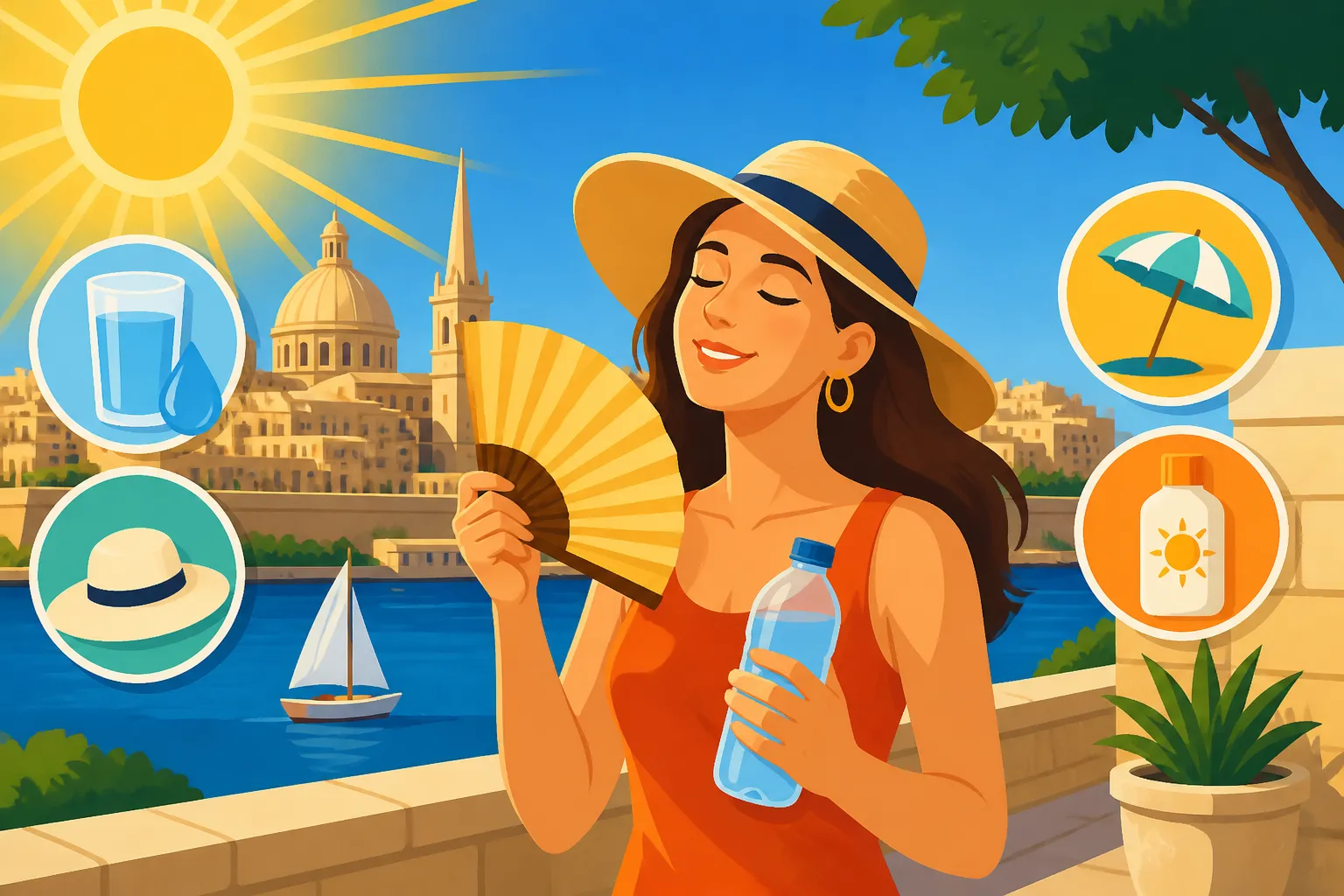
Having a few essentials on hand can make a big difference in coping with the heat. Your personal summer survival kit should include:
- High-SPF sunscreen: Apply generously and frequently, even on cloudy days.
- After-sun lotion or aloe vera: For soothing any accidental sunburn.
- Reusable water bottle: Keep it filled and with you always.
- Light, breathable clothing: Always have an extra set if you plan to be out for a while.
- Wide-brimmed hat and sunglasses: Non-negotiable for sun protection.
- A small, portable fan or a hand fan: Provides instant personal relief.
- Cooling towels or face mist: Great for a quick cool-down on the go.
- Oral rehydration salts or electrolyte tablets: Handy for quickly replenishing lost minerals.
- First-aid kit: Including pain relievers for headaches, and basic wound care.
Equipping yourself with these items, combined with smart planning, will significantly enhance your comfort and safety during the long, hot Maltese summer.
| Cooling Method | Pros | Cons | Typical Cost (running) |
|---|---|---|---|
| Air Conditioning (AC) | Most effective for significant cooling | High electricity consumption, dry air, maintenance | High |
| Electric Fans | Cheaper to run, provides air circulation | Doesn't cool air, just moves it; less effective in humidity | Low |
| Natural Ventilation | Free, fresh air when temperatures allow | Limited on still, humid days; security concerns at night | Very Low |
| Blackout Curtains/Blinds | Blocks solar heat, aids sleep | Can make rooms dark; doesn't actively cool air | Low (one-off purchase) |
| Cold Showers/Wipes | Immediate, temporary body temperature reduction | Short-lived effect; frequent use can dry skin | Medium (water usage) |
| Staying Hydrated | Essential for health, aids body's natural cooling | Requires constant effort, may not feel sufficient alone | Low |
Disclaimer
The information provided in this guide is for general informational purposes only and does not constitute professional advice. While we strive to offer accurate and up-to-date information based on general knowledge and experience in Malta, circumstances can vary significantly. Always consult with relevant professionals, such as healthcare providers, utility companies, or legal advisors, for advice tailored to your specific situation. We are not responsible for any actions taken based on the information presented herein.