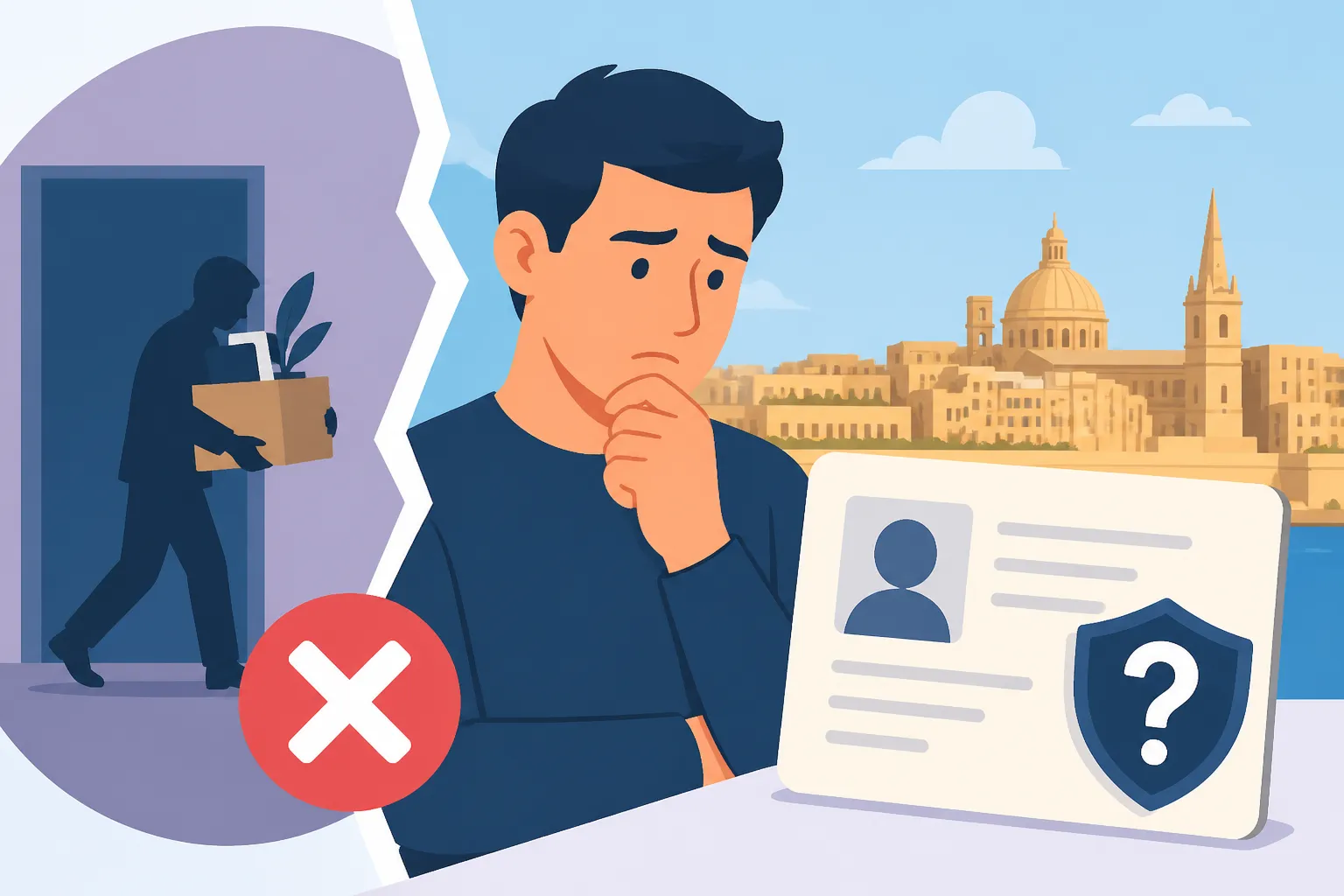
What Happens to My Permit If I Am Made Redundant in Malta?
The sudden news of redundancy can hit you like a tonne of bricks, especially when you're an expat building a life in a foreign country like Malta. It's not just about losing your job; it's about the very foundation of your right to live here potentially being shaken. This guide is here to walk you through the often confusing and anxiety-inducing process of what happens to your Maltese residence permit if you find yourself made redundant, offering practical steps and reassuring advice from someone who's seen it all.
Understanding Your Maltese Residence Permit and Redundancy
When you first arrived in Malta, navigating the permit system probably felt like wrestling an octopus – confusing, with lots of moving parts. Now, with redundancy on the horizon, it feels even more complex because your permit is so intrinsically linked to your employment.
The Basics of Your Permit and Employment Link
Most non-EU/EEA nationals residing in Malta do so under a 'Single Permit,' which, as the name suggests, bundles your work and residence authorisation into one document. This permit is issued based on a specific job offer from a specific employer. It's your golden ticket to live and work here. The moment that employment is no longer valid, the permit's very foundation is called into question. For EU/EEA citizens, the situation is different; your right to reside in Malta is based on treaty rights, though still generally contingent on being employed, self-employed, studying, or having sufficient resources. This guide primarily focuses on the challenges faced by non-EU/EEA Single Permit holders, as their situation is typically far more precarious.
The Maltese government, through Identità (the agency formerly known as Identity Malta), needs to know if your employment status changes. This isn't just a bureaucratic formality; it's central to their immigration control. They issue these permits with the understanding that you have a means of support and a legitimate reason to be in the country. Losing your job means that reason has fundamentally changed, triggering a review of your permit status. It's not personal, but it certainly feels like it when your whole life here is suddenly uncertain.
What "Redundancy" Really Means in Malta
It's important to distinguish between being 'made redundant' and simply being 'dismissed' or 'fired.' In Malta, redundancy has specific legal implications. It generally means your position is no longer required by the company, perhaps due to restructuring, economic downturns, or technological changes, rather than a failure on your part to perform your duties.
According to Maltese employment law, if a company is making positions redundant, there's usually a process they must follow, including selection criteria and often consultation periods. If you are made redundant, your employer must give you a notice period, the length of which depends on how long you've been employed. For instance, if you've been employed for more than six months but less than two years, the minimum notice period is two weeks. This notice period is paid, and you retain your rights and obligations as an employee during this time. Understanding this distinction is crucial because redundancy often comes with specific entitlements, whereas dismissal for cause might not.
The Immediate Aftermath: What to Do When You Receive That Letter
Getting the redundancy notice is a gut punch, no doubt. Your mind races: "What about my rent? My visa? My life here?" Take a deep breath. There are immediate steps you need to take to protect your status and your future in Malta.
Notifying Identità: The Crucial First Step
This is perhaps the most critical action. When your employment contract is terminated, your employer is legally obliged to notify Jobsplus (Malta's public employment service) and Identità. But don't just rely on them! You, as the permit holder, also have a responsibility to inform Identità yourself. While the exact grace period can vary and isn't always explicitly clear-cut in official documents, it's generally understood that you have a short window—often around 10 working days—to inform Identità of your change in circumstances. Failing to do so can complicate things significantly down the line, potentially even leading to your permit being revoked.
You'll need to contact Identità and explain your situation. They will typically ask for a copy of your termination letter from your employer. This might feel scary, but it’s a necessary step to stay compliant and show you're taking proactive measures. They will usually provide you with a period, commonly a few weeks to a few months, to find new employment. During this period, your existing permit technically remains valid, giving you time to look for another job without immediately becoming an overstayer. This is not a guaranteed length, so it's vital to confirm it directly with Identità.
Your Rights During the Notice Period
Even after you've been given notice of redundancy, you are still an employee during your notice period. This means your employer must pay you your full salary and benefits, and you are expected to perform your duties as usual. This period can be invaluable for job searching, attending interviews, and generally getting your affairs in order.
You should use this time wisely. Engage with Jobsplus, Malta's national employment agency, and officially register as a jobseeker. This is important for two reasons: firstly, it demonstrates your intention to remain employed and contributes to your track record with the authorities. Secondly, it can be a prerequisite for accessing certain social security benefits, should you need them. You can find more information on Jobsplus: Registering Your Employment and Finding Work in Malta on our site. Remember, your employer cannot legally prevent you from looking for new work during this time, nor can they refuse to pay you if you're actively working during the notice period.
Financial Considerations and Unemployment Benefits
This is where things can get truly stressful. Losing your income is a massive worry. First, ensure your employer pays all your outstanding dues, including any pro-rata leave not taken. Malta has a decent social security system, but accessing unemployment benefits as a non-EU citizen on a Single Permit can be tricky and often requires specific contributions and conditions.
To be eligible for Sickness Benefit in Malta: Your Rights When You Can't Work or unemployment benefits, you generally need to have paid sufficient social security contributions. The Social Security Department will assess your eligibility based on your contributions record. Many expats often find that while they've been paying into the system, the specific criteria for unemployment benefits for non-EU nationals might not always align perfectly with their situation, especially if they haven't been contributing for a significant period. Don't assume you'll automatically get a payout; check your eligibility directly with the Social Security Department.
It might be prudent to explore options for managing your finances, especially if there's a gap between jobs. Firms like Taxes for Expats can offer advice on managing your financial affairs, especially if your redundancy has cross-border tax implications or if you're considering returning to your home country. This transition period is when financial planning becomes even more critical.
Navigating the Job Market and Securing a New Permit
The clock starts ticking the moment you receive that redundancy notice. Your primary goal is to secure new employment and, with it, a new Single Permit.
The Window of Opportunity: How Long Do You Have?
As mentioned earlier, Identità typically grants a grace period, which can range from a few weeks to a few months, to find new employment. This period is crucial. It’s not an invitation to relax; it’s an intense job hunt. During this time, your current permit remains valid, preventing you from becoming an irregular migrant. However, if you don't secure a new job offer and the associated permit application within this window, you risk your permit being revoked and being asked to leave the country.
It's vital to stay in regular communication with Identità throughout this process. Don't wait until the last minute. Provide updates on your job search progress, even if it's just to show you're actively looking. Sometimes, demonstrating a genuine effort can buy you a little more time, but this is at their discretion. They need to see that you are actively seeking to fulfil the conditions of your residence.
The Job Search While on a Redundancy Permit
Malta's job market, especially for expats, is dynamic. Use all available resources:
- Online Job Portals: LinkedIn, Jobsplus, MaltaPark, KeepMePosted, and specific industry job boards are your friends.
- Recruitment Agencies: Many agencies specialise in placing foreign talent, particularly in iGaming, FinTech, and IT sectors. They can often fast-track interviews.
- Networking: Leverage your existing contacts. Reach out to former colleagues, industry peers, and expat groups. A personal recommendation can go a long way.
- Skills Assessment: Consider if your existing skills are still in demand. If not, look into short courses or certifications to boost your employability. Our guide on Recognising Foreign Qualifications in Malta Through the MQRIC might be helpful here.
Many companies in Malta operate in English, so your language skills are likely a huge asset. However, if you're looking to broaden your opportunities, perhaps consider picking up some basic Maltese. Tools like iTalki can connect you with online tutors to brush up on your language skills, which can be an impressive addition to your CV, showing your commitment to life in Malta. Even simple phrases can make a big difference in interviews, demonstrating a willingness to integrate.
Switching Employers and Permit Renewal
Once you secure a new job offer, the process essentially restarts, but with less initial uncertainty. Your new employer will need to apply for a new Single Permit for you, much like the first time. The crucial difference is that you are already in Malta, which simplifies some aspects of the application.
You will need a new, valid employment contract, and your new employer will submit the application to Identità. During the processing time of this new application, as long as your previous permit is still valid or you are within the grace period granted by Identità, you are generally allowed to remain in Malta. It's often referred to as "switching employers on a Single Permit in Malta." However, you cannot start working for the new employer until the new permit application is approved. This waiting period can be frustrating, but it's a non-negotiable legal requirement. Always verify this with Identità, as laws can change.
What If You Can't Find a New Job in Time?
This is the scenario everyone dreads, but it's important to be realistic and prepared for all possibilities.
Exploring Other Permit Options
If the grace period is running out and you haven't secured a new work permit, don't despair immediately. There might be other avenues to explore, depending on your circumstances:
- Nomad Residence Permit: If you can prove you work remotely for a company outside Malta, or are self-employed with clients primarily outside Malta, and meet the income threshold (€2,700 gross monthly in 2026), the Nomad Residence Permit could be an option. This is for those who aren't tied to the Maltese labour market. You can delve deeper into The Nomad Residence Permit: Income Threshold and Conditions to see if it's a fit.
- Self-Employment Permit: If you have a viable business idea and can meet the stringent criteria for self-employment, this could be an option. This typically requires a robust business plan, significant investment, and often employing Maltese nationals. It's not an easy route, but it exists. Our guide on Registering as Self-Employed with Jobsplus and the CFR in Malta has more details.
- Student Permit: If you have the financial means and a desire to upskill, enrolling in a full-time course at a recognised educational institution could allow you to apply for a student residence permit. Bear in mind that student permits usually come with restrictions on working hours.
- Family Reunification: If you have a spouse or partner who is an EU/EEA citizen or holds a stable Maltese residence permit, you might be able to apply for a family member permit. This depends heavily on their income and accommodation.
These options require careful planning and meeting specific criteria, so it's advisable to seek professional advice from an immigration lawyer or consultant if you are considering them.
The Inevitable: Preparing to Leave Malta
If all other options are exhausted and you cannot secure a new permit within the given timeframe, you will eventually be required to leave Malta. Overstaying your permit is a serious immigration offense and can have severe consequences, including fines, detention, and bans from re-entering the Schengen Area.
It's better to plan your departure than to be forced into it. This involves:
- Tying up loose ends: Closing bank accounts, cancelling utility contracts (remember those ARMS bills?), giving notice on your rental property, and ensuring you get your deposit back. Read Your Rights Under Malta's Private Residential Leases Act for advice on ending your tenancy.
- Shipping belongings: Plan logistics for moving your possessions.
- Tax implications: Consult with a tax advisor (perhaps from a service like Taxes for Expats) about your final tax obligations and any potential refunds or declarations required when leaving Malta.
- Official departure: Ensure you leave within the timeframe specified by Identità. Keep proof of your departure (e.g., flight tickets) as evidence of compliance.
This is a tough reality, and it's okay to feel disappointed or frustrated. Malta, for all its charms, can be challenging when the bureaucratic wheels turn. Remember, many expats face similar hurdles, and there's a strong community here to offer support, even if it's just to listen.
Key Timelines and Actions When Facing Redundancy
To help you keep track, here's a summary of crucial steps and approximate timelines. Please note these are general guidelines, and it is always best to confirm specifics with Identità and your employer.
| Action | Recommended Timeline | Key Contact / Document | Notes |
|---|---|---|---|
| Receive Redundancy Notice | Day 0 | Employer | Understand your notice period and severance (if any). |
| Inform Identità | Within ~10 working days of official termination | Identità (formerly Identity Malta) | Crucial for compliance; confirm grace period for job search. |
| Register with Jobsplus | As soon as possible, during notice period | Jobsplus | Important for job search support and potential benefit eligibility. |
| Job Search & Networking | Immediately upon receiving notice, throughout grace period | Online portals, recruiters, LinkedIn, personal network | Target roles that align with your permit type. Consider Finding a Job in Malta: Where to Look and How to Apply. |
| Apply for New Single Permit (with new employer) | As soon as new job offer is secured, within grace period | New Employer (applying to Identità) | You cannot start new employment until the new permit is approved. |
| Explore Alternative Permit Options | During grace period if job search is difficult | Identità, immigration lawyer, Jobsplus (for self-employment) | Consider Nomad, Self-Employed, or Student permits. |
| Prepare for Departure (if no new permit) | Proactively, before grace period expires | Landlord, utility providers, banks, tax advisor | Avoid overstaying. Plan logistics for moving out and financial wrap-up. |
Losing your job in Malta as a foreigner is undoubtedly a stressful experience, but by understanding the process, knowing your rights, and acting proactively, you can navigate it with greater confidence. Stay informed, stay resilient, and remember that many resources exist to help you through this challenging time.
Disclaimer
The information provided in this guide is for general informational purposes only and does not constitute legal, financial, or immigration advice. While we strive to provide accurate and up-to-date information, laws and procedures in Malta can change rapidly. Always consult with official government bodies such as Identità, Jobsplus, the Department of Social Security, or qualified legal and financial professionals for advice tailored to your specific situation. We cannot be held responsible for any outcomes based on the use of this information.