Do I Need a New Permit If I Switch Jobs in Malta?
One of the biggest anxieties for anyone living and working in a foreign country, especially here in Malta, is the thought of changing jobs. We've all been there, wondering if a new opportunity means navigating another mountain of paperwork, fearing that our hard-earned residence status might be jeopardized. This guide is here to untangle that very real knot of worry, providing clear, step-by-step insights into what happens to your residence permit in Malta when you decide to switch employers.
The Essentials: Understanding Your Maltese Single Permit
When you first arrive in Malta to work, for many of us coming from outside the EU/EEA, our journey begins with the fabled Single Permit. This isn't just a piece of plastic; it's the document that ties your right to live and work here intrinsically to your employment. Ignoring its specifics can lead to unnecessary stress, or worse, administrative hurdles that could put your status at risk.
What Your Single Permit Really Means for Your Employment
Your Single Permit, issued by Identità (Malta's agency responsible for identity management), isn't a carte blanche to work anywhere or for anyone. It's usually very specific. Look closely at your eResidence card and the accompanying letter you received; you'll typically find the name of your employer clearly stated on it, sometimes even the specific role or sector you're approved for. This means that if you're working for 'Company A' as a Marketing Executive, your permit explicitly grants you the right to do that job for that company. It's a fundamental aspect of how the Maltese system controls foreign labour. You can dive deeper into this process by reading our guide on How the Single Permit Application Works Between You and Your Employer for a more holistic understanding of the initial steps.
The rationale behind this employer-specific approach is rooted in immigration control and labour market needs. Malta wants to ensure that foreign workers fill specific gaps in its economy, and by tying permits to particular employers, they can monitor this effectively. It's not uncommon, and many countries adopt a similar strategy. For us expats, it means less flexibility than a general work visa might offer, but it also provides a clear framework for what's allowed and what isn't. This specificity is why simply handing in your notice and walking into a new job isn't an option here.
The Employer-Specific Nature of Your Permit
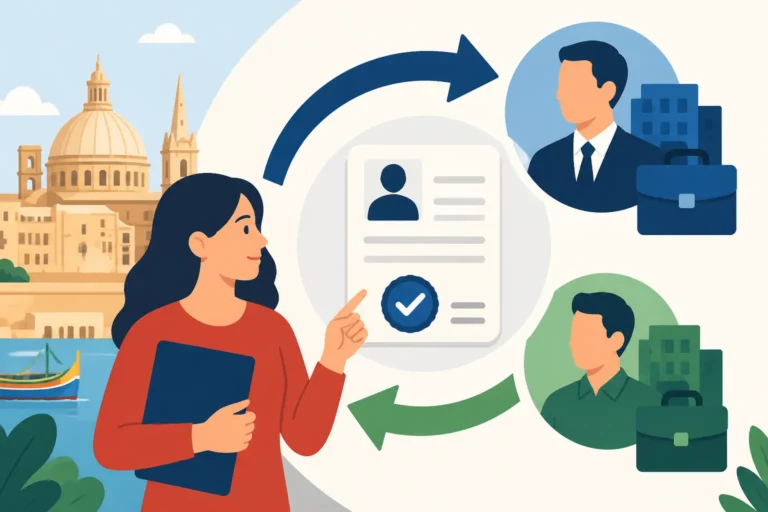
This brings us to the crux of the matter: your Single Permit in Malta is, by its very design, tied to the employer who sponsored your initial application. Think of it as a three-way agreement between you, your employer, and the Maltese government. When one part of that triangle changes – namely, your employer – the entire agreement needs to be reassessed and formally updated. This isn't just a suggestion; it's a legal requirement. Trying to bypass this could lead to serious issues, including invalidating your residence status or incurring fines.
It's a common misunderstanding that once you have the permit, you're free to move around. While the eResidence card grants you permission to reside, the underlying permit conditions dictate your employment rights. If you want to know more about the general process, our detailed article, The Single Permit in Malta: Combined Work and Residence, Step by Step, offers a full breakdown. This employer-specific linkage also means that your previous employer has certain obligations, such as notifying Identità when you leave their employment, which is an important but often overlooked detail in the grand scheme of things.
The Job Switch Dilemma: Navigating New Employment in Malta
So, you've found a new, exciting opportunity in Malta! Fantastic! But before you burn any bridges with your current employer, understand that changing jobs isn't a simple case of resigning and moving on. There's a formal process you absolutely must follow to ensure your residence status remains valid. This process can be a bit of a bureaucratic dance, but it's entirely manageable if you know the steps.
The Initial Steps: Notifying Identità and Your Old Employer
The first, and arguably most crucial, step when you decide to switch jobs in Malta is that both you and your current employer have an obligation to inform Identità of the change. Your current employer, by law, needs to notify Identità of your termination of employment. This is usually done through the Jobsplus system, which is Malta’s national employment agency. Simultaneously, you should also be proactive in communicating your intention to change employers to Identità, usually by initiating a new Single Permit application with your prospective new employer. You can often find official guidance on the Identità website regarding Do I Need to Tell Identità If My Job Changes in Malta?. This initial notification is vital because it signals to the authorities that your circumstances are changing, and it starts the clock on what can be a sensitive period.
Failure to properly notify Identità can create a gap in your employment record, which might cause complications later on, especially if you're aiming for long-term residence down the line. It’s always best to be transparent and ensure all parties are informed. It’s also wise to get written confirmation from your current employer that they have indeed notified Jobsplus of your departure, just for your records. This paper trail can be invaluable if any questions arise.
The New Single Permit Application Process
Yes, you generally do need a new permit if you switch jobs in Malta. This isn't just a renewal; it's essentially a fresh application for a Single Permit, albeit with the advantage that you're already physically present in Malta. Your new employer will need to sponsor you, just as your previous one did. This involves submitting a new set of documents to Identità, including the new employment contract, job description, and any other supporting paperwork. The process is remarkably similar to your initial application, but often quicker since your biometrics are already on file. The application needs to be processed before you can legally start working for the new company.
This can be a sticking point for many expats. The new application can take time, and during this period, you often cannot legally work for your new employer. It’s essential to discuss the timelines and expectations with both your old and new employers. If you're wondering How Long Does a Single Permit Application Take in Malta?, be prepared for some waiting. This is where meticulous planning and open communication become your best friends.
The Critical "No Work" Period and Interim Measures
This "no work" period is perhaps the most challenging aspect of switching jobs in Malta. Once you leave your old job and before your new Single Permit is approved, you are generally not permitted to work. This means you need to factor in a potential period without income. It’s crucial to have sufficient savings to cover your living expenses during this transition. While your residence permit itself might not immediately be invalid – you still have the right to reside in Malta based on the original permit's validity – your right to work for a new employer is contingent on the new permit.
In some cases, Identità might issue an interim letter or acknowledgement that your application is under review, which might allow you to start working, but this is not guaranteed and largely depends on your specific circumstances and the discretion of Identità. It is absolutely critical not to assume this. Always verify directly with Identità or your immigration consultant if you are allowed to commence work before receiving explicit approval. Our guide, Can I Start Working in Malta Before My Permit Is Approved?, delves into the nuances of this tricky period and offers further clarity.
Here's a simplified overview of the process:
| Step | Action | Responsible Party | Status of Old Permit | Status of New Permit |
|---|---|---|---|---|
| 1. Secure New Job Offer | Obtain an official offer letter/contract from the new employer. | You / New Employer | Valid | N/A |
| 2. Notify Old Employer | Inform current employer of your resignation. | You | Valid | N/A |
| 3. Old Employer Notifies Jobsplus | Current employer officially notifies Jobsplus of your termination. | Current Employer | Valid | N/A |
| 4. Initiate New Single Permit App | New employer prepares and submits a fresh Single Permit application on your behalf to Identità. | New Employer | Valid | Pending |
| 5. 'No Work' Period | You typically cannot work for the new employer until the new permit is approved. Maintain legal residence. | You | Invalid for work | Pending |
| 6. New Permit Approval | Identità approves the new Single Permit. | Identità | Invalid for work | Approved |
| 7. Commence New Employment | You can legally begin working for your new employer. | You / New Employer | N/A | Active |
| 8. Update eResidence Card | Collect your updated eResidence card (if required for new details). | You / Identità | N/A | Active |
Potential Pitfalls and Proactive Steps
Navigating a job change in a foreign country can feel like walking a tightrope. One misstep, and you could find yourself in a precarious position. However, with careful planning and an understanding of potential pitfalls, you can make the transition much smoother.
Maintaining Your Status During the Transition
The biggest concern during a job switch is undoubtedly maintaining your legal status in Malta. Your Single Permit grants you the right to reside primarily for work purposes. If there's a significant gap between jobs or if your new permit application faces unexpected delays, your residence status could become complicated. The key is to avoid becoming undocumented. Even if you've left your old job, your existing eResidence card typically remains valid until its expiry date, provided your application for a new permit is genuinely in process. However, as mentioned, your right to work for a new employer without a new permit is usually not there.
It's paramount to apply for the new Single Permit well before your old one expires, if possible. If you anticipate that your permit might expire during your job search or during the processing of a new permit, this is a serious situation. In such cases, you might need to seek urgent advice from Identità or an immigration specialist. Our related article, What Happens to Your Permit If You Lose Your Job in Malta, provides further insights into scenarios where your employment status changes unexpectedly.
Avoiding Common Mistakes and Delays
One of the most common mistakes expats make is assuming that the process will be fast, or that their existing permit somehow transfers automatically. This simply isn't the case. Delays are a hallmark of bureaucratic processes everywhere, and Malta is no exception. Always factor in potential delays into your timeline and have a financial buffer. Another pitfall is not submitting a complete application for the new permit. Missing documents, incorrect forms, or unclear information will invariably lead to requests for further details, prolonging the waiting time. Make sure your new employer is thorough in their submission.
Furthermore, failing to update your details with Identità can cause issues. For instance, if you move house during this transition, remember that you need to notify them. Keeping your details current is crucial for all official communications. You can find detailed guidance on Updating Your Address and Status with Identità in Malta. Communication is key: keep in close contact with your new employer, and if you have engaged an immigration consultant, rely on their expertise to push things along and clarify any queries.
What Happens If Your Permit Expires During a Job Search
This is truly one of the most stressful scenarios. If your Single Permit expires while you are actively searching for a new job or while your new permit application is still pending, you are technically no longer authorized to reside in Malta based on that permit. This can have severe implications, including being asked to leave the country. This is why planning is so vital. If you find yourself in this situation, immediate action is required. You must contact Identità directly to understand your options, which might include requesting an extension for job searching or leaving Malta and re-applying from your home country.
Ideally, you want to avoid this situation entirely by initiating your new permit application well in advance. Our guide on Renewing Your Maltese Residence Permit Before It Expires highlights the importance of timely action and proactive engagement with Identità to prevent such issues. It's a daunting prospect, but Malta, like many other countries, has rules that must be adhered to to maintain legal immigration status.
Specific Scenarios and Related Considerations
While the general rule of needing a new permit for a new job applies broadly, there are some specific scenarios and related considerations that might pop up, making your individual journey slightly different.
Changing Jobs Within the Same Sector vs. a New Field
You might wonder if changing jobs within the same sector or even for a competitor makes a difference. In terms of the Single Permit application process, the fundamental requirement for a new permit remains the same. Whether you're moving from one iGaming company to another, or from hospitality to finance, the new employer will still need to sponsor a fresh application. However, there might be practical differences in how smoothly the application proceeds. If your new role is in a highly sought-after sector or a Key Employee Initiative (KEI) profession, processing might be faster. Conversely, if you're making a drastic career change into a field less in demand for foreign labour, your new employer might face more scrutiny in demonstrating why they need to hire a non-EU national.
While the administrative steps are similar, the underlying assessment might subtly differ. For instance, if you've spent years in a particular industry in Malta and are highly skilled, moving to a similar role elsewhere could be viewed more favourably by Identità as a continuation of your contribution to that sector.
Self-Employment vs. Employed Status Changes
What if your dream is to go freelance or start your own business in Malta? This is a significant change in status, from being an employee sponsored by a company to becoming a self-employed individual. This transition absolutely requires a completely new type of residence permit. You cannot simply use your Single Permit to become self-employed. You would need to apply for a Self-Employed Residence Permit, which has its own specific set of criteria, including demonstrating a sustainable business plan, sufficient financial resources, and often, meeting certain investment thresholds or employing Maltese nationals.
This is a much more involved process than merely switching employers as an employee. If you're considering this path, you'll want to read our dedicated article on Registering as Self-Employed with Jobsplus and the CFR in Malta. It’s a rewarding path for many, but one that requires even more meticulous planning and understanding of Maltese regulations.
Leveraging Expert Advice: Immigration Consultants and Legal Aid
Sometimes, the complexities of Maltese immigration law can feel overwhelming, especially when your livelihood and residence depend on it. This is where professional help can be invaluable. Immigration consultants or legal professionals specialising in Maltese immigration law can guide you through the process, ensure all documents are correctly prepared, and liaise with Identità on your behalf. While there's a cost involved, the peace of mind and the reduced risk of errors can be well worth it.
They can offer advice on specific situations, help expedite the process where possible, and provide representation if any issues or appeals arise. For complex cases, or if you encounter any difficulties, their expertise can be a lifeline.
Keeping Your Paperwork in Order: Beyond the Permit
Your residence permit is the foundation, but changing jobs impacts other administrative aspects of your life in Malta too. It's not just about Identità; other agencies need to be in the loop.
Tax Implications of Changing Jobs
When you switch jobs, your tax situation might also see changes. While your basic income tax rates are progressive and depend on your overall income and filing status, there are subtleties. Your new employer will be responsible for deducting FSS (Final Settlement System) taxes from your salary, and ensuring your tax codes are correctly applied. If there's a gap in employment, or if your income changes significantly, this can affect your overall tax liability for the year. It's always a good idea to review your tax situation at the end of the year and ensure everything is correctly declared.
For complex tax queries, especially if you have foreign income or specific non-domicile considerations, seeking advice from a tax professional is highly recommended. Companies like Taxes for Expats specialise in helping individuals navigate international tax obligations, and they can be a great resource for understanding Malta's tax system, particularly if you are on a specific residence programme or have diverse income streams. For a deeper dive, you can explore our comprehensive guide on The Maltese Tax System Explained: Residence, Domicile, and Remittance.
Updating Your Details Across Maltese Agencies
Beyond Identità, it's a good practice to ensure all relevant Maltese agencies are aware of your updated employment status. This includes:
- Jobsplus: While your employer will notify them of your departure and new employment, it's good to ensure your individual record is accurate.
- Social Security: Your social security contributions will shift from your old employer to your new one. Ensure your new employer is correctly registering and paying these contributions on your behalf, as these are crucial for your entitlement to public healthcare and future pension benefits.
- Health Centres/GP: If your health entitlement is tied to your employment, ensure this transition is smooth. While the system usually updates automatically, a quick check won't hurt.
- Bank: Inform your bank of your new employer and any changes to your salary payments. They often require updated employment details for their records.
Ensuring consistency across all your records reduces the chance of future complications. Regularly checking your official documents and online portals like myHealth (once you're registered) can help you stay on top of things. Also, remember that your Maltese eResidence Card has your unique ID number on it, which is the key to accessing many services. If any details on your physical card change, you'll need to apply for an updated one as per Getting Your Maltese eResidence Card and ID Number. It's a bit of work, but staying organised is key to a hassle-free life in Malta!
Disclaimer
The information provided in this guide is for general informational purposes only and does not constitute legal, financial, or immigration advice. While every effort has been made to ensure accuracy, regulations in Malta can change. Always consult with official government sources, legal professionals, or immigration experts for advice tailored to your specific situation.