What Support Exists for Spouses of Workers Seeking Jobs in Malta?
Moving to a new country because your partner landed a great job is an exciting adventure, but it often comes with a silent, heavy burden for the "trailing spouse." In Malta, many find themselves stuck in a bureaucratic limbo where their right to live here is clear, but their right to work feels like a maze of conflicting advice. This guide breaks down the legal pathways, recruitment support, and social networks available to help spouses transition from being a dependent to a professional in the Maltese workforce.
Understanding the Legal Right to Work for Spouses in Malta
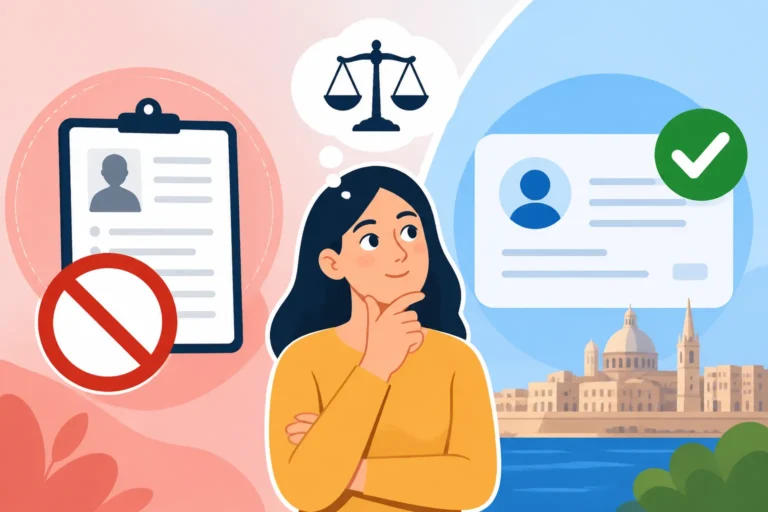
One of the biggest frustrations you will likely face as a spouse in Malta is the realization that your residence card does not automatically grant you the right to walk into any job. While your partner might have had their The Single Permit in Malta: Combined Work and Residence, Step by Step handled entirely by their employer, your situation is different. If you are a Third Country National (TCN) joined to a worker, you are usually here on a "Dependency" permit. This allows you to reside, but to work, you generally need to find an employer willing to apply for a separate work permit for you, or you must wait for specific family reunification rights to kick in.
The transition from a dependent to an active worker is often the first hurdle. Many spouses assume that once they have their eResidence card, they can start a trial period at a café or an office. Unfortunately, Maltese law is quite strict on this. You must ensure that your potential employer understands your current status. In some cases, if your spouse is a "Highly Skilled" worker under certain initiatives, your path might be slightly smoother, but for the majority, a new application to Identità is required. You should specifically look into Can My Spouse Work in Malta on a DependPermit? to see which category of dependency you fall under, as this dictates whether you need a full new Single Permit or just an employment licence.
A common scenario involves the "Family Reunification" clause. After your spouse has lived and worked in Malta for a specific period (usually 12 months), you may be eligible for more flexible work rights. However, the administrative backlog can be significant. It is vital to keep your documents in order and stay proactive. Don't wait for an employer to figure out the law for you; many local small business owners might not even know the difference between a dependent permit and a work permit. Being the expert on your own status will make you a much more attractive candidate.
The Role of Identità and the Single Permit Transition
When you find a job, the employer will usually need to initiate a change in your status. This means moving from a purely dependent permit to a Single Permit (Work-Residence). During this phase, you might feel like you are starting the whole relocation process over again. You will need to provide a new lease agreement, or at least a The Lease Agreement Attestation Requirement for Non-EU Tenants in Malta from your current landlord, to prove your living situation is stable.
There is a period of waiting that can be psychologically taxing. You have the job offer, but you can't legally start until the "Approval in Principle" letter arrives. Many spouses lose out on opportunities because they didn't explain this timeline clearly to their recruiters. Honesty is the best policy here; tell them you are a legal resident but require a status change. Most large firms, especially in iGaming or Finance, are used to this and will wait for the 2-3 months it takes for the paperwork to clear.
Family Reunification and Long-Term Rights
If you plan to stay in Malta for the long haul, your rights improve significantly over time. After five years of legal residence, you may be eligible for Long-Term Residence Status After Five Years in Malta. This status is the "holy grail" for spouses because it grants you equal access to the labor market without needing a specific employer to sponsor your work permit every year. It removes the power dynamic where your right to stay is tied to your job, giving you the freedom to freelance or jump between companies.
| Feature | Dependent (TCN) Status | Single Permit (Work) | Long-Term Resident |
|---|---|---|---|
| Right to Reside | Yes (Linked to Spouse) | Yes (Linked to Job) | Yes (Independent) |
| Right to Work | No (Requires Licence) | Yes (Specific Employer) | Yes (Open Market) |
| Admin Burden | Low | High (Annual Renewal) | Low |
| Employer Flexibility | None | Limited | Full |
Practical Job Hunting and Recruitment Resources
Malta's job market is unique because it is heavily driven by word-of-mouth and specific niche portals. As a spouse, your first stop should always be Jobsplus, the national employment agency. While their physical offices can feel quite "government-manual" in style, their online database is the primary source for local vacancies. You should aim for Jobsplus: Registering Your Employment and Finding Work in Malta as early as possible. Even if you aren't yet eligible for their training courses, their job search tool is a mandatory resource.
Beyond the government portals, the private sector in Malta is where the "support" truly lies. Recruitment agencies like Konnekt, Castille, and Reed are very active here. Because the talent pool in Malta is small, these recruiters are often very willing to sit down with a trailing spouse and help "Maltese-ify" their CV. They understand that if they place you, they've helped a local family stay in the country, which is a win for everyone. You should definitely read up on Writing a Maltese CV and Cover Letter That Get Noticed because the expectations here—such as including your photo or specific personal details—might differ from what you are used to in the US or UK.
If your background is in hospitality or manual labor, be aware of the new regulations coming in. From 2026, the government is emphasizing The Skills Pass: Malta's New Pre-Employment Requirement from 2026. This means even as a spouse of a professional, if you want to work in tourism or certain service sectors, you may need to pass a specific certification process. Staying ahead of these changes is part of the "support" you give yourself to ensure you aren't blindsided during an interview.
Tapping into the iGaming and Tech Hubs
If you have any background in digital marketing, customer support, or tech, you are in luck. The iGaming sector in Malta is massive and incredibly welcoming to expats. Many of these companies have "Refer a Friend" schemes where your spouse’s colleagues might be able to get your CV to the top of the pile. This is the "hidden" job market in Malta. Don't just apply online; attend the networking events in St. Julian's or Sliema.
iGaming companies often provide the best support for spouses because they offer comprehensive relocation packages that sometimes include "spouse support" sessions or access to a network of other expat partners. They understand that if the spouse isn't happy and employed, the main employee is likely to leave Malta within a year. Use this to your advantage. If your partner is interviewing, they should ask about "Spousal Support" as part of their benefits package.
Networking Groups and "Expats in Malta" Communities
Sometimes the best job leads don't come from a recruiter, but from a coffee morning. There are several Facebook groups specifically for "Expat Spouses in Malta" or "Women in Malta." These communities are goldmines for finding out which companies are "spouse-friendly" and which ones might help with your work permit. They also provide a space to vent about the frustrations of Identità, which is a vital part of staying sane during the search.
When you are out networking, you might find that How Do Salaries Compare Across Sectors in Malta? is a frequent topic of conversation. Use these groups to benchmark what you should be asking for. In Malta, there is a tendency to offer lower salaries to newcomers who don't know the local cost of living. Talking to other spouses will give you the confidence to negotiate for a fair wage that reflects your actual experience, not just your "newcomer" status.
Upskilling, Language, and Administrative Preparation
While you are waiting for your paperwork or searching for that perfect role, the best support you can give yourself is preparation. The language barrier in Malta is interesting—English is an official language and is used for all business, but Maltese is the "social" language of the office. If you want to move beyond entry-level roles into management or local SMEs, showing an effort to learn the language is a massive plus. Using a platform like iTalki can be a game-changer. On iTalki, you can find tutors who specialize in "Maltese for Expats," allowing you to learn the basics of office banter and greetings at your own pace.
Beyond language, there is the administrative side of your professional life. If you hold a degree from outside the EU, you might find that employers don't recognize your qualifications immediately. This is where the Malta Further and Higher Education Authority (MFHEA) comes in. You must look into Recognising Foreign Qualifications in Malta Through the MQRIC to get your degree formally equated to the Maltese Qualifications Framework (MQF). Having this certificate in your hand during an interview shows you are serious and saves the employer from doing the guesswork.
Preparation also means understanding the financial impact of your new job. Malta uses a progressive tax system, and if both you and your spouse are working, your tax status might change from "Married" rates to "Single" or "Parent" rates depending on how you file. This is where services like Taxes for Expats become invaluable. Especially for Americans or those from countries with complex global tax laws, Taxes for Expats can help you figure out how your Maltese salary will be taxed back home and how to optimize your filing in Malta. Don't wait until April to figure this out; the way your How the Single Permit Application Works Between You and Your Employer is set up will affect your take-home pay from day one.
The Importance of the Maltese ID Card (eResidence)
I cannot stress this enough: your eResidence card is your lifeblood in Malta. Without it, you can't get a local phone contract, a bank account, or even a gym membership in some places. As a spouse, your card will state "Family Member." When you find a job, you will eventually get a new card that mentions your employment.
During the "in-between" phase, you might find it difficult to open a bank account. Many traditional banks like BOV or HSBC can be quite slow with non-working spouses. In this case, digital alternatives are your best friend. They allow you to have a local IBAN to receive your salary once you do find work, without the three-month wait for a traditional bank's compliance department to "approve" your status as a spouse.
Financial Planning and Double Taxation
Once you start earning, you and your spouse will be a "dual-income" household, which changes your lifestyle significantly in Malta. However, it also adds a layer of complexity to your annual tax returns. You will need to decide if you want to be taxed jointly or separately. Usually, if both spouses earn a similar amount, separate filing is better. If one earns significantly more, joint filing at the "Married" rate might save you thousands of euros.
Using a service like Taxes for Expats ensures that you aren't overpaying in Malta or failing to report income to your home country. They understand the specific treaties Malta has with the US and other nations. Remember, your employer in Malta will deduct tax at the source via the Final Settlement System (FSS), but this doesn't always account for your global financial picture. Being proactive here prevents a nasty surprise from the Commissioner for Revenue (CFR) a year down the line.
Community Support and Social Integration
Lastly, the support for spouses in Malta isn't just about jobs and taxes; it’s about not losing your identity. It is very easy to become "the wife of the engineer" or "the husband of the developer." To combat this, look for professional organizations. The Malta Chamber of Commerce often holds events that are open to the public, and organizations like 100 Women in Finance (if you are in that sector) have active local chapters.
If you find that the job search is taking longer than expected—which, let's be honest, it often does in Malta due to the "island pace" of recruitment—don't isolate yourself. Use your time to build a portfolio or take a certification. Use iTalki to sharpen your English if it’s not your first language, as most high-paying jobs in Malta require near-native fluency. The confidence you gain from speaking clearly in an interview is worth every cent spent on a tutor.
Integration also means understanding the local workplace culture. Maltese offices are often family-oriented and can feel quite "loud" compared to Northern European or North American environments. There is a lot of social interaction, and many deals are done over a long lunch or a coffee (cino). As a spouse seeking work, your goal is to show that you aren't just a temporary visitor, but someone who is integrating into the fabric of the island. Employers are much more likely to sponsor a work permit for someone they feel will stay for 3-5 years.
Mental Health and Avoiding the "Expat Bubble"
It is common for spouses to feel a sense of "Expat Spouse Syndrome"—a mix of resentment, boredom, and loss of purpose. Malta is small, and if you stay in the Sliema/St. Julian's bubble, you might feel like you're on a permanent holiday that you can't afford. Break out of this. Take the ferry to Valletta, go for a hike in the North, or volunteer at a local animal sanctuary. These activities broaden your network beyond just other expats and often lead to job tips you wouldn't find on LinkedIn.
Remember that you are not alone in this struggle. Thousands of people move to Malta every year in your exact shoes. The system is slow, the heat in summer can make you irritable, and the paperwork feels endless, but there is a path through it. By leveraging recruitment agencies, using iTalki for language prep, and consulting with Taxes for Expats for your financial health, you turn a period of uncertainty into a strategic career move.
Disclaimer
The information provided in this guide is for educational and informational purposes only and does not constitute legal, financial, or professional advice. Immigration laws and tax regulations in Malta are subject to frequent changes. Always consult with the official Identità portal, the Commissioner for Revenue, or a qualified legal professional regarding your specific residency and employment status.