How the Single Permit Application Works Between You and Your Employer
Navigating the Maltese single permit application can feel like a labyrinth, especially when you're relying on your employer to get things moving. The uncertainty, the endless documents, and the waiting game can be incredibly stressful for anyone trying to build a new life here. This comprehensive guide will meticulously walk you through the single permit application process from the perspective of both you and your employer, demystifying each crucial step.
The Single Permit: Your Gateway to Working and Living in Malta
When you’re dreaming of living and working in Malta, the "Single Permit" is quite literally your golden ticket. It's not just a work permit; it's a combined residence and employment permit that allows non-EU/EEA/Swiss nationals to legally live and be employed on the islands. Many expats grapple with the complexities, and understanding this from the get-go is half the battle. This isn't just about ticking boxes for a visa; it’s about establishing your legal presence in a new country.
What Exactly is a Single Permit?
Think of the Single Permit as a comprehensive approval from the Maltese authorities, specifically Identità (the national agency responsible for identity management), that grants you both the right to reside here and to work for a specific employer in a specific role. Unlike some countries where you might have separate permits for residence and work, Malta streamlines it into one document. This permit is tied directly to your employment, meaning if your job changes, your permit status will likely need to be reassessed. It’s crucial to understand this connection because it forms the backbone of your legal status on the island. For a deeper dive into all types of permits, you might want to read our guide on Residence Permits in Malta: Types, Requirements, and How to Apply.
The concept behind the Single Permit is to simplify the immigration process for third-country nationals, providing a clear pathway rather than a tangled web of applications. However, "simplified" in a bureaucratic sense doesn't always translate to "easy" in real life, as many of us expats can attest! It means that your employer plays an absolutely central role, taking on significant responsibility for your application. This unified approach also means that issues with your employment can directly impact your right to reside, underscoring the importance of a stable job offer.
Why the Employer's Role is So Critical
In Malta, your employer isn't just offering you a job; they're essentially sponsoring your stay. The application process for the Single Permit is primarily driven by them. They are the ones who initiate the process with Identità, submitting the bulk of the documentation related to your employment, company details, and the necessity of hiring a non-EU national. This often involves demonstrating to the authorities that no suitable Maltese or EU/EEA candidate could be found for the role, a step sometimes referred to as a 'labour market test' (though this varies depending on the specific initiative like the Key Employee Initiative). It's a huge commitment on their part, so open communication and trust are absolutely paramount.
Without an employer, securing a Single Permit is practically impossible, unless you qualify under specific self-employment or Nomad Residence Permit schemes. Your employer acts as the primary contact for Identità, handling queries, submitting additional information, and generally shepherding the application through the system. This is why when you're job hunting, it's vital to ensure your prospective employer is familiar with the process and willing to undertake it. A good employer will have an HR department or an external agency that specializes in expat relocation, making your journey much smoother. They are truly your partner in this administrative marathon.
The Pre-Application Dance: Preparing for Your Maltese Journey
Before any official forms are stamped or uploaded, there's a significant amount of groundwork that needs to happen. This preparation phase is where many expats feel the first pangs of frustration, as it often involves a lot of waiting and meticulous document gathering. Think of it as laying the foundation before you can even start building your new life here.
The Job Offer: Your Golden Ticket
Everything hinges on a concrete job offer. This isn't just a verbal agreement; it needs to be a formal employment contract or a binding letter of engagement from a Maltese-registered company. This document will detail your role, responsibilities, salary, working hours, and the terms of your employment. Critically, the salary offered must meet the minimum wage requirements for a Single Permit, which typically aligns with Malta's general minimum wage, or often a higher threshold for specific initiatives. It's always a good idea to clarify these details upfront. Your contract is not just a piece of paper; it’s the bedrock upon which your entire permit application rests.
Without this formal offer, Identità simply won't entertain a Single Permit application. This means you can't just move to Malta hoping to find work and then apply; you need the job secured beforehand. Many employers will only issue this formal contract once they are reasonably confident that your permit application will be successful, which can sometimes feel like a chicken-and-egg situation. This is where researching your potential employer's experience with hiring foreign talent can provide a lot of peace of mind. For a general overview of the employment landscape, check out our guide on Working in Malta as a Foreigner: The Complete Guide (2027).
Gathering the Documents: A Bureaucratic Marathon
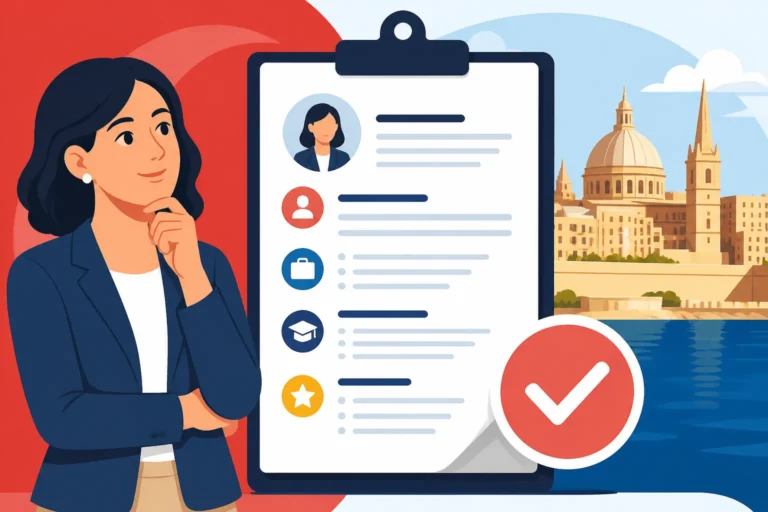
Once you have that solid job offer, the real administrative marathon begins: collecting all your personal documents. This list can feel endless and varies slightly depending on your nationality and the specifics of your case, but some common requirements include:
- Valid Passport: This is non-negotiable. Ensure it has at least 12 months validity beyond your intended stay.
- Curriculum Vitae (CV): A detailed CV outlining your educational background and work experience.
- Qualifications and References: Copies of your diplomas, certificates, and professional references. These might need to be translated into English by a certified translator.
- Passport Photos: Recent, passport-sized photographs meeting specific requirements.
- Police Conduct Certificate: This is a crucial document, often causing a headache for new arrivals. More on this in the next section!
- Proof of Accommodation: A rental agreement or declaration from your employer about provided accommodation. This needs to be attested for non-EU nationals.
- Health Insurance: For non-EU nationals, comprehensive private health insurance is often a strict requirement until you are entitled to public healthcare through social security contributions. Make sure it covers you for the initial period.
- Application Forms: Duly filled and signed by both you and your employer.
Your employer will also need to provide documents about their company, such as their VAT registration, company registration, and a Jobsplus engagement form. Keeping meticulously organised during this phase will save you countless headaches down the line. It is wise to creating a digital folder for scanned copies and a physical folder for originals.
The Importance of a Police Conduct Certificate
Ah, the Police Conduct Certificate – a document that strikes fear into the hearts of many expats! This certificate is essentially a clean criminal record check, a declaration that you have no adverse criminal history in your country of origin (and any other countries you've lived in for a significant period). What makes it tricky is that Malta requires a certificate issued recently, usually within the last six months, and often with an apostille or other official certification if from a non-EU country. This can be challenging if you've already left your home country.
For instance, if you're from a country that requires you to be physically present to request such a document, or if the process takes months, it can hold up your entire application. Some countries allow requests by mail or through embassies, but always verify the exact requirements with Identità or your employer's HR team. There are also services, sometimes provided by specialized agencies, that can assist in obtaining these certificates. Do not underestimate the time and effort needed for this particular document, as delays here are incredibly common. Our guide on The Police Conduct Certificate and Document Requirements in Malta offers more in-depth advice.
The Application Process: Step-by-Step with Your Employer
Once all your documents are gathered and validated, it's time for the official submission. This is where your employer truly takes the lead, but your input and readiness to provide additional information remain vital.
Employer-Initiated Application: The Standard Route
The standard procedure for a Single Permit in Malta is for the employer to submit the application to Identità. They will typically compile all the necessary documents, including your signed forms, passport copies, qualifications, and the police conduct certificate, along with their company's documentation. This submission is usually done through an online portal or, in some cases, physically at the Identità offices in Marsa. The initial submission will include the Jobsplus engagement form, which is a key component demonstrating a legitimate employment relationship.
After submission, Identità will review the application. This is often where the waiting game truly begins. Processing times can vary significantly, ranging from a few weeks to several months, depending on the volume of applications and the complexity of your case. It's during this time that Identità might request additional documentation or clarifications from either you or your employer. Open and frequent communication with your employer's HR or the agency handling your permit is crucial here. They are your eyes and ears on the ground. For those on a fast-track, like the Key Employee Initiative (KEI): Fast-Track Permits in Malta, processing might be quicker, but it still involves thorough checks.
Your Responsibilities in the Process
While your employer is the primary driver, you are not a passive observer. You must ensure all your personal documents are legitimate, up-to-date, and correctly certified. You also need to be ready to provide any further information Identità requests promptly. Delays often occur when applicants are slow to respond or provide incomplete details. For instance, if Identità asks for clarification on a specific qualification or a translation, responding quickly can prevent your application from stalling.
Another crucial responsibility, particularly if you are applying from outside Malta, is to manage your visa situation. Once the Single Permit receives an 'Approval in Principle' (AIP), you may then need to apply for a D-Visa (National Long-Stay Visa) to enter Malta. This D-Visa is specifically for the purpose of collecting your Single Permit. Do not try to enter Malta on a short-stay Schengen visa with the intention of converting it to a Single Permit, as this is generally not allowed and can lead to significant complications. Our article on Approval in Principle and the D-Visa: Entering Malta to Start Work delves into this in more detail.
Biometrics and Card Collection: The Final Stages
Once your Single Permit application is approved (or approval in principle is granted), the next step is usually the biometric appointment. This typically involves visiting the Identità offices to have your fingerprints and a digital photograph taken. This data is essential for the production of your eResidence card, which is your physical proof of residence and work permit in Malta. You’ll receive an appointment letter or notification from Identità, and it’s critical to attend this appointment as scheduled. Missing it can cause further delays.
After the biometric data is collected, you'll enter the final waiting period for your eResidence card to be produced. Once it's ready, you'll be notified to collect it, usually from the Identità office or a designated collection point. This eResidence card will contain your unique Maltese ID card number, which is absolutely essential for almost every administrative task in Malta, from opening a bank account to accessing public services. For more information on this vital step, refer to Getting Your Maltese eResidence Card and ID Number. Finally, holding that card in your hand truly marks the beginning of your new life in Malta!
Common Hurdles and How to Overcome Them
The journey to getting your Single Permit isn't always smooth sailing. There are common obstacles that many expats face, and knowing how to navigate them can save you a lot of stress.
Dealing with Delays and Missing Documents
Delays are, unfortunately, a common part of any bureaucratic process, and Malta is no exception. Reasons for delays can range from high volumes of applications to specific queries from Identità about your documents or your employer's credentials. The best way to combat this is proactive communication. Regularly follow up with your employer or their immigration consultant. Politely ask for updates and any feedback from Identità. While being persistent is good, remember to be patient and understanding; sometimes, the process just takes time.
If Identità requests additional documents, treat it with urgency. Provide the information as quickly and accurately as possible. Misunderstandings about required documents are also frequent. For example, if a translation isn't certified correctly, or a document is missing a specific stamp, it will be returned. Double-checking all requirements before submission, perhaps even having a third party review them, can prevent these setbacks. It's better to be overly prepared than to face a setback.
What Happens if Your Job Changes or is Lost?
This is a critical point that many new arrivals don't fully grasp: your Single Permit is tied to your specific job. If you change employers or, worse, lose your job, your permit status is directly affected. If you change jobs, your new employer will need to apply for a new Single Permit for you, even if your previous permit is still valid. You cannot simply transfer your existing permit. There are strict rules about changing employers on a Single Permit in Malta, and failing to adhere to them can jeopardise your legal status.
If you lose your job, your employer is legally obliged to inform Identità. You will typically be given a grace period, usually around three months, to find new employment and apply for a new Single Permit. During this time, your residence status becomes precarious. It's a stressful situation, but knowing the rules beforehand can help you plan. It's always advisable to maintain a financial buffer for such eventualities. Our guide What Happens to Your Permit If You Lose Your Job in Malta offers comprehensive advice on this challenging scenario.
Understanding the Skills Pass Requirement
Malta's regulatory landscape is constantly evolving, and a newer element that has come into play is the "Skills Pass." From 2026 onwards, certain non-EU/EEA/Swiss nationals seeking employment in Malta may be required to obtain a Skills Pass as a pre-employment requirement. This initiative aims to ensure that foreign workers possess the necessary foundational skills to integrate into the Maltese workforce and society, including basic English language proficiency and a general understanding of Maltese culture and laws.
The Skills Pass involves an online assessment covering English language skills, digital literacy, and civic orientation. While it’s designed to be a supportive tool, it adds another layer to the pre-application process for some. Your employer should guide you on whether this applies to your specific role and nationality. Preparing for this assessment, especially if English isn't your first language or you're unfamiliar with European workplace norms, can be beneficial. Consider using language learning platforms like iTalki to brush up on your English conversational skills, which can also help with integration. For a detailed explanation, consult our article on The Skills Pass: Malta's New Pre-Employment Requirement from 2026.
After Approval: Settling Into Your New Maltese Life
Congratulations! Your Single Permit is approved, and you've got your eResidence card in hand. While the hardest part is over, there are still crucial administrative steps to take to fully integrate into life in Malta. These are less about the permit itself and more about establishing yourself as a resident.
Registering for Tax and Social Security
One of the very first things you'll need to do after receiving your ID card number is to register with the Inland Revenue Department for your Maltese Tax Identification Number (TIN) and with the Department of Social Security to start contributing. As an employee, your employer will automatically deduct Social Security Contributions from your salary. These contributions are vital as they entitle you to Malta’s public healthcare system and future state pension benefits. The good news is that your employer will usually handle the setup of your income tax deductions (Final Settlement System or FSS) directly from your salary. However, understanding your tax obligations is your responsibility.
For complex tax situations, especially if you have foreign income or assets, it's always wise to consult a local tax advisor. Companies like Taxes for Expats specialise in helping individuals navigate international tax laws and ensure you're compliant with both Maltese and your home country's regulations. Even if you're not remitting all your foreign income to Malta, understanding how Malta's tax system works, particularly for non-domiciled residents, is crucial. You can find more information in our detailed guide on Registering for Tax When You Arrive in Malta and Social Security Contributions and What They Fund in Malta.
Accessing Healthcare and Other Services
Once you are officially registered for Social Security, you become entitled to Malta's public healthcare system. However, this isn't always immediate from day one of your employment. There's usually a short period before your contributions fully kick in and you're eligible for free public healthcare services. It's during this interim period that your private health insurance, a requirement for your permit, becomes invaluable. Once eligible, you'll need your Maltese ID card number to register with a local health centre and choose a General Practitioner (GP).
Your eResidence card and ID number are also gateways to countless other services. You’ll need it to open a local bank account (though some digital banks like Revolut might allow you to open one earlier with your passport), register for utility services with ARMS, and even get your Tallinja card for free public transport. Essentially, your eResidence card becomes your primary identification document and the key to unlocking your life in Malta. For a comprehensive overview of the healthcare system, our guide on Healthcare in Malta for Foreign Residents: The Complete System Guide (2027) is an excellent resource.
| Stage of Application | Applicant's Role | Employer's Role | Key Documents (Applicant) | Key Documents (Employer) | Potential Hurdles |
|---|---|---|---|---|---|
| Pre-Application | Secure Job Offer | Issue Contract | CV, Qualifications, References, Police Conduct Certificate, Proof of Accommodation, Health Insurance | Formal Job Offer/Contract, Company Registration, VAT Certificate | Slow document gathering, Police Conduct delays, Accommodation proof issues |
| Application Submission | Sign Forms, Provide Documents | Compile & Submit Application to Identità/Jobsplus | Signed application forms, passport copy, photos, all pre-application docs | Signed application forms, Jobsplus Engagement Form, Company docs, Justification for hire | Incomplete applications, slow Identità processing, requests for additional info |
| Processing & AIP | Await Feedback, Respond to Queries | Liaison with Identità, Provide Additional Company Info | Timely response to Identità queries | Prompt response to Identità queries | Lengthy waiting times, specific document clarifications, communication gaps |
| D-Visa (if applicable) | Apply for D-Visa | Provide AIP for D-Visa application | D-Visa application form, AIP letter, Passport, Photos | – | Visa refusal, delays in D-Visa processing |
| Biometrics | Attend appointment for fingerprints/photo | Ensure employee attends | Appointment letter, Passport | – | Missed appointments, technical issues |
| Card Collection | Collect eResidence Card | Inform employee of collection readiness | Notification letter, Passport | – | Delays in card production, lost notification |
| Post-Approval Admin | Register for Tax, Social Security, Bank Account, Health Centre | Set up FSS (tax deductions), Social Security registration | eResidence card, employment contract | Payslips, Social Security forms | Delays in bank account opening, understanding tax obligations |
Disclaimer
The information provided in this guide is intended for general informational purposes only and does not constitute legal or professional advice. While we strive to ensure accuracy, immigration laws and procedures in Malta can change frequently. It is always recommended to consult with Identità, Jobsplus, or a qualified immigration lawyer or consultant for the most current and specific advice pertaining to your individual circumstances.