The Remittance Basis: Taxing Only What You Bring Into Malta
Moving to Malta often feels like a whirlwind of paperwork, sun-drenched afternoons, and the steep learning curve of Mediterranean bureaucracy. One of the most significant points of confusion for new arrivals is how the local tax office views your money earned abroad. This guide clarifies the remittance basis of taxation, ensuring you understand how to legally protect your foreign income and avoid accidental tax liabilities.
The Foundation of Maltese Taxation Residence vs Domicile
When you first land at Luqa and start looking for an apartment in Sliema or St. Paul's Bay, the last thing on your mind is the legal definition of "domicile." However, in the eyes of the Commissioner for Revenue, this word dictates your financial life. Most expats living here are considered "resident but not domiciled." This distinction is the secret sauce that allows the remittance basis to exist.
The 183 Day Rule and Tax Residency
Becoming a tax resident in Malta is relatively straightforward compared to other European nations. If you spend more than 183 days in the country within a calendar year, you are generally considered a tax resident. This isn't just about counting days on a calendar; it is about where your life is centered. If you are renting a long-term home, have a Maltese phone number, and are spending your weekends at Golden Bay, the tax authorities will likely view you as a resident.
Understanding Tax Residence vs Domicile in Malta: Why Both Matter is crucial because residency can be temporary. You might be a resident this year but move to Portugal next year. Tax residency determines your obligation to contribute to the Maltese system for that specific period. It is the entry point for accessing local services and, eventually, sorting out your social security contributions.
Many newcomers worry that arriving mid-year will complicate things. While it does require more careful accounting, the 183-day rule remains the standard benchmark. If you arrive in September, you likely won't hit the threshold for that specific year, but your intent to stay for a long duration still matters for your overall tax status.
What is Domicile and Why Does It Stick
Domicile is far more permanent than residency. It is often described as your "home for life" or the place to which you eventually intend to return. For the vast majority of expats, your domicile is the country where you were born (domicile of origin). Even if you have lived in a penthouse in Gżira for five years, your domicile likely remains the UK, Italy, or wherever you grew up, unless you take active, permanent steps to change it.
The beauty of the Maltese system is that as long as you are "resident but not domiciled," you are not taxed on your worldwide income. This is a massive relief for those who still have rental properties in their home country or investments in international markets. You only need to worry about the money that actually touches Maltese soil.
However, proving your domicile of origin is something that requires professional oversight. If you are a US citizen, for example, you have the added layer of filing requirements back home. Working with specialists like Taxes for Expats can help you navigate the intersection of Maltese non-dom status and the rigorous reporting demands of the IRS, ensuring you don't accidentally claim a status that creates a conflict between two governments.
The Resident But Not Domiciled Sweet Spot
Being in this "sweet spot" means you have the rights of a resident—like using the public healthcare system once you are registered—without the burden of being taxed on every cent you own globally. It is a transitional status that many expats maintain for decades. It reflects the reality of modern life where we might work in one country, hold savings in another, and live in a third.
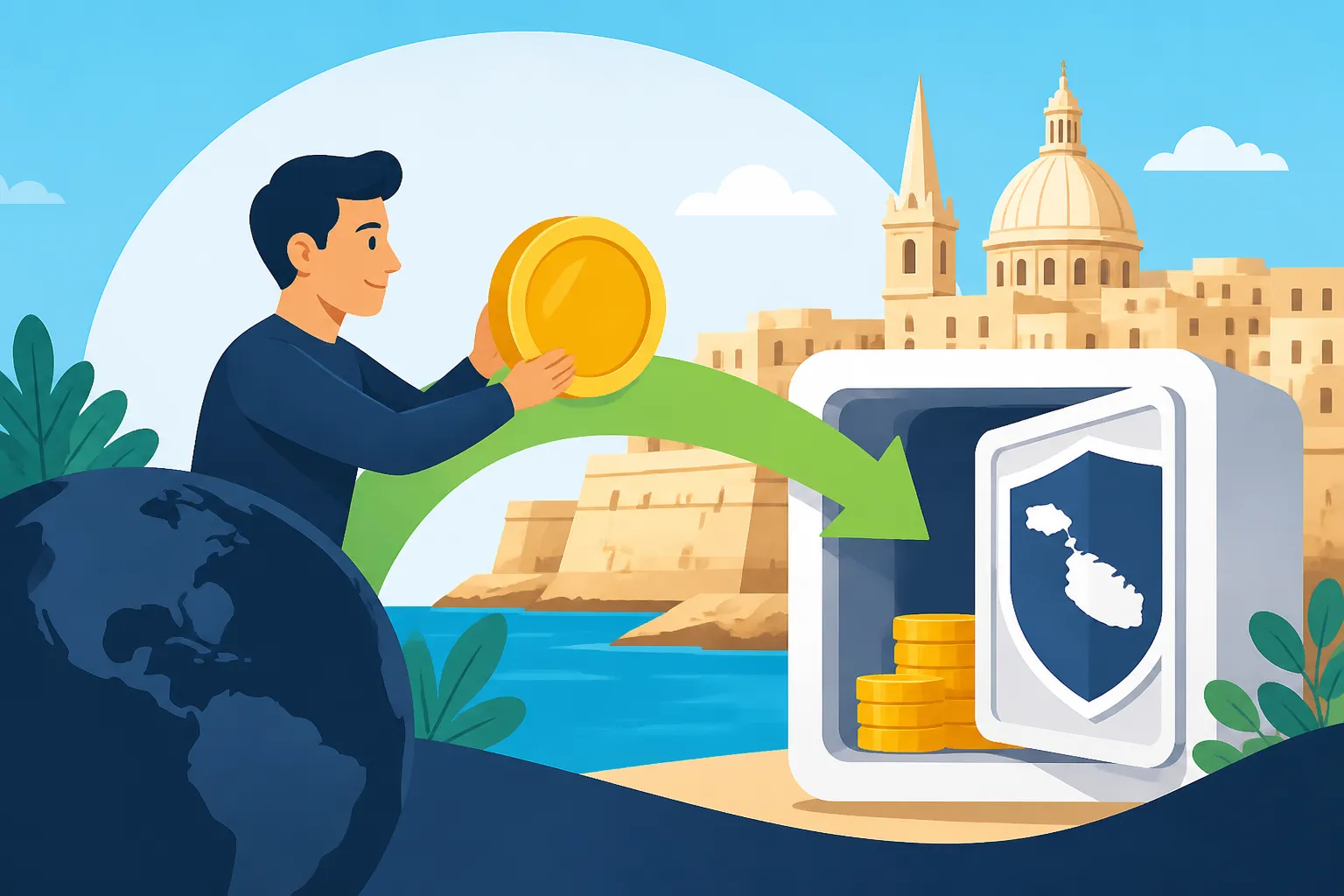
The "Non-Dom" status is what triggers The Non-Dom Remittance Basis in Malta: How It Works. It essentially creates a wall between your Maltese life and your international financial life. As long as the money stays on the other side of that wall, the Maltese taxman generally leaves it alone. But once you "remit" that money—meaning you bring it into Malta to pay for your pastizzi or your rent—it becomes fair game.
This status is not an automatic "get out of jail free" card. You still have to report your Maltese-sourced income, such as a salary from a local iGaming firm or a boutique agency in Valletta. The remittance basis only applies to the foreign side of your ledger. Keeping these two worlds separate is the most important administrative task you will face as a new resident.
How the Remittance Basis Functions in Practice
The core concept is simple: you are taxed on Maltese income and foreign income that you bring into the country. But as anyone who has tried to get a straight answer at a government office in Floriana knows, the devil is in the details. You need to distinguish between income and capital, and you need to be very careful about how you move your funds.
Taxing Maltese Sourced Income
If you are working for a company registered in Malta, that income is Maltese-sourced. It doesn't matter if you are a non-dom; that money is generated here and will be taxed at the standard progressive rates. Your employer will usually deduct this via the Final Settlement System (FSS), so you see the net amount in your bank account every month.
This also applies to any local business you might run or rental income you receive from a property you own in Gozo. Anything earned "within the territory" is subject to Maltese tax. There is no escaping this through the remittance basis. It is the price of admission for living and working in this beautiful archipelago.
When you are Registering for Tax When You Arrive in Malta, the authorities will ask about your employment status. If you are self-employed, you will have more control over how this is reported, but the principle remains: if the work is done here, the tax is paid here. The remittance basis won't help you with your local salary, but it will protect your foreign dividends.
Remitting Foreign Income into Malta
This is where the strategy comes in. Let's say you have a rental property in London that generates £1,000 a month. If you leave that money in a UK bank account and never touch it while in Malta, it is generally not taxed here. However, if you transfer that £1,000 to your Maltese bank account to help pay for your Cost of Living in Malta: Budgeting for the Real Numbers, that money has been "remitted."
Once remitted, that foreign income is added to your local income and taxed at the applicable Maltese rates. For many, this is still a good deal because Malta's tax brackets can be more favorable than those in their home country. However, you need to be aware that even small transfers count. If you use a tool like Wise to move small amounts of foreign income to pay your ARMS utility bill, that is a taxable event.
The trick is knowing what you are moving. The Maltese system distinguishes between "income" (like interest, dividends, or rent) and "capital" (like the principal sum you had in your savings account before you moved to Malta). Understanding How Foreign Income and Capital Gains Are Treated in Malta is the key to minimizing your bill. If you remit capital, it is generally not taxable. If you remit income, it is.
The Capital vs Income Distinction
Imagine your bank account is a bucket. Before you moved to Malta, you had €50,000 in it. That is your "capital." After you move to Malta, that account earns €500 in interest. That is "income." If you send €5,000 to Malta, you need to be able to prove whether that €5,000 came from the original €50,000 capital or the new €500 income.
This is why veteran expats often suggest "segregated accounts." You keep your pre-Malta savings in one account and your new foreign income in another. This makes it much easier to prove to the authorities that you are remitting non-taxable capital rather than taxable income. It is a bit of an administrative headache at first, but it saves a mountain of trouble during a tax audit.
If you don't keep these separate, the tax office may assume that any money you bring in is income first. This "first-in, first-out" or "mixed fund" trap is where many people get burned. Using a platform like Wise to manage different currency "jars" or accounts can help you keep these streams of money visually and legally distinct, which is vital when you eventually have to file your returns.
Avoiding the Accidental Remittance Trap
Most expats don't set out to evade tax; they simply don't realize that their everyday banking habits are creating a tax liability. In a world of digital banking and global credit cards, it is incredibly easy to "remit" money without ever visiting a bank branch in Valletta.
Using Foreign Bank Cards in Malta
One of the most common questions I hear is: "Can I just use my home country's debit card at the supermarket?" The answer is technically yes, but with a major caveat. If you use a foreign card to pay for goods or services in Malta, and that card is linked to an account containing foreign income, you have just remitted that income.
The tax authorities view the use of a foreign card as a form of constructive remittance. You are bringing the "value" of that foreign money into Malta to settle a local debt (your grocery bill at Pama or Pavi). If you are doing this regularly, you are technically remitting your foreign income bit by bit. This is why Does Spending on a Foreign Card in Malta Count as a Remittance is such a hot topic in expat circles.
To stay on the safe side, many residents prefer to use a local account for all local spending. They transfer a large lump sum of capital once or twice a year and use that for daily life. This is much easier to document than hundreds of small transactions at various shops and restaurants across the island.
Documentation and the Importance of Clean Records
The Maltese tax office doesn't usually come knocking the moment you arrive, but they do expect you to have your house in order if they ever ask. This means keeping clear records of where your money came from and when it entered Malta. If you claim that a €10,000 transfer is capital, you should have bank statements showing that this money existed before you became a resident.
It is advisable to keep a digital folder with every FS3 (the Maltese year-end tax summary), every foreign bank statement, and any contracts related to foreign income. If you are a high-net-worth individual or have complex investments, hiring a firm like Taxes for Expats is an investment in your sanity. They can look at your global portfolio and tell you exactly what counts as a remittance and what doesn't.
It is also worth noting that "remittance" isn't just about bank transfers. If you buy a car in the UK with foreign income and then ship it to Malta for your own use, you have remitted that income in the form of an asset. The rules are broad, and the goal is always the same: to ensure that money earned elsewhere but enjoyed in Malta pays its fair share.
Structuring Your Transfers Smartly
If you do need to bring money in, do it intentionally. Instead of haphazard transfers, plan your financial year. Use Wise to get the best exchange rates and to keep a clear audit trail of the transfer. Because Wise provides detailed statements and transparent fee structures, it is much easier to show the tax office exactly how much was sent and from which specific "jar" or balance it originated.
When you are Sending Money To and From Malta Without High Fees, you should also be thinking about the timing. Some people prefer to remit all their necessary income for the year in one go, calculate the tax, and set that aside. This prevents the "nasty surprise" at the end of the fiscal year when you realize you've remitted more than you intended.
| Feature | Resident & Domiciled | Resident & Non-Dom |
|---|---|---|
| Maltese Sourced Income | Taxed in Malta | Taxed in Malta |
| Foreign Sourced Income | Taxed in Malta (Worldwide) | Taxed only if remitted to Malta |
| Foreign Capital Gains | Taxed in Malta (Worldwide) | Usually NOT taxed even if remitted |
| Pre-Residency Capital | Not Taxed | Not Taxed |
| Reporting Requirements | Full Worldwide Disclosure | Disclosure of Maltese & Remitted Income |
The Five Thousand Euro Minimum Tax Rule
For a long time, the remittance basis was a "free for all" for anyone who could live off their savings. However, a few years ago, Malta introduced a minimum tax for certain non-doms to ensure that those living a high-end lifestyle on the island were contributing at least a baseline amount to the national coffers.
Who is Caught by the Minimum Tax
This rule doesn't apply to everyone. It specifically targets those who are resident but not domiciled, earn at least €35,000 in foreign income annually, and do not remit that income to Malta. If you are a digital nomad or a retiree with a substantial pension staying abroad, this is something you need to watch out for.
The law basically says that if you have the means (the €35,000 threshold) but you aren't remitting enough to generate at least €5,000 in tax, you must pay the difference. It is a way of preventing people from living in Malta essentially tax-free while having significant wealth elsewhere. If you are already paying more than €5,000 in tax on your Maltese salary or remitted income, this rule usually won't affect you.
If you are unsure if you hit this threshold, checking The €5,000 Minimum Tax Rule for Non-Doms in Malta is a vital step. Many people who work remotely for foreign companies think they are exempt, but if they are living in Malta long-term, they might fall into this category. It is one of those "hidden" rules that often catches people off guard in their second or third year of residence.
Calculating Your Liability
The calculation is relatively simple, but the implications are not. You take your total Maltese tax liability for the year. If that number is less than €5,000, and you meet the foreign income criteria, you owe the government the balance. For example, if you paid €2,000 in tax on some small remittances, you would owe an additional €3,000 to meet the minimum.
This is why many expats choose to remit exactly enough foreign income to hit the €5,000 tax mark. If you're going to pay the money anyway, you might as well bring the cash into Malta and spend it on a nicer apartment in Madliena or a better car. It turns a "penalty" into a planned part of your financial strategy.
Again, this is where professional advice becomes invaluable. A specialized firm like Taxes for Expats can help you run these numbers before the tax deadline. They can look at your total global income and help you decide whether it's more beneficial to remit more money or simply pay the minimum tax.
Exceptions to the Rule
There are exceptions, of course. The rule generally doesn't apply to those who are under certain specific tax schemes, like the Global Residence Programme, which has its own built-in minimum tax requirements. It also doesn't apply if your foreign income is below the €35,000 mark.
It is also important to note that this is a "per person" rule. If you are a couple, and only one of you has a high foreign income, the calculation might look different than if you both do. Always keep your Filing Your Maltese Tax Return: The CFR, FS3, and TA22/TA24 documents handy, as these will be the primary evidence used to determine your liability.
Strategic Financial Management for New Residents
Living as a non-dom in Malta requires a bit more foresight than living in a country with a simple "tax everything" approach. You need to be proactive about your banking, your transfers, and your reporting. If you do it right, the benefits are substantial, but if you do it wrong, you'll spend your summers arguing with the tax office instead of enjoying the Mediterranean.
The Multi Account Strategy
The gold standard for non-doms is the three-account system. Account A is for your Maltese-sourced income (your local salary). Account B is for your pre-residency capital (money you had before moving). Account C is for your ongoing foreign income (rent, dividends, etc.).
When you need money in Malta, you draw from Account A first, then Account B (which is non-taxable capital). You only touch Account C if you absolutely have to, knowing that doing so will trigger a tax bill. By using a service like Wise, you can easily manage these different pools of money and move them to your Maltese bank when necessary with a clear paper trail.
This level of organization is what separates the stressed expats from the relaxed ones. It makes How to Keep Capital and Income Separate for Maltese Tax a simple matter of checking which account you're clicking on in your banking app. It also makes the annual tax return a breeze because you can simply hand your accountant the statements for Account A and the remittance records from Account B and C.
Moving Money with Wise
In the old days, moving money meant expensive wire transfers and terrible exchange rates at local banks like BOV or HSBC. Today, most of us use Wise because it is faster and significantly cheaper. But beyond the cost savings, it is the transparency that matters for tax purposes.
When you use Wise to remit funds, you get a receipt that shows the source currency, the exchange rate, and the destination. If you are remitting capital, you can tag these transfers or keep them in specific "balances" within the app. This digital trail is exactly what the Maltese authorities want to see if they ever question the nature of your funds.
Furthermore, if you are paying local bills, you can often do so directly through Wise or by moving the money to a local Maltese account. Just remember the rule: the moment that money is used to pay for something in Malta, it is considered remitted. Using Wise to pay your landlord directly from a foreign income balance is still a taxable remittance.
Working with Professionals
Let's be honest: tax law is boring, and Maltese tax law can be confusing. If you have assets in multiple countries, you should not be doing your own taxes. The cost of a professional is almost always offset by the money they save you in avoided penalties and optimized remittances.
We often point readers toward Taxes for Expats because they understand the specific pain points of people living between borders. They can help you coordinate your Maltese filings with your home country obligations, ensuring you take advantage of any double-taxation treaties. This prevents you from paying tax on the same rental income in both London and Valletta.
Whether it is navigating the Sickness Benefit in Malta: Your Rights When You Can't Work or figuring out your non-dom status, having an expert in your corner is essential. Malta is a small island, and while the "who you know" culture is real, the "what you know" (or what your accountant knows) is what keeps your bank account healthy.
H2 Disclaimer
The information provided in this guide is for general informational purposes only and does not constitute legal, financial, or tax advice. Tax laws in Malta are subject to change, and individual circumstances vary significantly. You should always consult with a qualified professional, such as a certified public accountant or a tax legal specialist, before making any financial decisions or filing tax returns in Malta. The author and publisher assume no liability for any actions taken based on the content of this article.