What Documents Do I Need to Open a Maltese Bank Account?
Oh, the joy of trying to open a bank account in Malta as a newcomer! It’s a rite of passage, isn't it? You arrive, full of optimism, ready to set up your life, and then you hit the brick wall of Maltese banking bureaucracy. It feels like they’re asking for your firstborn, your grandmother’s recipe, and a blood sample just to let you deposit your hard-earned cash. It's frustrating, I know, because it often feels disproportionate to what you're used to. This guide is here to cut through the confusion and give you a realistic, no-nonsense rundown of exactly what documents you’ll need, and why, so you can finally get your finances sorted on the island.
The Initial Hurdles: Why Maltese Banks Are So Demanding (and How to Prepare)
Let's be honest, opening a bank account here can feel like trying to get into Fort Knox with a soggy napkin for ID. Many expats arrive expecting a straightforward process, similar to what they've experienced in other EU countries, only to be met with a seemingly endless list of demands. This isn’t just Maltese stubbornness, I promise you. It’s deeply rooted in international regulations and the island’s particular history.
Malta, like any other financial hub, has incredibly strict Anti-Money Laundering (AML) and Know Your Customer (KYC) regulations. After a few high-profile incidents and increased scrutiny from international bodies, Maltese banks are under immense pressure to be absolutely watertight when it comes to who they let through their doors. They are genuinely terrified of facilitating financial crime, and unfortunately, this means that even legitimate, law-abiding individuals like you get caught in the dragnet. It’s a pain, but understanding why they ask for so much can help you prepare mentally and practically. Think of it less as a personal affront and more as a necessary, if tiresome, bureaucratic hoop. This stricter stance also explains Why Maltese Banks Ask for So Much Documentation.
Understanding the "Know Your Customer" KYC Requirements
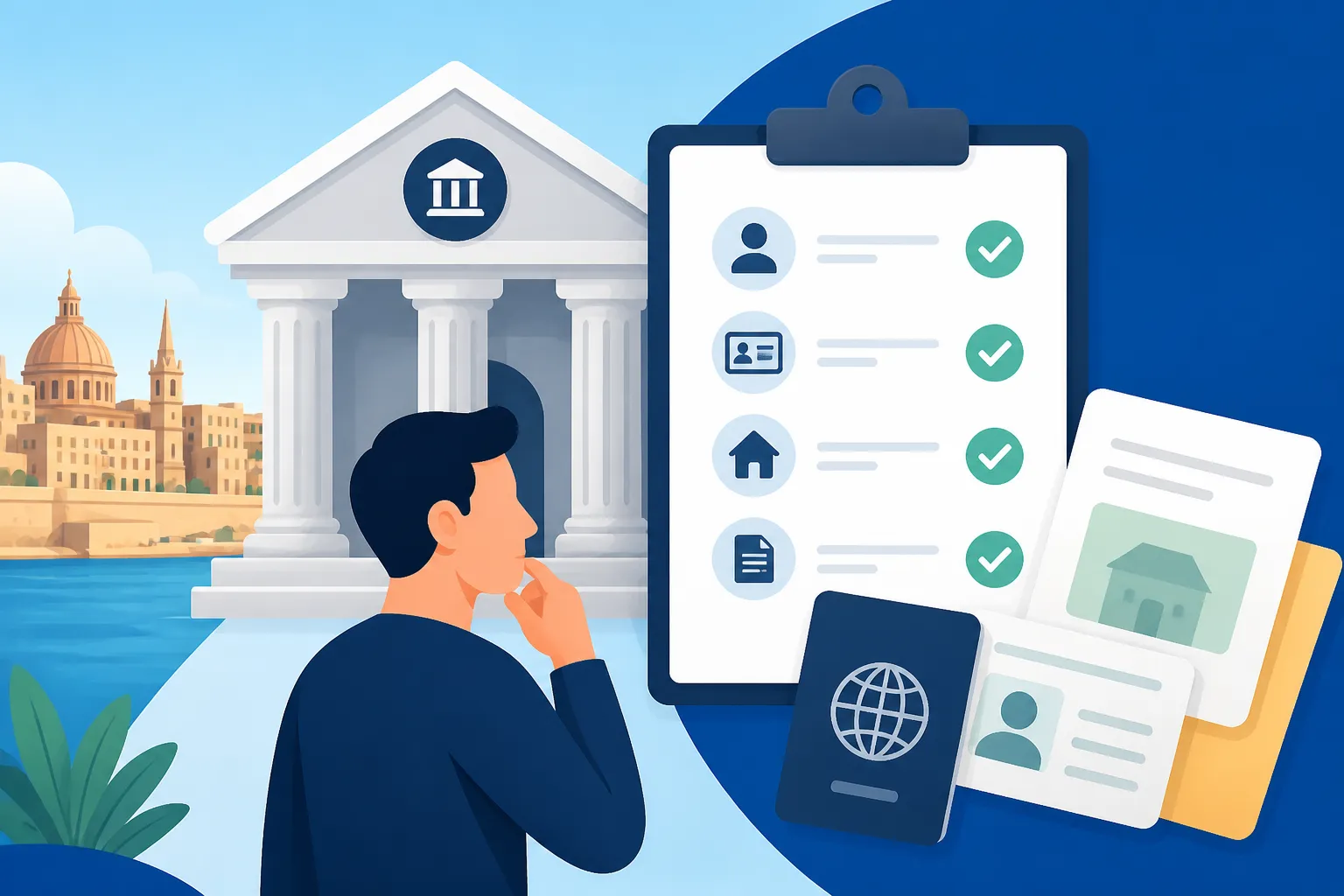
So, what exactly is KYC? In plain English, it's the process by which banks verify the identity of their clients and assess their suitability, alongside potential risks of illegal intentions for the business relationship. For you, the expat, it means the bank needs to confirm four crucial things:
- Who you are: Your legal identity, no question.
- Where you live: A confirmed, legitimate address in Malta.
- Where your money comes from: The lawful origin of your funds. They don't want to accidentally facilitate dirty money.
- Why you need an account: The purpose of your banking relationship – salary, savings, bill payments, etc.
This isn't just a tick-box exercise for them. They're looking for consistency, credibility, and a clear paper trail. If anything seems out of place or raises a red flag, they will dig deeper, asking for more documents, more explanations, and more patience from your side. For example, if you declare a high salary but only have minimal funds entering the account from a newly established business with no history, they will certainly want further proof of how you sustain your lifestyle. They're basically trying to paint a complete, verifiable picture of your financial life.
The Different Types of Maltese Banks and Their Approaches
Malta has a few key players in the banking sector, and while they all operate under the same strict regulations, their approach to opening accounts for foreigners can sometimes feel a little different.
- Bank of Valletta (BOV): Often seen as the largest local bank. They have numerous branches and a wide range of services. Historically, they've been a go-to for many, but their requirements can be rigorous, particularly for non-EU citizens or those without a solid employment history in Malta.
- HSBC Malta: An international bank with local operations. Some expats find their processes a bit more structured, but they can still be equally demanding in terms of documentation, especially regarding international source of funds.
- APS Bank: A growing local bank with a strong community focus. They've been making efforts to be more accessible, but again, don't expect a walk-in-walk-out service without the full suite of documents.
- Lombard Bank: Another local option, generally smaller and perhaps less frequently chosen by new expats for everyday accounts, but still part of the local banking landscape.
The truth is, while one person might have an "easy" experience with BOV, another might find HSBC more accommodating, and vice versa. It often boils down to the specific branch, the individual bank officer, and how meticulously you’ve prepared your documents. It’s not uncommon for banks to initially refuse accounts to those without a long-term residence permit or a stable job contract already in hand. This is where digital alternatives like Revolut can become a godsend in your first few weeks or months, offering a quick way to handle daily transactions while you navigate the traditional banking labyrinth. However, Revolut isn't a replacement for a local Maltese bank account for things like salaries or certain bills.
Your Essential Checklist: Core Documents for Every Bank Account Application
Right, let’s get down to brass tacks. This is the list you absolutely need to nail down. Without these, you might as well save yourself the trip to the bank branch. Remember, original documents are almost always required for verification, even if they'll keep copies.
Proof of Identity: Passport, ID Card, and Other Essentials
This is your most fundamental piece of evidence, proving who you are to the bank.
- Valid Passport (for non-EU/EEA citizens): This is non-negotiable. It must be current, not expired, and generally, banks prefer it to have at least six months of validity remaining. They will check all pages, look for visas, and ensure it’s in good condition. If your passport is nearing expiry, renew it before you start the banking process, otherwise, you might have to repeat steps when you get a new one.
- Maltese eResidence Card (for EU/EEA citizens and non-EU citizens with a permit): Once you’ve registered your residence in Malta and gone through the Identità process, your eResidence card is your primary form of identification here. For EU/EEA citizens, this effectively replaces your national ID card as your proof of Maltese residence and identity. For non-EU citizens, it's proof of your legal right to reside and work here. Banks will want to see this as it contains your Maltese ID number, which is crucial for almost every administrative task. If you're an EU citizen, simply presenting your national ID might suffice for initial checks, but they'll definitely want to see your eResidence card once it's issued. For more on this, check out Getting Your Maltese eResidence Card and ID Number.
- National ID Card (for EU/EEA citizens only, if no eResidence card yet): If you're an EU citizen and still waiting for your Maltese eResidence card, your national ID card from your home country might be accepted temporarily, but you’ll be expected to provide your Maltese one once it arrives. The emphasis is always on local, verified documents where possible.
Common pitfalls: An expired passport, a damaged ID card, or attempting to use a foreign driving licence as a primary form of ID (this is usually not accepted for banking purposes). Ensure all your personal details across all documents match exactly – even a minor discrepancy in a middle name could cause delays.
Proof of Address: Utility Bills, Rental Contracts, and Lease Attestation
This is often where expats hit their first major snag. Establishing a verifiable address in Malta can be tricky, especially if you're newly arrived or living in temporary accommodation.
- Recent Utility Bill (in your name): An ARMS electricity/water bill, or a bill from a major internet/mobile provider (like GO, Melita, or Epic), dated within the last three months. This is gold. The problem? If you’ve just moved in, the utilities might still be in the landlord's name, or your flatmate’s. This is a common and incredibly frustrating scenario.
- Registered Rental Contract (Private Residential Lease Agreement): This is absolutely crucial. As of recent regulations, all residential leases in Malta must be registered with the Housing Authority. Banks will require a copy of your full, signed lease agreement, and they will likely ask for proof that it has been registered. If your landlord hasn't registered it, or tries to give you an unregistered contract, this will be a massive red flag for the bank. You simply cannot open a proper bank account without this. Ensure the contract clearly states your full name, the property address, the duration of the lease, and is signed by all parties. For non-EU nationals, you will also need The Lease Agreement Attestation Requirement for Non-EU Tenants in Malta for your residence permit, and by extension, your bank.
- Letter from Employer/Landlord (as a supplementary document): In very specific cases, if you can’t get a utility bill in your name immediately, some banks might accept a formal letter from your employer or landlord confirming your residence. However, this is usually seen as a supplementary document and rarely replaces a registered lease or utility bill in your name. Don’t rely on it as your sole proof of address.
Hyper-local tip: If you're sharing a flat and the utility bills aren't in your name, see if your landlord is willing to switch one utility (like internet) into your name, or issue a formal letter stating you reside there and attaching the main utility bill. Alternatively, if your lease is correctly registered with the Housing Authority, this is usually the most robust piece of evidence. This entire process forms a significant part of How to Open a Maltese Bank Account as a Newcomer.
Proof of Income & Source of Funds: Payslips, Contracts, and Bank Statements
This is where the bank wants to understand your financial story and ensure your money is legitimate.
- Employment Contract: A signed, valid employment contract from your Maltese employer, clearly stating your position, salary, and start date. It needs to be official and on company letterhead.
- Recent Payslips: Usually, the last 3-6 months of payslips from your current Maltese employer. If you’ve just started, your first payslip or a letter from your employer confirming your imminent salary payments can sometimes suffice.
- Bank Statements (from your previous country): If you're planning to transfer a significant sum of money into your new Maltese account, the bank will want to see statements from your originating bank account, showing where these funds came from. This is their "source of funds" check. They'll scrutinise large deposits or transfers, so be prepared to explain them. For example, if you sold a property, have the sale agreement ready. If it's inherited money, have the relevant legal documents.
- Proof of Maltese Tax Identification Number (TIN): You will absolutely need your TIN, issued by the Maltese tax authorities (the Commissioner for Revenue, or CFR). This number is essential for almost any financial transaction in Malta, including banking and employment. You can usually apply for this online or by visiting the CFR offices. Without it, banks are highly unlikely to proceed. Don’t worry, getting your TIN is usually one of the easier administrative tasks. Find out more about this here: Getting Your Maltese Tax Identification Number (TIN).
- Self-Employment/Business Documents: If you’re self-employed, expect to provide your VAT registration, company registration documents (if applicable), a business plan, and details of your provisional tax payments. Banks will need to understand the nature of your business and verify its legitimacy. Services like Taxes for Expats can be invaluable here, not just for tax advice, but also for helping you structure your financial documentation to satisfy banks. They understand what banks are looking for in terms of income verification for foreign nationals.
Real-life scenario: I once had a friend who needed to explain a large sum transferred from his home country. It was from the sale of an antique car collection. He had to provide photos of the cars, auction house receipts, and bank statements showing the funds arriving from the auction house. It was a tedious process, but it satisfied the bank’s "source of wealth" requirements.
Additional Documents and Considerations for Specific Situations
Not everyone fits into a neat "employee with a standard contract" box. Here are some other things you might need, depending on your circumstances.
Residence Permits, Visas, and Your Right to Be in Malta
Your right to live in Malta is paramount. Banks won't open an account if they're unsure of your legal status.
- Single Permit/Nomad Residence Permit/EU Registration Certificate: If you're a non-EU citizen, your Single Permit is your combined work and residence permit. For digital nomads, the Nomad Residence Permit serves a similar purpose. For EU citizens, your registration certificate or eResidence card confirms your right of residence. These documents are vital. The bank needs to confirm you're legally permitted to live in and usually work from Malta. They won't just take your word for it. Explore the various pathways in Residence Permits in Malta: Types, Requirements, and How to Apply, and specifically for remote workers, The Nomad Residence Permit: Income Threshold and Conditions.
- D-Visa (Long-Stay Visa): If you've just arrived on a D-Visa (a national long-stay visa) and are awaiting your full residence permit, some banks might begin the process, but they will almost certainly put the account "on hold" or limit functionality until your eResidence card is issued. It's often easier to wait until you have that physical card in hand.
For the Self-Employed or Business Owners
Malta is a popular spot for freelancers and entrepreneurs, but setting up a business account, or even a personal account when you're self-employed, brings its own set of requirements.
- Proof of Business Registration: Your Maltese company registration documents, or if you're a sole trader, proof of your self-employment registration with Jobsplus and the Commissioner for Revenue. This is covered in detail in Registering as Self-Employed with Jobsplus and the CFR in Malta.
- Business Plan/Activity Description: Banks might want a brief overview of your business activities, especially if it's a new venture or in a sector they consider "high risk" (e.g., iGaming, crypto).
- Invoices/Contracts: Recent invoices or service contracts to demonstrate active business operations and expected income.
- Expected Income Projections: A realistic projection of your income, especially if you don't have a long track record yet.
Dealing with Unique Challenges and Alternative Solutions
What happens when you don't have all the ideal documents, or you need banking services now?
- Waiting for Your eResidence Card: This is a common bottleneck. Many banks will not finalise your account until you have the physical eResidence card, even if you have "Approval in Principle" for your permit. It can be frustrating, as the Identità process can take time.
- Digital Banks: This is where digital-first banking solutions truly shine for expats. Revolut is incredibly popular in Malta because it allows you to set up an account relatively quickly with just your passport and proof of address. You get an IBAN (often Lithuanian), can receive salaries, and manage daily spending easily. While it's not a full Maltese bank account, it bridges the gap perfectly for initial months. Other platforms like Wise are fantastic for international money transfers, allowing you to send money to and from Malta with much lower fees than traditional banks, and they offer multi-currency accounts too. Many expats use a combination: a digital bank for initial setup and everyday spending, and a traditional Maltese bank once all residence paperwork is in order.
- Temporary Solutions: Some employers might offer to pay your salary into a foreign account for a month or two, but this is usually not sustainable long-term due to exchange rates and potential tax implications.
Summary of Key Documents
To give you a clearer picture, here’s a quick summary table of what you'll typically need, categorised by applicant type. Remember, this is a general guide, and banks always reserve the right to ask for more!
| Document Category | EU/EEA Citizen (Employee) | Non-EU Citizen (Employee) | Self-Employed (Any Nationality) |
|---|---|---|---|
| Proof of Identity | Valid Passport / National ID Card | Valid Passport | Valid Passport / National ID Card |
| Maltese eResidence Card (essential) | Maltese eResidence Card (essential) | Maltese eResidence Card (essential) | |
| Proof of Address | Registered Rental Contract (Housing Authority) | Registered Rental Contract (Housing Authority) | Registered Rental Contract (Housing Authority) |
| Recent Utility Bill (in your name) | Recent Utility Bill (in your name) | Recent Utility Bill (in your name) | |
| Lease Attestation Form (if applicable for permit) | Lease Attestation Form (essential for non-EU) | Lease Attestation Form (if applicable for permit) | |
| Proof of Income/Funds | Employment Contract | Employment Contract | Business Registration Documents (VAT, CFR) |
| Last 3-6 Months Payslips | Last 3-6 Months Payslips | Business Plan / Activity Description | |
| Bank Statements (previous country, for transfers) | Bank Statements (previous country, for transfers) | Recent Invoices/Contracts | |
| Bank Statements (business & personal) | |||
| Maltese Specifics | Maltese Tax Identification Number (TIN) | Maltese Tax Identification Number (TIN) | Maltese Tax Identification Number (TIN) |
| Social Security Number (if applicable) | Social Security Number | Social Security Number (if applicable) |
Navigating the Application Process and What to Expect
Having the documents is half the battle; knowing how to present them and what to expect during the application itself is the other half.
Preparing Your Documents: Translations and Certifications
- English is Key: Almost all official documents in Malta need to be in English or Maltese. If you have documents from your home country that are not in English, you will absolutely need to get them officially translated by a certified translator. Do not just present a Google Translate version – it will be rejected.
- Originals and Copies: Always bring the original documents to your bank appointment. Banks will want to see the originals for verification and then take certified copies for their records. Sometimes, they will make the copies themselves, but it's always wise to have a set of photocopies ready just in case.
- Certifications/Apostilles: For some documents issued outside of Malta, especially those from non-EU countries, banks might require them to be apostilled or certified by a notary in your home country. This is less common for standard identity and employment documents but can crop up for things like marriage certificates (for joint accounts) or birth certificates (for family reunification documents). Always check with the specific bank what their exact requirements are for foreign-issued documents.
The Interview and Follow-Up Questions
Once you have your appointment (and yes, you almost always need an appointment – don’t just walk in!), you’ll sit down with a bank officer. This isn't just a document handover; it's an interview.
- Be Prepared to Explain: They will go through your documents, ask about your job, your income, your previous banking history, and most importantly, your "source of funds" if you plan to deposit significant amounts. Be honest, clear, and concise. Have logical answers ready.
- Purpose of Account: Clearly state the purpose of the account – receiving salary, paying bills, saving, etc. If it's for business, ensure you have your business details ready.
- Patience and Politeness: This is crucial. Bank officers deal with hundreds of complex cases. A polite, patient attitude, even when faced with frustrating requests, will serve you far better than exasperation. Remember, they are just doing their job according to stringent regulations.
Patience is a Virtue: Understanding Processing Times
After you submit everything, brace yourself. This is rarely an instant process.
- Initial Review: The bank will conduct an initial review of your documents. This can take anywhere from a few days to a couple of weeks.
- Compliance Checks: Your application then goes to the bank’s compliance department. This is where the deep dive happens, particularly for KYC and AML. This stage can take several weeks, or even a month or more, especially if they need to request additional information or verify foreign documents.
- Decision and Account Activation: Once compliance gives the green light, your account will be activated. You’ll receive your debit card, PIN, and online banking details.
It’s not uncommon for the entire process, from initial application to fully functional account, to stretch to 4-6 weeks, sometimes even longer for non-EU citizens or complex cases. Don't underestimate this timeframe. This is why many expats use digital banks like Revolut or Wise for their initial financial needs. For a more detailed look at expectations, you can read How Long Does It Take to Open a Bank Account in Malta?. Plan ahead, prepare meticulously, and cultivate a healthy dose of patience!
Disclaimer
The information provided in this guide is intended for general informational purposes only and does not constitute financial, legal, or immigration advice. While we strive to keep the information up-to-date and accurate, regulations and requirements in Malta can change frequently. It is essential to consult with the specific bank, financial advisor, legal professional, or relevant government authority (such as Identità or the Commissioner for Revenue) for advice tailored to your individual circumstances before making any decisions. We are not responsible for any actions taken based on the information in this guide.