Are My Children Covered by Maltese Healthcare Through Me?
Moving your family to a new country involves a mountain of paperwork, but nothing feels more urgent than knowing your kids are protected if they wake up with a fever or take a tumble at the playground. I remember the sheer panic I felt when my daughter developed a nasty cough during our first month in Sliema, before I even had my own residency card in hand. This guide solves the confusion around whether your children inherit your healthcare rights in Malta and how to ensure they are fully registered.
The Foundation of Health Coverage for Families in Malta
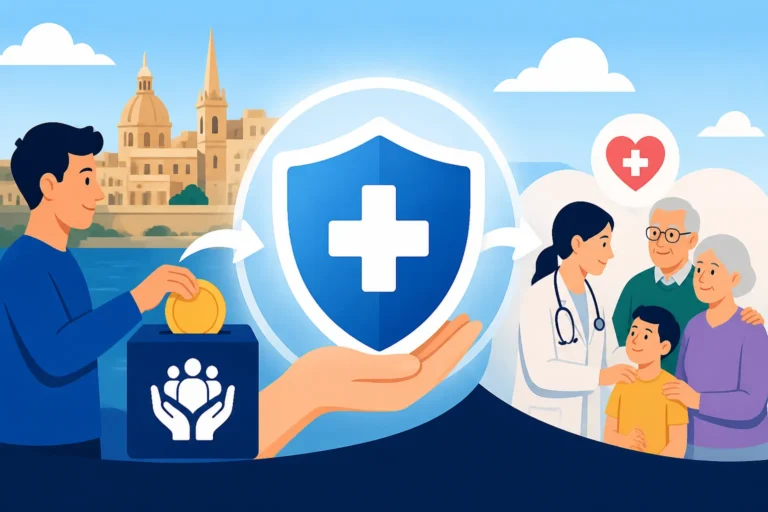
In Malta, the public healthcare system is fundamentally built on social security contributions. If you are working here and paying your National Insurance (NI) from your monthly payslip, you are opening a door for your entire family. However, it is not an automatic "all-in-one" registration. You are the primary policyholder in the eyes of the state, and your children are considered your dependents.
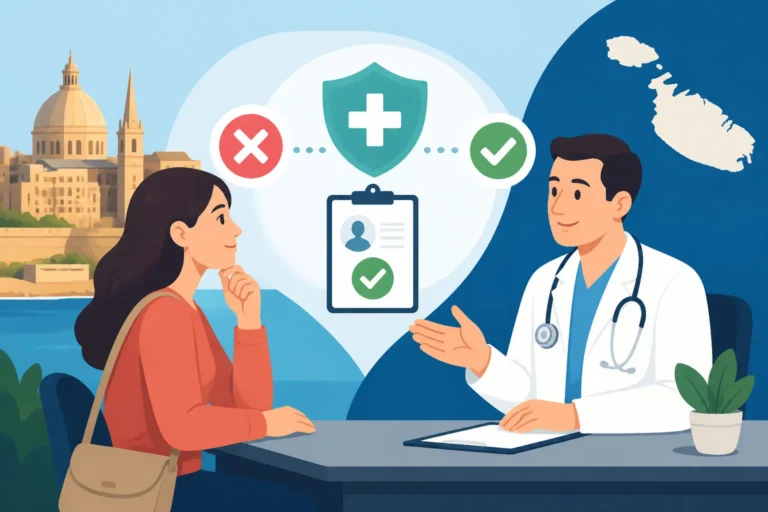
The most important thing to realize is that "coverage" and "registration" are two different hurdles. Your children are entitled to care because of your status, but the hospital or local health clinic won't know that until you’ve navigated the administrative corridors of the Entitlement Unit. This often causes frustration for new expats who assume that because their employer is deducting tax, their kids can simply walk into Mater Dei for a check-up.
For those of us who have lived here through several permit renewals, we know that the system is generous but strictly procedural. If you are an EU citizen, your path is slightly different from a Third Country National (TCN), but the core principle remains the same: the child’s right to free care is tethered to the parent’s legal residence and employment status. If you are just arriving and your paperwork is still in the "In Process" stage at Identità, you might find yourself in a gray zone. During these gaps, many parents rely on nomadic or international plans like SafetyWing to ensure there is no lapse in protection while the Maltese bureaucracy grinds along.
Who Exactly Qualifies as a Covered Dependent
Malta generally defines a dependent child as anyone under the age of 18 who is living with you. If your child is older than 18 but still in full-time education, they may still be covered under your "umbrella" of entitlement, but you will need to provide proof of their studies.
The rules get a bit more nuanced based on your specific visa or residency type:
- EU/EEA Citizens: If you are an EU national working in Malta, your children are covered under the same rights as Maltese citizens. This is part of the bilateral agreements within the EU. You will need to show that you are exercising your treaty rights (working or self-sufficient).
- Third Country Nationals (TCNs) on a Single Permit: If you are here on a work permit, your children are typically covered as long as you are paying social security. However, you must specifically register them. To understand the broader landscape, you should check Healthcare in Malta for Foreign Residents: The Complete System Guide (2027).
- Nomad Residence Permit Holders: This is where it gets tricky. Nomads are often required to have private insurance because they aren't paying into the local social security system. In this case, your children are "covered through you" only if your private policy includes them. Many nomads use SafetyWing for this exact reason, as it allows for easy addition of family members under one flexible plan.
- Self-Employed Parents: If you are self-employed, your entitlement is based on your Class 2 social security contributions. Once these are up to date, your children gain access to the public system.
The Vital Role of the Entitlement Unit
You cannot skip a visit to the Entitlement Unit if you want your children to be "in the system." Located in Gwardamanġa, near the old St. Luke’s Hospital, this office is the gatekeeper. They issue the documents that tell the doctors at Mater Dei or your local Health Centre that you don't need to be billed for services.
When I first went there, I brought a folder full of documents, and I suggest you do the same. You will need your child’s birth certificate (translated into English if it isn't already), your own eResidence card, and your recent payslips showing NI contributions. For a deep dive into this specific office, read The Entitlement Unit: Sorting Out Your Right to Treatment in Malta.
Once the Entitlement Unit approves your application, your child will be added to the national database. This is a massive relief. It means that if you ever have to visit Mater Dei and Beyond: A Guide to Malta's Public Hospitals and Health Centres, the staff can look up your child’s ID number and see that they are fully entitled to free care. Without this registration, you might be handed a bill at the end of a hospital stay, which you then have to spend weeks trying to contest or get refunded.
| Document Type | Why It Is Needed | Where to Get It |
|---|---|---|
| Birth Certificate | To prove parentage and age | Your home country (Apostilled/Translated) |
| Parent's eResidence Card | To prove the sponsor's legal status | Identità (formerly Identity Malta) |
| FS3 or Recent Payslips | To prove social security is being paid | Your Employer |
| Marriage Certificate | Sometimes required for family link | Your home country |
| Rental Agreement | To prove the family lives in Malta | Your Landlord (must be registered) |
Registering with Your Local Health Centre
Once the state acknowledges your child’s entitlement, your next practical step is local. Malta is divided into catchment areas for Health Centres. Whether you live in the busy streets of Birkirkara or the quieter alleys of Mellieħa, you belong to a specific clinic.
You should take your paperwork to your local clinic and ask: How Do I Register with a Health Centre in Malta? This is where your child will go for non-emergency issues, such as a sore throat or a routine check-up. The Health Centres are the backbone of Maltese communities. They are staffed by General Practitioners (GPs) and nurses who handle everything from stitches to blood tests.
In my experience, the doctors at these centers are excellent, but the waiting rooms can be packed. It’s a very different vibe from the "appointment-only" private clinics expats might be used to. However, once you are registered, the care is free at the point of use. If your child needs a specialist—say, a dermatologist or an ear, nose, and throat doctor—the GP at the Health Centre will issue a referral to Mater Dei.
Preventive Care: Well-Baby Clinics and Vaccinations
One of the best perks of being covered through the public system is access to the "Well-Baby" clinics. These are specialized services within the Health Centres dedicated to monitoring the growth and development of infants and toddlers.
The nurses here are incredibly thorough. They track weight, height, and developmental milestones. More importantly, this is where your child will receive their vaccinations according to The National Immunisation Schedule for Children in Malta. The schedule might be slightly different from your home country, so it is vital to bring your child’s previous immunization records. The doctors will review what has already been administered and fit your child into the Maltese schedule.
I’ve found that the Well-Baby clinic in Mosta, for example, is a hub of activity. It’s also a great place to meet other parents—both local and expat. The care is proactive. If the nurses spot anything concerning, they can fast-track your child to a pediatric specialist. This proactive care is one of the reasons How Malta's Public Healthcare Works: Entitlement, Contributions, and Costs is so highly regarded once you actually get past the registration hurdles.
Dental and Vision Care for Children
A common question parents ask is: Is Dental Care Free for Children in Malta? The answer is a qualified yes. Children who are entitled to public healthcare generally receive free dental check-ups and certain treatments through the school health service or at the dental department in Mater Dei and certain Health Centres.
However, the public dental system is often overwhelmed with long waiting lists for anything beyond basic fillings or extractions. Many expat families choose to use private dentists for regular cleanings or orthodontics (braces). If you are relying on a plan like SafetyWing, you should check if your specific tier covers dental emergencies, as this can be a lifesaver if a child chips a tooth while playing.
Vision care follows a similar pattern. Screenings are often done through the school system or at Health Centres, but if your child needs glasses, the state usually only provides a very basic voucher or limited selection for those on low incomes. Most parents expect to pay out-of-pocket for frames and lenses at private opticians in Valletta or Sliema.
The Gap: What Happens Before Entitlement is Confirmed?
This is the most stressful period for any expat parent. You’ve moved, you’ve started your job, but your eResidence card hasn't arrived yet. In the eyes of the Health Centre, you don't officially exist yet.
During this window, you are technically liable for full costs if you visit a public hospital. This is not just a few Euros; a night in a pediatric ward as a "non-entitled" patient can cost hundreds or even thousands of Euros. This is why having bridge insurance is non-negotiable. Whether it is a travel-medical policy or a dedicated expat plan like SafetyWing, you need that "safety net" while the Maltese government processes your file.
Newcomers are advised not to take that risk. Even if you are an EU citizen with an EHIC card, that card is meant for temporary stays, not for people who have moved here permanently to work. Once you start working, the rules change, and the transition period is when you are most vulnerable. Having that private backup ensures that if your child has an emergency, you can focus on their health rather than the mounting hospital bill. For more on these "gap" scenarios, see Private Healthcare and Insurance in Malta: When You Need Cover.
Private Paediatricians: A Common Alternative
Even with full public coverage, you will notice that many Maltese and expat parents still visit private paediatricians. Why? Convenience.
In the public system, you usually see whichever doctor is on duty at the Health Centre. In the private sector, you can build a relationship with a specific doctor who knows your child’s history. Private consultations usually happen in "pharmacy clinics." In almost every town—from Żebbuġ to Marsascala—the local pharmacy has a small clinic in the back where specialists consult in the evenings.
A private pediatric visit typically costs between €20 and €40. It is affordable enough that many parents use it for routine illnesses (like ear infections) while keeping the public system as their "big ticket" backup for surgeries or major hospital stays. This hybrid approach—using public care for the heavy lifting and private care for day-to-day speed—is very common.
Education and Healthcare: The School Link
Once your children are enrolled in a Maltese school (state, church, or private), they become part of the school health network. This includes regular visits from school nurses who perform screenings for hearing, vision, and scoliosis.
If a nurse identifies an issue at school, they will send a note home with a referral. If you are already registered with the Entitlement Unit, this referral flows seamlessly into the public hospital system. It’s a great secondary layer of protection that ensures no child falls through the cracks. It also reinforces the importance of getting your child’s registration sorted early, as the school will often ask for their ID number or a copy of their entitlement document during the enrollment process.
Final Steps for Parents
To wrap your head around the timeline, expect the process to take about 2-3 months from the day you land. You need your job contract, then your residence application, then your first payslip, and finally your trip to the Entitlement Unit.
- Secure bridge insurance (like SafetyWing) the moment you land.
- Apply for your eResidence card immediately.
- As soon as you have your first payslip, go to the Entitlement Unit in Gwardamanġa.
- Register your children at your local Health Centre.
- Bring your vaccination records to the Well-Baby clinic to sync with the Maltese schedule.
By following these steps, you ensure that your children are not just "covered through you" in theory, but are fully protected and recognized by the Maltese state. It’s a bit of a bureaucratic maze, but once you are through it, the peace of mind is worth every form you had to sign.
Disclaimer
This guide is provided for informational purposes only and reflects the personal experiences of the author alongside current administrative guidelines in Malta as of 2026. Healthcare regulations and entitlement criteria are subject to change by the Maltese Ministry for Health and Identità. Always verify your specific situation with the Entitlement Unit or a legal professional to ensure your family is compliant with current laws.