Healthcare in Malta for Foreign Residents: The Complete System Guide (2027)
Landing in Malta and realizing you don't have a designated family doctor can be a massive shock to the system. I remember spending my first flu season here wandering between pharmacies, confused about why I couldn't just "register" with a local clinic like I did back home. This guide dismantles the administrative maze of Maltese healthcare to ensure you get the care you need without the usual expat headaches.
Understanding the Maltese Healthcare Landscape
The healthcare system in Malta is a dual-layered structure consisting of a robust, tax-funded public sector and a rapidly expanding private sector. For a newcomer, the distinction isn't always clear, especially when you see the same specialist working at a public hospital in the morning and a private clinic in the afternoon. The public system is centered around Mater Dei Hospital, a state-of-the-art facility that handles everything from routine check-ups to complex surgeries. However, the system is under significant pressure due to the island's growing population, which often results in long waiting lists for non-urgent procedures.
Public healthcare is essentially free at the point of use for those who contribute to the Maltese social security system. This is a "Beveridge" model, similar to the NHS in the UK. If you are employed or self-employed and paying your Class 1 or Class 2 contributions, you and your localized dependents are generally covered. But don't expect a card to arrive in the mail automatically; the burden of proving your entitlement lies squarely on your shoulders. You’ll need to navigate the Entitlement Unit and ensure your documentation is airtight before you ever set foot in a consultant's office for a free appointment.
On the other side of the coin, the private sector offers speed and comfort. Many expats, including myself during my first year, find that the private route is the only way to see a specialist within a week rather than six months. Private hospitals like St. James or DaVinci provide a hotel-like experience, but the costs can add up quickly if you aren't insured. This is where services like SafetyWing become invaluable for those in transition, offering a safety net while you wait for your local residence paperwork to clear. Understanding how these two systems interact is the first step toward a stress-free life in the Mediterranean.
The Public Sector and Mater Dei Hospital
Mater Dei is the sun around which the Maltese medical world orbits. Located in Msida, it is the primary acute general hospital for the entire island of Malta. I’ve spent my fair share of time in its corridors, and while the facility is impressive, the sheer volume of patients can be overwhelming. As an expat, you need to know that Mater Dei is where you go for emergencies, specialized consultations, and inpatient care. It is not, however, a "walk-in" clinic for a sore throat or a basic prescription refill; for those, you head to the regional health centres.
Accessing Mater Dei for non-emergency issues requires a referral. You cannot simply call up the hospital and book an appointment with a cardiologist because your chest feels tight. You must first see a General Practitioner (GP), either at a public health centre or privately. If the GP deems it necessary, they will issue a referral form which is then processed by the hospital's central appointments office. You will eventually receive a letter (or an SMS, if you’ve registered for the myHealth portal) with your appointment date. Be warned: the "eventually" in that sentence can sometimes mean several months.
For those living on the sister island, the situation is slightly different. Gozo General Hospital provides public care for Gozitans and residents there. While it handles many issues locally, serious cases are often transferred to Mater Dei via ambulance or, in extreme circumstances, helicopter. If you’re considering living in Gozo, it’s vital to understand this logistical hurdle. Mater Dei and Beyond: A Guide to Malta's Public Hospitals and Health Centres provides a deeper look into how these facilities operate and what to expect during your first visit.
The Growing Private Sector
If the public system is the reliable workhorse, the private sector is the agile sprinter. In Malta, private healthcare isn't just for the wealthy; it’s a standard middle-class choice for those who value their time. Most "family doctors" in Malta actually operate out of the back of local pharmacies. You walk in, pay a fee (usually between €15 and €30), and see a doctor within thirty minutes. This is often the fastest way to get a sick note for work or a prescription for antibiotics.
Beyond the pharmacy GPs, there are several large private hospitals and multidisciplinary clinics. These facilities offer everything from MRI scans to cosmetic surgery and maternity care. The primary draw is the lack of waiting times. While the public system might have a six-month wait for a dermatology appointment, a private clinic can usually see you within 48 hours. Many expats choose to maintain a hybrid approach: using the public system for major, high-cost surgeries and the private system for routine specialist visits and diagnostic tests.
Because private care is fee-for-service, having adequate insurance is non-negotiable if you want to avoid a massive bill. For many digital nomads or those on a Healthcare on a Visa-Based Permit in Malta: Nomads, Retirees, and Investors route, international providers like SafetyWing offer the flexibility needed to access these private clinics without worrying about the immediate out-of-pocket hit. Private care in Malta is high-quality, and the bedside manner is often more personalized than what you’ll find in the high-volume public environment.
Finding the Right Balance for Your Needs
Choosing between public and private care is a personal decision based on your health history, budget, and employment status. If you are a young, healthy professional, you might find that paying the occasional €20 at a pharmacy GP is sufficient. However, if you have a chronic condition, the public system's "Schedule V" scheme (which provides free medication for specific illnesses) is an absolute lifesaver. I have friends who save thousands of Euros a year by utilizing the public scheme for their insulin or heart medication.
It's also worth noting that even if you have private insurance, you might still end up in the public system for major emergencies. If you're involved in a serious car accident, the ambulance is going to take you to Mater Dei, not a private clinic. This is because the public hospital has the intensive care infrastructure that many private clinics lack. Therefore, every resident should ensure their public entitlement is sorted, regardless of whether they plan to use private care.
| Feature | Public Healthcare (Mater Dei / Health Centres) | Private Healthcare (Clinics / Private Hospitals) |
|---|---|---|
| Cost | Free (if paying Social Security) | Fee-for-service / Insurance-based |
| Wait Times | Can be long (months for specialists) | Short (days or even hours) |
| Referrals | Strictly required for specialists | Often not required; can book directly |
| Amenities | Basic, high-volume environment | Modern, private rooms, personalized care |
| Primary Care | Regional Health Centres | Pharmacy GPs and private clinics |
| Emergency | Full A&E and ICU capabilities | Limited emergency services |
Navigating the Public System and Entitlement
The most common mistake I see new expats make is assuming that having a job automatically grants them a "free pass" at the hospital. While your employer does deduct social security from your paycheck, the hospital computer system doesn't always talk to the Social Security department in real-time. To access free care, you must prove you are an active contributor. This involves a trip (or a very long email chain) with the Entitlement Unit, located at St Luke’s Hospital in Gwardamanġa.
Entitlement is not just about having a job; it’s about your residence status. EU citizens have different hurdles than Third-Country Nationals (TCNs). For instance, an EU citizen might use an S1 form to transfer their health rights from their home country, while a TCN on a single permit is only covered if they are currently employed and paying into the system. If you lose your job, your entitlement can vanish overnight, which is a terrifying prospect if you’re midway through a treatment plan. You must stay on top of your Health Entitlement in Malta: How Social Security Contributions Unlock Free Care to avoid being handed a bill at the end of a hospital stay.
Social Security Contributions and Free Care
In Malta, your "National Insurance" (NI) or Social Security contribution is divided into two main categories: Class 1 (for employees) and Class 2 (for self-employed individuals). These payments fund the entire social safety net, including pensions, unemployment benefits, and, crucially, healthcare. When you receive your first payslip, you’ll see a deduction for "SSC." This is your ticket to the public system. However, the system requires a minimum number of contributions to unlock full benefits, though acute emergency care is generally provided to all residents.
For self-employed expats, the burden is slightly higher. You are responsible for calculating and paying your own contributions three times a year. If you fall behind on these payments, you may find your health entitlement suspended. I’ve known freelancers who ignored their Class 2 payments for a year, only to be hit with a €2,000 bill after an emergency appendectomy. It is essential to understand How Malta's Public Healthcare Works: Entitlement, Contributions, and Costs before you start your business on the island.
Dependents are also covered under the main contributor's umbrella. This includes your spouse (if they are not working) and your children. However, you must specifically register them with the Entitlement Unit. They won't "automatically" appear in the system just because they are on your tax return. You’ll need birth certificates, marriage certificates, and your eResidence card to prove the link. This administrative step is vital for Family and Children's Healthcare in Malta: Maternity, Well-Baby, and Beyond.
The Role of the Entitlement Unit
The Entitlement Unit is the gatekeeper of the public healthcare system. Their job is to verify that you have the legal right to free treatment. To do this, they issue various "certificates of entitlement." If you are an EU citizen living here but working for a company in Germany, or if you are a retiree drawing a pension from the UK, the Entitlement Unit will handle your S1 or EHIC paperwork. Without their stamp of approval, the hospital billing department will treat you as a "paying patient."
When you visit the Entitlement Unit (or contact them via their website), you need to bring your eResidence card, your employment contract, and your recent FS3 (the annual tax summary). They will cross-reference this with the Jobsplus database. If everything matches, they will update your status in the national health database. Once this is done, when a clerk at Mater Dei swipes your ID card, your profile will show "Entitled." If you haven't done this, your profile will remain blank or show "Non-Entitled," leading to a flurry of invoices.
The Entitlement Unit also handles the "Pink Card" and "Yellow Card" applications. These are specific schemes for those on low incomes or those with chronic conditions. For example, if you have diabetes, the Entitlement Unit will process your doctor’s application for a Yellow Card, which allows you to get your insulin and testing strips for free from a local pharmacy. Learning How to Register for Health Entitlement with the Entitlement Unit in Malta is perhaps the most important administrative task you’ll face in your first month.
Registering for Public Healthcare Services
Once you have your entitlement confirmed, your next step is to find your local Health Centre. Malta is divided into several catchment areas, each served by a primary health centre. You don't "choose" your health centre; it is determined by your place of residence. If you live in Sliema, you go to Gżira; if you live in Mosta, you go to the Mosta Health Centre. These centres are the backbone of primary care and are open 24/7 for emergencies, though routine services have specific hours.
Registration at a health centre is relatively simple but requires your Getting Your Maltese ID Card Number: The Key to Accessing Healthcare. You show up with your card, prove your address (a rental contract or utility bill usually suffices), and they will create a file for you. This file stays at that specific health centre. If you move house, you have to "transfer" your file to the new catchment area. It sounds archaic, and in many ways it is, but it’s the only way to ensure the doctors have your local history.
Many newcomers expect to have a specific "Family Doctor" at the health centre who knows their name and history. In reality, the public health centres operate on a "doctor-on-duty" basis. You might see Dr. Borg on Monday and Dr. Camilleri on Thursday. If you want a consistent relationship with a single doctor, you will likely need to go the private route and visit a pharmacy GP. This is a key distinction explained in Registering with a Health Centre and Choosing a GP in Malta.
Accessing Primary Care through Health Centres
Primary care in Malta is unique. Unlike many countries where you have to book an appointment weeks in advance just to talk to a doctor, Malta’s public health centres operate largely on a walk-in basis for GP services. This is both a blessing and a curse. It’s a blessing because if you wake up with a chest infection, you can see a doctor that same morning. It’s a curse because you might be sitting in a waiting room for three hours with fifty other people who also have chest infections.
The health centres are more than just GP offices. They are mini-hospitals that provide nursing services (like wound dressing), immunizations, blood tests, and even minor surgeries. Most health centres have a "Treatment Room" where you go for anything involving a needle or a bandage. If you need a blood test, you don't go to the hospital; you go to your local health centre between 7:00 AM and 8:00 AM, wait in line, and get it done there.
How Health Centres Operate
The first thing you’ll notice when you walk into a health centre like the one in Floriana or Paola is the "reception" desk, which often looks like a high-security bunker. You present your ID card, tell them what you need, and they give you a number. From there, you wait. The system is egalitarian; it doesn't matter if you're a CEO or a student, you wait your turn. The facilities can feel a bit dated, but the care is generally excellent. The doctors are often younger residents or experienced GPs who have seen it all.
Service hours vary. Most centres provide GP services 24/7 for urgent issues, but if you need a specific clinic—like the "Well-Baby" clinic or the "Diabetes" clinic—you have to check the schedule. These specialized clinics usually require an appointment, which can be made over the phone or at the reception desk. For a detailed breakdown of which centre serves which town, see Which Health Centre Do I Go to After Moving to Malta?.
It’s also important to know that health centres are where you go for your "Sick Certificate." In Malta, if you miss even one day of work, your employer may require a blue medical certificate signed by a doctor. While you can get this from a private doctor, the public health centre provides them as part of their service. Just be prepared to wait in line for that signature.
Seeing a GP and the Referral System
When you finally see a GP in the health centre, the consultation is usually brief and to the point. The doctor will examine you, write a prescription, or—if the issue is complex—issue a referral to a specialist at Mater Dei. This referral is a piece of paper that you take back to the reception desk. They will stamp it and send it to the hospital. You cannot "self-refer" to a specialist in the public system. If you want to see an ENT or a neurologist, the GP must agree that it's necessary.
If you choose to see a private GP (at a pharmacy), they can also write referrals to Mater Dei. However, there has been an ongoing debate about whether private referrals are treated with the same priority as public ones. In my experience, a referral is a referral, but the hospital triage team ultimately decides how fast you get seen. If you’re in a hurry, you might find that Finding a Doctor in Malta: GPs, Specialists, and the Referral System is easier if you use the private route to get your initial tests done.
One great modern addition to the system is the myHealth portal. Once you have your eID, you can log in to this portal and see all your lab results, your upcoming appointments at Mater Dei, and even a history of the medications you've been prescribed. It's a surprisingly sophisticated tool that allows you to take ownership of your medical data. I highly recommend every expat Registering on the myHealth Portal in Malta as soon as they get their ID card.
Walk-in Clinics vs. Scheduled Appointments
The "Walk-in" culture is deeply ingrained in Malta. It applies to health centres and many private clinics. If you need a quick consultation, you just show up during "clinic hours." However, for anything specialized—like a mammogram, an ultrasound, or a consultation with a consultant—you will always need a scheduled appointment. The confusion for many expats arises when they try to "walk in" for something that is actually an appointment-only service.
In the private sector, "walk-in" clinics are becoming more common in high-traffic areas like Sliema and St. Julian's. These are great for minor injuries or quick prescriptions. But be prepared to pay a premium for the convenience. For those with international coverage like SafetyWing, these visits are often easier to manage because you aren't tied to the rigid catchment area rules of the public health centres.
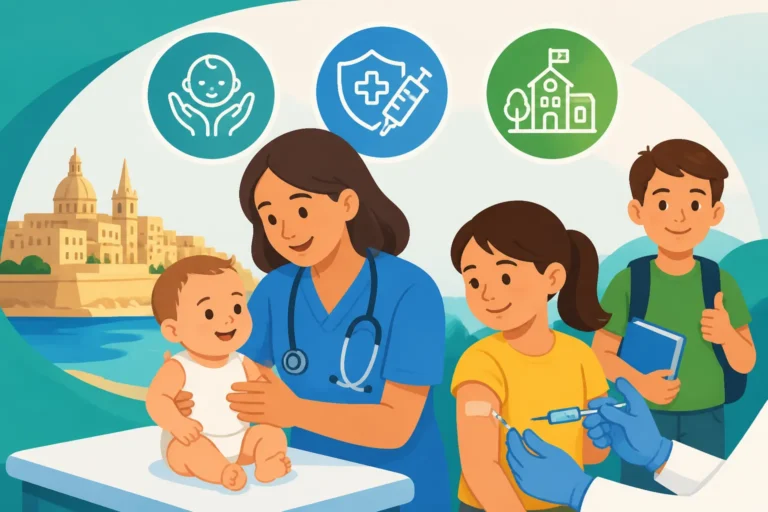
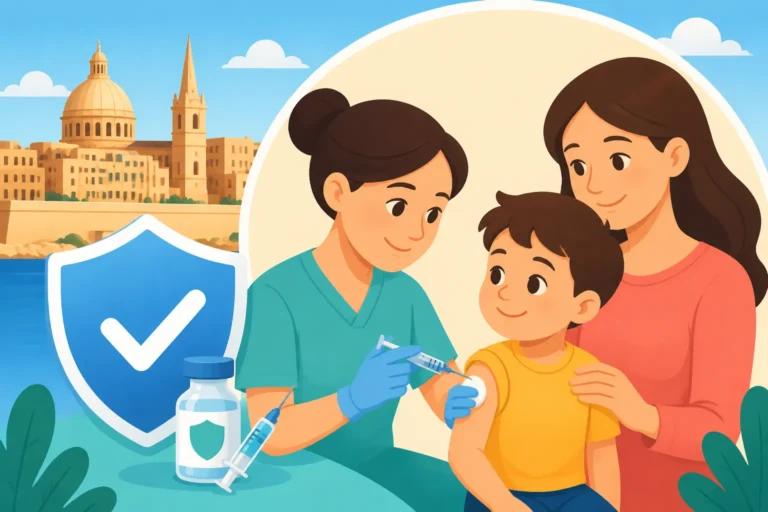
If you are a parent, you will quickly become familiar with the "Well-Baby" clinics. These are scheduled appointments where your child’s growth is monitored and vaccinations are administered according to The National Immunisation Schedule for Children in Malta. These are handled at the health centres and are generally very well-organized, providing a rare break from the usual walk-in chaos.
Specialized Care and Hospitalization
If your health issue requires more than a GP can provide, you enter the world of specialized care. In Malta, this almost always leads to Mater Dei Hospital. The hospital is divided into "Outpatients" (where you go for consultations and tests) and "Inpatients" (where you stay overnight for surgery or recovery). The specialized care system is highly competent, with many Maltese doctors having trained in the UK, Italy, or the US.
The challenge with specialized care in the public system is the waiting list. For life-threatening issues, the system moves with incredible speed. If you have a suspected cardiac event, you will be in the catheterization lab within minutes. However, if you need a knee replacement or a non-urgent gall bladder surgery, the wait can stretch into years. This is why many expats choose Private Hospitals and Clinics in Malta: Faster Specialist Access for elective procedures.
Referrals to Specialists at Mater Dei
When you receive your appointment letter for a specialist, it will include a specific time and "Suite" number. Mater Dei Outpatients is a sprawling maze, so arrive at least twenty minutes early just to find your way. You will "check in" at a kiosk or a desk using your ID card. One thing to note: the "appointment time" is often more of a "block time." If your appointment is at 9:00 AM, there might be ten other people with the same time. The consultant sees people in the order they arrived or based on clinical priority.
During the consultation, be prepared to be your own advocate. The specialists are busy and handle a high volume of patients. Bring a list of your medications and any previous test results from your home country. If the specialist orders further tests (blood work, X-rays), you will often be directed to another department within the hospital to get them done the same day. For a detailed guide on navigating this, see How the Specialist Referral System Works in Malta's Public Hospitals.
If you find the wait for a specialist too long, you can take your public referral and "go private." You find a specialist at a private clinic, show them your referral (or have them write a new one), and pay for the consultation. This is a common way to jump the queue for the initial diagnosis. You can then take the private specialist's findings back to the public system if you want the actual surgery or treatment to be done for free at Mater Dei.
What to Expect During a Hospital Stay
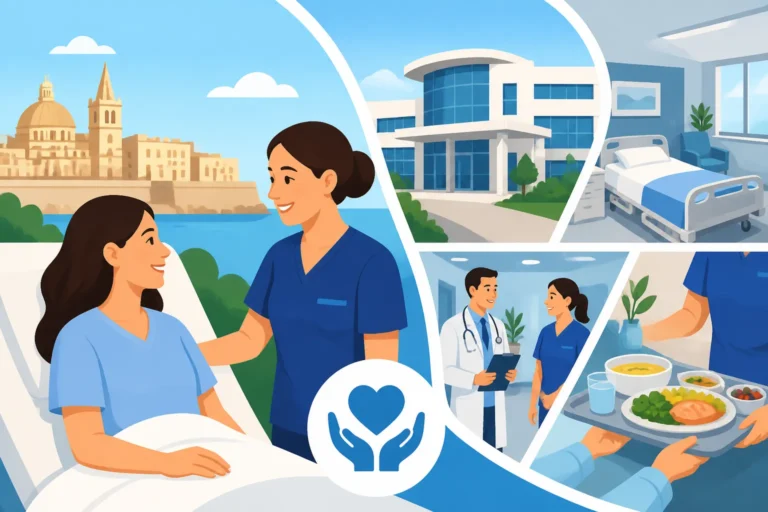
Being admitted to Mater Dei as an inpatient is a structured experience. The wards are generally divided by specialty (e.g., Orthopedic, Cardiac, Surgical). Most rooms are shared, usually with 4 to 6 beds per bay. If you are used to the privacy of a single room in a private hospital, this can be a bit of a culture shock. However, the nursing care is professional and the medical supervision is constant.
One thing that surprises many foreigners is the role of the family in Maltese hospitals. It is culturally expected that family members will stay with the patient, help with feeding, and provide emotional support. While the nurses handle the medical tasks, the "care" often falls to the family. Visiting hours are strictly enforced, but for serious cases, one family member is often allowed to stay by the bedside.
The hospital provides meals, which are… hospital meals. Don't expect gourmet Mediterranean cuisine. Many patients have family members bring in extra food (within dietary restrictions). If you are looking for a more "private" experience, Private Healthcare and Insurance in Malta: When You Need Cover allows you to stay in private hospitals where you’ll have a single room and more liberal visiting hours.
Emergency Medical Services and the 112 Line
In a medical emergency, the number to dial in Malta is 112. This connects you to a central emergency dispatcher who can send an ambulance, the police, or the fire department. The ambulance service in Malta is manned by highly trained paramedics. If you are in a situation where every second counts, the 112 system is your lifeline. For more on this, check out What Number Do I Call for an Ambulance in Malta?.
Emergency treatment at Mater Dei's Accident & Emergency (A&E) department is free for everyone at the point of delivery, regardless of nationality or insurance status, if the situation is a genuine emergency. However, if you show up at A&E with a minor issue that could have been handled at a health centre, you may be redirected or, in some cases, billed later if you aren't entitled to free care.
The A&E department uses a triage system: Red (Immediate), Orange (Very Urgent), Yellow (Urgent), and Green (Non-Urgent). If you are "Green," be prepared to wait for six to ten hours. It’s a busy place, especially on weekend nights. If your situation isn't life-threatening but needs urgent attention, the regional health centres in Mosta, Paola, and Floriana also offer 24/7 emergency GP services which are often much faster than Mater Dei.
Pharmacies and Medication Schemes
Pharmacies in Malta (known locally as is-spiżerija) are more than just shops; they are community health hubs. They are the only places where you can buy even basic medications like Ibuprofen or Paracetamol—you won't find these in supermarkets here. Most pharmacies have a "doctor's clinic" in the back, making them the primary point of contact for many residents.
Malta has a unique system for providing free medication to those with chronic illnesses, known as the POYC (Pharmacy of Your Choice) scheme. Instead of going to a hospital pharmacy, you can register with a local pharmacy of your choice and collect your government-funded medications there. This is a fantastic convenience that saves patients from trekking to Mater Dei every month.
Collecting Free Medicines through POYC
To qualify for the POYC scheme, you must have a "Yellow Card" (Schedule V) or a "Pink Card." These are issued based on your medical condition or financial status. Once you have the card, your specialist will write a "Schedule V" prescription. You take this to the Entitlement Unit, and once approved, you choose a pharmacy near your home or work. From then on, you simply walk into your chosen pharmacy every few weeks and pick up your medicine for free.
The list of medications covered is extensive but specific. It includes treatments for chronic asthma, diabetes, hypertension, and many other long-term conditions. However, the government usually provides "generic" versions of drugs. If you insist on a specific brand name that isn't on the government list, you will have to pay for it privately. You can read more about this in The POYC Pharmacy of Your Choice Scheme: How to Collect Free Medicines.
I've found the POYC system to be one of the most efficient parts of Maltese healthcare. However, the "stock" is managed by the government. Occasionally, there are national shortages of certain drugs. In these cases, you might have to check multiple pharmacies or wait for the central stores to be replenished. It’s always wise to keep a few weeks' worth of buffer supply if you can.
Buying Over-the-Counter and Prescription Medicines
For non-chronic issues, you’ll be buying your medicine. Prescription drugs in Malta are generally affordable compared to the US, but prices are higher than in some other EU countries. You will always need a physical or digital prescription from a doctor registered in Malta to buy antibiotics, strong painkillers, or hormonal treatments. Pharmacists here are quite strict; don't expect to talk your way into an "emergency" pack of Amoxicillin without a script.
Over-the-counter (OTC) medicines are available without a prescription, but again, only at a pharmacy. If you have a headache at 9:00 PM on a Sunday and don't have aspirin at home, you’ll need to find an open pharmacy. Most pharmacies close at 7:00 PM or 8:00 PM and are shut on Sundays, except for a revolving list of "duty" pharmacies.
When buying medicine, it’s worth asking the pharmacist if there’s a cheaper generic version available. Most Maltese pharmacists are incredibly knowledgeable and speak perfect English. They can often provide advice on minor ailments, saving you a trip to the doctor. For more tips, see Buying Over-the-Counter Medicine at a Maltese Pharmacy.
Sunday Openings and Pharmacy Schedules
The "Pharmacy on Duty" system is something every expat learns about the hard way. On Sundays and Public Holidays, only a handful of pharmacies across the islands are open, typically from 9:00 AM to 12:30 PM (though some in the airport or main hubs stay open later). The list of which pharmacies are on duty is published in the local newspapers, on the Do Maltese Pharmacies Open on Sundays and Public Holidays? website, and is usually posted in the window of every pharmacy.
If you find yourself needing medicine on a Sunday afternoon, your options are limited. The pharmacy at the Malta International Airport (Arrivals Lounge) is often open for longer hours, but for most, the Sunday morning window is the only chance to get supplies. Planning ahead is essential in Malta; the "24-hour pharmacy" on every corner is a luxury we don't have here.
| Day | Standard Hours | Emergency / Sunday Hours |
|---|---|---|
| Monday – Friday | 09:00 – 13:00, 16:00 – 19:00 | N/A |
| Saturday | 09:00 – 13:00 | Some open in the afternoon |
| Sunday | Closed | Selected "Duty" pharmacies only (09:00 – 12:30) |
| Public Holidays | Closed | Selected "Duty" pharmacies only |
Private Healthcare and International Insurance
For many expats, private healthcare is not a luxury—it’s a necessity for maintaining a busy lifestyle. Whether it’s to avoid the three-hour wait at the health centre or the six-month wait for a specialist, the private route is heavily utilized by the international community. This is where private health insurance comes into play. While the public system covers you locally, it doesn't offer much in the way of "comfort" or "speed."
International insurance like SafetyWing is particularly popular among the "new" Malta—the iGaming workers, digital nomads, and remote entrepreneurs. It provides a level of continuity that local Maltese insurance sometimes lacks, especially if you travel frequently between Malta and other European hubs. Having a policy that covers you both at St. James Hospital in Sliema and during a weekend trip to Sicily is a major advantage.
Why Expats Choose Private Options
The primary driver is speed. If you have a mole that looks suspicious, you want it checked now. In the private system, you can see a dermatologist tomorrow. Furthermore, the level of communication is often better. You can usually email your private specialist or call their clinic directly, whereas navigating the Mater Dei switchboard can feel like a full-time job.
Another factor is the environment. Private clinics are modern, air-conditioned, and usually offer free Wi-Fi and coffee. If you’re going for a routine check-up, it feels much less like a "medical event" and more like a professional appointment. For those with children, the private sector offers a calmer environment for vaccinations and pediatric visits. Private Hospitals and Clinics in Malta: Faster Specialist Access covers the top facilities on the island.
Finally, some residence permits require you to have private insurance. If you are here on a Nomad Residence Permit or as a Self-Sufficient retiree, the Maltese government requires proof that you won't be a burden on the public health system. In these cases, you must have a policy that covers a minimum amount (usually €30,000) for inpatient and outpatient care.
Comparing Local and International Insurance Providers
Local insurers like Atlas, GasanMamo, or Bupa Malta offer plans tailored specifically to the Maltese market. They often have "direct billing" agreements with the major private hospitals, meaning you don't have to pay upfront; the hospital bills the insurer directly. This is incredibly convenient for major surgeries. However, these plans can be restrictive if you spend a lot of time outside Malta.
International providers like SafetyWing offer more global flexibility. They are often cheaper for younger, healthier expats and provide coverage that follows you across borders. The trade-off is that you may need to pay the clinic upfront and then file a claim for reimbursement. For routine GP visits of €20, this isn't a big deal, but for a €5,000 surgery, you’d need to ensure your "pre-authorization" is in place.
When choosing, look at the "exclusions." Many local Maltese plans will not cover pre-existing conditions or chronic care (like ongoing cancer treatment) beyond a certain limit. International plans vary, so read the fine print. Choosing a Private Health Insurer in Malta: Cover, Costs, and Claims provides a deep dive into the pros and cons of each approach.
Handling Claims and Direct Billing
If you go to a private doctor in a pharmacy, you pay cash or card and get a receipt. You then submit this receipt to your insurer via their app or website. Most insurers in Malta are quite efficient, reimbursing the funds within 7 to 14 days. Make sure the doctor writes a brief "medical report" or a diagnosis on the receipt, as insurers will reject a claim that just says "Consultation."
For hospital stays, "Direct Billing" is the gold standard. When you are admitted to a private hospital, you give them your insurance details. They contact the insurer to confirm coverage. If approved, you only pay the "excess" (the part of the bill your insurance doesn't cover) when you leave. This prevents you from having to find thousands of Euros in an emergency.
Always keep a digital folder of your medical receipts and reports. Maltese bureaucracy loves paper, but as an expat, having everything scanned on your phone will save you when you’re trying to prove a claim to an insurer or showing your history to a new specialist. For more on the logistics, see Booking Appointments and Using myHealth Online in Malta.
Specialized Health Services (Dental, Mental Health, Maternity)
Beyond the general GP and hospital visits, you may need specific services that sit slightly outside the standard "free" public health umbrella. In Malta, certain areas of healthcare are almost entirely private, while others have strong public support but long waits. Dental care, for example, is an area where almost everyone—locals and expats alike—uses private clinics.
Maternity and mental health, however, have very robust public pathways. Malta is a very family-oriented society, and the maternity care at Mater Dei is world-class. Mental health services have also seen significant investment in recent years, moving away from old-fashioned institutional care toward community-based support.
Dental Care and Private Clinics
Public dental care in Malta is limited to emergencies (extractions or acute pain) and is provided at Mater Dei or certain health centres. For routine cleanings, fillings, or braces, you must go private. Fortunately, dental care in Malta is of a very high standard and relatively affordable compared to Northern Europe or the US. A check-up and cleaning will typically cost between €40 and €60.
There are dental clinics in almost every village. Most are equipped with modern digital X-rays and offer everything from dental implants to teeth whitening. If you have a dental emergency on a Sunday, there is usually one private clinic on the island that stays open, but you’ll pay an emergency fee. For more information, see Dental Care in Malta: Public Provision, Private Dentists, and Costs.
Because dental care is private, it is rarely covered by basic health insurance policies. You usually need to add a specific "dental rider" to your plan. If you’re planning extensive work, like crowns or bridges, it’s worth getting a few quotes from different clinics, as prices can vary significantly between the trendy areas like St. Julian's and the more traditional villages in the south.
Mental Health Support in the Community
If you are struggling with your mental health, the first port of call is usually your GP, who can refer you to the public Mental Health Services. Malta has a dedicated psychiatric hospital (Mount Carmel), but the focus has shifted toward "Community Mental Health Centres" located in various towns. These centres provide access to psychiatrists, psychologists, and social workers for free.
For those who prefer privacy and speed, there is a large network of private therapists and psychologists. Many speak multiple languages, which is vital for expats. Private therapy sessions usually cost between €40 and €70 per hour. Unlike physical health, many private insurers are still catching up on mental health coverage, so check your policy carefully. Mental Health Support in Malta: Services, Therapy, and Mount Carmel Hospital is a comprehensive resource for finding help.
In a crisis, Malta has a 24/7 mental health helpline (1770) and a dedicated psychiatric emergency service at Mater Dei. Never hesitate to use these services; the Maltese medical community takes mental health very seriously, and help is available regardless of your residency status.
Maternity Care and Giving Birth in Malta
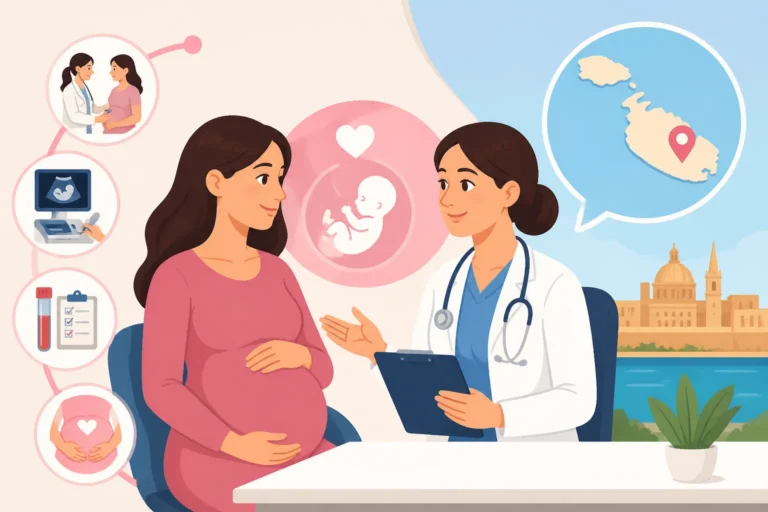
If you’re having a baby in Malta, you’re in good hands. The public maternity system is highly regarded. Once your pregnancy is confirmed, you will be assigned to a "Midwife-Led Clinic" at your local health centre. You will have regular check-ups, ultrasounds, and blood tests, all for free if you are entitled. The actual birth takes place at the Obstetric Ward in Mater Dei.
Many expats choose a "Shared Care" model, where they see a private obstetrician for their monthly scans and consultations but still give birth in the public hospital. This gives you the consistency of the same doctor throughout the pregnancy but the safety and cost-savings of the public hospital for the delivery. Maternity Care in Malta: Antenatal Visits, Birth, and the Maternity Benefit explains the paperwork you'll need to claim your maternity leave and benefits.
Post-natal care is also excellent. Midwives from the "Discharge Liaison Team" will visit you at home in the days following the birth to check on you and the baby. There is also a strong network of breastfeeding support and "Well-Baby" clinics to ensure your new arrival is hitting their milestones. For a parent's perspective on the process, see How Pregnancy, Birth, and Maternity Leave Connect in Malta.
Healthcare for Specific Resident Groups
Your experience with the Maltese health system will depend heavily on the "color" of your residence permit. Malta has various schemes for different types of foreigners, and each has its own set of rules regarding health access. Whether you are a digital nomad, a retired EU citizen, or a worker from outside Europe, you need to know which box you fall into.
The general rule is: if you pay into the system, you get out of the system. But there are nuances. Some groups are required to have private insurance regardless of their tax contributions, while others have their rights "exported" from their home country. Understanding these categories will prevent you from being hit with an unexpected What Public Healthcare Costs in Malta: Free Services and Paid Extras bill.
Digital Nomads and Retirees
Digital Nomads on the "Nomad Residence Permit" are a unique group. Because they are often working for companies outside Malta, they aren't paying Maltese Social Security. Therefore, they are required by law to have health insurance that covers them in Malta. Providers like SafetyWing are specifically designed for this demographic, providing the necessary documentation for the Identità (formerly Identity Malta) application.
Retirees have a different path. If you are an EU retiree, you can use the S1 form to prove that your home country is "paying" for your care. You present this form to the Entitlement Unit in Malta, and you are granted full access to the public system as if you were a Maltese pensioner. For non-EU retirees, the "Malta Retirement Programme" (MRP) usually requires you to hold a private health insurance policy. More details can be found in Healthcare on a Visa-Based Permit in Malta: Nomads, Retirees, and Investors.
EU/EEA Citizens and the S1 Form
As an EU citizen, you have the right to equal treatment. If you are working in Malta, you are covered. If you are not working but have been contributing in another EU country, you might still be covered for a transitional period using your EHIC (European Health Insurance Card). However, once you become a "resident" (usually after 3 months), the EHIC is no longer valid for primary care; you must register with the local system.
The S1 form is the "golden ticket" for EU citizens who are posted workers or retirees. It ensures that the costs of your healthcare in Malta are billed back to your home country. This is a vital piece of paper that must be organized before you leave your home country. Without it, you may be forced to pay for private care until you can prove your status. Check Transferring EU Health Rights to Malta with an S1 Form or EHIC for the step-by-step process.
Third-Country National Requirements
For those coming from outside the EU/EEA (Third-Country Nationals), health insurance is usually a mandatory part of the visa and residence permit process. When you apply for a Single Permit (work permit), you must often show proof of "interim" health insurance to cover you until your first social security contributions are processed. Once you are employed and have your ID card, you are entitled to public care, but only for the duration of your contract.
If you are a TCN and you lose your job, your right to free healthcare generally ends when your work permit is revoked. This makes having a backup international policy very wise. Furthermore, TCNs are often the group most scrutinized by the Entitlement Unit, so keeping meticulous records of your payslips and employment history is essential. For more on the requirements, see Private Health Insurance Requirements for Non-EU Permit Holders in Malta.
Legal Disclaimer
The information provided in this guide is for informational purposes only and does not constitute medical, legal, or financial advice. Healthcare laws, entitlement criteria, and insurance requirements in Malta are subject to frequent change by the Maltese Government and Identità. While every effort has been made to ensure accuracy, readers should always verify their specific situation with the Entitlement Unit, their employer, or a qualified legal professional before making decisions about their healthcare or residency.