Managing a Chronic Condition in Malta: Schedule V Medicines and Care
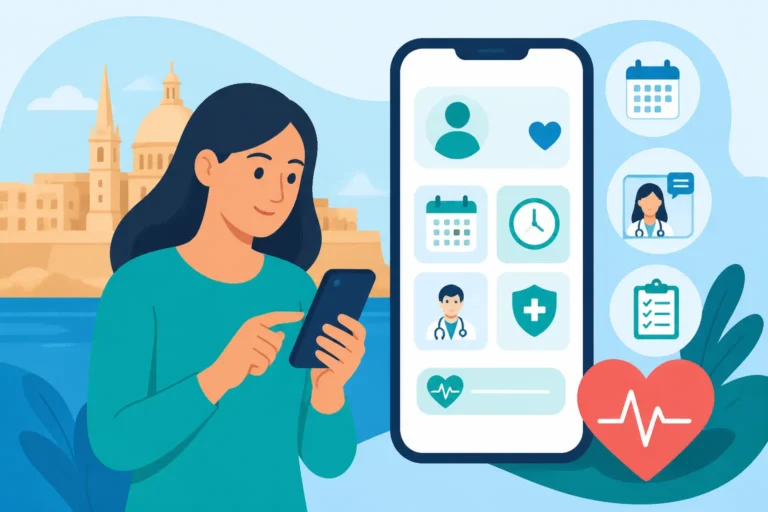
Moving to a new country is stressful enough without the looming fear that your life-saving medication won't be available or will cost a fortune. I remember landing at Luqa airport with a suitcase full of inhalers and a nervous knot in my stomach, wondering if the Maltese system would actually catch me if I fell. This guide breaks down exactly how to manage chronic health needs here, from the legendary "Pink Card" to the local pharmacy quirks.
Navigating the Maltese Healthcare System for Chronic Patients
When you first arrive in Malta, the healthcare system can feel like a labyrinth of stone-walled corridors and confusing paperwork. The most important thing to understand is that Malta operates a dual-track system: public and private. For someone with a chronic condition, you will likely find yourself standing with one foot in each camp. The public system is robust and remarkably high-quality, but it is also heavily burdened, leading to the kind of waiting lists that can make your head spin.
The Public vs. Private Balance
The public sector, centered around the massive Mater Dei Hospital, provides free care for those who are entitled to it. However, the path to a specialist can be long. Many expats choose to see a private specialist initially to get a diagnosis or a prescription update, then "bridge" back into the public system to access free medications. It is a common strategy to pay for a private consultation—which usually costs between 60 and 100 Euro—just to skip a six-month wait for an initial appointment.
If you are just arriving and haven't yet sorted your social security contributions, you might feel exposed. This is where options like SafetyWing can provide a crucial safety net for digital nomads or those in the "limbo" period before their Maltese ID card arrives. Having that backup means you aren't paying thousands out of pocket if a chronic flare-up lands you in a ward before your public entitlement is processed.
The Role of Social Security and Entitlement
Your access to the "free" part of the system is strictly tied to your social security contributions. If you are employed by a Maltese company or self-employed and paying your Class 2 contributions, you are generally covered. For a deep dive into how this works, you should check out How Malta's Public Healthcare Works: Entitlement, Contributions, and Costs. Without these contributions, or a specific entitlement document like an S1 form for EU pensioners, the public system will bill you as a "non-entitled" patient, and those bills are not cheap.
Demystifying the Schedule V Pink Card Entitlement
If you have a chronic condition, the phrase "Schedule V" will soon become a central part of your vocabulary. Locally known as the "Pink Card" (though it’s now often a yellow document or a digital record linked to your ID), this is the golden ticket that allows you to receive specific medications for your condition entirely free of charge, regardless of your income.
What is Schedule V and Who Qualifies
Schedule V is a legislative list of chronic diseases and conditions that the Maltese government has deemed "heavy" enough to warrant free medication. This includes everything from diabetes and hypertension to more complex autoimmune disorders and mental health conditions. You can read more details in What Is the Schedule V (Pink Card) Scheme in Malta? to see a broader list. The key takeaway is that you don't automatically get this just because you have a diagnosis; you must be a resident, entitled to healthcare, and have your condition "vetted" by a government-approved consultant.
The Application Process for the Pink Card
The process is notoriously bureaucratic. You cannot simply take a letter from your doctor back home to a pharmacy. You must first be seen by a consultant within the Maltese public health system (usually at Mater Dei or a specialized clinic). This consultant will fill out a specific application form. Once submitted, the application goes to the Department of Health for approval. It can take several weeks, or even months, for the permit to be issued.
During this waiting period, you will likely have to pay for your medications out of pocket. This is another reason why many expats maintain a policy with SafetyWing or a similar provider during their first year; it helps manage the unexpected costs of a system that moves at its own "island pace." For more specifics on the paperwork, see How Do I Qualify for Free Chronic-Disease Medicines in Malta?.
Understanding Schedule II vs. Schedule V
You might also hear about "Schedule II" (the Yellow Card). While Schedule V is for chronic conditions, Schedule II is more about means-testing for those with low income who need help with general medical costs. As an expat, unless you are on a very low wage or a specific pension, Schedule V is the one you are most likely to interact with. It is strictly based on the medical condition, not your bank balance.
The Specialist Referral System: Getting to the Right Consultant
In Malta, the General Practitioner (GP) is the gatekeeper. You cannot simply call up Mater Dei and book an appointment with a cardiologist. You need a referral. This is where Finding a Doctor in Malta: GPs, Specialists, and the Referral System becomes essential reading.
The Public Route via Health Centres
Your first stop is usually your local Health Centre. These are government-run clinics spread across the island. You walk in, see the GP on duty, and explain your chronic condition. They will then issue a referral to the appropriate department at Mater Dei. The downside? You don't get to choose your consultant, and you might wait months for that first "new case" appointment. For someone managing a condition that needs constant monitoring, this wait can be nerve-wracking.
The Private Route Shortcut
Many of us veterans have learned to use the private system to our advantage. You can book a private appointment with a consultant who also works at Mater Dei. By seeing them privately first, you get immediate attention. The consultant can then often "onboard" you into their public clinic for long-term management and Schedule V applications. It’s a perfectly legal and common way to navigate the system faster.
For those who are not yet fully integrated into the Maltese social security system—like those on a Nomad Residence Permit—this private route is often the only route. In these cases, having comprehensive coverage like SafetyWing is vital because private specialist fees and diagnostic tests (like MRIs or complex blood work) add up quickly.
| Feature | Public Specialist Route | Private Specialist Route |
|---|---|---|
| Cost | Free (for entitled residents) | €60 – €150 per visit |
| Wait Time | 3 to 12 months | 2 to 7 days |
| Choice of Doctor | Assigned by department | You choose the consultant |
| Medication Access | Direct link to Schedule V | Must bridge to public for free meds |
| Diagnostics | Long queues for non-urgent | Very fast (often same/next day) |
Managing Your Medications: The POYC Scheme and Pharmacies
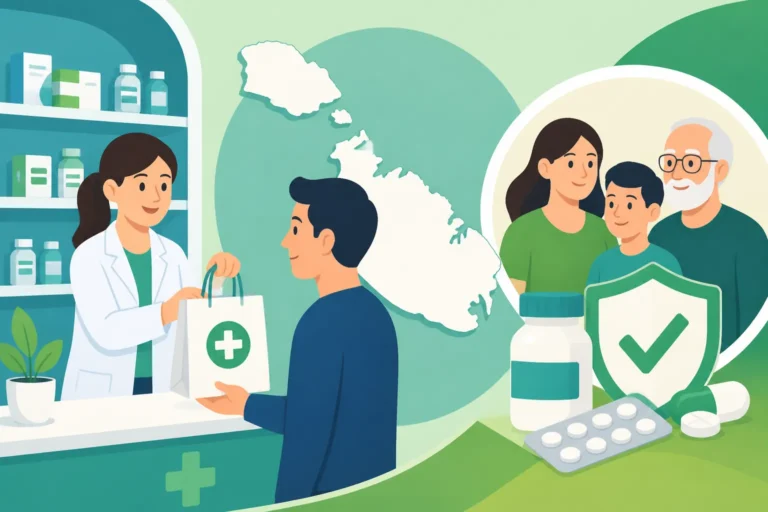
Once you have your Schedule V permit, you don't go to the hospital to get your pills. Instead, you use the "Pharmacy of Your Choice" (POYC) scheme. This is a brilliant system where you register with a local pharmacy near your home, and the government sends your free medication directly to them for you to collect.
Registering for POYC
To register, you take your approved Schedule V permit and your ID card to your preferred local pharmacy. They will help you fill out the POYC registration form. From that point on, you are "linked" to that pharmacy. You can’t just walk into any chemist on the island and ask for your free meds; you must go to your registered one. For a step-by-step guide on this, read The POYC Pharmacy of Your Choice Scheme: How to Collect Free Medicines.
Dealing with Out-of-Stock Issues
Here is the "been-there" reality: Malta is a small island at the end of a long supply chain. Sometimes, the government-provided medications go out of stock. If your specific brand or dosage isn't available through POYC, the pharmacist will tell you it's "out of stock at the stores." In these cases, you have two choices: wait and hope, or buy it privately.
Always keep a small "emergency fund" or ensure your insurance covers outpatient medications. I’ve had moments where my specific asthma inhaler was out of stock for three weeks, and I had to pay the full retail price at a different pharmacy just to keep breathing. It’s frustrating, but it’s part of island life. You can find more tips on this in Pharmacies and the POYC Scheme: Getting Medicines in Malta.
Prescription Validity and Renewals
Maltese prescriptions for chronic medications usually have a specific "use by" date, often six months or a year. Even with a Schedule V card, you will periodically need to visit your consultant (public or private) to get a fresh "Schedule V renewal" form or a new prescription booklet. Do not leave this until the last minute. The administrative wheels turn slowly, and you don't want to be chasing a consultant for a signature while your pill bottle is empty.
Bridging the Gap: Private Care and Insurance Coverage
Even if you are fully entitled to public care, many expats choose to maintain private health insurance. Why? Because the public system is fantastic for emergencies and chronic maintenance, but it can be exhausting for everything else.
Why You Might Need Private Insurance
If you have a chronic condition, you know that sometimes you need a "peace of mind" check-up. Waiting six months for a public ultrasound isn't ideal when you're worried about a new symptom. Private insurance allows you to bypass the queues. While most private insurers in Malta have "pre-existing condition" exclusions, some international plans or specific nomad-focused products like SafetyWing can be useful for new complications or emergencies that aren't directly linked to your documented chronic history.
You should evaluate your needs based on the information in Private Healthcare and Insurance in Malta: When You Need Cover. If your chronic condition requires frequent blood tests or imaging, the cost of doing those privately out-of-pocket will eventually dwarf the cost of a good insurance premium.
Combining Both Systems
The smartest way to live in Malta is to be a "hybrid" patient. Use the public system for your expensive monthly medications through the Which Medicines Are Free Under Malta's Entitlement Schemes? list. Then, use the private system for your annual specialist reviews and any diagnostic imaging. This gives you the best of both worlds: the cost-savings of the state and the efficiency of the private sector.
Essential Administrative Steps for New Chronic Patients
If you are currently packing your bags for Malta and you have a chronic illness, stop what you are doing and organize your paperwork. The Maltese system loves a stamped, signed, and original document.
Bringing Medical Records from Abroad
Don't just bring a summary. Bring your last three sets of blood results, copies of any recent scans (on a CD or digital link), and a detailed letter from your current specialist. This letter should clearly state your diagnosis, the ICD-10 code (if they know it), your current medication regime, and why this specific treatment is necessary. When you sit down in front of a Maltese consultant for the first time, handing them a neat folder of history will save you months of "re-testing" and "observing."
Registering with the Entitlement Unit
Your first administrative hurdle isn't the doctor; it's the Entitlement Unit. This office confirms that you have the right to use the public system. You will need to show your employment contract, your social security history, and your eResidence card. Without the approval from this unit, Mater Dei will view you as a tourist and charge you accordingly. For the exact steps, see Registering with a Health Centre and Choosing a GP in Malta.
The Importance of the Maltese ID Card
Everything in the Maltese health system hinges on your ID card number. You cannot register for POYC, you cannot get a Schedule V card, and you cannot even register at a local Health Centre without it. If you are a new arrival, your priority should be getting your eResidence card as fast as humanly possible. While you wait for that piece of plastic, you are essentially a "private" patient, which is why having temporary coverage from a provider like SafetyWing is so critical during those first 90 days.
Practical Advice for Daily Management
Living in Malta with a condition also means dealing with the environment. The high humidity can be a nightmare for respiratory or inflammatory conditions. The summer heat (regularly topping 40°C) is dangerous for those with heart conditions or those on medications that affect hydration.
Managing Heat and Humidity
In the winter, Maltese homes are notoriously damp and cold because they lack central heating. If you have arthritis or a chronic lung condition, you will need to invest in a high-quality dehumidifier and an AC unit that can heat your home effectively. In the summer, you must plan your pharmacy runs for early morning. People have collapsed in the queue at the Health Centre because they underestimated the July sun.
Support Groups and Community
Malta is a small, tight-knit community. There are active support groups for diabetes, cancer, fibromyalgia, and mental health. Joining these local Facebook groups or associations can be a godsend. They often have the inside track on which pharmacies have stock of a certain medicine or which consultant is the most "expat-friendly."
Dealing with a chronic illness in a foreign country is a test of patience and resilience. But once you jump through the initial hoops of the Healthcare in Malta for Foreign Residents: The Complete System Guide (2027), the level of care is genuinely impressive. You just have to learn to navigate the bureaucracy with a bit of "island time" philosophy—and a very organized folder of paperwork.
Disclaimer
The information provided in this guide is for educational and informational purposes only and does not constitute medical or legal advice. Healthcare regulations and entitlement criteria in Malta are subject to change. Always consult with a qualified medical professional or the Maltese Health Authorities (Identità and the Ministry for Health) regarding your specific medical condition and residency status. The author is a lifestyle blogger, not a medical professional or government official.